
This page contains affiliate links. Far Cornel may earn a commission if you buy through them, at no extra cost to you.
See the top-rated gear on Amazon →
Quick answer: Choose the tent last, not first. Start from your vehicle’s dynamic roof rating and your rack’s load rating, then pick a hard-shell if you move camp often and want a one-minute setup, or a soft-shell if you want more floor space for the money. A lighter tent that sits inside your limits beats a bigger one that pushes past them and turns the vehicle into a handful in crosswinds.
Most people buy a rooftop tent backwards. They fall for a photo, order the tent, and only then discover their roof cannot legally or safely carry it while moving. The decision that actually matters happens before fabric, ladders or mattresses: what your roof can hold at speed, what your rack can hold, and how the two clamp together. Start there and the shortlist narrows itself, often to fewer and lighter options than you had in mind.
The trap is a number most buyers never check. Vehicles quote two very different roof ratings: a static rating for when you are parked, which is high, and a dynamic rating for when you are driving, which is often modest, sometimes not much more than the tent and rack together. The static number is how a roof holds sleeping adults it could never carry at speed. Confuse the two and you overload the roof the moment you drive off.
Quick Picks
- Best for frequent moves: a hard-shell tent that opens in about a minute.
- Best space per dollar: a soft-shell that folds out to a larger floor.
- Best foundation: a rack or platform rated and approved for tent loads.
- Best daytime add: an awning for shade and a dry spot to cook.
- Best extra room: an annexe under a soft-shell for changing and storage.

How to Choose a Rooftop Tent
Work out the numbers before you shop. Read the owner’s manual for the dynamic roof rating and the rack maker’s figures, then add up the tent, the rack, bedding, wet canvas and any people. The dynamic rating for driving is the limit that catches people out, because it is often far lower than the tent-and-rack weight suggests. A rooftop tent is a road load once the vehicle moves, and it has to stay secure and within limits for the whole trip, not just look good in camp.
Treat the rack and mounts as part of the tent, not an afterthought. A rooftop tent needs more than a generic pair of crossbars: the rack has to match the vehicle, the tent base, the clamp spacing and the tracks you drive. Check that the rack maker approves rooftop-tent use on your vehicle, that the tent maker approves the rack style, and that you can reach and retighten the clamps after the first rough road. Rack brands like Rhino-Rack and Thule publish this fitment data; do not guess it.
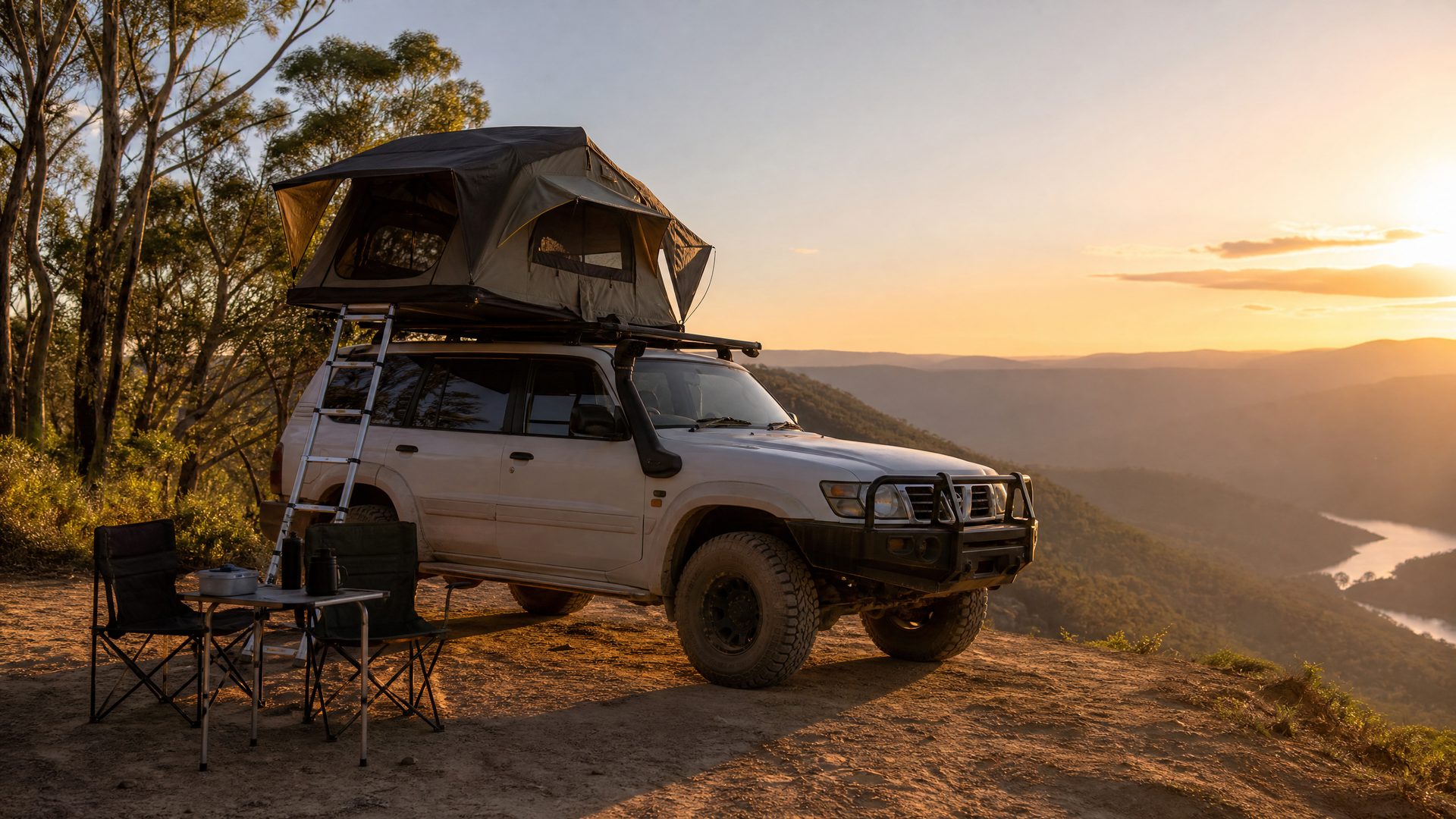
Then be honest about how you travel. Putting 50 to 70 kilograms high on the roof lifts the centre of gravity, adds body roll and wind noise, and dents fuel economy every day the tent stays up. That decides between hard-shell and soft-shell. Names like ARB and Darche span both styles, so compare packed height and weight, not just the sleeping area.
The Rooftop Tent System
Check today’s prices on Amazon →
A hard-shell rooftop tent
Hard-shells win on speed and weather. They open in about a minute, often just by releasing catches and letting gas struts lift the roof, and they close nearly as fast, which is a real advantage when you move camp daily or pack up in the rain. They sit lower and quieter on the roof and usually let you leave bedding inside. The trade-offs are honest: they cost more and generally sleep fewer than a soft-shell of similar footprint. Do not buy one if you mostly stay put for several nights and want the most sleeping room per dollar. Check the latest hard-shell rooftop tent on Amazon
A soft-shell rooftop tent
Soft-shells fold out over the side of the vehicle to far more floor space, often with room for an annexe below, and they cost less than a hard-shell of similar size. For couples or a small family who want space and do not mind a slower pitch, they make sense. The catch is pack-up: you wrestle damp canvas back into a cover and dry it later so it does not go mouldy, and they catch more wind when folded. Choose one if you value room and value over a fast, tidy setup. Browse soft-shell rooftop tent on Amazon
A rack or platform
The rack is the part people underspend on, and it is the part holding your bed above a moving vehicle. It must be rated for rooftop-tent loads, approved for your specific vehicle, and spaced correctly for the tent base. A flimsy or unapproved rack turns a good tent into a dangerous load, and a low-profile platform that fouls the clamps makes fitting a nightmare. Match the platform to both the vehicle and the tent before you buy either, and confirm you can inspect the fasteners after corrugations work them loose. Shop roof rack platform on Amazon
A 4×4 awning
A rooftop tent solves where you sleep and nothing else: there is no shade at midday, no dry spot to cook in a shower, and nowhere to stand up and change. Most people who live out of one end up adding an awning, so budget for it from the start rather than treating the tent as the whole camp. A side or wraparound awning bolts to the same rack and pulls out in seconds, turning the vehicle into a shaded living area. Spend on solid poles and good pegging, because a cheap awning is the first thing to fail in a gust. See 4×4 awning options on Amazon
An annexe or accessories
An annexe hangs off a soft-shell to give you an enclosed room at ground level for changing, storing boots and gear, or keeping kids out of the weather. Paired with the right tent it roughly doubles your usable space for a modest outlay. Other accessories earn their keep too: an anti-condensation mat under the mattress, a thicker topper if the standard one is thin, and interior pockets that keep the tent liveable. Buy these to fix the small annoyances that make a tent one you dread climbing into. Find the right rooftop tent annexe on Amazon

Comparison
| Type | Setup speed | Sleeping space | Best for |
|---|---|---|---|
| Hard-shell | About a minute | Usually less per dollar | Frequent moves, bad weather |
| Soft-shell | Slower, more canvas | More floor, annexe option | Space and value, longer stays |
| Rack / platform | One-off fit | Foundation only | Safe mounting, any tent |
| Awning | Seconds | Daytime living space | Shade and cooking cover |
| Annexe | Adds to pitch | Ground-level room | Changing and gear storage |
Frequently Asked Questions
Hard-shell or soft-shell?
Hard-shells set up in about a minute, sit sleeker on the roof and cope better with weather, but cost more and usually sleep fewer. Soft-shells give more room and often an annexe for less money, at the price of a slower, messier pack-up and more wind when folded. Pick on how often you move camp: frequent movers lean hard-shell, longer-stay campers lean soft-shell.
Will my vehicle and rack take one?
Check two numbers before anything else. The dynamic roof rating for driving is the limiting one and is often modest; the static rating for when parked is much higher. Add up the tent, rack, bedding and people against the dynamic figure, confirm the rack is rated and approved for tent loads on your vehicle, and stay comfortably inside both limits.
How much does it hurt fuel and handling?
Expect a noticeable hit. Fifty to seventy kilograms high on the roof lifts the centre of gravity and adds drag, so fuel use climbs and the vehicle rolls more, especially in crosswinds. Drive to the change by taking corners and gusts gently, and if the tent lives up there full-time, accept that you pay that fuel penalty every single day.
Can I leave bedding inside when it is closed?
Usually only in a hard-shell. Their fixed shape leaves room for a sleeping bag and pillow to stay put, which is a big part of their appeal. Most soft-shells fold too tightly for that, so bedding comes out each time. Check the closed internal space before you buy if leaving the bed made up matters to you.
The Bottom Line
The best rooftop tent is not the most dramatic one in the catalogue. It is the one your vehicle can carry safely within its dynamic rating, that you can put up and take down without dreading it, and that you will actually sleep well in. Confirm the roof numbers, pick a rack and mounts that genuinely suit both the vehicle and the tent, then choose hard-shell or soft-shell on how fast you need to pitch and how much room you want. Budget for an awning too, because a tent alone is a bed, not a camp.
For the wider setup, see our roundup of the best rooftop tents for touring and camping, the camping sleep system guide, and the camping gazebo and canopy guide.