
This page contains affiliate links. Far Cornel may earn a commission if you buy through them, at no extra cost to you.
See the top-rated gear on Amazon →
Quick answer: A mid-size roto-moulded hard cooler around 40–50 litres is the sweet spot — it keeps catch and drinks cold for a full weekend and shrugs off being stood on. Drop to a value hard cooler for day sessions, choose a soft cooler bag for a kayak or a walk-in, and add an insulated kill bag when you are keeping fish to eat. Ice life comes mostly from how you pack it, not the badge on the lid.
The cooler is where a good day’s fishing quietly goes wrong. Warm catch, softened bait, and a soup of slush and slime by lunchtime — usually because the box was too small, opened too often, or packed with a thin scatter of cubed ice. A roto-moulded cooler with thick walls fixes most of that, but the name on the lid matters far less than buyers think. How you load a cooler does more work than how much you paid for it.
The honest job of a fishing cooler is to hold a low, steady temperature while you keep flipping the lid to drop in a fish or grab a drink. Names like YETI, RTIC, Coleman and Engel span everything from near-indestructible roto-moulded boxes to sensible mid-price ice boxes, and the right one depends on how long you stay out and how you carry it. Get the size and the ice ratio right and a modest cooler will beat a premium one that is half-empty and opened every ten minutes.
Quick Picks
- Best overall: a 40–50 L roto-moulded hard cooler such as a YETI Tundra or RTIC.
- Best value: a thick-walled mid-price hard cooler like a Coleman Xtreme.
- Best for kayaks and walk-ins: a welded-seam soft cooler bag.
- Best for catch you will eat: an insulated kill/fish bag with a slurry.
- Best cheap upgrade: reusable block-ice packs and a divider tray.

How to Choose a Fishing Cooler
Start with how long your fish and bait need to stay cold, then buy one size up. A day-session angler is well served by a 25–35 L box; a weekend of catch, bait and drinks wants 45–60 L, because a cooler two-thirds full of contents and one-third ice loses the battle fast. The rule that rarely fails is roughly two parts ice to one part contents by volume, and a block of ice or a few frozen bottles will outlast the same weight of cubes by a wide margin.
Roto-moulded construction — a single thick-walled shell with 50–70 mm of insulation — is what separates a true multi-day cooler from a picnic box. It costs more and weighs more, but the ice retention and the ability to sit or stand on it are real. Check the drain plug, the latches and the lid gasket, because those are the first things to fail and the first corners a cheap cooler cuts. Pre-chill the empty box overnight with a sacrificial bag of ice and you buy yourself most of a day of extra performance for nothing.
Then be honest about carrying it. A loaded 60 L roto-moulded box is a two-person lift, which is fine off a wharf or out of the boot but miserable on a kayak or a long walk in. If you travel light, a soft cooler bag with welded seams holds a day’s catch and drinks at a fraction of the weight and packs flat when empty.
A fishing cooler’s real job is the catch, and this is where most anglers slip up: they drop fish straight onto a bed of dry cubes. Fish chill far faster and keep far better in an ice slurry — ice topped up with a little water so it becomes a near-freezing bath the fish sits in, not on. Bleed and ice a fish the moment it comes aboard and the difference on the plate is night and day; leave it flapping in the sun and no cooler will save the flesh. Two more habits: keep catch and drinks apart (a divider, or a second box) so you are not fishing a can out of fish-water, and pick a light-coloured box — a dark cooler bakes in the sun and burns through ice faster.
The Fishing Coolers and Ice Boxes
Check today’s prices on Amazon →
The roto-moulded hard cooler
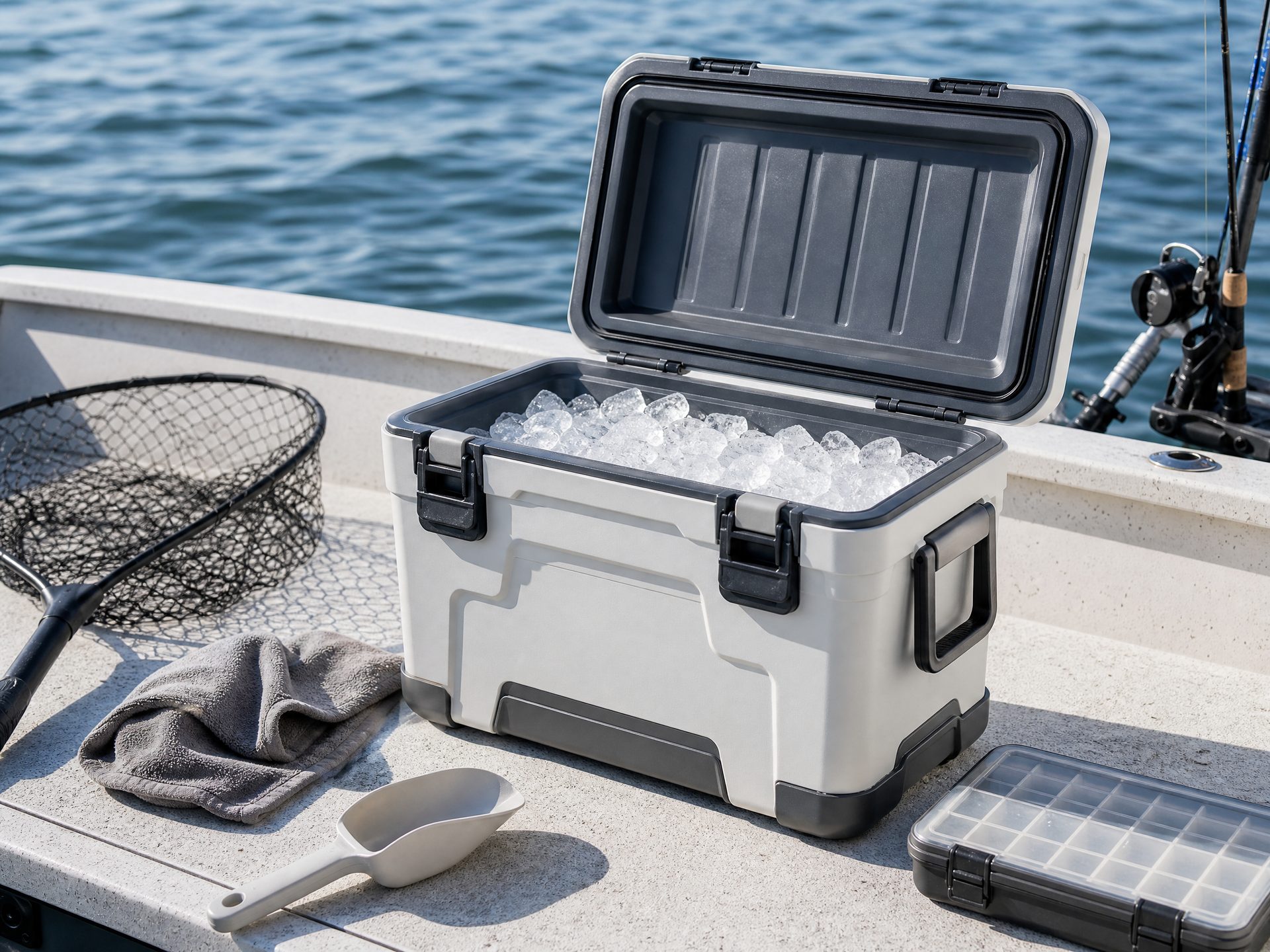
This is the weekend workhorse and the box most keen anglers eventually buy. A roto-moulded cooler in the 40–50 L range from YETI, RTIC or a heavy-duty ice-box brand like Icey-Tek gives you 50–70 mm of wall insulation, a proper gasket, and the strength to double as a casting platform or a seat. Packed two-to-one with block ice and pre-chilled, it will hold cold for several days in real heat. The trade-offs are honest ones: it is heavy and it is not cheap, so it rewards people who fish multi-day or in serious sun rather than the occasional afternoon. see what a roto-moulded ice box costs
The value hard cooler
Not everyone needs to spend a week’s bait money on a lid. A mid-price hard cooler such as a Coleman Xtreme has thinner walls and lighter hardware, but for day sessions it does the job for a fraction of the cost. Load it with a frozen bottle or two, keep it in the shade, and open it as little as you can, and it will hold a day’s catch and drinks comfortably. This is the smart first cooler for nearly everyone, and the one to buy before you decide if you truly need the premium box. compare the value hard-sided boxes
The soft-sided cooler bag
When weight and bulk matter more than multi-day ice, a soft cooler bag earns its place. Welded seams, a leakproof zip and thick foam walls — the sort of build you see in a YETI Hopper or an RTIC soft bag — keep a day’s catch and drinks cold while weighing almost nothing. It slings over a shoulder for a walk-in, straps neatly to a kayak, and packs flat in the boot when it is empty. It will not match a roto-moulded box over a long weekend, but for a single session it is often the more practical choice. look at the soft cooler bags for a light day
The insulated kill or fish bag
If you keep fish to eat, a long insulated kill bag is the tool that actually protects the flesh. It lays flat, chills a whole fish quickly in an ice slurry, and folds away to nothing when the trip is done. Because it wraps the catch rather than leaving it rattling in a half-empty box, it holds a more even temperature and travels better on a kayak or over a shoulder. It is the choice of anglers who care about how the fillet tastes at the table, and it pairs well with a hard cooler for the drinks. price up an insulated kill bag for big fish
Ice packs, dividers and tie-downs
The cheapest upgrades often make the biggest difference. Reusable block-ice packs last longer and leave no melt-water sloshing around; a divider or dry tray keeps phones, keys and food out of the slush; and tie-down mounts stop the box sliding across a deck or a boot on the drive home. None of it costs much, and together it turns an ordinary cooler into an organised one that holds cold longer and stays clean. Buy these once and you will wonder how you managed without them. grab ice packs, a divider and tie-downs

Comparison
| Cooler type | Typical size | Real-world ice life | Best for | Watch-out |
|---|---|---|---|---|
| Roto-moulded hard | 40–60 L | Several days, packed and pre-chilled | Weekends and hot conditions | Heavy and expensive |
| Value hard cooler | 25–50 L | A day or two with block ice | Day sessions on a budget | Thinner walls, weaker seals |
| Soft cooler bag | 15–30 L | Roughly a day | Kayaks and walk-ins | Not a multi-day option |
| Insulated kill bag | Fish-length | A day with a slurry | Keeping catch to eat | Single purpose |
| Ice packs and trays | Add-on | Extends any cooler | Organising and dry storage | Not a cooler on its own |
Frequently Asked Questions
Are expensive roto-moulded coolers actually worth it?
If you fish multi-day trips or in real heat, yes: the thick walls and better seals genuinely hold ice longer and survive years of abuse. For the occasional day session, a value hard cooler plus block ice does most of the job for far less money, so match the spend to how you fish.
How much ice do I really need?
Aim for about two parts ice to one part contents by volume, use block ice or frozen bottles rather than cubes, and pre-chill the empty cooler first. Packing habits beat price for ice life — a half-empty premium box warms up faster than a well-packed cheap one.
Can I keep my catch and my drinks in the same cooler?
You can, but it is better not to. Every drink you grab lets warm air in, and fish slime taints food and packaging. A cheap divider tray, or a second small cooler just for drinks, keeps the catch both colder and cleaner.
What size cooler should I buy?
Size it to your longest typical trip, then step up once. Roughly 25–35 L handles day sessions and 45–60 L covers weekends. An oversized box carried half-full wastes ice, while a too-small one warms up every time you open the lid.
The Bottom Line
The best fishing cooler is the one sized to your trips and packed with enough block ice to do its job. A 40–50 L roto-moulded box is the do-it-all choice, a value hard cooler covers day sessions for far less, and a soft bag or kill bag earns its place when weight or a clean fillet matters. Spend on insulation and honest packing before you spend on the badge, and your catch will still be firm and cold when you reach the ramp.
For more on carrying and organising your kit, see our guide to the best fishing backpacks, our guide to fillet knives and boards, and the best fish grips.