
This page contains affiliate links. Far Cornel may earn a commission if you buy through them, at no extra cost to you.
See the top-rated gear on Amazon →
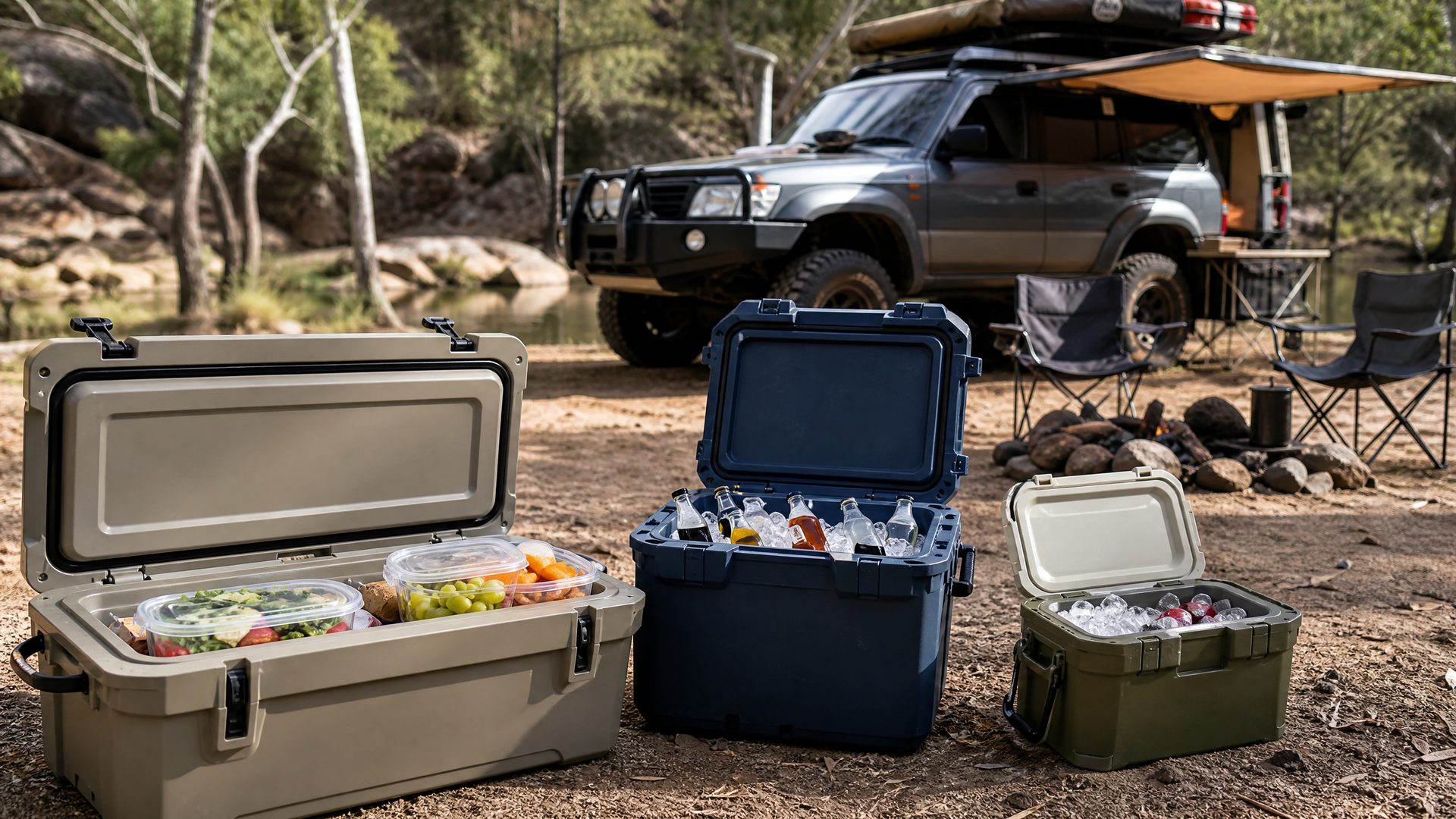
Quick answer: for serious multi-day trips a premium rotomoulded cooler holds ice the longest and shrugs off years of abuse, while a mid-range hard cooler gives you most of that performance for far less. Families want a large basecamp chest, a wheeled model earns its keep if you move a loaded box over flat ground, and a compact personal cooler handles drinks and day trips. Buy for the days of ice you actually need, not the brand on the lid.
A heavy-duty cooler has one job that matters most, holding ice long enough for your trip, and a few that matter almost as much: surviving rough handling, keeping the cold in when the lid opens, and staying manageable when it is full. The gap between a cheap box and a good one is real, but so is the gap between what you need and what you pay for, and this guide sorts out both.
The right cooler depends on how many days you need cold food, how many people you feed, and how you will move it. Answer those and the size and type follow, well before the brand does.
Quick picks
- Best overall: a premium rotomoulded cooler for the longest ice life and toughest shell.
- Best value: a mid-range hard cooler with most of the performance for less.
- Best for families: a large basecamp chest cooler of 60 litres or more.
- Best when loaded: a wheeled heavy-duty cooler for moving it over flat ground.
- Best for day trips: a compact personal cooler for drinks and short outings.

How to choose a heavy-duty cooler
Start with ice retention, since that is what you are really buying. Thick insulated walls and a tight-sealing lid gasket keep ice solid for days, which is why premium rotomoulded coolers cost what they do; thinner mid-range boxes hold cold for a day or two, which is plenty for a weekend. Then weigh capacity against how you will carry it, because a big cooler packed with ice and food becomes very heavy, and consider a drain plug, sturdy latches, and non-slip feet that make daily use easier.
How you use it matters as much as how it is built. Pre-chill the cooler and pack it cold, fill it with plenty of ice rather than a token bag, keep it out of the sun and closed, and a mid-range box will hold cold far longer than a premium one used carelessly. Match the size to your group and trip length, erring larger, since a full cooler holds cold better than a half-empty one.
Then weigh up size, hardware and drainage. Bigger is not automatically better: a large cooler full of ice and food becomes a two-person lift and eats vehicle space, so a 40 to 50-litre box is a versatile sweet spot for most. Look for rubber T-latches and hinges that will not snap or corrode, and a drain plug you can reach without tipping the whole thing. Have a quick look at the current and most recent options on Amazon for the heavy-duty coolers.
The styles, and who each suits
Check today’s prices on Amazon →
Premium rotomoulded: longest ice, toughest build
This is the buy-once box. Brands like YETI and RTIC built their name on thick rotomoulded shells, deep insulation and gaskets that hold ice for days in serious heat, tough enough to stand on, sit on or fish from without a crack. You pay a premium and carry the weight, but for long off-grid trips where an ice run is not an option, that reliability is what you are buying. Camp often and hard and it pays for itself over years. Have a quick look at the current and most recent options on Amazon for the premium rotomoulded cooler.
Mid-range hard cooler: most of the performance for less
You do not have to spend top dollar to camp well. A mid-range hard cooler, the kind Coleman does well, uses solid insulation and a decent seal to deliver a big slice of premium performance for a fraction of the price. It may hold ice a day less and the latches feel less bombproof, but for the camper who wants reliable cold without a fridge-sized outlay, it is the sensible buy. Spend the saving on more ice and good ice packs. Have a quick look at the current and most recent options on Amazon for the mid-range hard cooler.
Large basecamp chest: capacity for groups and long stays
Feeding a family or settling in for a week, a large chest cooler of 60 litres or more stops the daily shuffle of cramming food around melting ice. There is room for a proper two-to-one ratio of food to ice, which is what actually keeps things cold. Loaded, it is heavy and awkward, so it wants to be positioned once and left. Buy it if you run a fixed basecamp and truly need the volume, not as a default. Have a quick look at the current and most recent options on Amazon for the large basecamp chest cooler.
Wheeled heavy-duty: for moving a loaded box
A full heavy-duty cooler is a genuine load, so if you have to move it any distance, wheels change everything. A wheeled model with a sturdy tow handle lets one person drag it from vehicle to site over firm, flat ground without wrecking their back. The trade-off: small wheels bog down in soft sand or deep mud, and the housings steal a little insulation and space. Ideal for drive-in sites and events, less so for rough terrain. Have a quick look at the current and most recent options on Amazon for the wheeled heavy-duty cooler.
Compact personal cooler: drinks and day trips
Not every outing needs the big box. A compact personal cooler of roughly 25 to 40 litres keeps drinks and a day’s food cold, fits easily in the cab, and carries one-handed even when full. Many campers run one as a grab-and-go for day trips alongside a larger cooler that stays sealed at camp, sparing the main box from constant opening. For short trips or a second cooler, it is the practical pick. Have a quick look at the current and most recent options on Amazon for the compact personal cooler.
How the styles compare
| Cooler type | Rough size | Real ice retention | Best for |
|---|---|---|---|
| Premium rotomoulded | Any | Longest, several days | Long, hard, off-grid trips |
| Mid-range hard | 40–50 litres | Strong for the price | Value all-rounder |
| Large basecamp chest | 60 litres and up | Long, holds volume | Families, week-long stays |
| Wheeled heavy-duty | Medium to large | Good | Moving a loaded box on flat ground |
| Compact personal | 25–40 litres | Shorter, easy to top up | Day trips and second cooler |
Frequently Asked Questions
Are premium rotomoulded coolers actually worth the money?
For the right user, yes; for many, no. A premium rotomoulded cooler holds ice for days, survives being stood on and dragged around, and often carries a bear-resistant rating, which earns its price on long, hot, or remote trips. For weekend camping near home, a well-used mid-range cooler holds cold plenty long enough for a fraction of the cost. Buy premium if your trips are long, hot, or hard on gear; otherwise the mid-range box is the smarter spend.
How long will a good cooler really hold ice?
It depends on the cooler and, just as much, on how you use it. A premium rotomoulded box can hold ice for several days in warm weather, a mid-range hard cooler often a day or two, and a thin cheap one less than that. Pre-chilling the cooler, packing it with plenty of ice, keeping it shut and shaded, and draining melt water all stretch that time significantly, so real-world ice life is as much about habits as the box itself.
What size should I get?
Size to your group and the length of the trip, then go up a notch. A packed cooler holds cold better than a half-empty one, and food and drinks take more room than people expect, so undersizing is the common regret. A couple for a weekend needs far less than a family for a week. Remember that bigger coolers get very heavy when full, so balance the capacity you want against the weight you can actually lift or wheel.
Should I just get a 12V fridge instead?
It depends on power and trip length. A 12V fridge holds a set temperature for as long as it has power and never needs ice, which suits long trips and anyone with a battery and solar setup, at a much higher price and a reliance on that power. A heavy-duty cooler is cheaper, needs no power, and is unbeatable for simplicity and shorter trips, but you buy ice and manage melt water. Choose the fridge for long, powered touring; the cooler for value, simplicity, and shorter stays. Many campers carry both.
The bottom line
A heavy-duty cooler is worth buying well, but not always buying dear. Decide how many days of ice you need and how many people you feed, size up rather than down, and match the type to how you move it. A premium rotomoulded box rewards long, hot, or rough trips; a mid-range cooler is the value pick for most weekends; a wheeled or basecamp model solves capacity and moving it. Whichever you choose, pre-chill it, load it with ice, and keep it shut and shaded, and it will keep your food cold trip after trip.