
This page contains affiliate links. Far Cornel may earn a commission if you buy through them, at no extra cost to you.
See the top-rated gear on Amazon →
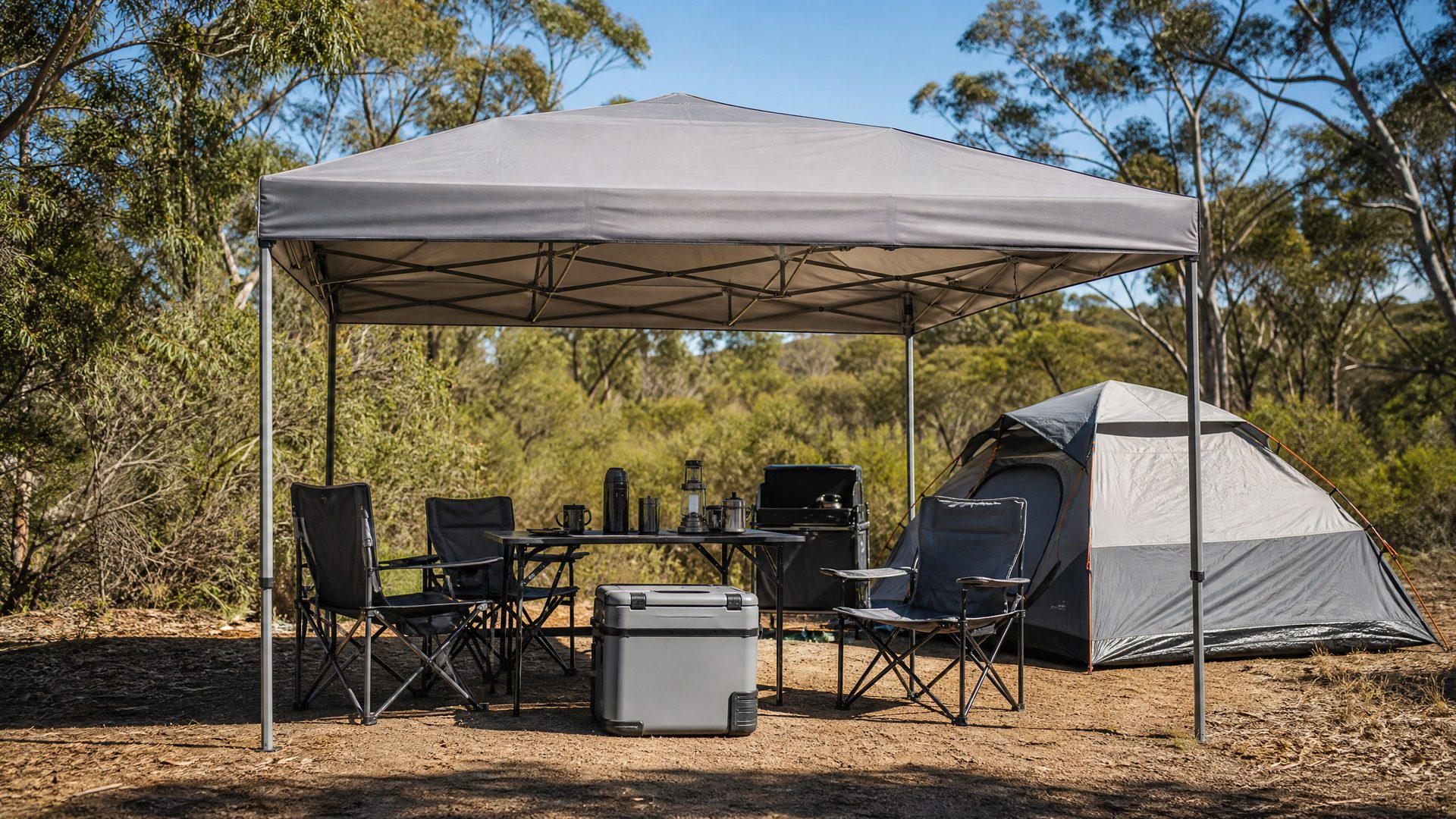
Quick answer: A 3×3 metre pop-up gazebo is the best all-round buy — fast to raise, big enough to shade a table and four chairs, and easy to weight down. Step up to a heavy steel-framed gazebo if you camp in wind or leave it standing for days, keep a light sun shelter in the boot for day trips, add a screen house where insects run the evening, and size up to a 3×6 metre model for a group or shared kitchen.
I have watched a bargain pop-up gazebo cartwheel across a campsite and wrap itself around a neighbour’s awning, all because nobody weighted the legs. That afternoon taught me more about buying shade than any spec sheet: a gazebo lives or dies by its frame and how you anchor it, not by the artwork on the box. Everything else — colour, cup holders, the number of “easy-lock” buttons — is a distant second.
Shade is the one thing that turns a hot, squinting afternoon into somewhere you actually want to sit. A good gazebo becomes the middle of camp: the spot for cooking out of the sun, keeping the cooler off hot ground, and getting everyone under cover when a shower blows through. The trick is matching the shelter to how exposed your sites are and how often you move, because the gazebo that is perfect for a still, sheltered pitch is the same one that becomes a kite on an open, windy site.
Quick Picks
- Best overall: a 3×3 metre pop-up gazebo with a decent-gauge frame and pinch-free sliders.
- Best for wind and long stays: a heavy steel-framed gazebo with thick legs and a 420D+ canopy.
- Best for day trips: a lightweight pop-up sun shelter you can throw up in seconds.
- Best for insects: a screen house with fine “no-see-um” mesh walls.
- Best for groups: an oversized 3×6 metre gazebo for a shared camp kitchen.

How to Choose a Camping Gazebo
Start with the frame, because that is what fails first. Powder-coated steel is heavy but stiff, and it is what you want if the gazebo stands for days or cops an afternoon breeze; aluminium is lighter and kinder to your back and roof rack, but it flexes more and will bend before steel does. Look at the leg profile too — fatter hex or truss-section legs resist twisting far better than thin round tube, which is where the cheapest frames give up.
Then the canopy. For sun you want UPF 50+ with a silver or PU-coated underside, which genuinely drops the temperature underneath rather than just casting a shadow. Fabric is rated in denier: 300D is fine for the occasional weekend, while 420D to 500D shrugs off years of packing and repacking. If you expect rain, check the seams are sealed and the roof pitches steeply enough to shed water. A flat roof pools, and a few litres of trapped water will buckle a leg in minutes.
Setup speed matters less than the marketing suggests; almost any modern pop-up goes up in a minute or two with two people. Anchoring matters far more, and it is the step people skip. Budget for proper pegs, and for hard or sandy ground where pegs will not bite, a set of leg weights or sandbags. That is the day-one upgrade nobody sells you and everybody eventually needs.
The Gazebos
Check today’s prices on Amazon →
The 3×3 metre pop-up gazebo
This is the default for good reason. A 3×3 shades a table and four chairs, packs into a wheeled bag, and one person can raise it at a pinch. Brands like Coleman, Wanderer and Quik Shade all build this size sensibly. Go for a heavier frame gauge and pinch-free push-button sliders that will not eat your fingers, and treat the pegs in the box as a starting point rather than the finished job. For the money, nothing covers more campers more of the time. Compare 3×3 pop-up gazebo on Amazon
The heavy-duty steel-framed gazebo
When you leave a shelter standing for a week, or camp somewhere the wind arrives on schedule every afternoon, a heavy steel-framed gazebo earns its bulk. Thicker legs, welded or reinforced joints and a heavier canopy (420D and up) stay put where a light pop-up dances. The commercial-grade frames from the likes of Blackwolf and E-Z UP are what market stallholders and long-stay campers lean on. The honest trade-off is real weight and a genuine two-person lift, so it is overkill for a single calm night. Check the latest heavy-duty gazebo on Amazon
The lightweight pop-up sun shelter
For a quick day out you often do not want a full gazebo at all. A pop-up sun shelter weighs a couple of kilos, springs up in seconds, and blocks the worst of the UV without a frame to lug. It will not stand up to real weather, and that is the point — it is the throw-in-the-boot option for a picnic, a sideline, or a lazy afternoon out of the glare. Keep your expectations honest and it is the handiest shade you own. Browse pop-up sun shelter on Amazon
The screen house with mesh walls
Where biting insects own the evening, a screen house changes the whole trip. It is a gazebo with fine mesh walls — the “no-see-um” grade that stops midges, not just the bigger mosquitoes — so you keep the breeze and lose the bugs hovering over dinner. Some add roll-down solid panels to block wind or a low sun. Companion and Coleman both make usable versions. It is a niche pick, but in insect-heavy conditions it is the difference between eating in peace and eating in the car. Shop screen house gazebo on Amazon
The oversized 3×6 metre gazebo
Feeding a group or running a shared camp kitchen? A 3×6 metre gazebo doubles the covered area and lets a couple of families share one roof, table and cooking zone. It is a bigger, heavier and windier thing to manage, so it wants every leg pegged and weighted and a spare set of hands to raise. For base camps that do not move, though, it becomes the social heart of the site — the place everyone drifts back to. See large gazebo options on Amazon

Comparison
| Shelter | Frame & fabric | Best for | Wind handling |
|---|---|---|---|
| 3×3 pop-up | Steel or alloy, 300–420D | Most campers, weekends | Good once pegged and weighted |
| Heavy-duty gazebo | Thick steel, 420–500D | Long stays, exposed sites | Strong |
| Sun shelter | Light alloy/fibre, thin fabric | Day trips, picnics | Poor |
| Screen house | Alloy, mesh walls | Insect-heavy evenings | Moderate |
| Oversized 3×6 | Steel, 420D+ | Groups, shared kitchen | Moderate, needs anchoring |
Frequently Asked Questions
What size gazebo do I actually need?
A 3×3 metre gazebo shades a table and four chairs; a 3×4.5 or 3×6 suits a group or a shared kitchen. Bigger models catch far more wind, so size to your group and how exposed your sites are, not to the largest one on the shelf.
Will pegs alone stop it blowing away?
Rarely. On soft ground good pegs and guy ropes help, but on hard or sandy sites you need leg weights or sandbags, and 8 to 10 kg a leg is not overkill. A gazebo is the first thing airborne in a gust, so drop the walls or pack it down when it really blows.
Are gazebos waterproof or just for shade?
Most shade well but only shrug off light rain unless the seams are sealed and the roof pitches steeply. For real downpours look for a high hydrostatic head rating and never let water pool on the roof, because trapped water bends a leg surprisingly fast.
Steel or aluminium frame?
Steel is heavier but stiffer and better for wind and long stays; aluminium is lighter and easier on your back and roof rack for frequent moves. Pick steel for a base camp that stays put, alloy if you pack up and shift sites often.
The Bottom Line
Buy for your windiest, longest day, not the calm one. A well-anchored 3×3 pop-up covers most campers; go heavy steel for exposed base camps, keep a light sun shelter in the boot for day trips, and add a screen house only where insects force the issue. Whatever you choose, spend the extra on decent pegs and weights — the shade is only ever as good as the anchoring holding it down.