
This page contains affiliate links. Far Cornel may earn a commission if you buy through them, at no extra cost to you.
See the top-rated gear on Amazon →
Quick answer: For most tourers a 200W folding solar panel with a good MPPT regulator is the right call — enough to keep a fridge and devices topped up through a normal day. Drop to a 120 to 160W kit for weekends with light draw, step up to 250 to 300W if you run a dual-zone fridge or camp under cloud, and choose a lightweight solar blanket when weight and pack size matter more than outright watts.
The most useful thing I ever learned about camp solar is that the number printed on the bag is a best-case lie. A “200W” folding panel might make 200W for about ten minutes at midday, pointed dead at the sun on a cool, clear day. Angle it wrong, let it heat up, or park it in the dappled shade of a tree and that figure drops fast. Once you accept that, you stop buying the smallest kit that “should be enough” and start buying the one that actually keeps your fridge cold on a cloudy afternoon.
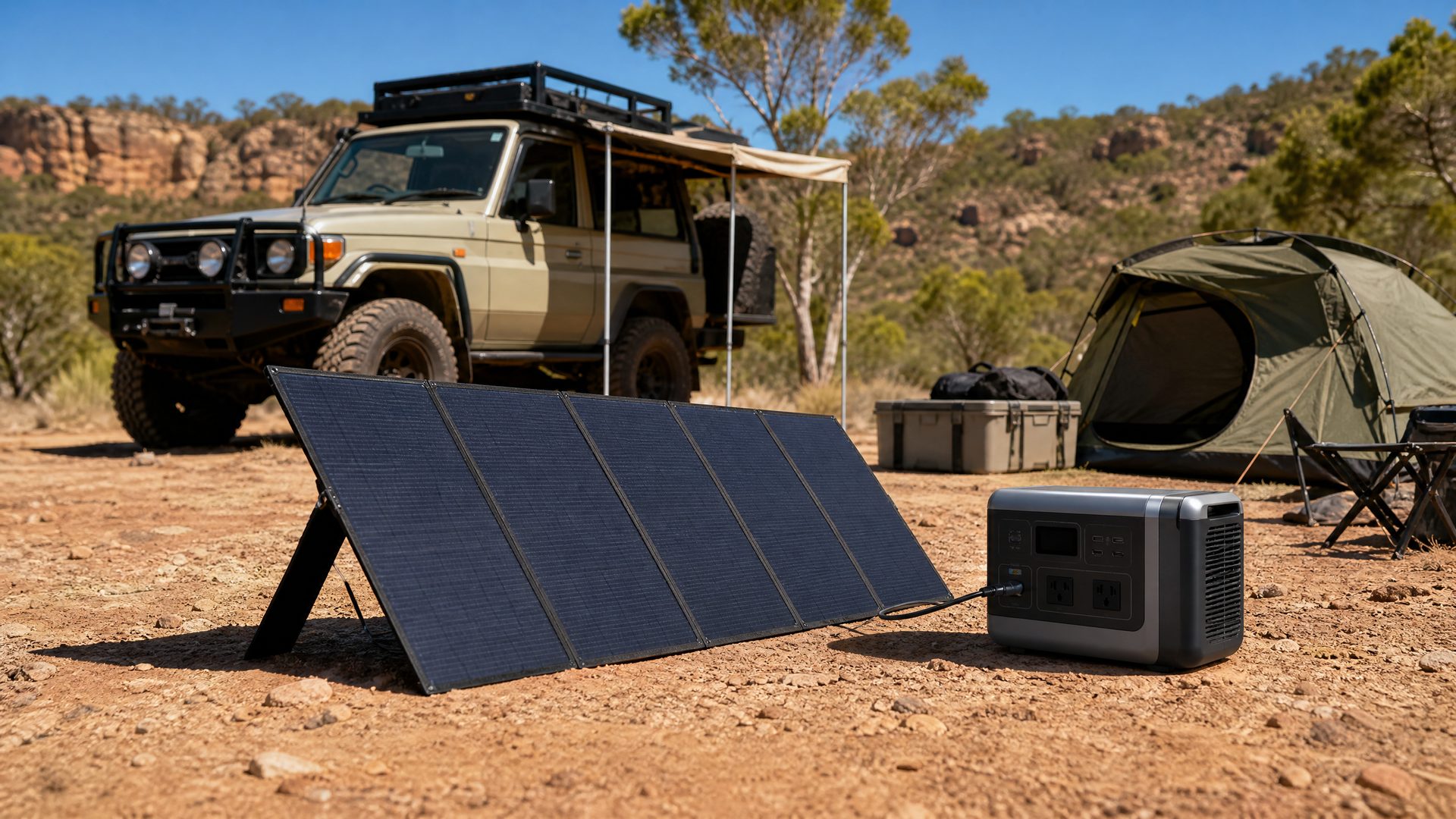
A folding kit is the flexible way to charge off-grid: two or more panels hinged into a briefcase you unfold, prop toward the sun, and plug into your battery or power station. Unlike fixed roof panels, you can park in the shade and put the panel in the sun, and chase the light through the day. The choice comes down to how much power you actually draw, how far you carry the panel, and whether you are feeding a 12V battery or a modern portable power station — because those two setups want different kits.
Quick Picks
- Best overall: a 200W folding panel with an MPPT regulator and Anderson plugs.
- Best lightweight: an ETFE solar blanket that packs down small and light.
- Best for weekends: a compact 120 to 160W kit for a fridge and phones.
- Best for heavy draw: a 250 to 300W kit for a dual-zone fridge or cloudy runs.
- Best plug-and-play: a folding panel matched to your portable power station.

How to Choose a Folding Solar Panel Kit
Size to your daily draw, then add a buffer. A small 40L fridge, some lights and phone charging is comfortably served by 150 to 200W; a larger or dual-zone fridge plus a laptop and a water pump pushes you toward 250 to 300W. Because real output runs well below the rated figure once you factor in heat, angle and cloud, undersizing is the single most common regret. It is cheaper to buy one size up now than to add a second panel later.
Get the panel type and regulator right. Almost all good folding panels use monocrystalline cells, which are more efficient and better in low light than older polycrystalline. The regulator matters just as much: an MPPT controller harvests noticeably more from the same panel than a basic PWM one, especially when the battery is low or the day is cool. Check the controller suits your battery chemistry, whether that is AGM, gel or lithium (LiFePO4), because the charge profiles differ.
Then weigh build against weight. Glass-and-aluminium panels are tough and cheap per watt but heavy at 15 to 20kg for a big one; ETFE blankets weigh a fraction of that and roll up small, trading some durability and cost. Whatever you buy, the day-one upgrade is to bin the flimsy alligator clips for proper Anderson plugs and add a long extension lead, so you can leave the panel in full sun while the car sits in shade. And always connect the regulator to the battery first, then the panel to the regulator.
Have a quick look at the current and most recent options on Amazon for the folding solar panel kits.
The Solar Kits
Check today’s prices on Amazon →
The 200W folding panel
This is the all-rounder that suits most touring setups. Two big monocrystalline panels, a decent MPPT regulator and Anderson leads give you enough to hold a fridge and keep devices charged across a normal day, with headroom for the odd cloudy hour. Brands like Renogy and Projecta build solid versions with sturdy legs and IP-rated connections. It is heavier than a blanket and needs a spot to stand, but for reliable everyday charging it is the one I would point most people at first. Have a quick look at the current and most recent options on Amazon for the 200W folding solar panel.
The ETFE solar blanket
When weight and pack size matter, a solar blanket is the clever answer. An ETFE-coated blanket folds down thin, weighs a few kilos instead of fifteen, and drapes over a bonnet or hangs off an awning where a rigid panel will not fit. Baintech and Redarc make well-regarded ones. You pay more per watt and it is a little more delicate than glass, but for anyone tight on space or lifting the panel a lot, the weight saving is worth it. Keep it off hot metal to avoid cooking the output. Have a quick look at the current and most recent options on Amazon for the solar blanket.
The compact 120 to 160W kit
For weekends with a light load — a small fridge, lights, phones and a camera — a compact 120 to 160W kit does the job without hogging boot space. It sets up fast, weighs less than the big panels, and costs less to buy. The honest limit is cloudy days and bigger fridges, where it will struggle to keep up. Treat it as the weekender’s panel: perfect within its bracket, and quick to run short if your power habits grow. Have a quick look at the current and most recent options on Amazon for the 120W folding solar panel.
The 250 to 300W kit
Run a dual-zone fridge, a big battery bank, or camp somewhere the afternoon clouds roll in, and a 250 to 300W kit stops the daily anxiety about charge levels. The extra panel area banks more amp-hours in the good hours so you coast through the bad ones. It is bigger, heavier and needs more room to stand, so it is more panel than a lone weekender needs, but for extended off-grid living it is the difference between managing power and forgetting about it. Have a quick look at the current and most recent options on Amazon for the 300W folding solar panel.
The power-station solar panel
If your setup is a modern portable power station rather than a 12V battery, buy the folding panel designed to plug straight into it. Jackery, EcoFlow, Bluetti, Goal Zero and Anker all sell foldable panels with the right connectors and voltage for their units, so there is no separate regulator to match or wire. It is the true plug-and-play option: unfold, plug in, done. Just confirm the wattage and connector suit your station, because a mismatched panel either underperforms or will not charge at all. Have a quick look at the current and most recent options on Amazon for the portable power station solar panel.
Comparison
| Kit | Typical output | Weight | Best for |
|---|---|---|---|
| 200W folding panel | Solid all-day charge | Heavy | Everyday touring |
| ETFE solar blanket | Good, angle-dependent | Very light | Weight and space savers |
| 120–160W compact | Light loads | Light | Weekends, small fridge |
| 250–300W kit | Heavy draw, cloudy days | Heaviest | Dual-zone fridge, long stays |
| Power-station panel | Matched to the unit | Varies | Plug-and-play setups |
Frequently Asked Questions
What size panel do I need to run a fridge?
For a small fridge plus lights and phones, 150 to 200W is a sensible start; a larger or dual-zone fridge wants 250 to 300W. Remember that real output sits well below the rated watts once heat, angle and cloud are factored in, so size up rather than down.
Does monocrystalline versus polycrystalline really matter?
For camping, yes. Monocrystalline cells are more efficient and hold up better in low light, so you get more from the same panel area and pack size. Almost all good folding kits use them now, and the small price difference is worth it for the extra real-world charge.
MPPT or PWM regulator?
MPPT wins for camping. It harvests noticeably more from the same panel, especially when the battery is low or the day is cool, by converting spare voltage into usable current. A PWM controller is cheaper and fine for tiny setups, but on a 150W-plus kit the MPPT pays for itself.
Can I plug a panel straight into my battery?
No — you need a regulator between them. Connecting a panel directly can overcharge and damage the battery. Wire the regulator to the battery first, then the panel to the regulator, and make sure the controller matches your battery chemistry.
The Bottom Line
Buy solar for your worst realistic day, not the sunny one in the photo. A 200W folding panel with an MPPT regulator covers most tourers; drop to 120 to 160W for light weekends, jump to 250 to 300W for a dual-zone fridge or cloudy runs, and pick an ETFE blanket when weight rules. Match the regulator to your battery, upgrade to Anderson plugs and a long lead, and keep the panel out of shade — placement earns more power than a bigger panel left lying flat.