
This page contains affiliate links. Far Cornel may earn a commission if you buy through them, at no extra cost to you.
See the top-rated gear on Amazon →
Quick answer: The smartest single buy is a mid-length aluminium plier with tungsten-carbide cutters and a sprung jaw, because it unhooks, crimps and slices braid in one tool. Add split-ring pliers if you throw lures, a lip grip for toothy fish, and proper braid scissors for tidy leaders. Stainless is tougher and cheaper; titanium is a buy-it-for-life luxury, not a must.
Nothing kills the first ten minutes of a session like prising open a pair of pliers welded shut with orange rust, or watching a good tool cartwheel off the rocks because you never clipped it to anything. Tools are the quiet half of a tackle kit: you barely notice them until the one time a hook is buried past the barb in a thrashing fish and you need to back it out cleanly. Cheap hardware-shed pliers will do that job once or twice, then bind up and let you down.
The catch is that “fishing pliers and tool kits” spans a $12 blister-pack plier and a $150 machined set with replaceable everything. More money mostly buys corrosion resistance and cutters that stay sharp, not magic. This guide sorts the field into the handful of tools that actually earn a place on your belt, and shows where each one matters.
Quick Picks
- Best overall: aluminium pliers with replaceable tungsten-carbide cutters.
- Best for lure anglers: a dedicated split-ring plier.
- Best for toothy species and deep hooks: long-nose pliers.
- Best for handling fish: a lip grip that keeps fingers clear of trebles.
- Best for tidy leaders: sprung braid scissors.

How to Choose Fishing Pliers and Tool Kits
Start with the metal, because that is what fails first. Aluminium is light, shrugs off salt, and is the sensible default; the trade-off is a softer body that dents if you drop it on rock. Stainless is stronger and cheaper, but only genuinely rust-resistant if it is a decent grade and you rinse it. Titanium is the buy-it-for-life option that never corrodes and weighs almost nothing, though you pay dearly for the privilege. Here is the myth worth busting: no metal is maintenance-free. A rinsed aluminium plier will outlast an expensive stainless one that lives wet in a tackle tray, every time.
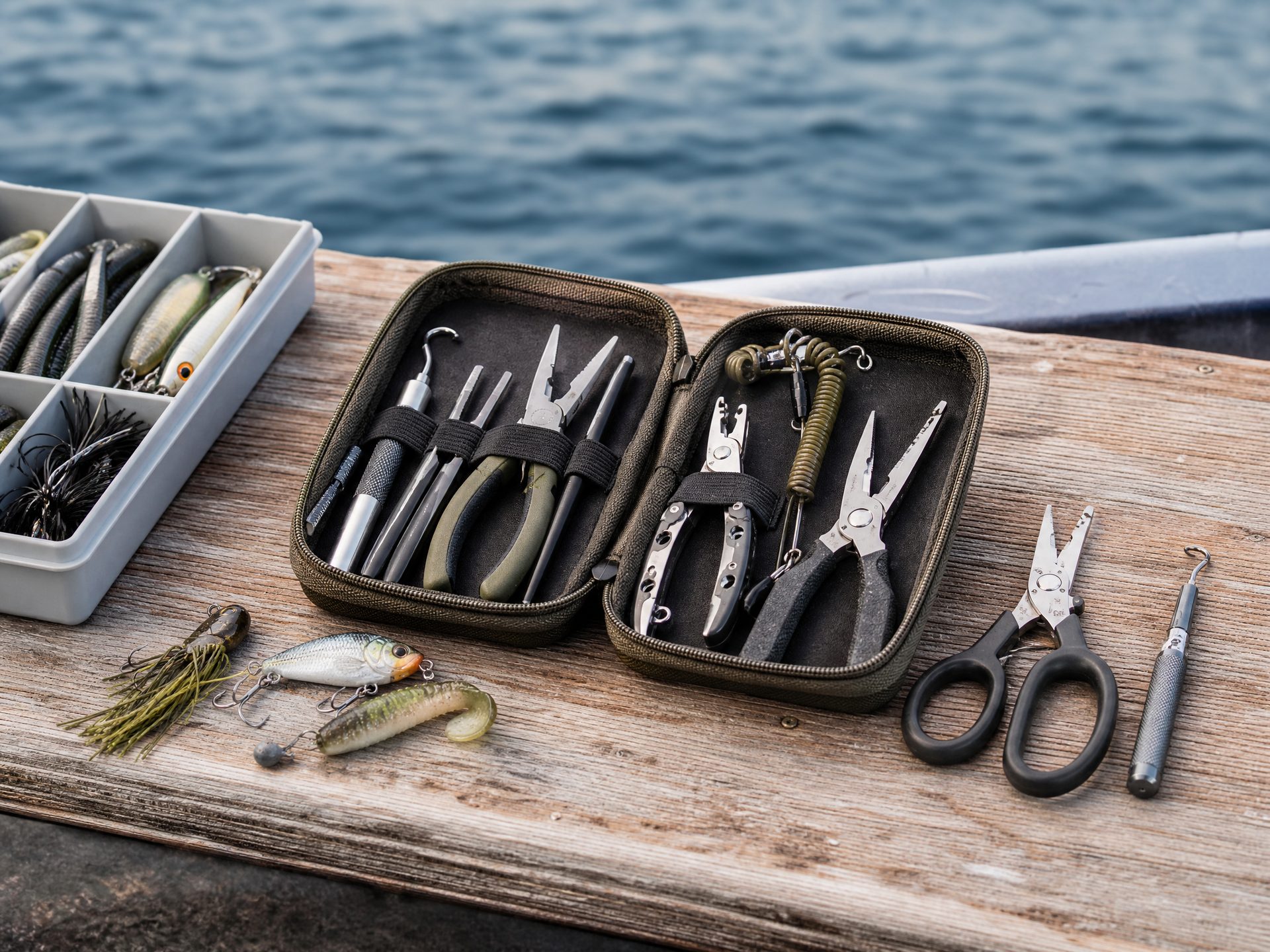
After the metal, look at the working parts. Tungsten-carbide cutters hold an edge on braid far longer than plain steel, and cutters that unscrew and replace turn a dead tool into a five-minute fix. A jaw that springs open on its own lets you work one-handed while the other hand holds the fish. If you throw hard-bodies, a split-ring nose saves your thumbnails when you change trebles. And a coiled lanyard with a sheath is not an accessory, it is the difference between owning your pliers and donating them to the seabed.
Finally, be honest about how much tool you need. A lure angler wants split-ring work and fine tips; a bait fisher chasing bigger fish wants length and leverage to reach a hook past sharp teeth. Buy the two or three tools your fishing actually uses rather than a twenty-piece boxed set where half the pieces never come out.
Two things separate pliers that last from ones you replace every season. First, the cutters: braid is the enemy of cheap jaws, and only tungsten-carbide cutters slice it clean and keep doing it — plain steel chews it, frays the tag and goes blunt within a season, and on the good pliers those cutters are replaceable, which is worth paying for. Second, corrosion: saltwater kills tools, so rinse them in fresh water after every trip and put a drop of oil on the spring and pivot, or the jaw seizes and the cutter rusts. And clip them to a retractable lanyard in a sheath — more good pliers are lost to a single fumble over the side than ever wear out.
The Tools
Check today’s prices on Amazon →
Aluminium pliers with tungsten cutters
This is the one tool to own if you own only one. A mid-length aluminium plier handles the daily grind of backing out hooks, crimping sleeves and snipping braid and mono, and the aluminium body means it will not seize after a salty morning the way cheap steel does. Pay for replaceable tungsten-carbide side cutters; they slice braid without the frayed, fluffy ends that plain cutters leave, and you can swap them when they finally dull instead of binning the tool. Brands like Berkley sell these at sensible money. See what a good aluminium plier with tungsten cutters costs.
Split-ring pliers
If you fish hard-bodies and metals, split-ring pliers change how you rig. The little bent tip lifts a split ring open so you can swap a tired treble or clip on a fresh assist hook in seconds, without shredding a thumbnail or springing the ring out of shape. They are a specialist tool rather than a do-everything one, so most anglers carry them alongside a general plier rather than instead of it. Smaller, fine-tipped versions suit light estuary lures; heavier ones handle the rings on offshore metals. Look at the split-ring pliers if you throw lures.
Long-nose pliers
Some fish bite back. When a flathead has crushed a hook flat in the back of its mouth, or a toothy fish has swallowed a bait deep, stubby pliers put your knuckles far too close to the action. A long-nose or long-reach plier gives you 15 to 20 centimetres of clearance to grip and reverse a hook while keeping fingers out of the teeth and gill rakers. It is also the tool that lets you release a fish cleanly without lifting it out of the net. Compare the long-nose pliers for deep-hooked fish.
Lip grips
A lip grip clamps the lower jaw so you can control a fish without wrapping a hand around a mouthful of hooks and teeth. For catch and release it is kinder than squeezing the body, and for anything with a raspy or toothy mouth it saves your fingers. Look for a stainless or anodised grip with a smooth, sprung trigger, and treat any built-in scale as a rough guide rather than a competition-legal weight. Wet it before use so it does not rasp the jaw, and never hang a heavy fish vertically by the lip alone. Price up a lip grip for toothy fish.
Braid scissors
Pliers cut braid in a pinch, but a small pair of sprung, serrated braid scissors cuts it cleanly every time, which matters when you are tying leaders and want a neat tag to thread through a knot. They are cheap, they live on a retractor on your shirt, and they save your good cutters for wire and heavy mono. Once you have trimmed a dozen knots with proper scissors you stop reaching for the pliers for fiddly work. Berkley and other tackle brands make inexpensive pairs that last. Grab a pair of proper braid scissors for tidy leaders.

Comparison
| Tool | Best at | Material to look for | Watch-out |
|---|---|---|---|
| Aluminium pliers | Everyday unhooking and cutting | Aluminium body, tungsten cutters | Body dents if dropped on rock |
| Split-ring pliers | Changing trebles and rings | Hardened, fine bent tip | Too specialised to be your only tool |
| Long-nose pliers | Deep hooks, toothy fish | Long stainless jaws | Less leverage than stubby pliers |
| Lip grip | Holding and releasing fish | Stainless, sprung trigger | Built-in scale is only approximate |
| Braid scissors | Clean leader and knot trims | Serrated, sprung blades | Small, so tie them to a retractor |
Frequently Asked Questions
What should a good pair of fishing pliers actually do?
Back out hooks, crimp sleeves, open split rings and cut braid and mono cleanly, all without seizing after a few salty trips. If a plier struggles to cut braid or binds at the hinge, it is failing at the two jobs you bought it for.
Aluminium or stainless?
Aluminium is lighter and naturally more corrosion-resistant, which is why it suits salt work; stainless is stronger and usually cheaper but needs a rinse to stay rust-free. Either lasts for years if you wash and oil it, and neither survives being stored wet.
Do I really need braid scissors as well?
If you tie your own leaders, yes. Pliers cut braid well enough to get by, but sprung scissors give a clean, closely trimmed tag every time, which makes knots neater and quicker. They cost little and save wear on your good cutters.
How do I stop pliers seizing up?
Rinse them in fresh water after every saltwater trip, dry them, and put a drop of light oil in the hinge now and then. Nine dead pliers out of ten were simply thrown back in a wet tackle tray and forgotten.
The Bottom Line
Buy for the jobs your fishing repeats, not the biggest set on the shelf. One good aluminium plier covers most days; add split-ring pliers for lures, a lip grip for toothy fish, and braid scissors for leaders. Skip titanium, clip it all to a lanyard, and rinse after every salt trip.
Related: fishing gear checklist and fishing backpacks, and our hooks and terminal tackle guide.