
This page contains affiliate links. Far Cornel may earn a commission if you buy through them, at no extra cost to you.
See the top-rated gear on Amazon →
Quick answer: The best all-round fishing headlamp is a rechargeable dual-mode unit with a genuine red light, a moderate 200 to 400 lumen white beam and a real water rating. Choose a high-output lamp if you navigate rocks in the dark, a light compact one for stealthy shallow work, a dual-power USB-and-AAA model for remote trips, and a rear-battery design if you wear it for hours.
Night fishing rewards anyone who can see what they are doing without lighting up the whole shoreline. A headlamp keeps both hands on the rod while you tie knots, unhook fish and pick your footing on a dark, slick bank. But the cheap camping lamp in the drawer is the wrong tool for it: too bright in the wrong way, quick to blind you, and rarely built to survive salt and spray. A fishing-specific headlamp fixes all three.
The features that matter are not the ones printed largest on the box. A proper red mode, sensible brightness rather than maximum brightness, honest water resistance and a comfortable fit decide whether a lamp helps or hinders, while the headline lumen figure is mostly there to sell you. This guide sorts the field by the job each lamp actually does after dark.
Quick Picks
- Best overall: a rechargeable red-and-white dual-mode headlamp.
- Best for rock and surf navigation: a high-output spot-and-flood lamp.
- Best for stealthy shallow work: a light, compact headlamp.
- Best for remote trips: a dual-power USB and AAA model.
- Best for long sessions: a rear-battery-pack lamp that balances the weight.

How to Choose a Fishing Headlamp
Put the red mode first, because it is the one feature that separates a fishing lamp from a torch. Red light preserves the night vision you have spent an hour building, so a glance at your tackle does not leave you blind for the next ten minutes. It spooks fish far less in the shallows than white light, and it draws a fraction of the insects. Use white only when you genuinely need detail, and live on red the rest of the time.
Now the myth that sells the most headlamps: more lumens is not better. A 1000 lumen beam glares off the water, wrecks your night vision the instant you look up, and flattens the battery in an hour. A moderate 200 to 400 lumen white beam with real dimming does everything an angler needs, from tying on to picking a path back to the car, and lasts the session. What you want is adjustability and beam quality, not a big number, plus a tilt of around 45 degrees so you can aim the light at your hands.
Then check the sealing and the fit, because both fail quietly. Look for a stated IPX rating rather than a vague “water resistant” claim: IPX4 handles splashes and light rain, IPX6 shrugs off heavy spray, and IPX8 survives being dunked, which matters if you wade or rock-fish. Finally, a light that is comfortable for ten minutes can give you a sore neck over four hours, so favour a balanced, well-strapped unit you will actually keep wearing.
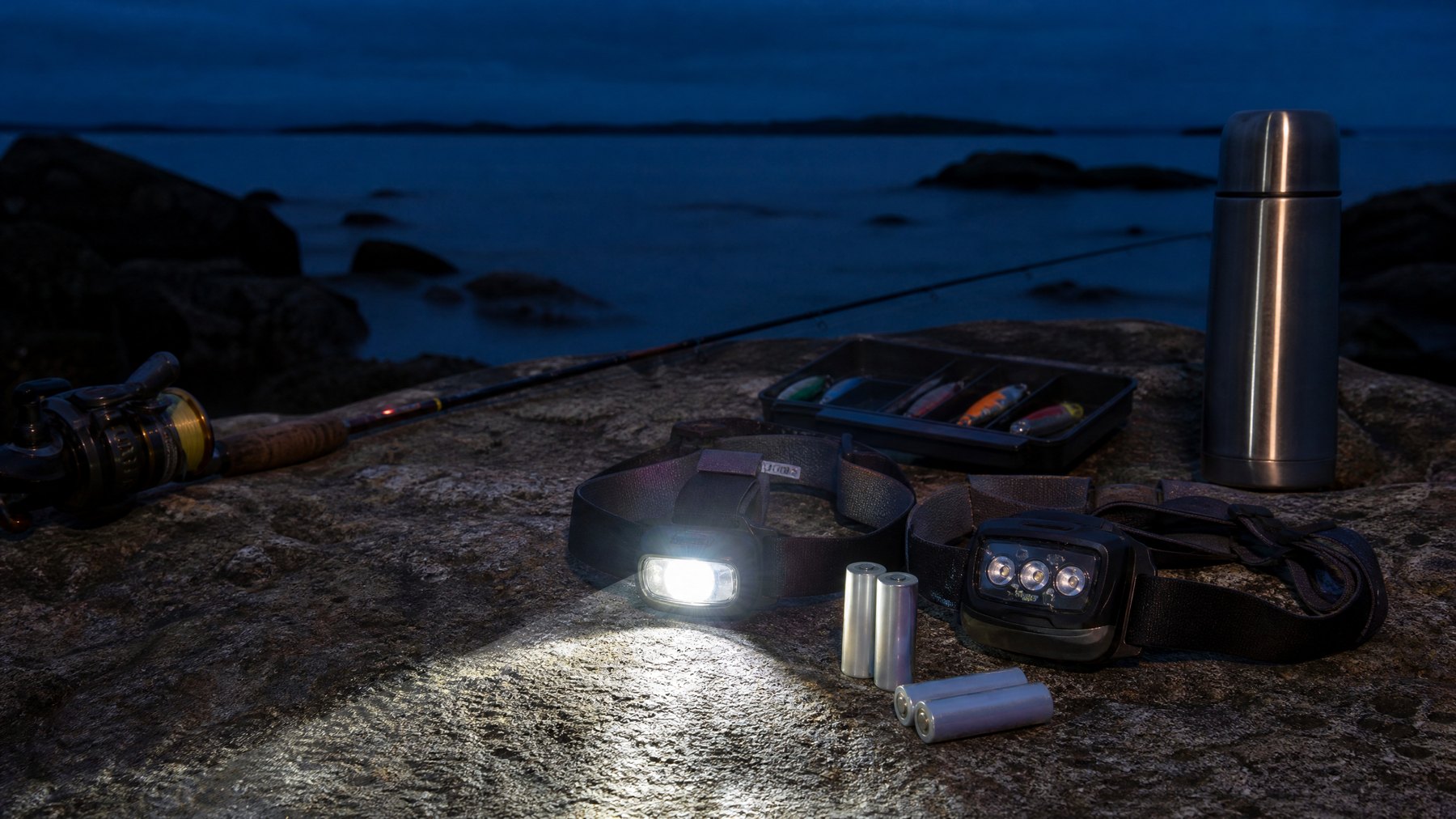
The number on the box is lumens at full blast for a few minutes; what matters on the water is usable runtime at a level you will actually fish. A cheap lamp that claims a huge figure often holds it for ninety seconds before it steps down to protect itself, then runs dim for the rest of the night. Look for a regulated lamp that holds a steady output as the battery drains rather than fading to a brown glow, check the stated runtime at a mid setting, and treat a lithium 18650 or a built-in rechargeable pack as longer-lasting and far better in the cold than AAAs — alkalines sag fast on a cold night and can leak in the housing over a season.
Two features do the real work after dark. A genuine red LED — not a white beam behind red plastic — lets you tie knots and unhook fish without wrecking your night vision or spooking fish in the shallows, and the good lamps come on in red first so you are not blinded hunting for a mode button. And take the water rating seriously: spray, rain and the odd dunk are normal, so look for at least an IPX4 splash rating, or IPX7 if you wade or fish from a kayak. A lamp that dies the first time it gets wet is no bargain, however bright it looked in the shop.
The Headlamps
Check today’s prices on Amazon →
Rechargeable dual-mode headlamp
This is the lamp most anglers should buy. A single-button switch between a genuine red LED and a dimmable white beam covers the two things you do all night: work up close on red without killing your night vision, and throw a moderate white beam when you need to see the ground or land a fish. USB-C charging keeps running costs to nothing, and a decent one holds a useful brightness for a full session. Check that red is easy to reach without cycling through full white first. See what the rechargeable red-and-white lamps are going for.
High-output spot-and-flood lamp
If your fishing means picking a path across dark rocks or reading the wash before you commit a step, you want reach as well as red. A lamp that throws a focused spot for distance and a wide flood for the ground in front covers both, so you can scan the water and then light your feet. Run it on the lower settings for tackle work and save the full beam for navigation, because that top output drains a battery fast. Check pricing on the high-output spot-and-flood lamps.
Light compact headlamp
For stealthy work in the shallows, where a big lamp is overkill and a spooked fish is the price of too much light, a small, light headlamp on mostly red is the tool. It weighs almost nothing, sits comfortably for hours, and gives just enough glow to tie a knot, check a bait and unhook a bream or flathead without lighting up the whole flat. It will not throw a beam across open water, which is the point. Compare the light, compact headlamps for stealthy work.
Dual-power USB and AAA headlamp
On a long or remote trip, a dead rechargeable lamp ends the session, so a model that runs off its own battery and takes standard AAA cells as backup is the reassuring choice. Charge it by USB for everyday trips, and carry a few AAA cells for the night you forget, or the third day away from power. It is a little heavier for the flexibility, but never being left in the dark is worth it on a remote night. Look at the dual-power USB and AAA lamps.
Rear-battery-pack lamp
Wear a headlamp for four hours and comfort beats brightness. Larger lamps put the battery in a pack at the back of the strap, which balances the weight so the whole thing does not drag on your forehead or slide when you look down to tie on. The result is a light you forget you are wearing, with the running time a bigger battery brings. It is bulkier to pack, so it suits dedicated night sessions rather than a lamp you throw in a pocket. Weigh up the rear-battery-pack lamps for long sessions.

Comparison
| Lamp type | Output | Water rating | Best for |
|---|---|---|---|
| Rechargeable dual-mode | 200 to 400 lumens | IPX4 to IPX6 | Everyday night fishing |
| High-output spot and flood | 500 lumens and up | IPX4 to IPX6 | Rock and surf navigation |
| Light compact | Low, mostly red | IPX4 | Stealthy shallow work |
| Dual-power USB and AAA | 200 to 400 lumens | IPX4 to IPX6 | Remote and multi-day trips |
| Rear-battery pack | Moderate, long runtime | IPX6 to IPX8 | Long sessions and wading |
Frequently Asked Questions
Why does a fishing headlamp need a red light?
Red preserves the night vision you build over an hour of darkness, so a glance at your rig does not blind you for the next ten minutes. It also spooks fish far less in the shallows than white light and attracts fewer insects. Up close, red is all the light you need.
How bright do I actually need it to be?
A moderate 200 to 400 lumen beam handles rigging, landing fish and finding your way, and a brief higher setting covers spotting or rough ground. You rarely need the maximum, and running it constantly wrecks your night vision and flattens the battery. Look for adjustable levels and live on the lowest that does the job.
Rechargeable or replaceable batteries?
Rechargeable is convenient and cheaper to run, but it strands you if you forget to charge it, so carry a backup. Replaceable cells let you swap in fresh ones anywhere, which is reassuring on long or remote sessions, at the cost of buying batteries. Many anglers keep one of each for exactly that reason.
What water rating do I need for rock or wading?
If you only fish a sheltered bank, IPX4 splash resistance is enough. If you rock-fish in spray or wade where a lamp can go under, step up to IPX6 or IPX8 so a wave or a dunk does not kill it. The rating is cheap insurance against the one soaking that ends a session.
The Bottom Line
A purpose-built fishing headlamp is a small purchase that transforms night sessions. Put a genuine red mode, solid water resistance and a comfortable strap ahead of raw brightness, choose a battery setup that suits how you fish, and always carry a backup. Get that right and you stop thinking about the light and start thinking about the bite.
Related: fishing gear checklist and polarised fishing sunglasses, and pair a lamp with bite alarms for hands-free night sessions.