
This page contains affiliate links. Far Cornel may earn a commission if you buy through them, at no extra cost to you.
See the top-rated gear on Amazon →
Quick answer: The size you need comes down to what you actually run and how you recharge, not the biggest number on the box. Weekend campers charging phones and lights want 300 to 500Wh; car campers and tourers running a 12V fridge overnight want 500 to 1000Wh of LiFePO4; heavy or backup loads push past 2000Wh. Add up your devices, apply the 85 per cent rule, and step up one size rather than down.
Sizing a power station is where most buyers go wrong in one of two directions. Some overspend on a heavy unit they never fill; far more buy too small and run flat halfway through the second night. The honest answer is not a bigger battery, it is matching capacity to your real load and your recharge plan. Work that out first and the right size, and the sensible price, tend to pick themselves.
The one idea that saves the most grief: watt-hours and watts are not the same thing, and you need both. Mix them up and you can buy a unit with plenty of stored energy that still trips the moment you plug in a kettle. This guide walks through capacity, output, chemistry and recharging so you can buy once.
Quick Picks
- Best for weekends: a 300 to 500Wh unit for phones, lights and a fan.
- Best all-rounder: a 500 to 1000Wh LiFePO4 station for a fridge overnight.
- Best for backup and big loads: a 2000Wh-plus unit with a strong inverter.
- Best off-grid refill: a folding solar panel matched to the input limit.
- Best way to grow later: a model that takes an add-on expansion battery.

How to Choose the Right Size
Capacity is watt-hours, the size of the fuel tank. Output is watts, how much can flow out at once. A unit might hold a big 2000Wh but if its inverter is rated at 300 watts it will trip the instant you plug in a 1000-watt kettle. So check two numbers, not one: the watt-hours you can store, and the continuous and surge watts the inverter can push. The surge figure matters for anything with a motor, like a fridge, which spikes hard for a moment at start-up.
Runtime on the box is best-case, measured with one efficient device and no losses. In real life you lose roughly ten to fifteen per cent turning stored energy into mains-style output, more on tiny loads, so plan with the 85 per cent rule: multiply the rated watt-hours by 0.85 for what you can actually use. A 1000Wh unit running a fridge that averages 30 watts gives you about 850 divided by 30, near 28 hours, before you factor in heat and cold. Chemistry matters here too: a LiFePO4 (LFP) station takes far more charge cycles than the older lithium chemistry, often several thousand against a few hundred, copes better with heat and is the safer cell, so on anything you cycle most days it is worth paying the extra for.
Then think about refilling. A station is only as good as your ability to recharge it, so if you camp off-grid for more than a night, check the maximum solar input, not just the battery size. A 1000Wh unit that only accepts 200 watts of solar needs most of a sunny day to refill; look for 400 watts or more if you plan longer stints. Brands such as EcoFlow, Jackery and Bluetti all publish these input limits, so compare them directly.
The Sizes, and What Each One Suits
Check today’s prices on Amazon →
Compact 300 to 500Wh unit
For weekend camping where the job is phones, a couple of lights, a fan and maybe a small speaker, a compact unit is the right call. It is light enough to carry in one hand, refills fast from the mains or a modest solar panel, and does not sit half-empty judging you. The limit is honest: it will not run a fridge for long or drive any heating appliance, so do not buy this size if a 12V fridge is in your plans. As a grab-and-go for short trips, though, it is the one you will actually pack. Compare compact power station on Amazon
Mid-size 500 to 1000Wh LiFePO4 station
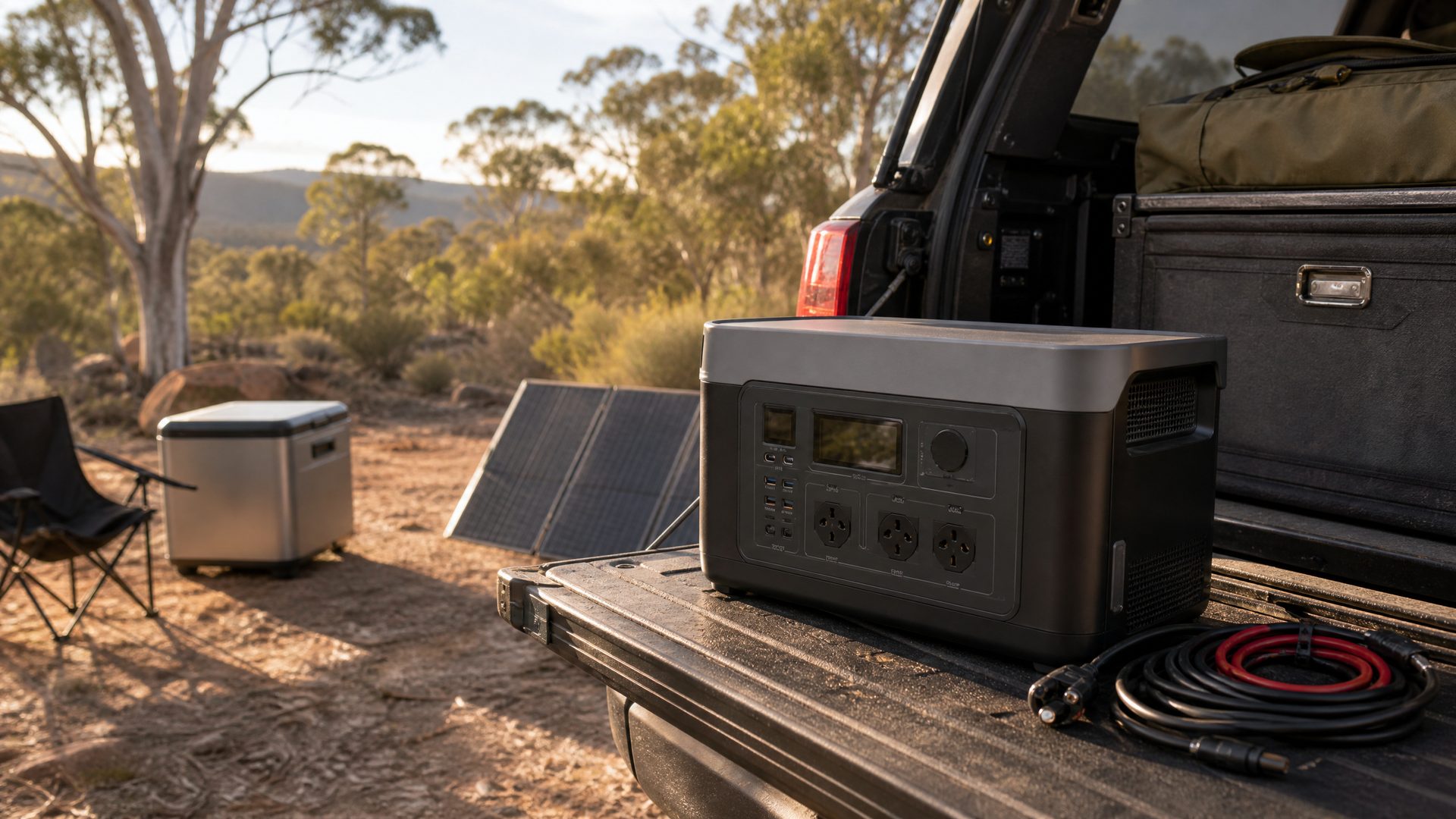
This is the sweet spot for car camping and touring, and the size most people should buy. It runs a portable fridge overnight, charges laptops and keeps camp lights going, while staying light enough for one person to lift in and out of a vehicle. Insist on LiFePO4 chemistry at this size: it survives several thousand charge cycles and shrugs off heat far better than the older lightweight cells. Pair it with a 12V regulated output for the fridge and you have a setup that covers the vast majority of trips without the weight of a backup-grade unit. Check the latest LiFePO4 power station on Amazon
High-capacity 2000Wh-plus unit
Once you need to run higher-draw appliances, keep a fridge going for days, or hold a medical device and lights through a blackout, you are into 2000Wh and beyond. The trade-off is weight and price: these are two-handed lifts and cost accordingly. What you are paying for is a strong AC inverter that copes with real appliances and the headroom to run several things at once. Do not buy this size just to feel safe; buy it because you genuinely have loads a mid-size unit cannot sustain. Browse high-capacity power station on Amazon
A folding solar panel
If you stay out longer than a night or two, a folding solar panel turns the station from a battery into a small power system. The number that matters is not the panel’s headline watts but whether it suits your unit’s input window and connector, so match them before you buy. A panel around 200 watts tops up a mid-size unit over a good part of a sunny day; go larger if your station accepts more and your trips are long. Look for a built-in MPPT controller on the station, which squeezes more from the panel in patchy light. Shop folding solar panel on Amazon
An add-on expansion battery
If you are torn between two sizes, a station that accepts an expansion battery lets you start sensible and grow later. You buy the main unit now, then bolt on extra capacity when your trips get longer or your load grows, without replacing the whole thing or juggling two separate boxes. It is the cheapest way to future-proof a purchase. The catch is that expansion packs are brand-specific and not cheap, so only pay a premium for the feature if you can see yourself using it within a year or two. See expansion battery options on Amazon

Comparison
| Class | Capacity | Comfortably runs | Best for |
|---|---|---|---|
| Compact | 300-500Wh | Phones, lights, a fan | Weekends, easy carrying |
| Mid-size LiFePO4 | 500-1000Wh | Fridge overnight, laptops | Car camping and touring |
| High-capacity | 2000Wh+ | Appliances, days of fridge | Backup and heavy loads |
| Folding solar | Refill only | Daytime top-ups | Longer off-grid stints |
| Expansion battery | Adds capacity | More of the same | Growing needs over time |
Frequently Asked Questions
What size do I need for a 12V fridge overnight?
A mid-size 500 to 1000Wh LiFePO4 unit is the safe pick. A fridge averaging around 30 to 45 watts draws roughly 250 to 500Wh over a night once you allow for warm weather and the compressor cycling. A 1000Wh unit gives you a comfortable margin plus charging for phones and lights, and enough spare to ride out a cloudy day before you refill.
Can it run a CPAP machine?
Yes, and the humidifier and heated hose are what drain it. With those off, many machines sip only a handful of watts and will run several nights on a mid-size unit; with them on, draw can jump to 50 to 100 watts and cut runtime sharply. Running the machine from the DC output where possible avoids inverter losses and stretches it further.
Is the lighter chemistry worth it to save weight?
Rarely, for vehicle-based use. The older nickel-based cells pack more energy into less weight, but they last fewer cycles and cope worse with heat. LiFePO4 is heavier and bulkier, yet for a unit that mostly lives in a vehicle that hardly matters, and it survives far longer. Unless every gram counts, LiFePO4 is the better long-term buy.
Can I leave it charging in a hot vehicle?
Not ideally. Sustained heat shortens battery life and can trip the unit’s protection, and extreme cold saps capacity too. Store and charge it in the shade or the cabin rather than a sealed load area baking in the sun, and keep the vents clear. Treat it gently on temperature and it will hold its capacity for years.
The Bottom Line
The right size comes down to your devices and your trips, not a headline number. Weekend campers are well served by a compact 300 to 500Wh unit; car campers and tourers running a fridge want 500 to 1000Wh of LiFePO4; backup and higher-draw use pushes past 2000Wh with a strong inverter. Whatever the case, list your devices, apply the 85 per cent rule, check the solar input if you go off-grid, and step up one size rather than down. A unit with a little headroom beats one you are nursing flat every night.
These guides carry on from here: see the portable fridge versus cooler comparison, the beginner 4×4 recovery gear checklist, and the camping sleep system guide.