
This page contains affiliate links. Far Cornel may earn a commission if you buy through them, at no extra cost to you.
See the top-rated family tents on Amazon →
Quick answer: For a family of four, buy a six-person tent, not a four — the two-berth buffer is what turns a coffin-tight rating into real room for four people plus their gear. A vertical-wall cabin adds standing room and separate bedrooms; an instant-up frame trades bulk for a one-minute pitch; canvas earns its weight on long stays in rough weather; an air-pole tent swaps poles for a pump.
The tent stops being a place you sleep the moment the rain sets in at two in the afternoon. Suddenly four people are inside it for six hours — someone wants to read, someone is mid card-castle, someone needs to get changed — and the walls feel a lot closer than they did in the shop. A good family tent is the one that makes that afternoon bearable, and it is almost never the one with the biggest number on the box.
That number — “sleeps six”, “eight-person” — is measured with bodies packed shoulder to shoulder on bare mats and not one bag of clothes on the floor. Real families need somewhere to stash gear, a dry patch to stand and dress, and enough separation that a toddler’s early bedtime does not end everyone’s night. The type of tent decides how it lives when the weather turns, so match it to how you actually camp rather than to the headline capacity.
Quick Picks
- Best overall: a six-person dome for a family of four with gear.
- Best living space: a vertical-wall cabin tent with a room divider.
- Best fast setup: an instant-up frame tent that pitches in a minute or two.
- Best in rough weather: a canvas touring tent that seasons and holds up.
- Best no-pole option: an inflatable air-pole tent you pump up.

How to Choose a Family Tent
Start with capacity, and be honest about it. Ratings assume adult-width mats touching edge to edge with nothing else inside, so the working rule is to add two to your headcount: a family of four wants a six-berth, a family of five or six wants an eight. That one decision fixes more misery than any feature — it is the difference between gear living in the car and gear living underfoot.
Then read the floor plan, not just the floor area. Two tents can quote the same square metres and live completely differently: a long tunnel gives you zones (sleep one end, sit the other), while a square cabin is one big room that is easier to supervise small kids in but harder to darken for an early bedtime. Check where the standing height actually is, too — many tents are only full-height along a narrow ridge, so read the peak height and the shape together.
Finally, weatherproofing and pitch. A fly around 3,000mm with a sewn-in bathtub floor and taped seams is what keeps a wet weekend dry; most leaks are pooling water and tired seams, not the fabric giving up. And be realistic about who pitches it: a big cabin or canvas tent is a genuine two-person job, so if you routinely set up alone with kids underfoot, make solo pitching — colour-coded poles, an instant frame, or air beams — something you shop for, not an afterthought.
The Family Tents
Check today’s family tent prices on Amazon →
The six-person dome
The dome is the sensible family default: a six-berth sleeps four with room for gear, pitches in a few minutes with one or two people, packs down small, and costs little enough that a pole through the fly is not a tragedy. It gives up outright living space and standing room to the bigger styles, and a tall dome can feel the wind. Buy one if you move campsites often and want the least fuss across the most trips. Run your eye over the six-person dome tent range on Amazon.
The vertical-wall cabin tent
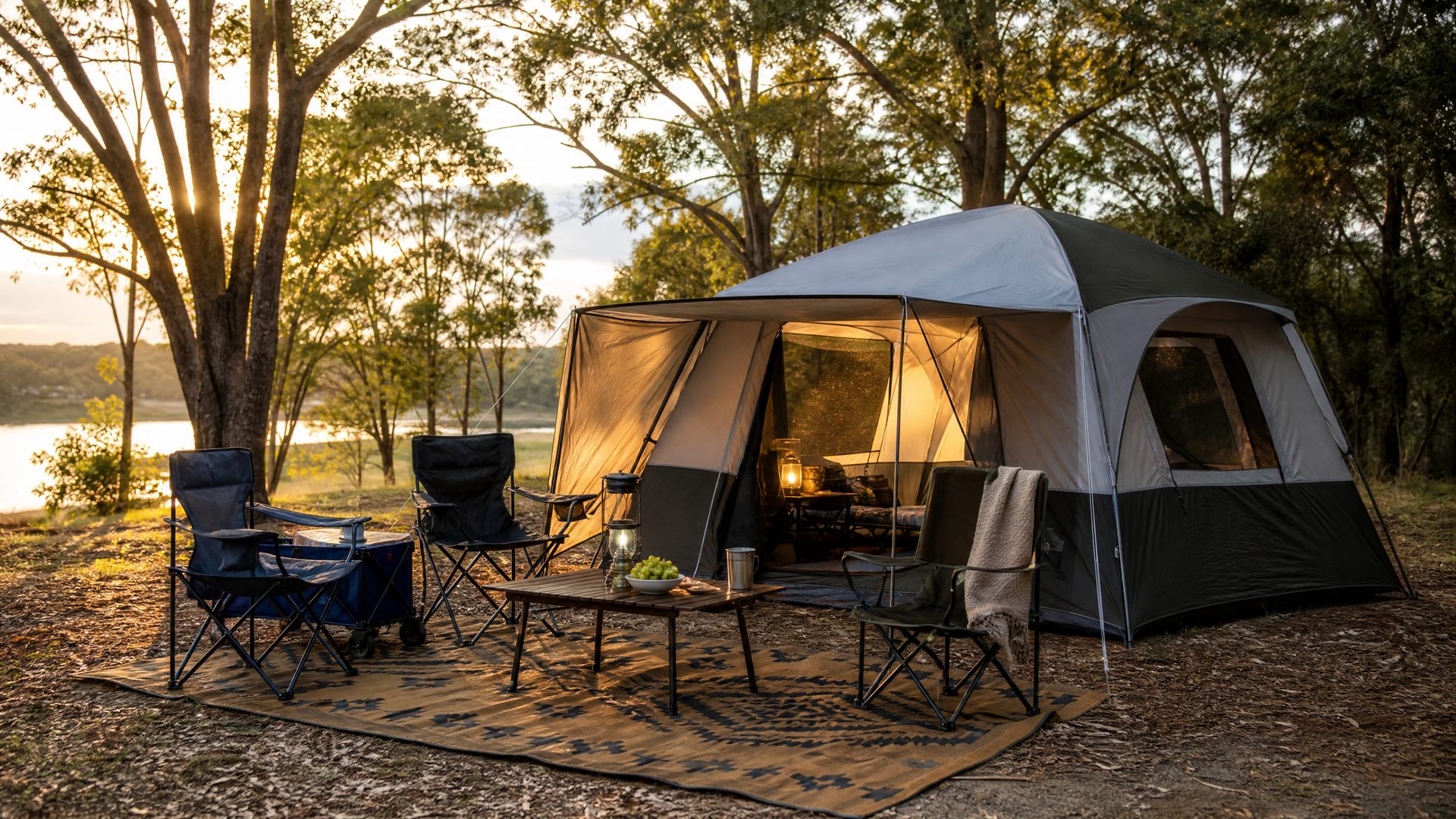
Near-vertical walls turn floor area into usable living space: you stand up to dress, fit a stretcher and a bag beside each bed, and a room divider gives the kids a bedroom and the adults theirs. That volume is the trade-off too — cabins catch wind, weigh and pack big, and take two people and a few more minutes to pitch. It is the pick for one long basecamp stay rather than a moving trip. Look over the current vertical-wall cabin tent options on Amazon.
The instant-up frame tent
Pre-attached poles mean the whole shell springs up in a minute or two, often solo — worth a lot when you roll in late with tired kids and fading light. The compromises are bulk and weight (the folded frame is heavy and long) and a slightly higher price for the mechanism. Buy one if fast, one-person setup is the feature you will use every single trip. See current instant-up frame tent prices on Amazon.
The canvas touring tent
Canvas is heavy, bulky and wants seasoning before its first real downpour — none of which matters once you have slept through a wild night in one. Poly-cotton and canvas breathe better, hold temperature and shrug off sustained weather that flattens thin polyester. It suits people who set one basecamp or camp in genuinely rough conditions; just respect the weight, which belongs on a roof rack or trailer, not a one-night dash. Shop canvas touring tent choices on Amazon.
The inflatable air-pole tent
Air-pole tents swap rigid poles for beams you inflate with a pump, so there is nothing to thread and the whole thing goes up fast and solo. You pay more, you carry a pump, and a punctured beam wants a repair kit rather than a spare pole — though a good one holds air for a whole trip and flexes instead of snapping in a gust. Buy one if pole-threading is the part of camping you quietly dread. Check the latest inflatable air-pole tent range on Amazon.
Comparison
| Tent style | Setup | Weather handling | Real fit for a family of four | Packed bulk |
|---|---|---|---|---|
| Six-person dome | Quick, one to two people | Good in wind, fair in long rain | Four plus gear, comfortably — the honest sweet spot | Compact |
| Vertical-wall cabin | Slower, two people | Great space, weaker in wind | Four with a room divider and space to stand | Large |
| Instant-up frame | Fastest, solo | Good all-round | Size to a six-berth; a four-berth frame is tight for four | Bulky and heavy |
| Canvas touring | Slow, two people | Best in sustained weather | Four in comfort; roomier per berth than polyester | Heavy |
| Inflatable air-pole | Fast, solo with pump | Good, flexes in wind | Four with room to move in a five to six-berth | Moderate |

Frequently Asked Questions
What size tent does a family of four actually need?
A six-person tent is the honest match for four. Capacity ratings assume shoulder-to-shoulder sleeping with no gear, so sizing up two berths gives you room for bags, a dry corner to dress, and space that does not feel like a tin of sardines when it rains. A genuine four-berth only works for four if two of them are small children.
Polyester or canvas for a family tent?
Polyester is lighter, cheaper and pitches faster, which suits most moving trips and fair-weather camping. Canvas and poly-cotton are heavier and need seasoning, but they breathe better, hold temperature and last through weather that flattens thin tents. Choose polyester for convenience, canvas for long stays in tough conditions.
How hard is a big family tent to pitch on your own?
A large cabin or canvas tent is genuinely a two-person job, while a dome with colour-coded poles, an instant-up frame or an air-pole tent can be managed solo. If you often set up alone or with kids underfoot, make one-person pitching a priority and practise once at home first.
What waterhead rating stops a tent leaking?
Look for a fly rated around 2,000 to 3,000mm or higher and a sewn-in bathtub floor with taped seams. Most leaks come from pooling water and un-sealed seams, so pitch the fly taut, peg it out properly, and re-tape seams as the tent ages.
The Bottom Line
The right family tent comes down to how you camp, not how many it claims to sleep. For a family of four, a six-person dome is the pick that goes wrong least — roomy enough, quick to pitch, cheap to replace. Move to a cabin when you want standing room and separate bedrooms at one basecamp, an instant-up or air-pole tent when a painless solo pitch matters most, and canvas when you camp long and hard enough to justify the weight. Size up, seal it well, and buy for the wet afternoon, not the sunny photo.
Once the tent is sorted, get the rest of the sleep system right: browse the best camping tents for other styles, the best sleeping bags for camping, and the best self-inflating sleeping mats to keep everyone warm off the ground.