
This page contains affiliate links. Far Cornel may earn a commission if you buy through them, at no extra cost to you.
See the top-rated braid on Amazon →
Quick answer: Spool a quality 4-carrier braid in the 8 to 20 lb band and you have covered ninety per cent of spin and baitcast fishing — thin, sensitive and tough enough for bream through to snapper. Pay up for a round 8-carrier braid only if you chase casting distance or fish light lures, run a hi-vis colour if you strike on sight, and step to 30 lb-plus for reef and heavy timber. The one time to leave braid on the shelf is when you want stretch or near-invisibility with no leader — there, mono or fluorocarbon still wins.
Two spools on the shelf both say 20 lb. One is barely thicker than a hair; the other is closer to garden twine — and they will not cast, cut the water, or break anywhere near the same. That gap is the first thing to understand about braid: the number printed on the label is marketing, and the diameter is the truth. Get past it and you are most of the way to buying well.
Braid earns its place because it barely stretches, so you feel a fish breathe on the bait, and because it packs serious strength into a thin diameter, so you cram more line on the spool and cast it further. The cost of admission is that braid is opaque in the water, digs into itself if you fish it slack, and always wants a leader tied on the end. Sort those three things and nothing else does the job as well.
Quick Picks
- Best overall: a smooth 4-carrier braid in the 8 to 20 lb range — the everyday all-rounder.
- Best value: a dependable budget braid for filling spare spools without the premium.
- Best for casting: a round, slick 8-carrier braid for distance and light lures.
- Best for bite detection: a hi-vis coloured braid you can watch for the smallest tick.
- Best for structure: a heavy 30 lb-plus braid to turn fish out of cover.

How to Choose Braided Line
Ignore the pound rating and read the diameter. Braid’s breaking strain is a loose, optimistic figure that swings wildly between brands, so the honest way to compare two spools is the millimetre diameter, or better still the PE number — a diameter-based sizing scale (PE 0.8, 1.0, 1.5 and up) that measures how thick the line actually is rather than a marketing claim. A PE 1.0 from one maker sits very close to a PE 1.0 from another, where “20 lb” tells you almost nothing. Match the diameter to your reel’s line rating and your target species, and the strength looks after itself.
Then choose your carrier count with your eyes open, because more strands is not an upgrade — it is a different tool. A 4-carrier braid weaves four fibres into a slightly flatter, grippier line that resists abrasion and behaves itself on the spool; it is the sensible pick for general fishing, heavier work and anyone still learning. An 8-carrier braid is rounder and smoother, so it casts a touch further and runs more quietly through the guides, but it is no tougher against rock, costs more, and its slick roundness can bury itself under load and knot up if you let the line go slack. Buy 8-carrier for casting distance and finesse, not because the bigger number sounds better.
The part most guides skip is that the leader and the knot decide whether braid works, not the brand on the spool. Because braid is opaque and has zero give, you tie a length of mono or fluorocarbon leader to the end — mono for stretch and topwater, fluoro for abrasion resistance and clarity down deep — and the connection between the two is the single biggest point of failure in the whole setup. Learn an FG knot for a slim, strong join, or a double-uni if you want something easier, and practise it until it is boring. Two more habits save real money: never load braid onto a bare spool because it slips, so add mono backing or run a braid top-shot over cheap mono to fill the reel; keep light tension on the retrieve so the line never beds down loose; and when the working end frays after a season, strip it off and flip the line end-for-end to double its life.
The Braided Lines
Check today’s braid prices on Amazon →
The all-round 4-carrier braid
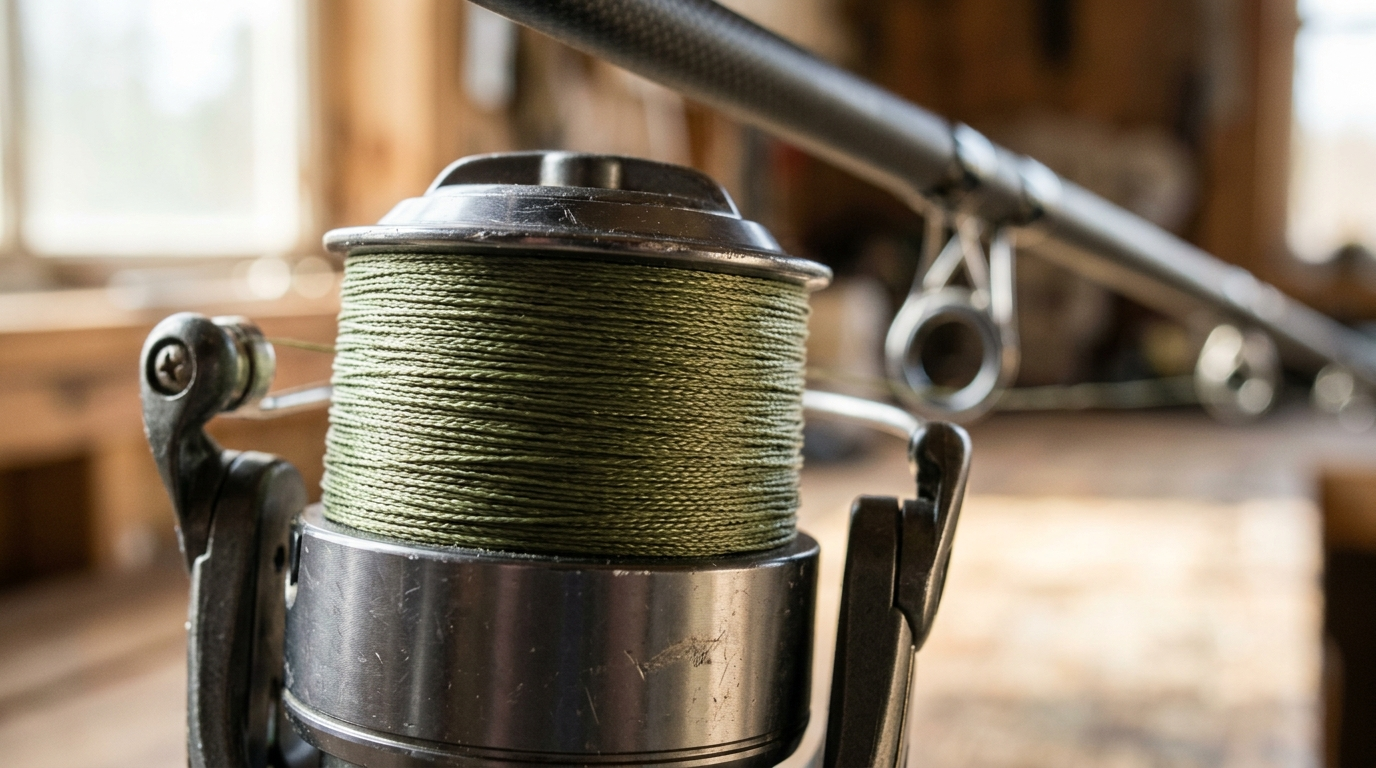
The line to spool first and second-guess never. A quality 4-carrier braid in the 8 to 20 lb range — Daiwa J-Braid x4 and Power Pro are the obvious workhorses — is tough, casts cleanly and handles bream, flathead, snapper and most of what swims between. It grips the spool better than a slick 8-carrier, forgives a little slack line, and shrugs off the odd scrape on structure. If you own one braid, own this. See what the everyday 4-carrier braids are going for on Amazon
The budget braid
If you are filling three reels before a trip or trying braid for the first time, a cheaper everyday braid gives you most of the sensitivity and thin-diameter strength for a fraction of the outlay. The tells are a slightly less consistent diameter and colour that fades faster, not some fatal flaw — for the money it is a lot of line. Just do not expect the tight, round, whisper-quiet finish of a premium 8-carrier at this price. Weigh up the wallet-friendly braids on Amazon
The 8-carrier casting braid
When the extra ten metres of cast genuinely matters — flicking light plastics, chasing spooky surface fish — a round 8-carrier such as Sufix 832 or Daiwa J-Braid x8 is the upgrade you feel on the first cast. It leaves the guides with less noise and less friction, which buys distance and a little finesse. Remember what you are paying for, though: smoothness and casting, not toughness, because it is no better than a 4-carrier against abrasion. Compare the slick 8-carrier casting lines on Amazon
The high-visibility braid
Fish soft plastics or a slow-sinking bait and half your bites show up as a tick in the line, not a knock in the rod. A bright yellow or fluoro-green braid lets you see that twitch and strike on sight, and it costs no more than a drab spool. Pair it with a clear leader so the fish only ever meets invisible line, and accept that the colour will wash out over a season of sun. Look over the hi-vis braids on Amazon
The heavy braid for structure
Around rock, timber, reef and pontoon piles you are not playing fish, you are stopping them, and that calls for 30 lb and up so you can lock the drag and lift before they bury you. It is overkill on open-water light tackle, where it kills casting distance for nothing, but it is exactly right when a fish only has to reach cover once to win. Balance it with a heavier leader and a rod that has the backbone to use it. Check the heavy structure braids on Amazon
Comparison
| Type | Best for | Feel on the spool | Watch-out |
|---|---|---|---|
| All-round 4-carrier | Everyday spin and baitcast | Slightly flat, grippy | A hair less casting distance |
| Budget braid | Filling spare reels | Varies batch to batch | Fades and frays sooner |
| 8-carrier casting | Distance and light lures | Round, slick, quiet | Digs in if fished slack |
| Hi-vis colour | Striking on sight | As its carrier count | Colour washes out |
| Heavy 30 lb-plus | Reef and heavy cover | Thick, stiff | Kills casting on light gear |

Frequently Asked Questions
Is braid actually better than monofilament?
For different jobs. Braid gives you no stretch, a thin diameter and real sensitivity, which is what lure fishing and bite detection want. Mono is cheaper, stretches to cushion a lunging fish and is less visible, which suits bait soaking and anyone new to casting. Most people end up running braid as a main line with a mono or fluoro leader and getting the best of both.
What size should I start with, and why do the numbers disagree?
A braid around PE 1.0 to 1.5, roughly 10 to 20 lb, covers most light-to-medium spin and baitcast fishing. Because the pound rating is inconsistent between brands, compare the diameter in millimetres or the PE number instead; two spools both marked 15 lb can be a full size apart.
Do I really need backing under braid?
Usually, yes. Braid is slick enough to spin on a bare spool no matter how tight your knot, so lay down a few wraps of mono backing or a strip of tape first. A cheap mono base with a shorter braid top-shot over it also fills a deep spool without paying for 300 metres of braid you will never cast to.
Which knot joins braid to a leader?
The FG knot is the gold standard — slim enough to pass through the guides and stronger than the line itself when tied well — but it takes practice. A double-uni or slim-beauty is easier to learn and plenty strong for most fishing. Whatever you pick, wet it and seat it slowly; a rushed braid knot is where the big one gets away.
Can I just fish braid straight to the hook?
You can, but you usually should not. Braid’s visibility spooks wary fish in clear water, and its zero stretch pulls small hooks and pops light tippets on a headshake. A metre or two of leader fixes both, and it is the cheapest upgrade in the tackle box.
The Bottom Line
Start with a quality 4-carrier braid in the 8 to 20 lb band and you will out-fish most of the tackle shop: it is sensitive, strong and forgiving enough for nearly everything. Move to a round 8-carrier when casting distance is the point, add a hi-vis spool if you fish by sight, and keep some 30 lb-plus for the reef and the snags. Then spend your real effort where it counts — comparing diameter instead of the printed pound rating, and tying a leader knot you can trust — because that, far more than the brand on the spool, is what puts fish on the bank.
It pairs naturally with the right line type for the job, a well-matched leader material, and a tidy line spooling setup to load it without twist.