
This page contains affiliate links. Far Cornel may earn a commission if you buy through them, at no extra cost to you.
See the top-rated gear on Amazon →
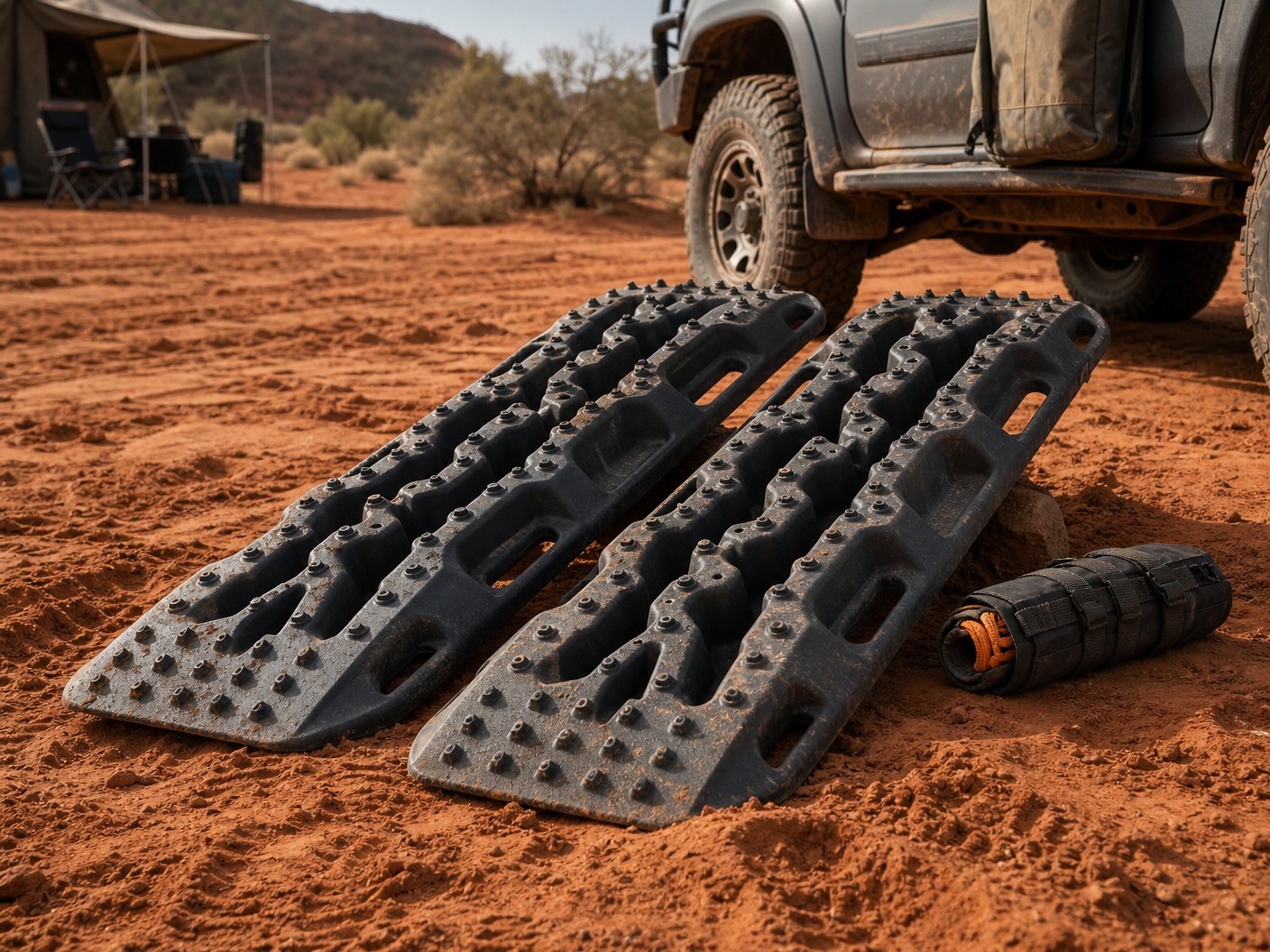
Quick answer: You do not have to pay premium prices for boards that work. For most people a mid-range pair in reinforced nylon — sharp lugs, a board that flexes a little rather than cracking — rivals the famous names for far less. Budget boards suit occasional, lighter recoveries, nesting boards save space, and long heavy-duty boards are the pick if you seriously bog in deep sand or mud.
A recovery board is one of the few pieces of kit that can turn a bogged, spinning vehicle into a self-rescue in minutes, with no second vehicle and no winch. Maxtrax set the standard, but you do not have to pay top dollar for a board that grips and holds. Plenty of cheaper alternatives do the job well; the trick is knowing which corners a low price cuts, and which of those actually matter to you.
A board lives a hard life: baked in the sun, loaded with two tonnes of vehicle, and ground against spinning rubber. A few qualities decide whether it lasts years or snaps on its first serious bog, and none of them is the colour. Brands like TRED and Bushranger sit between the budget boards and the premium names. Here are the five types and how to choose.
Quick Picks
- Best overall value: a mid-range pair in reinforced nylon with deep, sharp lugs.
- Best budget: a cheaper pair for occasional, lighter recoveries.
- Best for storage: compact nesting boards that stack flat.
- Best for deep bogs: long heavy-duty boards for sand and mud.
- Best features: boards with a built-in shovel edge, leashes and a mounting kit.

How to Choose Recovery Boards
Two things separate a board that works from one that fails: the plastic and the lugs. The board carries the full weight of a wheel, so material matters — look for tough, slightly flexible reinforced nylon, which spreads the load, rather than brittle recycled polypropylene that can crack in the cold or shatter under a heavy vehicle. Grip then comes from the lugs, the moulded teeth: sharp, well-spaced lugs bite into the tyre and the ground at once, while shallow or widely spaced ones let the wheel skate. Here is the myth to bust: a cheap board is not automatically useless, and an expensive one is not automatically good. Judge by the material and the tread pattern, not the price or the colour, and the best alternatives rival the premium names for far less.
Beyond that, a few details separate a usable board from a false economy: a tapered end so the tyre climbs on easily, nesting shapes that stack flat to save space, and moulded handles or a leash so you can dig them out and carry them muddy. Bright, floating boards are easier to find if one pops loose into murky water. The best day-one habit is in how you use them, not just what you buy: clear the sand or mud from in front of each driven wheel, wedge the tapered end firmly under the tyre, fit the leashes so you can find the boards afterwards, and drive on gently — wheelspin is what wrecks boards, so ease the power on.
Have a quick look at the current and most recent options on Amazon for the recovery boards.
The Recovery Boards
Check today’s prices on Amazon →
Mid-range reinforced-nylon boards
For most people this is the sweet spot. A mid-range pair in reinforced nylon, from the likes of TRED or Bushranger, gives you deep, sharp lugs and a board that flexes under load rather than cracking, at a fraction of the premium price. For airing-down sand runs and the occasional serious bog it does everything the famous names do. Look for a genuine reinforced-nylon board and an aggressive tread, and you are unlikely to feel short-changed. Have a quick look at the current and most recent options on Amazon for the mid-range recovery boards.
Budget recovery boards
The cheapest boards can still get you out, as long as you set expectations. A budget pair suits occasional, lighter recoveries on sand or a muddy track, and the best of them punch above their price. The worst use brittle plastic and shallow lugs that flex, glaze or crack when you really lean on them, so check the material and tread before you buy. Fine as a light user’s first pair, not for constant hard bogging. Have a quick look at the current and most recent options on Amazon for the budget recovery boards.
Compact nesting boards
If storage space is tight, compact nesting boards are the answer. Shaped to stack flat into each other, a pair — or two pairs — takes up far less room on a roof rack or in a canopy than boards that will not nest. You give up a little length compared with the longest boards, but for most recoveries the traction is plenty and the packed size is the win. A good pick for smaller rigs or a crowded load. Have a quick look at the current and most recent options on Amazon for the nesting recovery boards.
Long heavy-duty boards
When you seriously bog — deep, soft sand or axle-deep mud, or a heavy laden rig — longer heavy-duty boards earn their keep. The extra length puts more surface under the tyre for traction, and the tougher construction shrugs off the loads that crack lighter boards. They are bulkier and heavier to store and handle, so they suit big 4WDs and genuinely tough conditions rather than a light beach run. If you regularly get properly stuck, buy long and strong. Have a quick look at the current and most recent options on Amazon for the heavy-duty recovery boards.
Boards with a shovel edge and mounting kit
Some boards bundle in the details that make a recovery less miserable: a shovel edge moulded into the board for clearing around a wheel, brightly coloured leashes so you can find them after, and a mounting kit or carry bag to keep them secure and the mud out of the cabin. None of it changes the core job, but the leash alone saves the classic mistake of driving off and leaving a board buried in the bog. Worth it if you want the full kit. Have a quick look at the current and most recent options on Amazon for the recovery boards with a mounting kit.
Comparison
| Type | Material | Best for | Watch-out |
|---|---|---|---|
| Mid-range nylon | Reinforced nylon | Most tourers | Costs more than budget |
| Budget | Basic plastics | Occasional light use | Can flex or crack |
| Compact nesting | Reinforced nylon | Tight storage | A little shorter |
| Long heavy-duty | Tough reinforced nylon | Deep bogs, big rigs | Bulky and heavy |
| With shovel and mounting kit | Reinforced nylon | Full kit | Pay for the extras |
Frequently Asked Questions
Are cheaper recovery boards any good?
The best budget boards work well for occasional, lighter recoveries, provided they use sharp lugs and a tough, slightly flexible board. The best rival the premium names; the worst flex, glaze or snap, so judge by the material and tread rather than price alone.
What should I look for in a board?
Sharp, well-shaped lugs for grip, a stiff but not brittle board that spreads the load, a tapered end the tyre can climb, and handles or a leash for carrying and retrieval. Nesting shapes and bright, floating plastic are useful extras that make them easier to store and find.
How do I use them without wrecking them?
Ease onto the boards without wheelspin, because spinning tyres melt the lugs in seconds and can fling a board out behind you. Clear the ground first, wedge the board firmly under the tyre, use gentle steady throttle, and stop once the vehicle is on firm ground.
How many boards do I need?
A pair covers most single-vehicle recoveries, placed under the driven wheels. Carry two pairs if you bog all four, travel solo in tough country, or want boards under both axles. Whatever you carry, mount them where you can reach them fast, because a board buried under gear is no use when you are stuck.
The Bottom Line
Premium boards like Maxtrax earn their name, but you do not have to pay their price to get out of a bog. For most people a mid-range reinforced-nylon pair with sharp lugs does the same job for far less; step up to long heavy-duty boards if you seriously bog, or nesting boards if space is tight. Judge boards by material and tread rather than price, fit the leashes, and ease on without wheelspin.
For the rest of your recovery kit, see our guides to traction boards and the recovery gear checklist.