
This page contains affiliate links. Far Cornel may earn a commission if you buy through them, at no extra cost to you.
See the top-rated fish finders on Amazon →
Quick answer: A mid-size CHIRP fish finder with a bright 7-inch screen and built-in GPS is the sweet spot on a typical boat, and the Humminbird Helix 7 nails that balance. Fishing on a tight budget? The Garmin Striker 4 covers the essentials. Off a bank or a kayak, a castable Garmin Striker Cast GPS or a compact Lowrance Hook Reveal 7 fits. Chasing structure on a big rig, the Humminbird Helix 12 gives you screen and imaging to spare. Match the transducer and screen to your water, not the price tag.
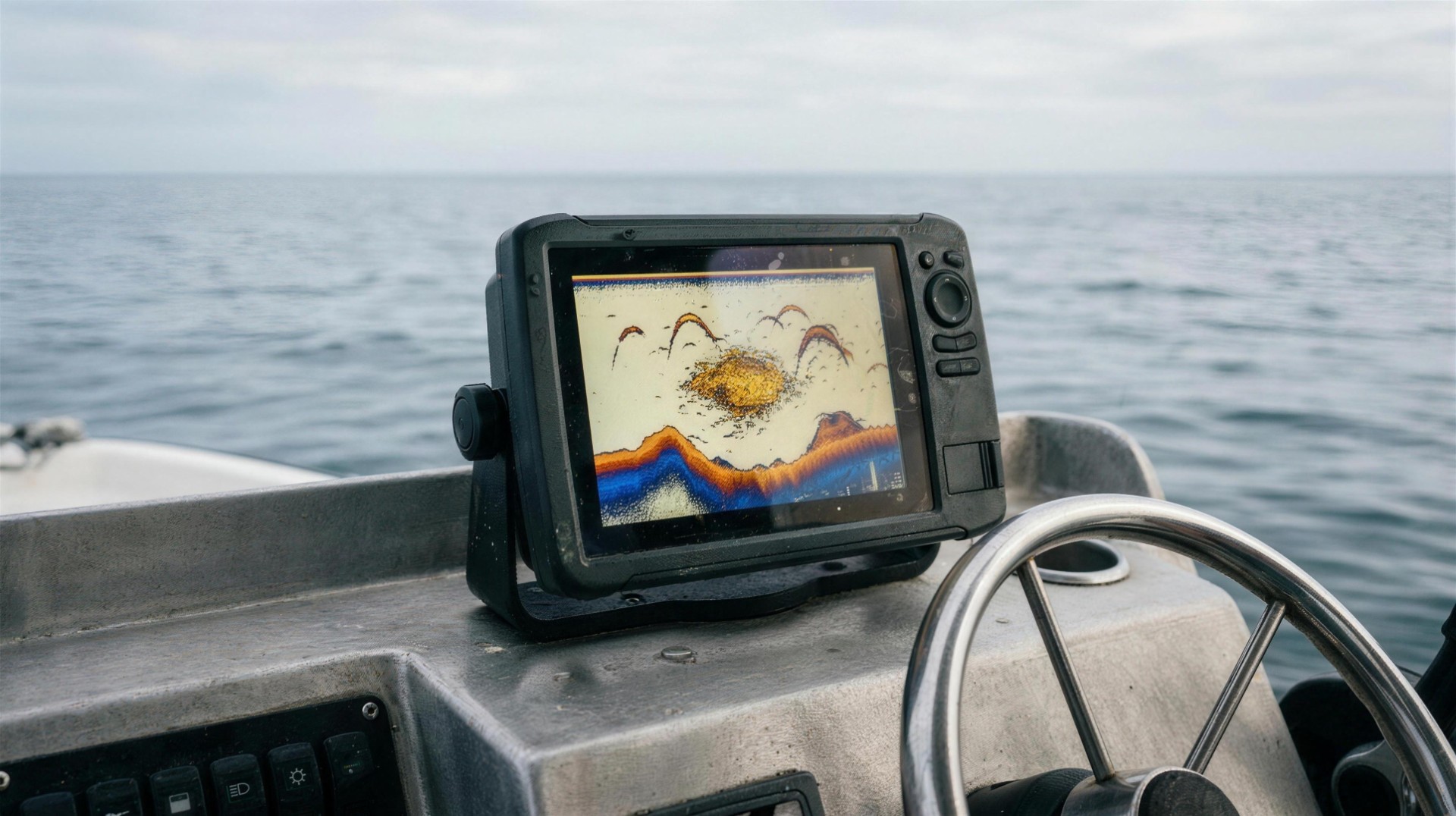
Everyone buys a fish finder to see fish, then spends the first season squinting at the screen wondering why nothing looks like the arches in the brochure. Here is what the box will not tell you: a clean, textbook arch only forms when a fish swims straight through the narrow middle of the sonar cone. Most of the time fish show as dots, dashes or fat commas — and the tidy arches you do get are the least useful thing on the screen.
What actually puts fish in the boat is reading the rest of it: hard and soft bottom, bait, the thermocline, and the structure that holds fish. A good finder makes those obvious; a cheap one mounted badly turns them to mush. So the two things most buyers overlook — the transducer and how you read the display — matter more than the brand on the bezel. Here are five finders worth the money, and how to choose the sonar, screen and GPS that suit your water.
Quick Picks
- Best overall: Humminbird Helix 7 — a bright 7-inch screen, CHIRP, down-imaging and GPS at a sane price.
- Best budget: Garmin Striker 4 — real CHIRP sonar and waypoints for the price of a few lures.
- Best castable: Garmin Striker Cast GPS — cast it on your line and read the bottom on your phone.
- Best for kayaks: Lowrance Hook Reveal 7 — capable, easy to read and easy on a small battery.
- Best premium: Humminbird Helix 12 — a big, crisp screen and near-photographic imaging.

How to Choose a Fish Finder
Start with the transducer, because it does the actual work. Traditional 2D sonar — and CHIRP, which is just a smarter, cleaner version of it — is still the best at showing fish as marks in open water. Down-imaging draws photo-like detail of what sits directly below; side-imaging scans wide swaths to either side, which is gold in the shallows and close to pointless if you fish deep and vertical. Frequency is the trade-off: a higher frequency (around 200 kHz and up) gives fine detail in shallow water, a lower one (around 50–83 kHz) sees deeper over a wider cone. Most anglers do fine with CHIRP 2D plus down-imaging, and add side-imaging only if they scan flats and edges.
Then the screen, where inches can lie. Resolution and brightness decide whether you can read the thing at midday — a bright, high-pixel 5-inch beats a dim, low-resolution 9-inch every time. If you fish in glare, look for a display that states a high brightness figure, and remember a bigger screen only earns its space if you run split views, sonar beside a map.
GPS is the quiet hero. Even a basic unit lets you drop a waypoint on a reef, a drop-off or a bait school and motor straight back to it next week, and for a lot of anglers that mapping is worth more than fancy sonar. Last, the mistake that ruins good gear: mount the transducer where it rides in clean, undisturbed water below the hull. Put it behind a strake or a row of rivets and the turbulence turns the screen to static the moment you lift off idle.
The Best Fish Finders
Check current fish finder prices on Amazon →
Humminbird Helix 7 — best overall
If you want one finder to stop thinking about, this is it. A bright 7-inch screen, CHIRP 2D plus down-imaging, and built-in GPS mapping cover almost every way people fish from a boat, at a price that is not silly. It is not the flashiest — there is no wide side-imaging at this size — but the picture is clean, the menus make sense, and the GPS is genuinely useful for saving spots. Skip it only if you need a big split-screen or wide side-scan. See what the Helix 7 is selling for right now.
Garmin Striker 4 — best budget
Proof you do not need to spend big to fish smarter. The little Striker 4 runs proper CHIRP sonar and a basic GPS with waypoints — enough to read depth, mark a spot and see bait — for the price of a couple of hard-bodies. The screen is small and there is no chart mapping, so it suits a tinny, a first boat or a spare unit rather than a serious rig. As a way to learn what sonar is actually telling you, nothing else comes close on value. Check the current Striker 4 price.
Garmin Striker Cast GPS — best castable
The finder for anyone without a boat. You cast this sonar ball out on your line and it beams the bottom, depth and fish straight to your phone — off a bank, a jetty or a kayak. The GPS version even lets you build a rough contour map of a spot by casting a grid over it. It is not a replacement for a mounted unit on open water, and battery life is modest, but for shore-based fishing it opens up water you could only guess at before. Compare castable sonar options.
Lowrance Hook Reveal 7 — best for kayaks
A lot of finder in a package that suits a smaller platform. The Hook Reveal 7 pairs a clear 7-inch screen with CHIRP, down-scan and auto-tuning, so you spend time fishing rather than fiddling with settings. It draws less current than a big rig’s unit, which matters on a kayak battery, and the mapping is genuinely handy. If your platform is a kayak, a punt or a small runabout, this is the sweet spot of capability and power draw. See the Hook Reveal 7 deals.
Humminbird Helix 12 — best premium
When you fish structure hard and want to see everything, the big Helix 12 delivers. A large, crisp 12-inch screen makes split views actually readable, and MEGA imaging paints structure and bait in near-photographic detail. It is overkill on a small boat and priced to match, but on a serious rig working reefs, bommies and bait schools, the extra resolution turns guesses into decisions. Buy it if imaging and screen size are the point, not an afterthought. Check the latest Helix 12 pricing.
Comparison
| Fish finder | Screen | Sonar & GPS | Best for |
|---|---|---|---|
| Humminbird Helix 7 | 7-inch, bright | CHIRP + down-imaging, GPS mapping | All-round boats |
| Garmin Striker 4 | Small | CHIRP 2D, basic waypoints | Tight budgets, tinnies |
| Garmin Striker Cast GPS | Your phone | Castable sonar, GPS mapping | Shore and no-boat |
| Lowrance Hook Reveal 7 | 7-inch | CHIRP + down-scan, mapping | Kayaks and small boats |
| Humminbird Helix 12 | 12-inch | MEGA imaging, full mapping | Premium structure hunting |

Frequently Asked Questions
Do fish finders really show each fish?
Sometimes, but not the way the brochures suggest. A clean arch only forms when a fish crosses the centre of the sonar cone; most fish show as dots, dashes or short commas. Reading bait balls, bottom hardness and structure tells you far more about where fish will be than hunting for perfect arches.
CHIRP, down-imaging or side-imaging — which do I need?
CHIRP 2D is the best all-rounder and the best at marking fish in open water. Down-imaging adds photo-like detail of what is directly beneath you. Side-imaging scans wide to either side and shines in shallow water; if you fish deep and vertical, you can skip it and save the money.
Is the GPS worth paying for?
In a word, yes. Being able to drop a waypoint on a reef or a bait school and motor straight back to it later is one of the most useful things a finder does. Basic units give you waypoints; step up to detailed contour mapping if you often fish new water.
Can I use a fish finder from a kayak or the shore?
Absolutely. A compact unit like the Hook Reveal 7 suits a kayak on a modest battery, while a castable sonar such as the Striker Cast lets you read depth and structure from a bank or jetty with nothing but your phone and your rod.
The Bottom Line
The finder that suits the widest range of anglers is a mid-size CHIRP unit with a bright 7-inch screen and GPS, and the Humminbird Helix 7 is the honest sweet spot. Save money with the Garmin Striker 4, go phone-based with the Striker Cast, keep it compact on a kayak with the Hook Reveal 7, or buy screen and imaging to spare with the Helix 12. Whatever you choose, spend your attention on mounting the transducer well and learning to read the screen — that is what actually catches the fish.
Sorting the rest of the kit: our fish finder under $300 versus premium breakdown weighs how far your money really goes, the guide to the best kayak fish finders covers compact units for paddle craft, and the best spinning reels rounds out the rod-and-reel end of the setup.