
This page contains affiliate links. Far Cornel may earn a commission if you buy through them, at no extra cost to you.
See the top-rated gear on Amazon →
Quick answer: For most anglers a stable 10–12 ft sit-on-top paddle kayak is the smart first choice — steady, light enough to car-top, and cheap enough to learn on. Step up to a pedal kayak if you fish long lure sessions and want your hands free, choose a longer big-water hull for open, windy conditions, and keep a short, light kayak for shallow creeks and tight launches. Match the boat to the water and to your ability to lift it alone.
The mistake almost every first-time buyer makes is chasing the kayak with the most features instead of the one they will actually launch. A loaded pedal kayak looks unbeatable in the shop, then lives in the garage because it takes two people and a sore back to get it on the roof. The best fishing kayak is the one you will happily drag to the water on a whim, rig in a few minutes, and still trust when the wind gets up in the afternoon.
Under the marketing, a fishing kayak is a set of trade-offs between stability, speed, weight and how many rods and boxes you can bolt on. Brands like Hobie, Old Town, Native Watercraft, Pelican, Perception and Wilderness Systems each sit at different points on that scale. Work out where and how you fish first — calm lake, open water, skinny creek, camping weekend — and the right hull, drive and length fall out of that answer rather than the other way round.
Quick Picks
- Best all-round first kayak: a stable 10–12 ft sit-on-top paddle model.
- Best for hands-free fishing: a pedal-drive kayak.
- Best for open, windy water: a longer big-water hull with a rudder.
- Best for creeks and tight launches: a short, light car-topper.
- Best for camping-and-fishing weekends: a high-capacity hull with dry storage.

How to Choose a Fishing Kayak
The first real decision is paddle or pedal. A paddle kayak is lighter, cheaper, simpler and easier to launch alone, but your hands are busy whenever you move. A pedal kayak frees your hands to fish, holds position against wind and current, and makes trolling effortless — at the cost of more weight, more money and a drive unit to maintain. If you fish tight, shallow or only occasionally, paddle wins; if you fish long lure sessions on open water, a pedal drive pays for itself in fishing time.
Then weigh stability against speed. A wider hull, say 33–40 inches, feels planted enough to stand and cast from but is slower and harder to push; a narrower hull glides and tracks better but trades away that standing stability. Length does similar work: a 9–10 ft kayak turns on a coin in a creek, while a 12–14 ft hull tracks straight and copes with chop far better on open water. Match those numbers to the water you fish most, not the water you fish once a year.
Finally, respect weight and capacity. A hull you cannot load onto the roof by yourself is a hull you will leave at home, so check the fitted weight rather than the bare figure and plan a trolley or a rack from day one. Capacity matters too: never load a kayak to its maximum rating, because usable, stable capacity sits well below the headline number once you add a seat, tackle, a cooler and yourself.
The Fishing Kayaks
Check today’s prices on Amazon →
The all-round sit-on-top paddle kayak
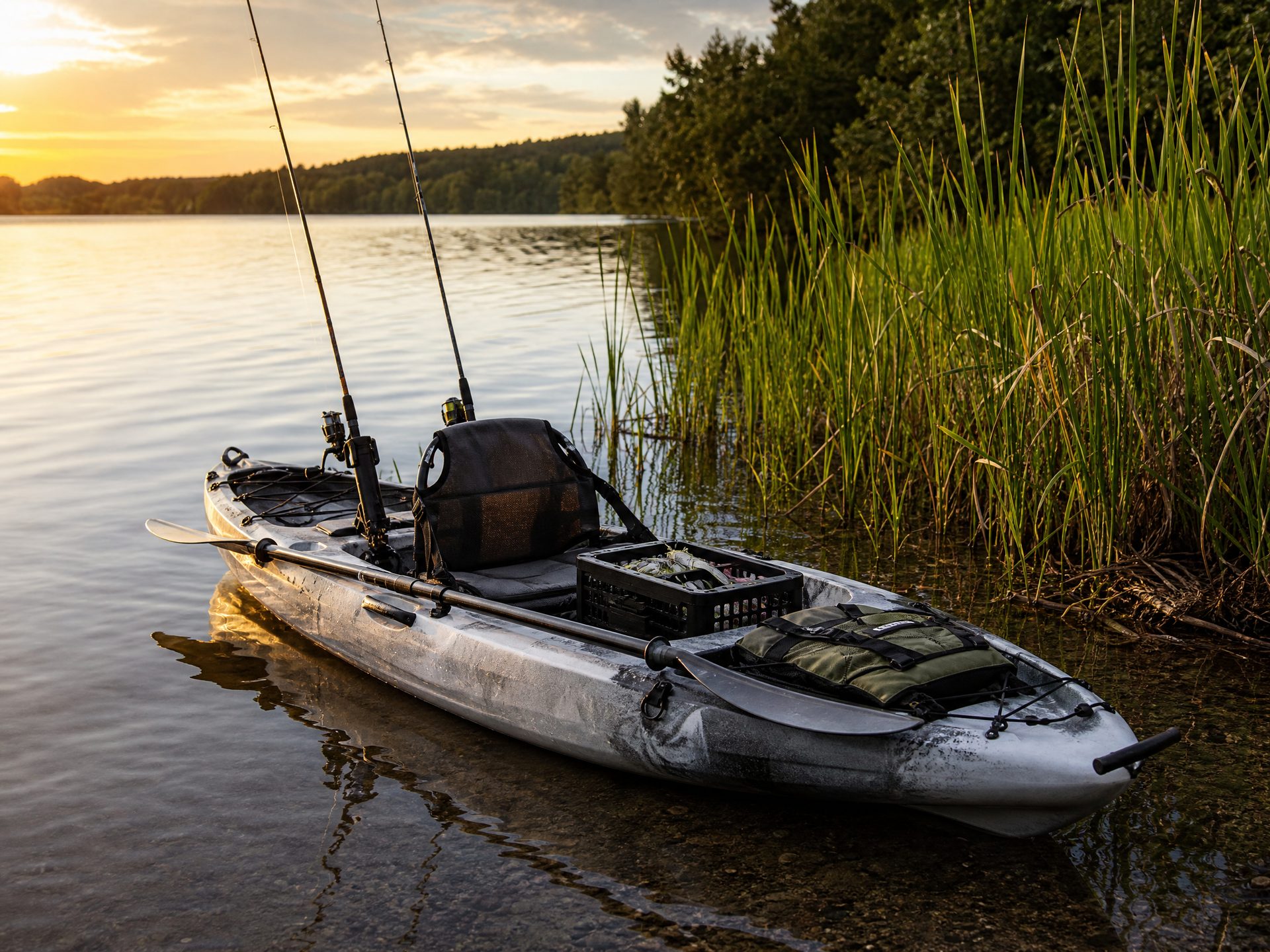
This is the sensible first boat for the great majority of anglers. A 10–12 ft sit-on-top with a flat, stable hull, self-draining scupper holes and a couple of moulded rod holders covers lakes, estuaries and slow rivers without drama. Pelican, Perception, Lifetime and Wilderness Systems all make well-priced versions, so you can learn the sport without a big outlay. It is light enough to car-top alone, forgiving if you catch a wave side-on, and easy to sell on if you decide to upgrade. Start here and you rarely regret it. Compare sit-on-top fishing kayak on Amazon
The pedal-drive kayak
When you want to fish with both hands and hold your spot, a pedal kayak changes the game. A Hobie MirageDrive, an Old Town PDL or a Native Propel lets you drive with your legs, ease into a cast, back off a snag, and troll a lure at a steady crawl — all without picking up a paddle. The costs are real: more weight, a higher price, and a drive unit to rinse and look after. It is the right buy for committed lure anglers who fish long sessions in open water, and overkill for the odd calm-morning paddle. Compare the current pedal fishing kayak options on Amazon
The big-water open-water hull
Open water, chop and wind ask for a longer, more capable hull. A 12–14 ft kayak with a rudder tracks straight in a crosswind, carries higher freeboard to keep spray out, and holds its line far better when the surface turns lumpy. That length is a liability in a tight creek, where it will feel like steering a canoe through a hedge, but on exposed water it is exactly what keeps a session safe and productive. Buy this if your usual water is broad and breezy rather than narrow and sheltered. Browse big-water fishing kayak on Amazon
The compact, lightweight car-topper
Sometimes the best kayak is simply the one you can grab and go. A short 9–10 ft hull that weighs little is a joy to lift onto the roof alone, launches down a muddy bank without a second person, and slips into skinny creeks and reed-lined edges that a big boat cannot reach. You give up some storage and top speed, but for quick after-work sessions and tight water that hardly matters. This is the boat that gets used on a whim, which often means it is the boat that catches the most fish. Shop lightweight fishing kayak on Amazon
The high-capacity camping-and-fishing hull
For overnight trips where the kayak carries the camp as well as the tackle, payload is everything. A high-capacity hull with sealed dry hatches, a tankwell that takes a crate, and mounts for an anchor trolley lets you load a cooler, a dry bag and a night’s gear without swamping the deck. It is a heavier boat to move, so a trolley is not optional, but the margin of usable capacity is what turns a fishing kayak into a genuine touring platform. Choose it if your weekends mix casting with camping. See high-capacity fishing kayak options on Amazon

Comparison
| Kayak type | Drive | Typical length | Best water | Watch-out |
|---|---|---|---|---|
| Sit-on-top paddle | Paddle | 10–12 ft | Lakes, estuaries, slow rivers | Hands busy while moving |
| Pedal-drive | Pedal | 11–13 ft | Open water, long lure sessions | Heavy, pricey, drive upkeep |
| Big-water hull | Paddle or pedal | 12–14 ft | Exposed, windy water | Awkward in tight creeks |
| Lightweight car-topper | Paddle | 9–10 ft | Creeks, quick sessions | Less storage and speed |
| High-capacity hull | Paddle or pedal | 12–14 ft | Camping-and-fishing trips | Needs a trolley to move |
Frequently Asked Questions
Paddle or pedal for my first fishing kayak?
If you are new, launch alone, or fish shallow and tight water, start with a paddle kayak: it is lighter, cheaper and simpler. Move up to a pedal drive once you know you want hands-free fishing and position control in open water, where it genuinely earns its extra weight and cost.
How stable does a fishing kayak need to be to stand up?
Look for a wide, flat-bottomed hull around 33 inches or more; those let most anglers stand and sightcast on calm water. Narrower hulls are faster and track better, but you fish them seated. Standing stability and speed pull in opposite directions, so pick the one that suits how you fish.
How do I get a fishing kayak on and off the roof on my own?
Plan for it before you buy: a kayak trolley to wheel it to the water, a roof rack with rollers or a load-assist bar, and honest attention to the fitted weight. A boat you dread lifting is one you will rarely use, so weight and a transport plan matter as much as the hull itself.
Sit-on-top or sit-inside for fishing?
Sit-on-top, almost always. It self-drains, is easy to climb back onto if you come off, and gives you open deck space for rods and tackle. Sit-inside kayaks stay drier in cold weather but are far more awkward to fish from and harder to re-enter on the water.
The Bottom Line
The right fishing kayak is the one that matches your water and that you will actually launch. For most people that is a stable 10–12 ft sit-on-top paddle kayak; add a pedal drive when you want hands-free fishing, go longer for open water, and stay short and light for creeks. Weigh the fitted weight and usable capacity as seriously as the rod holders, because a boat you can load and trust is worth far more than a spec sheet full of features.
For more on kitting out your kayak, see our complete fishing kayaks buyer’s guide and our guide to the best kayak fish finders.