
This page contains affiliate links. Far Cornel may earn a commission if you buy through them, at no extra cost to you.
See the top-rated gear on Amazon →
Quick answer: The best touring folder is the one that stows the way you travel and rides better than its size suggests. A compact commuter folder suits van and caravan storage; a fat-tyre folder trades pack size for comfort on rough ground; a lightweight folder saves your back at the rack. Match the battery’s watt-hours to your real rides, not the headline range, and if you want long, fast rides on rough trails, buy a full-size e-bike instead.
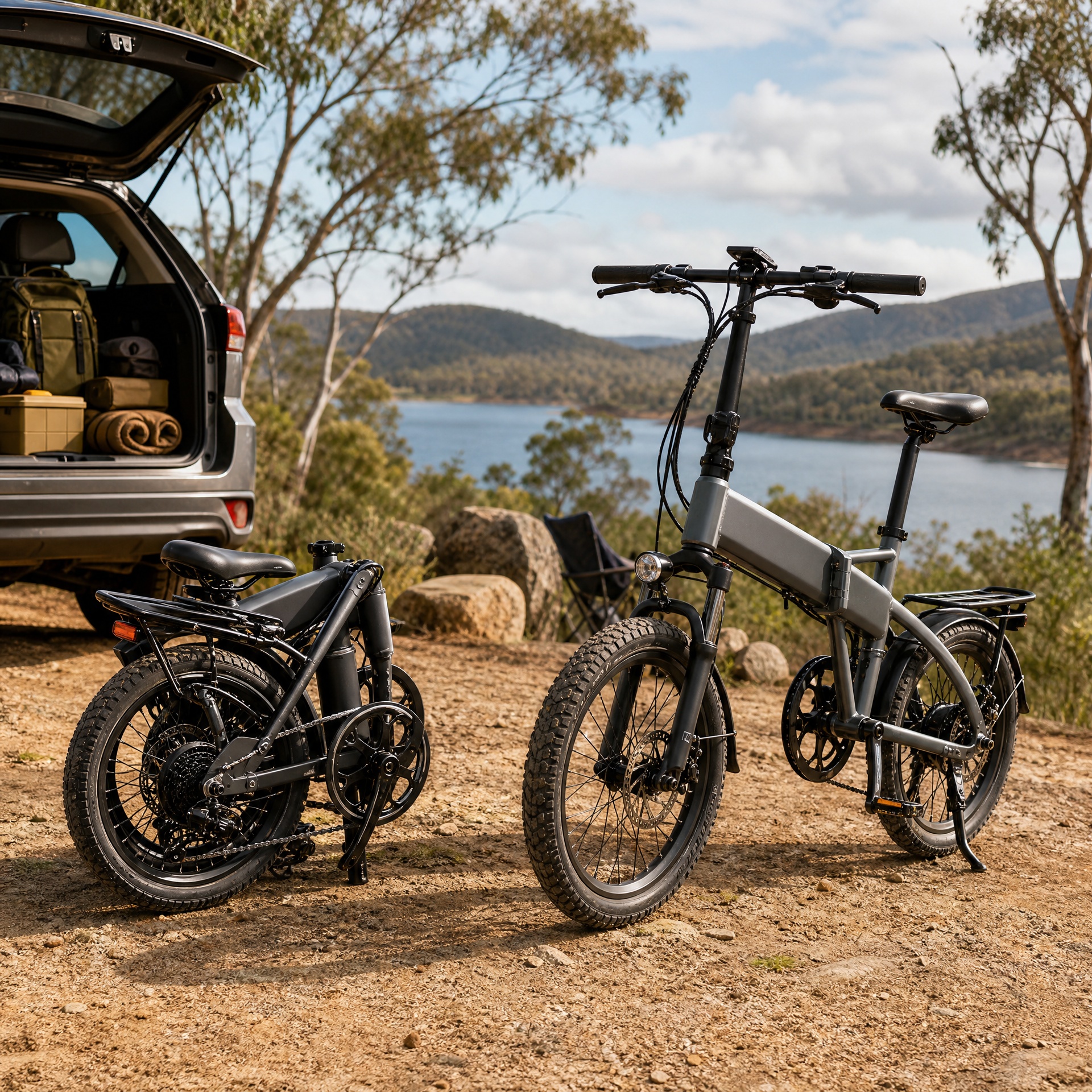
A folding e-bike solves one specific touring problem: it packs small enough to travel inside a van, a caravan or a car boot, then gets you into town or along a path without unhitching the whole rig or bolting a second vehicle to the back. The price of that compactness is honest: small wheels, real weight and modest range. The good ones fold cleanly, carry a usable battery and ride far better than their size hints.
The trap most buyers fall into is the headline range number. It is measured on the lowest assist, on flat ground, with a light rider, so your real range on hills and higher assist will be a good deal less. The second trap is underestimating weight, both for lifting it onto a rack and staying under the rack’s e-bike limit. Decide first how you will carry it and how far you will ride.
Quick Picks
- Best for tight storage: a compact commuter folder that stows small.
- Best for rough ground: a fat-tyre folder that rides softer.
- Best for easy lifting: a lightweight folder for racks and vans.
- Best range fix: a spare or larger battery matched to your bike.
- Best carrying buy: a rack rated for an e-bike of that weight.

How to Choose a Touring Folder
Weigh up four things. Battery capacity in watt-hours sets your range; the motor type sets how it climbs and feels; the total weight sets how it lifts and whether it suits your rack; and the fold quality sets how it stows. On top of those, good brakes matter far more on a heavy, quick bike than on a pushbike, and a torque sensor makes the assist feel natural rather than an on-off surge. A hub motor from a maker like Bafang is common and fine for flat rides; a mid-drive from the likes of Bosch climbs better and balances the bike.
Be realistic about comfort. Small wheels make the fold compact but ride firmer on rough ground, so wider tyres or a suspension seatpost earn their place on a touring folder. These are not luxuries; they make a small-wheeled bike pleasant over a real ride.
Then match the bike to how you carry it. One that lives inside a van needs a tidy fold and a weight you can lift; one that rides on a rack has to stay under the rack’s e-bike limit. Even a compact folding pedigree like Brompton’s turns heavy once a motor and battery go on, so check the exact figure. Look for a sensible warranty, available spares and clear specifications, because vague listings are a warning sign.
The Folders and What Rounds Them Out
Check today’s prices on Amazon →
A compact commuter folder
This is the classic touring folder: small wheels, a clean fold and a modest battery, built to disappear into a van or a boot and pop out for a run into town. It is the lightest, most packable style, and for short rides on sealed paths it is all most people need. The limits are honest, a firmer ride and a shorter range, so do not buy one expecting trail comfort or big distances. If your riding is errands, cafes and easy paths from camp, this is the sweet spot. Compare folding electric bike on Amazon
A fat-tyre folding e-bike
If your camps put you on gravel, grass or soft ground, a fat-tyre folder trades some pack size for a lot of comfort and grip. The wide, low-pressure tyres soak up bumps that punish a small-wheeled commuter, and they float better on loose surfaces. The catch is that they are heavier and bulkier folded, which matters for lifting and for a van’s storage. Do not buy one if your riding is all smooth paths and storage is tight, but for rougher touring it turns a nervous ride into a planted one. Check the latest fat-tyre folding e-bike on Amazon
A lightweight folder
If lifting is your real concern, a lightweight folder is worth paying for. Shaving even a handful of kilograms makes a genuine difference hoisting the bike onto a rack or into a high van, and it keeps you comfortably under a rack’s e-bike weight limit. You usually pay for that lightness with a smaller battery and a firmer ride, so weigh range against the ease of handling. Choose this if you will carry the bike often, ride shorter distances, or simply do not want to wrestle a mid-twenties-kilo machine every time you stop. Browse lightweight folding e-bike on Amazon
A spare or larger battery
Range is the folder’s weak spot, and the honest fix is more battery rather than trusting an optimistic number. A spare pack, or a step up in watt-hours, extends your day and covers the ride home with reserve, which matters when hills and higher assist eat into the claimed figure. Match any battery to your exact bike and motor, and treat the watt-hour rating as the real measure of how far you will go. Do not skip this if your rides are longer than a quick errand, because a flat battery turns a light bike into a heavy one. Shop e-bike battery on Amazon
A rated e-bike rack
If the bike rides outside the vehicle, the rack is not an afterthought. It has to be rated for an e-bike of that mass, not just any pushbike, and it has to hold the bike securely against corrugations and wind. A rack that flexes or an undersized clamp turns a good bike into a road hazard. Look for a sturdy platform rack with solid straps and a wheel hold-down, confirm the load rating against your bike’s real weight, and strap it well. Removing the battery for the drive drops a few kilograms and keeps it safe from vibration. See e-bike rack options on Amazon

Comparison
| Type | Strength | Trade-off | Best for |
|---|---|---|---|
| Compact commuter | Smallest fold, lightest | Firm ride, shorter range | Van storage, town runs |
| Fat-tyre folder | Comfort and grip | Heavier, bulkier folded | Gravel and soft ground |
| Lightweight folder | Easy to lift | Smaller battery | Frequent racking, short rides |
| Spare / larger battery | More range | Extra cost and weight | Longer outings |
| Rated e-bike rack | Safe carrying | Takes up tow space | Carrying outside the vehicle |
Frequently Asked Questions
Why a folding e-bike for touring?
Because it packs small and rides easily. A folding e-bike stows in a van, caravan or car boot, then gives you assisted local transport at camp without towing a second vehicle. The assist flattens hills and headwinds so the ride stays enjoyable, and the fold means it disappears when you move on. The compromises are small wheels, extra weight and modest range, which suit short, frequent touring rides well.
What range do I realistically get?
Less than the headline figure, usually. Claimed ranges are measured in ideal conditions on the lowest assist, so hills, wind, a heavier rider, higher assist and cold weather all cut into it. Treat the battery’s watt-hours as the honest guide and keep reserve for the ride back. For longer outings, buy more capacity rather than trusting an optimistic number.
How heavy are they to lift onto a rack?
Heavier than they look. A folding e-bike carries a motor and battery, so many land in the low-to-mid twenties of kilograms, which is a real lift onto a rack or into a van. Check the exact weight before buying, make sure any rack is rated for an e-bike of that mass, and consider a lighter model or a ramp if lifting is a concern. Removing the battery first drops a few kilograms.
Can I charge it from a caravan or power station?
Usually yes, from a mains-style outlet. Most e-bike chargers draw modestly, so a mid-size power station or a caravan’s inverter can top the battery up over a few hours. Check the charger’s wattage against what your setup supplies, and charge in the cool rather than a hot load area.
The Bottom Line
The right touring folder makes camp life easier in a way you can feel: transport that packs away when you drive and appears when you stop. Choose a compact commuter for tight storage and town rides, a fat-tyre folder for rough ground, or a lightweight one if lifting matters most, then judge it on real range, ride quality and how solidly it locks together. Buy the battery capacity your rides need, carry it on a rack rated for its weight, and check the latches before each ride. Match it to how you tour, not the photos.
For more on carrying gear as you travel, see our guides to the best roof cargo boxes for touring, our wider 4×4 and overlanding gear guides, and our camping gear section.