
This page contains affiliate links. Far Cornel may earn a commission if you buy through them, at no extra cost to you.
See the top-rated gear on Amazon →
Quick answer: A mid-size aerodynamic hard-shell box of about 400 to 500 litres from Thule, Yakima or Rhino-Rack is the best all-rounder, secure and quiet at speed. Go bigger for families, long and narrow for awkward gear, and a soft roof bag if you want a foldaway budget option. Load only bulky light gear up top, and check your roof’s dynamic load limit before anything else.
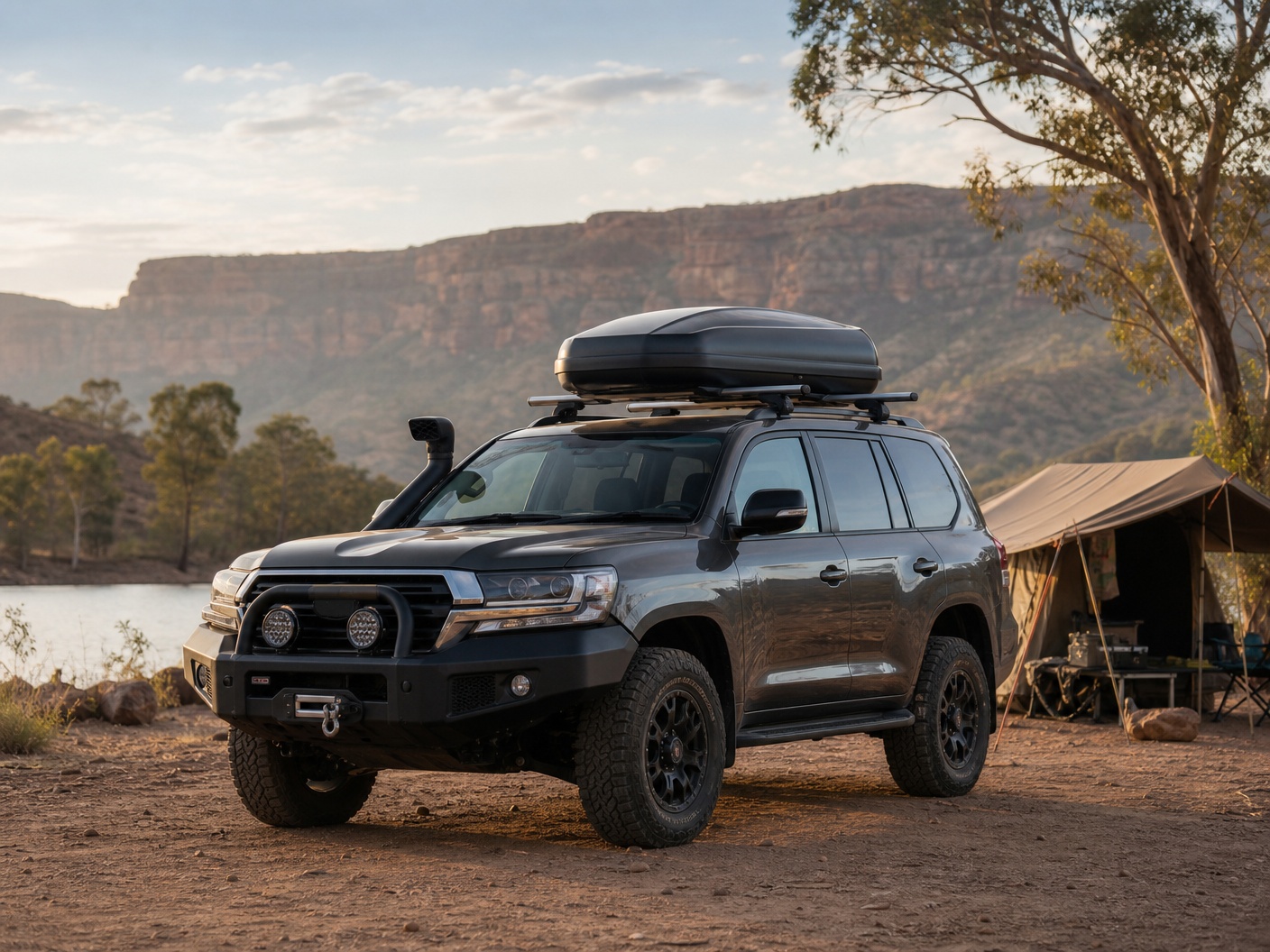
Interior space vanishes fast once you pack for a real trip, and the roof is the obvious place to send the bulky, lightweight stuff, swags, bedding, camp chairs and empty storage tubs, that eats cabin room without weighing much. A hard-shell box does it while keeping that gear dry, locked and out of the dust, which a loose load on the bars never manages.
The mistake most people make is treating a roof box as free space. It is not. Your roof has a dynamic load limit, usually modest once you subtract the rack, and everything up there raises your centre of gravity. Thule, Yakima and Rhino-Rack dominate for good reason, but the right box is the one that fits your bars, your gear and your roof rating, not the biggest on the shelf.
Quick Picks
- Best overall: a mid-size aerodynamic hard box of about 400 to 500 litres.
- Best for families: a large 500-litre-plus box for bulky bedding and chairs.
- Best for long gear: a long, narrow box that leaves room alongside on the bars.
- Best budget and foldaway: a soft, weatherproof roof bag.
- Best for a flat rack: a box designed to T-track mount onto a platform.

How to Choose a Roof Cargo Box
Start with the number that trumps everything: your vehicle’s dynamic roof load limit, the weight it can safely carry moving. It is often lower than people expect, and the rack and the empty box both count against it, so your real payload up top might be 50 kilograms, not the box’s rated capacity. This is the myth worth busting: a roof box does not give you free carrying capacity, it gives you organised space for bulky light gear. Heavy items belong low in the vehicle.
With that fixed, match the shape to your gear. Capacity runs from about 300 to 600 litres, but a long, narrow box suits skis, poles and rods while leaving bar space alongside, and a short, wide box swallows duffel bags and bedding. Check internal dimensions, not just the litre figure, and measure whether the box clears your tailgate when open, since a box mounted too far back can block the boot. Then think about height: a tall box on a raised vehicle will find every low car park and awning.
Finally, weigh aerodynamics, security and mounting. A low, tapered box cuts the wind roar and fuel penalty of boxy old designs, and a good multi-point lock that will not release the key until every latch is closed stops you driving off with the lid up. Confirm the box fits your bars, whether aero, round or a flat platform via a T-track kit, before you buy. A universal claw fits most, but check the maximum bar spread.
The number that limits a roof box is not its litres — it is your vehicle’s roof load rating, and it is lower than most people think (often 75 to 100 kg moving, sometimes less). Weight up high also hurts handling and raises rollover risk, so the golden rule is pack the box with light, bulky gear — sleeping bags, clothes, camp chairs, empty containers — and keep the heavy stuff low inside the vehicle. Two things people forget: a loaded box eats fuel and adds wind roar even though it is more aerodynamic than gear strapped to bare bars, so take it off when you are not touring; and it adds a good 30 to 40 cm of height, which is how carports, low garages and drive-through awnings claim so many boxes. Measure your loaded height and stick a note on the dash.
The Roof Cargo Boxes
Check today’s prices on Amazon →
Mid-size aerodynamic hard box
This is the box I would buy for a typical touring family, around 400 to 500 litres in a low, tapered shell from Thule, Yakima or Rhino-Rack. It holds a genuinely useful load of bedding, chairs and soft bags, stays quiet at highway speed and does not murder your fuel figure the way an old brick-shaped box did. It locks up solid and shrugs off weather. This size is the sweet spot between capacity and the drag and clearance you have to live with. See what a mid-size aero box costs
Large-capacity box
When there are four or more of you and every seat is full, a 500-litre-plus box turns the roof into the extra boot you need. It swallows bulky bedding, several camp chairs and the odd awkward item that never fits inside. The honest trade-offs are more drag, more noise and a real fight with the roof load limit, since the bigger empty shell eats into your carrying weight. Fill it with light, bulky gear only, and watch your total height. Compare the large-capacity boxes for families
Long, narrow box
If your bulky items are long rather than fat, a long, narrow box is the smart shape. It carries poles, rods, skis and awning gear neatly and, crucially, leaves clear bar space beside it for a second box, a rack basket or a bike mount. It is less capacious than a wide box for duffel bags, so it suits people with specific long gear rather than general bulk. Check that its length still clears your tailgate and does not overhang the windscreen too far. Look at the long, narrow boxes for gear and rods
Soft roof bag
A soft, weatherproof roof bag is the budget and foldaway answer. It costs a fraction of a hard box, packs flat when empty so it is not hogging garage space between trips, and moulds to whatever you stuff in it. The compromises are real: less security, more flap and noise, and weather resistance that depends on a good closure and cover. It shines for occasional trips and for anyone short on storage at home, but a hard box wins for frequent tourers who value locking it and walking away. Price up a soft roof bag for occasional loads
Platform-mount box
If you already run a flat roof platform, look for a box built to bolt straight onto it through a T-track rather than clamping to round bars. Mounting into the platform channel is stronger and tidier, and it frees the rest of the platform for a shovel, an awning or recovery boards alongside the box. It is a setup for people building a proper modular roof, so it pairs naturally with quality platform racks. Confirm the box and your platform share a compatible mounting pattern before buying. Check the platform-mount boxes for a flat rack

Comparison
| Box style | Best for | Typical capacity | Watch-out |
|---|---|---|---|
| Mid-size hard box | Most tourers and families | 400 to 500 L | Check bar fit and clearance |
| Large hard box | Big families, maximum bulk | 500 L and up | Drag and roof load limit |
| Long, narrow box | Long gear, shared bars | 300 to 450 L | Less room for duffels |
| Soft roof bag | Budget, occasional use | Varies, foldaway | Less secure and quiet |
Frequently Asked Questions
How much can I actually put on the roof?
Only up to your vehicle’s dynamic roof load limit, which includes the rack and the empty box, so your real payload is often smaller than the box’s rated volume suggests. Load light, bulky items in the box and keep heavy gear low in the vehicle. Overloading the roof is the fastest way to ruin your handling and stability.
Will a roof box hurt fuel and clearance?
Yes to both, though a low, aerodynamic box keeps the fuel penalty modest. It also raises your total height, which matters for car parks, awnings and low branches. Note your new clearance, write it on a sticky note on the dash, and drive gently to the changed handling until you are used to it.
Hard box or soft bag?
A hard box is more secure, weatherproof and quiet, but it costs more and needs storage space at home between trips. A soft bag is cheaper and folds away, but it is less secure and noisier. Choose by how often you tour and where you can store it: frequent tourers usually want the hard box.
Will it fit my roof rack?
Most boxes use a universal claw or U-bolt system that fits aero, square and round bars, but check the maximum bar spread and width the box needs. If you run a flat platform, look for a T-track mounting kit. Confirm the box clears your open tailgate before you commit, since a poor position blocks the boot.
The Bottom Line
A roof box is one of the most practical touring upgrades, as long as you treat it as organised space for bulky light gear rather than free payload. A mid-size aerodynamic hard box from Thule, Yakima or Rhino-Rack suits most people; size up for a big family, go long and narrow for awkward gear, and pick a soft bag if budget and storage rule. Measure your clearances, respect the roof load limit, and keep the heavy stuff low.
For the rest of your storage setup, see our guides to roof rack platforms, collapsible storage crates, portable fridge vs cooler and dual-zone camping fridges.
Set up the rest of your load-carrying with our guides to the best roof rack platforms, 4WD drawer systems, and rugged storage boxes.