
This page contains affiliate links. Far Cornel may earn a commission if you buy through them, at no extra cost to you.
See the top-rated gear on Amazon →
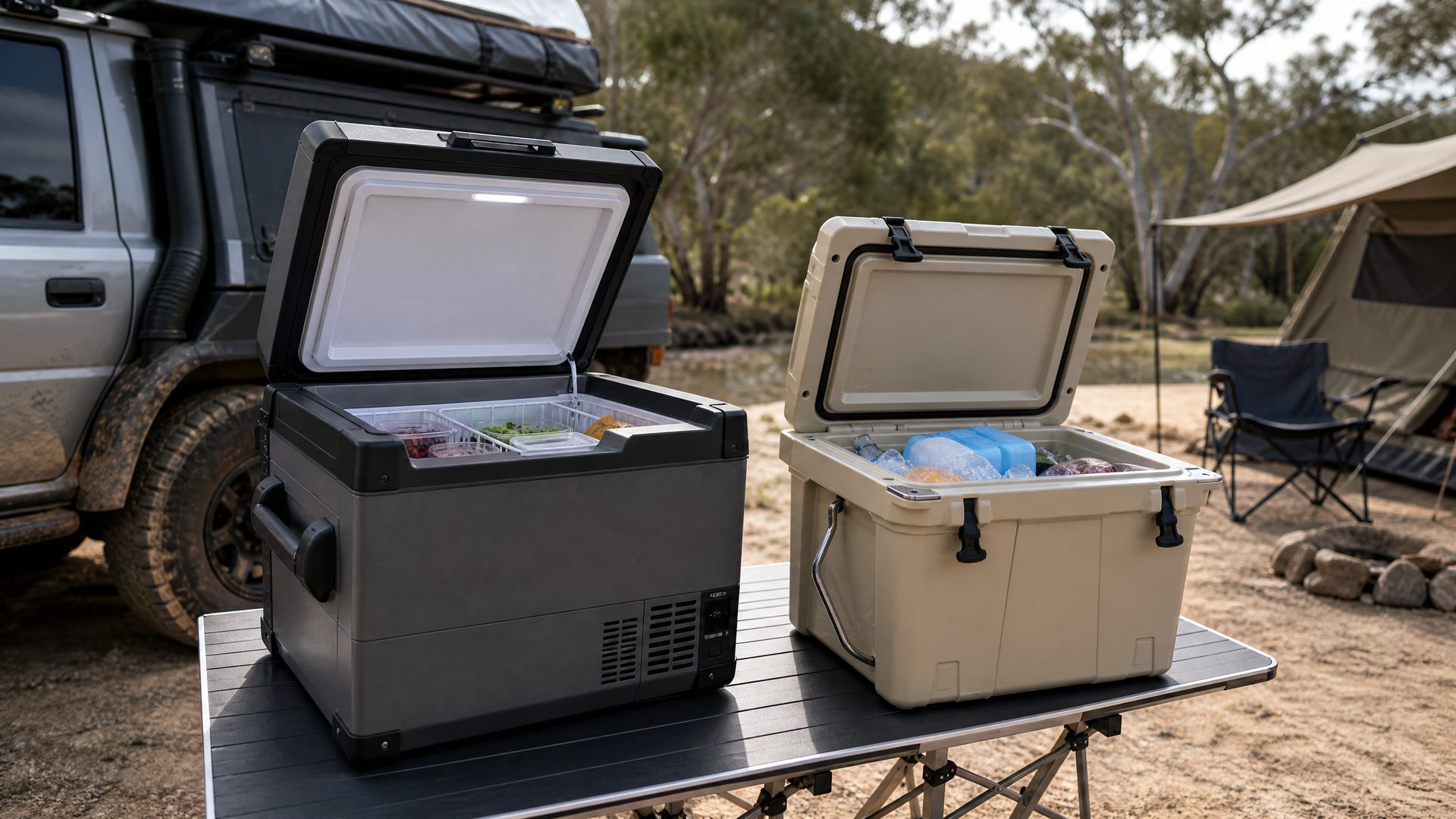
Quick answer: For one or two nights, or if you cannot spare power, a good cooler wins: cheap, unbreakable, and safe for a couple of days on ice. For three days or more, hot weather, or a vehicle set up for touring, a 12V compressor fridge is worth the money and the power it draws. Dual-zone models add a freezer, and a fridge with a built-in battery suits campers without a dual-battery setup.
The real cost of a cooler is not the sticker. It is the ice: the bag you buy on the way, the melt that soaks your food, and the run into town on day three for more. A fridge skips all that and holds a set temperature, but it needs power and costs a lot more up front. That trade, hassle and ice money against price and power, is the whole decision.
There is no single right answer, only the one that fits your trips. A weekend camper chilling drinks has different needs from someone touring a week in the heat with meat and dairy to keep safe. Here are the five cold-storage options worth comparing, and where each earns its place.
Quick Picks
- Best without power: a rotomoulded hard cooler.
- Best budget weekender: a mid-range hard cooler or ice box.
- Best all-round upgrade: a single-zone 12V compressor fridge.
- Best fridge-and-freezer in one: a dual-zone 12V fridge/freezer.
- Best without a dual battery: a powered cooler or fridge with a built-in battery.

How to Choose Between a Fridge and a Cooler
Three questions settle it. First, how long and how hot? One or two mild nights are easy work for a cooler; three days or more in real heat is where ice becomes a chore and a fridge pulls ahead. A rotomoulded cooler holds ice for days in ideal conditions, but warm food, a hot day and a frequently opened lid all shorten that quickly.
Second, what power can you spare? A compressor fridge runs on 12V from a vehicle or a power station, and a typical 40-litre model averages one to two amps once it is cold, so a 100Ah battery can hold it a couple of days without sun. No dual battery and no plan to add one usually means a cooler, or a powered unit that carries its own battery.
Third, what are you keeping cold? Drinks forgive a warm patch; meat, dairy and medication do not. A fridge holds a steady temperature below the roughly 5 degrees that matters for safety, while a cooler drifts as the ice melts and needs a thermometer and fresh ice to stay honest.
Sitting between the two are thermoelectric coolers and soft-sided cooler bags: cheaper and lighter than a compressor fridge, but they only chill a few degrees below the surrounding air, so they suit short trips and mild conditions rather than genuine heat.
The Cold-Storage Options
Check today’s prices on Amazon →
Rotomoulded hard cooler
The workhorse when power is off the table. A thick rotomoulded cooler holds ice impressively, sometimes for several days if you pre-chill it, pack two parts ice to one part food, and keep it shaded. Brands like YETI and RTIC set the benchmark for ice retention and tough latches. It never breaks down and shrugs off rough handling, but the ice still eats space and soaks your food if you do not seal things well. See current rotomoulded cooler prices on Amazon
Mid-range hard cooler or ice box
For short trips and tight budgets, a mid-range hard cooler does most of what the premium boxes do at a fraction of the price. Coleman is the obvious name here. It will not hold ice as long as a rotomoulded unit, but for a weekend of drinks and a few meals that rarely matters. Look for a solid seal, sturdy latches and a working drain plug, and pre-chill it so the first bag of ice is not wasted cooling warm walls. Compare ice box on Amazon
Single-zone 12V compressor fridge
The upgrade most tourers eventually make. A single-zone compressor fridge sets an exact temperature and holds it, uses every litre for food rather than ice, and never sends you hunting a bag of ice on a hot afternoon. Engel and Dometic are the long-standing names, with Bushman a strong choice. For trips of three days or more in the heat it quietly pays back both the price and the power it draws. Check the latest 12V fridge on Amazon
Dual-zone fridge/freezer
When one cold box is not enough, a dual-zone unit runs a fridge on one side and a freezer on the other, each with its own setting. It is the answer for longer trips where you want frozen meat and cold drinks at the same time. The trade-offs are size, weight and power: the freezer side pulls noticeably more current than simple chilling, so size your battery and solar around it rather than hoping it copes. Browse dual-zone fridge freezer on Amazon
Powered cooler with a battery
The bridge for campers who like the idea of a fridge but have no dual-battery setup. These pair a compressor with a slot-in or built-in battery, so the unit runs itself for a day or two and tops up from the car, a power station or solar. It costs more than a plain fridge of the same size, but it removes the biggest hurdle, somewhere to plug in, which makes it a genuine cooler alternative. Shop portable fridge with a battery on Amazon

Comparison
| Option | Runs on | Ongoing cost | Best trip |
|---|---|---|---|
| Rotomoulded cooler | Ice only | Bags of ice | Off-grid, no power |
| Mid-range cooler | Ice only | Bags of ice | Budget weekends |
| Single-zone fridge | 12V or mains | Battery power | Multi-day touring |
| Dual-zone fridge/freezer | 12V or mains | More battery power | Long trips, frozen food |
| Powered cooler | Built-in battery | Recharge time | No dual battery |
Frequently Asked Questions
Is a fridge really worth it over a good cooler?
For one or two nights, rarely. A quality cooler is cheaper, needs no power and keeps food safe for a couple of days on ice. The fridge earns its keep on longer trips and in the heat, where the ice runs, the melt and the wasted food add up to more hassle than the power draw ever will.
How long will a fridge run on a battery?
It depends on the battery, the fridge’s draw and the heat. A typical 40-litre fridge averages one to two amps once cold, so a 100Ah lithium battery might last a couple of days without solar. A warm load, a hot day and constant lid-opening all cut that figure down.
Do I need to pre-cool a cooler or fridge?
Yes, both. Chill a cooler and its contents first, or the first bag of ice is wasted cooling warm walls. Switch a fridge on and bring it down to temperature before you load it, not after, so it is not fighting a full box of warm food from the start.
Can a portable fridge freeze food?
Most compressor fridges drop to freezing, and dual-zone models run a fridge and a freezer side by side. Freezing pulls noticeably more power than chilling, though, so plan your battery and solar around it if you want frozen food for the whole trip.
The Bottom Line
Weekend trippers and anyone without power are usually better off with a good cooler: cheap, tough, and safe for two or three days on ice, with the only running cost being the ice itself. Regular multi-day trips, hot weather, or a vehicle set up for touring tip the balance to a fridge, where precise temperature, full usable space and never chasing ice repay the higher price and the power it draws. If you love the fridge idea but have nowhere to plug in, a powered cooler with its own battery is the honest middle path.
To go deeper, see our guides to 12V fridge freezers, heavy-duty coolers, and how to size a portable power station.