
This page contains affiliate links. Far Cornel may earn a commission if you buy through them, at no extra cost to you.
See the roof rack platforms on Amazon →
Quick answer: A low-profile aluminium platform like the Rhino-Rack Pioneer, Front Runner Slimline II or ARB BASE Rack is the versatile pick for a touring build, mounting an awning, boxes and a rooftop tent on one flat surface. A half platform keeps weight and drag down, steel suits heavy budget builds, and the vehicle-specific mounting kit matters as much as the rack itself. Whatever you choose, keep heavy gear low and respect your roof load limit.
Every loaded roof platform hides the same trap: the number that matters is not printed on the rack. A platform might be rated to carry 100 kilograms while moving, but your vehicle’s roof is often rated for far less, and that lower figure is the one physics enforces. Pile a tent, an awning, a full box and a jerry can up top and you have not just reached that limit, you have lifted the whole vehicle’s centre of gravity to exactly where it does the most harm on a side slope or a sudden swerve.
None of that means skip the platform. Interior space runs out fast once you pack swags, recovery boards, fuel and a tent, and a flat platform is the modern answer for the bulky gear that will not fit inside. Unlike crossbars or a deep basket, it gives you a continuous, boltable surface: an awning down one side, a shovel and jack on the other, a box or a tent in the middle. The skill is loading it light and low-density, with the bulky, featherweight things up top and anything heavy kept down in the vehicle.
Quick Picks
- Best all-rounder: a full-length low-profile aluminium platform for a modular tent, awning and box setup.
- Best for a tent build: a half or three-quarter platform that carries the tent while keeping weight and drag down.
- Best on a budget: a steel platform, tougher for the money if you can accept the weight up high.
- Most important part: a vehicle-specific mounting kit, which decides whether the whole thing stays put and stays dry.
- Best upgrades: a front wind deflector plus awning and recovery-board brackets from the platform’s own range.

How to Choose a Roof Rack Platform
Start with the two load ratings, because they are where people get caught out. The dynamic rating is what the rack can carry while you are moving, and it must cover the platform plus your gear within your vehicle’s own roof limit. The static rating is what it holds when parked, which matters when a rooftop tent with sleepers sits on it overnight. A tent build in particular needs you to check both numbers, then keep the heavy stuff low in the vehicle regardless.
Then choose the material and the aerodynamics. Aluminium is the sensible default: light, rust-proof and strong, with a powder coat to resist scratches and sun, which is why Rhino-Rack, Front Runner and ARB build in it. Steel is tougher for the money but heavy up where weight hurts most. Either way, look for a low profile and a front wind deflector fairing, which pushes air up and over the load and tames the roar and the fuel penalty on long highway stints.
Finally, treat the mounting kit as part of the rack rather than an afterthought. A kit made for your exact roof, whether it clamps to raised rails, bolts to factory hardpoints or tracks into the roof channel, holds a heavy load through corrugations in a way a generic fit never will. This is the single detail that separates a platform that rides silent for years from one that works loose, rattles, or lets water in at the feet.
The Roof Rack Platforms
Compare platforms and mounts on Amazon →
Full-length aluminium platform
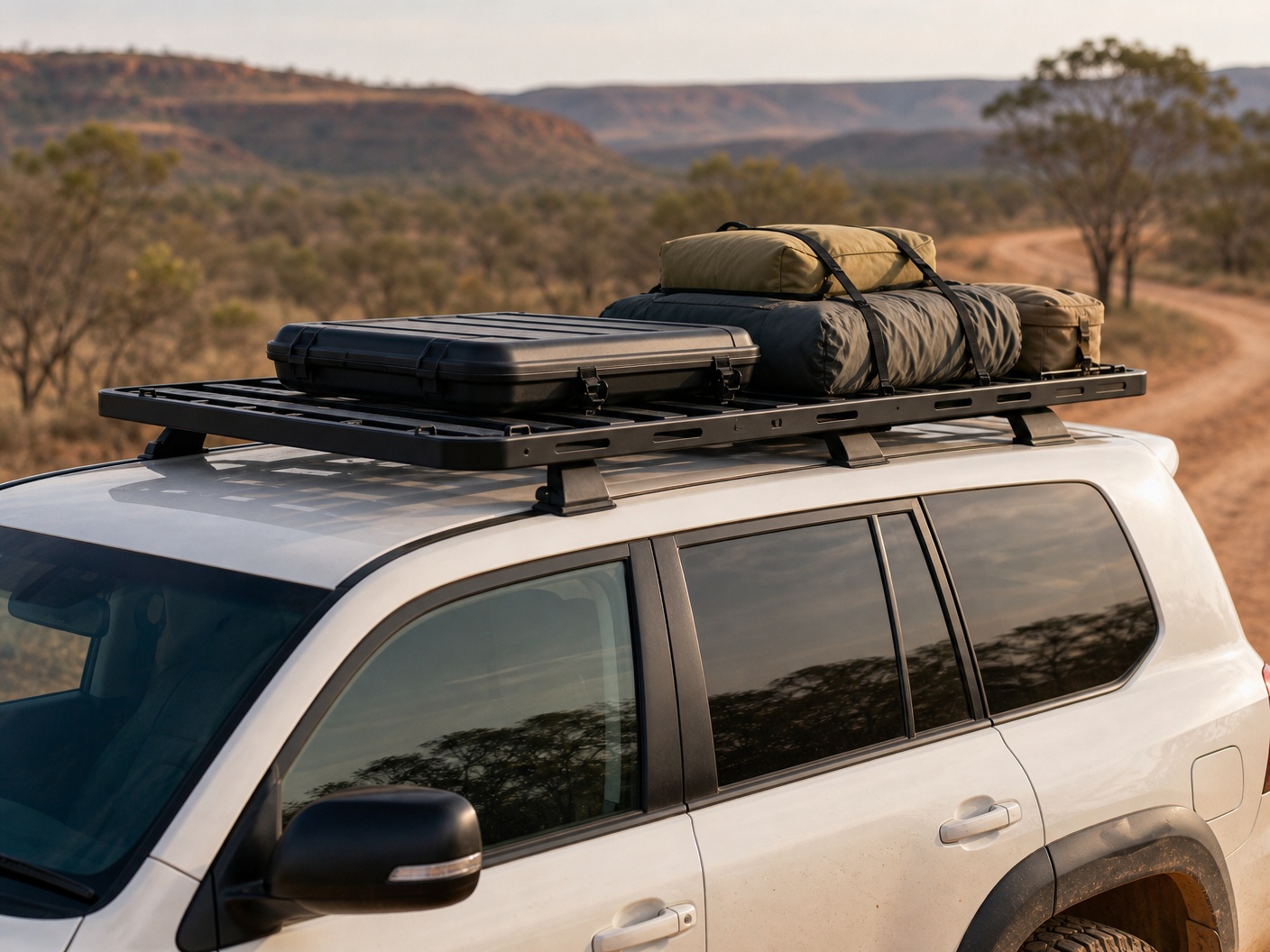
This is the platform most serious builds end up on: a low-profile aluminium sheet running most of the roof, from names like Rhino-Rack Pioneer, Front Runner Slimline II or ARB BASE Rack. The full length gives you room to mount a tent, an awning, boxes and recovery gear together, and the aluminium keeps the weight and rust down. It is the dearest option and the heaviest up high, so it earns its place on a proper touring rig rather than a weekend runabout. Match it to a fairing and mind the roof limit. Compare the full-length aluminium platforms on Amazon.
Half or three-quarter platform
If your main roof load is a rooftop tent, a half or three-quarter platform is often the wiser choice. It carries the tent and an awning while saving weight and leaving the rear roof clear, which keeps the centre of gravity lower and the handling honest. You give up some mounting real estate, but for most tent-first builds that is a trade worth making, and the lighter rack is kinder on both fuel and the roof rating. See what the half and three-quarter platforms cost.
Steel platform
For a heavy-duty build on a tighter budget, a steel platform gives you strength for the money. It takes abuse and heavy static loads without complaint and usually costs less than premium aluminium. The catch is weight in the worst place, up high, so it hits your handling and roof load limit harder than aluminium. It also needs a good coating to hold off rust. Consider it if you value toughness and price over shaving kilograms. Look over the steel platform options.
Vehicle-specific mounting kit
The mounting kit is the part that decides whether a platform is safe, and it is too often an afterthought. A kit designed for your exact roof, whether it clamps to raised rails, bolts to factory points or tracks into the roof channel, holds a heavy load through corrugations far better than a generic fit. Get this wrong and even the best platform works loose or leaks. Buy the mounting kit made for your make and model alongside the rack, not as a maybe-later. Find the mounting kit made for your vehicle.
Wind deflector and accessory brackets
A platform becomes a system through what you bolt to it, and two add-ons matter most. A front wind deflector fairing quietly pays for itself by cutting the highway roar and the fuel hit that a bare front edge causes. Then the bracket range does the rest: mounts for an awning, recovery boards, a shovel, a jack or light bars let you place gear exactly where you want it instead of fabricating your own. Stick to brackets from the platform’s own ecosystem so they fit the channels cleanly. Price up fairings and accessory brackets.
Comparison
| Roof option | Best for | Versatility | Watch-out |
|---|---|---|---|
| Crossbars | Light loads, a single accessory | Low | Little room to secure loose gear |
| Roof basket | Bulky, odd-shaped items | Medium | High wind noise and drag |
| Aluminium platform | Touring, modular setups | High | Cost, weight up high |
| Steel platform | Heavy-duty budget builds | High | Heaviest option |

Frequently Asked Questions
Flat platform or basket rack?
A flat platform is the more versatile choice, letting you bolt awnings, tents, boxes and recovery gear exactly where you want them, and it sheds wind noise better than a deep basket. A basket has raised sides that help contain loose items but adds drag and roar. Most touring builds go platform for the mounting flexibility.
How much can it actually carry?
Mind two ratings: the dynamic rating for driving and the static rating for a parked load like a rooftop tent with occupants. Both have to sit within your vehicle’s own roof load limit, which is usually the lower number and the one that really governs. When in doubt, load lighter than the rack allows and keep the weight forward and low.
Will a platform fit my vehicle?
Almost certainly, provided you buy the right mounting kit. Platforms mount to raised rails, to a bare roof via track or foot kits, or to factory hardpoints, and the reputable brands publish a fitment list per make and model. The rack is the easy part; matching the correct kit to your roof is what makes it fit and stay put.
Does a platform add noise and fuel use?
A bare front edge does roar and cost a little fuel at highway speed, but a front wind deflector fairing tames most of it, and a low-profile platform is far quieter than a deep basket. Take the empty rack off for long road trips if economy really matters, since even a good platform is never quite free.
The Bottom Line
For most touring builds the sweet spot is a low-profile aluminium platform matched to a vehicle-specific mounting kit and a front fairing: versatile, rust-proof, and quiet enough to live with on the highway. Go half-length if a rooftop tent is your main load, or steel if budget and toughness beat saving weight. Then win the part that actually keeps you safe by loading light up top, keeping the heavy gear inside, and staying under your roof’s own limit rather than the rack’s.
Planning the rest of the roof? See our guides to the best roof cargo boxes, the best rooftop tents, and the best 270-degree awnings to mount on your platform.