
This page contains affiliate links. Far Cornel may earn a commission if you buy through them, at no extra cost to you.
See the top-rated gear on Amazon →
Quick answer: For anyone fishing braid, the one cutter to own is a pair of micro-serrated braid scissors — they shear braid, mono and fluoro cleanly where blunt clippers just crush and fray. Add a nail-style nipper for quick mono trims, a folding multi-tool cutter for rigging leaders, ceramic blades if salt rusts everything you own, and a retractable zinger so the cutter is always to hand.
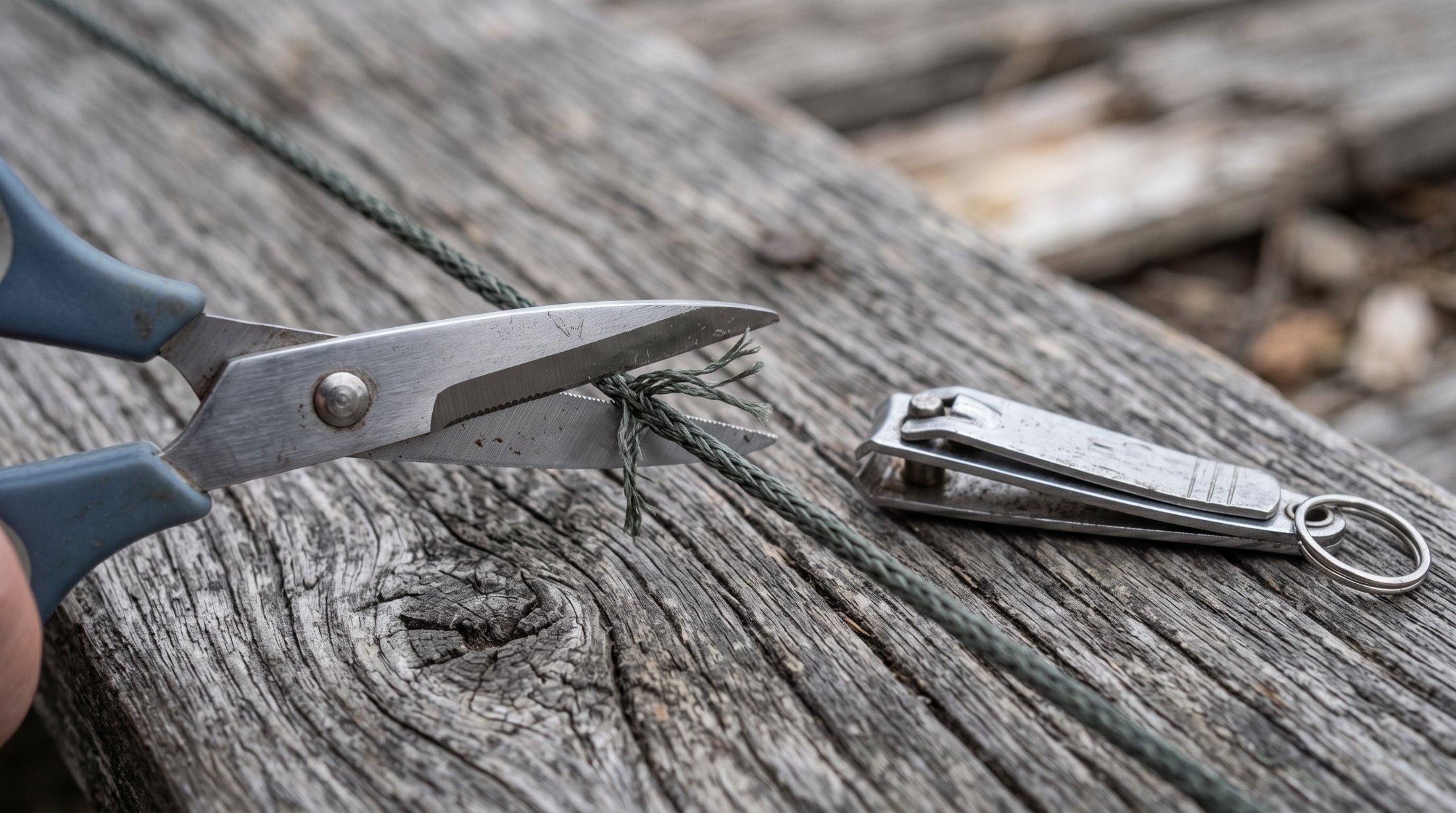
Braid changed fishing, and it quietly wrecked every pair of scissors in the tackle bag on the way through. Modern gel-spun braid is astonishingly strong for its diameter, and the blunt clippers that snipped monofilament for decades push the fibres aside and crush them instead of cutting. A proper cutter is a small, cheap tool that saves a surprising amount of grief, letting you trim knots and re-rig without a frayed tag end catching in every rod guide.
The choices fall into a few clear groups: micro-serrated braid scissors, nail-clipper nippers, folding multi-tools with a cutter built in, rust-proof ceramic blades, and retractable zingers that clip to a vest. Each suits a different style and budget. Here is what actually separates a good cutter from a frustrating one, then five worth comparing.
Quick Picks
- Best overall: micro-serrated braid scissors that slice everything cleanly.
- Best for quick trims: a hardened nail-style line nipper.
- Best all-in-one: a folding cutter tool that also opens split rings.
- Best for salt: a ceramic-bladed cutter that will not rust.
- Best always-to-hand: a retractable zinger cutter on a cord.

How to Choose a Line Cutter
Match the blade to the line you fish. Braid is the problem child: those slippery, high-strength fibres need a fine, hardened, ideally micro-serrated edge to slice rather than chew, which is why ordinary scissors leave a frayed mess that will not thread a hook eye. Mono and fluoro are far more forgiving and snip fine with a plain nipper. If braid is your main line, buy for braid first, because a braid cutter handles mono easily but a mono nipper mangles braid.
Then think about corrosion and carry. Anything near salt wants stainless, titanium-coated or ceramic blades and a sealed pivot, since a rusty cutter tears line worse than none at all. Decide how you will keep it to hand, too: a zinger tethers a clipper so it springs back after every cut, while scissors ride better in a vest pocket or a boat tray. Cold, wet hands matter more than people expect, so look for finger loops or a body you can grip with gloves on.
The Line Cutters
Check today’s prices on Amazon →
Braid scissors
The specialist, and the one cutter most braid anglers should own. Short micro-serrated stainless blades shear through braid without a hint of fraying, and the same edge cuts mono, fluoro and often light wire leaders. Boomerang and Berkley both make well-regarded pairs. They cost more than a basic nipper and the fine tips will bend if you force them through something too heavy, so keep them for line and light trace, not split rings. Find the right braid scissors on Amazon.
Line nippers and clippers
Nail-clipper-style nippers are quick, cheap and made for one-handed tag-end trims, and they shine on mono and fluoro. Many add a pin for clearing hook eyes or a fine point for picking knots. The limit is braid: only the harder models cut it cleanly, while a soft, cheap nipper crushes and frays it. As a light, always-there tool clipped to a pack they are hard to fault, provided you match them to the line you actually cut. Look over the current fishing line clippers options on Amazon.
Multi-tool cutter
A folding cutter tool bundles a line cutter with needle-nose pliers, a split-ring opener and often a hook remover, so one item covers most on-water jobs. It is the efficient pick if you hate a cluttered vest or want a single tool in the kayak. The cutter is usually good rather than exceptional, so if you fish heavy braid you may still carry dedicated scissors alongside it for the cleanest cuts. Check current fishing line cutter tool stock on Amazon.
Ceramic-blade cutter
Ceramic blades bring two real advantages: they never rust and they hold an edge far longer than steel, slicing braid cleanly trip after trip. That makes them a favourite for salt and for anyone sick of replacing corroded cutters. The catch is brittleness — ceramic can chip or snap if you drop it on rock or twist it sideways under load — so do not buy these if you are hard on your gear; they reward straight, careful cuts. Compare today’s ceramic line cutter prices on Amazon.
Retractable zinger cutter
A zinger clips a cutter to a retractable cord on your vest or pack, so it springs back into place after every use and never ends up on the bottom of the lake. Lure and fly anglers love them because the tool is always exactly where your hand reaches. The cutter itself is usually a compact nipper, so match the blade quality to your line and check the cord retracts smoothly before you trust it. See current fishing line zinger prices on Amazon.
Comparison
| Type | Best line | Rust resistance | Carry |
|---|---|---|---|
| Braid scissors | Braid, mono, fluoro | Good | Pocket or tray |
| Line nippers | Mono and fluoro | Good | Clip or lanyard |
| Multi-tool cutter | Heavier line and leader | Good | Belt or vest |
| Ceramic cutter | Braid and mono | Excellent | |
| Zinger cutter | Mono and light braid | Good | Retracts to vest |

Frequently Asked Questions
Why will ordinary scissors not cut braided line?
Braid is woven from slippery, high-strength fibres that plain blades push aside and crush rather than sever, which leaves a frayed end that will not thread a hook eye or seat a knot. Fine, hardened or micro-serrated edges grip and slice each fibre cleanly instead.
Can one tool cut both braid and mono?
Yes, if you start with the right one. Micro-serrated braid scissors slice mono and fluoro just as easily as braid, whereas a basic mono nipper struggles and frays braid. Always buy for the tougher line and the rest looks after itself.
How do I keep line cutters from rusting?
Rinse them in fresh water after salt trips and dry them before they go back in the bag, since trapped moisture is what corrodes blades and pivots. A drop of light oil on the pivot helps, and ceramic or coated blades sidestep the problem entirely.
Ceramic or steel blades?
Ceramic never rusts and holds its edge longer, which suits salt and heavy braid use, but it is brittle and can chip if dropped or twisted. Hardened stainless is tougher and more forgiving of rough handling. Choose ceramic for edge life, steel for durability.
My pliers have cutters — do I need separate braid scissors?
Keep the pliers as backup, but yes. Most pliers’ side-cutters crush rather than shear braid, leaving fluffy tag ends that will not thread an eye, and daily braid duty notches the jaws you need for hooks and split shot. A dedicated serrated tool cuts cleaner and saves the pliers for plier jobs.
Can serrated braid scissors be sharpened?
Not practically — the serrations are the working feature and a stone flattens them. When a serrated tool starts chewing instead of cutting, replace it; the good news is that even the premium options cost little. Carbide nippers are the exception, staying sharp so long that replacement rarely comes up.
The Bottom Line
The best line cutter is the one that suits your line and stays with you. If braid is your main line, a pair of micro-serrated braid scissors is the single tool to own, cutting everything cleanly for years. Mono anglers can spend far less on a decent nipper, and anyone fishing salt should lean toward ceramic or coated blades. Whatever you pick, tether it — the cheapest cutter you ever buy is the one you do not drop overboard.
Build out the rest of your terminal kit with our guides to fishing pliers and tool kits, fishing knot tools, and the differences between braided, mono and fluorocarbon lines.