
This page contains affiliate links. Far Cornel may earn a commission if you buy through them, at no extra cost to you.
See the top-rated gear on Amazon →
Quick answer: A quiet 12V or USB fan is the first and often only buy: it clears heat, stuffiness and morning condensation for very little power. Add a compact HEPA-and-carbon purifier only for a real reason, such as allergies, smoke, pets or cooking smells. A 2-in-1 combo suits tight builds. Skip the mains purifier on an inverter; it just flattens the battery.
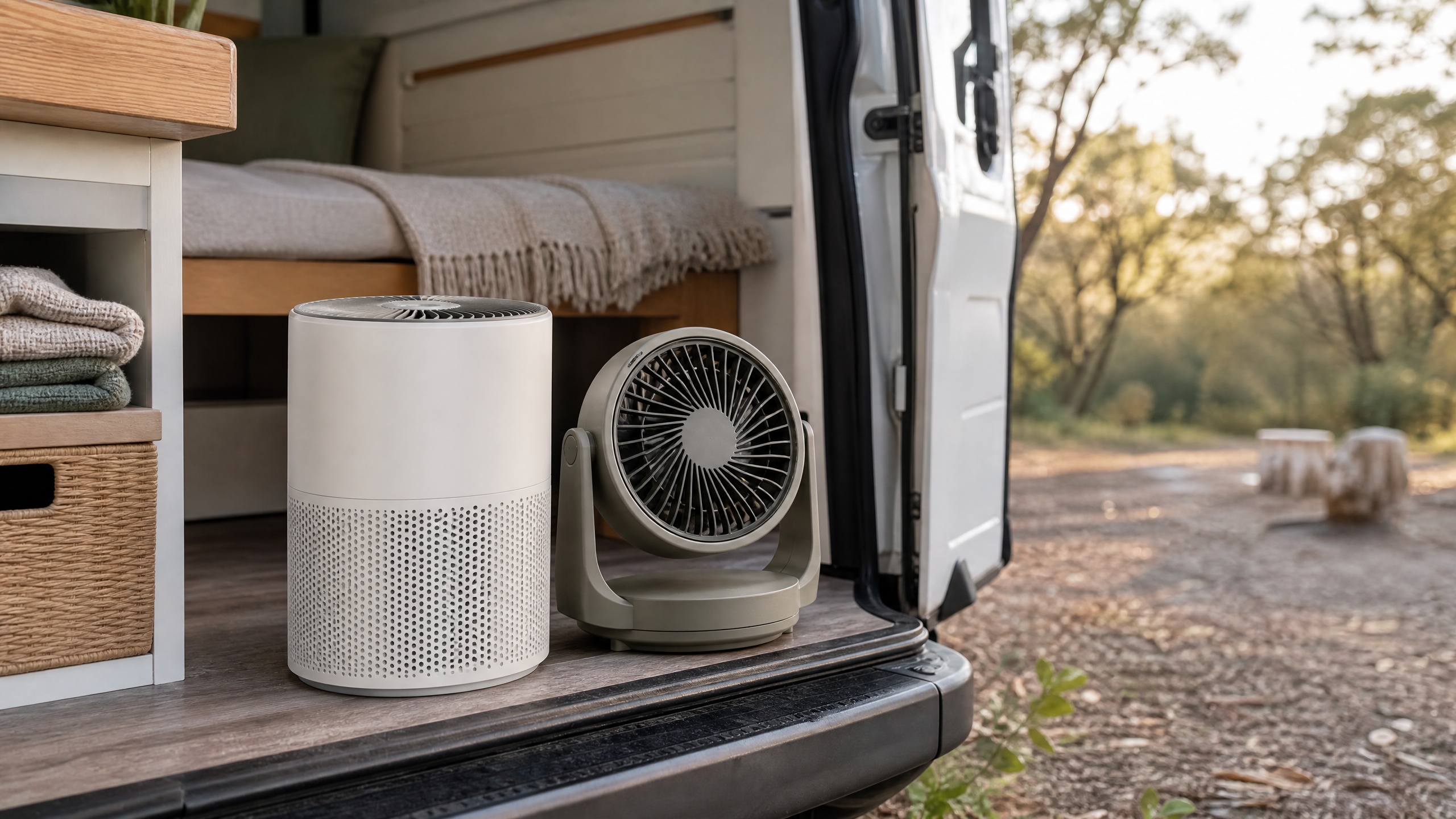
The single most useful thing to understand before you spend a cent is that a fan and a purifier fix completely different problems, and confusing the two is the classic mistake. A fan moves air. It breaks up the still, warm layer that pools under a van roof, cuts the stuffiness that wakes you at 3am, and pushes the damp breath and cooking steam that condenses overnight toward an opening. A purifier does none of that; it pulls air through filters to strip out fine particles and smells. Most vans need a fan first and a purifier only for a specific reason.
So the honest advice runs against the instinct to buy both. Sort your ventilation and a low-draw fan, and heat, stale air and most condensation are handled for very little money or power. Reach for a purifier only when dust, smoke, pet dander or lingering smells are a genuine problem you can name. Buying the pair by default is a reliable way to waste money and battery on something you do not have. This guide separates what each device actually does.
Quick Picks
- Best first buy: a quiet 12V or USB clip-on fan for heat and condensation.
- Best portable fan: a rechargeable battery fan you can move outside.
- Best for allergies and smoke: a compact HEPA-and-carbon purifier.
- Best hands-off purifier: a USB unit with an air-quality sensor.
- Best for tight builds: a 2-in-1 fan-and-purifier combo.

How to Choose a Fan or Purifier
Ignore the marketing wattage and start with power, because in a van that is the number that decides whether a device gets used or left in a cupboard. Look for genuine 12V or USB gear rather than a mains appliance run through an inverter. A good van fan sips under an amp on low and can run all night off a modest battery; a mains-powered room purifier draws far more than a small battery and solar setup wants to give, so it either flattens your power or never gets switched on.
Then judge a fan on noise and airflow. On the settings you will actually sleep with, it should be quiet and still move useful air, with a fixed head aimed to set up a cross-flow usually doing more than an oscillating one that spreads its effort thin. A secure clip or magnetic base that survives corrugations matters more than a long feature list. The genuine van icon here is the Caframo Sirocco, and the clones chase its quiet, low-draw formula.
For a purifier, the pairing that matters is a true HEPA filter for fine particles, which captures around 99.97 per cent of dust, pollen and smoke, plus an activated-carbon layer for odours. Brands like Levoit and Philips build compact units that suit a small cabin; you do not need a large room’s clean-air rating. Factor in the ongoing cost of replacement filters, which is the real expense over time, and remember a purifier does nothing for condensation or stale air.
The Fans and Purifiers
Check today’s prices on Amazon →
12V or USB Clip-On Fan
The first thing most vans actually need, and the cheapest to run. A clip-on 12V or USB fan draws next to nothing, clamps to a shelf, bed rail or cupboard edge, and, aimed to pull cool air in one opening and push warm air out another, fixes heat, stuffiness and much of the morning condensation on its own. Look for two or three speeds and a base that grips through corrugations. The Caframo Sirocco is the benchmark; plenty of low-draw clip fans borrow the idea. See current 12V clip-on fan prices on Amazon.
Rechargeable Battery Fan
When you want air where there is no power point, a rechargeable fan earns its keep. Its own battery means it runs on the picnic table, in the awning, or clipped near the bed without touching the house battery, then tops up over USB. Runtimes stretch to many hours on low, and a built-in light is a handy bonus for a reading lamp. It will not shift the air of a fixed 12V fan indefinitely, so treat it as the flexible extra rather than the main circulation fan. Check current rechargeable camping fan stock on Amazon.
Compact HEPA-and-Carbon Purifier
The purifier to buy if you buy one at all. A compact unit that pairs a true HEPA filter with an activated-carbon layer handles both halves of the job: HEPA traps the fine dust, pollen and smoke that gets in on unsealed tracks, and carbon absorbs cooking and damp smells. A van is a tiny space, so a small unit clears it easily. The running cost is the filters, so check how often they need changing and keep a spare. It does nothing for stale air, so pair it with a fan. Check the latest compact HEPA air purifier range on Amazon.
USB Purifier with Air-Quality Sensor
A step up in convenience rather than cleaning power. These add a particle sensor that reads the air and ramps the fan up when dust or smoke rises, then settles back to a quiet trickle when the air is clear, which saves power and stops it droning all night. The sensor is genuinely useful when you travel through variable conditions, since it reacts before you notice. Look for one that still runs happily on USB and lets you force a low, quiet mode overnight regardless of what the sensor wants. Compare USB air purifier sensor options on Amazon.
2-in-1 Fan-and-Purifier Combo
For a build where every centimetre counts, a combo unit puts circulation and filtration in one housing, so you free a shelf and run a single cable. It is the neat answer when you genuinely want both jobs and cannot spare the space for two devices. The compromise is that a combo rarely matches a dedicated fan for airflow or a dedicated purifier for filter capacity, so buy it for the space saving with eyes open, not expecting it to beat two purpose-built units. Check the draw on the fan side. See how the fan air purifier combo options stack up on Amazon.

Comparison
| Device | Fixes | Power draw | Watch-out |
|---|---|---|---|
| 12V clip-on fan | Heat, stuffiness, condensation | Under 1A on low | Aim it for cross-flow |
| Rechargeable fan | Air anywhere, no power point | Own battery, USB top-up | Not a full-time fan |
| HEPA-and-carbon purifier | Dust, smoke, odours | Low, USB or 12V | Ongoing filter cost |
| Sensor USB purifier | Auto response to bad air | Low, variable | Force a quiet night mode |
| Fan-and-purifier combo | Both, in one unit | Low to moderate | Master of neither |
Frequently Asked Questions
Do I need a fan or a purifier in a van?
A fan moves air and cuts stuffiness and condensation; a purifier cleans particles and odours out of it. They are not interchangeable. Most people should start with a fan and good ventilation, and add a purifier only if allergies, smoke or smells are a real, named problem rather than a vague worry.
How much power do they draw?
Small 12V or USB fans sip power and run all night off a modest battery. Purifiers vary, and mains models on an inverter are the ones that hurt, so check the amp draw against your battery and solar before you buy rather than after. A device you cannot afford to run is not a bargain.
How do I cut condensation?
Ventilation is the main fix, so crack a vent and keep air moving; a fan speeds it up by pushing the damp air toward the opening. A purifier will not help, because it filters air without removing moisture. Cooking with a lid on and drying wet gear outside make a bigger difference than any gadget.
Do the filters cost a lot to keep replacing?
Over the life of a purifier, the filters are the real expense, not the unit. HEPA and carbon layers clog and stop working, faster in dusty conditions, so budget for regular replacements and keep a spare on board. A purifier running a dead filter is just a noisy box drawing power.
The Bottom Line
Sort ventilation and a quiet 12V fan first, since together they fix heat, stuffiness and most condensation for very little outlay. Treat a purifier as a targeted add-on for allergies, smoke or odours rather than a default, and choose the compact HEPA-and-carbon unit if you buy one. Match every device to your power budget so you actually run it instead of resenting the draw, and the cabin stays cool, fresh and quiet without punishing the battery.
Related: portable induction cooktops.