
This page contains affiliate links. Far Cornel may earn a commission if you buy through them, at no extra cost to you.
See the top-rated gear on Amazon →
Quick answer: For nearly any rig, a quality rated soft shackle with a clearly stated breaking strength well above the vehicle’s weight is the easy pick: lighter, safer and kinder to gear than steel. Add a moveable chafe sleeve for abrasive points, step up to a high-rated shackle for a heavy rig, and keep one rated steel bow shackle for dragging over sharp rock. Buy honest ratings, not big numbers on a packet.
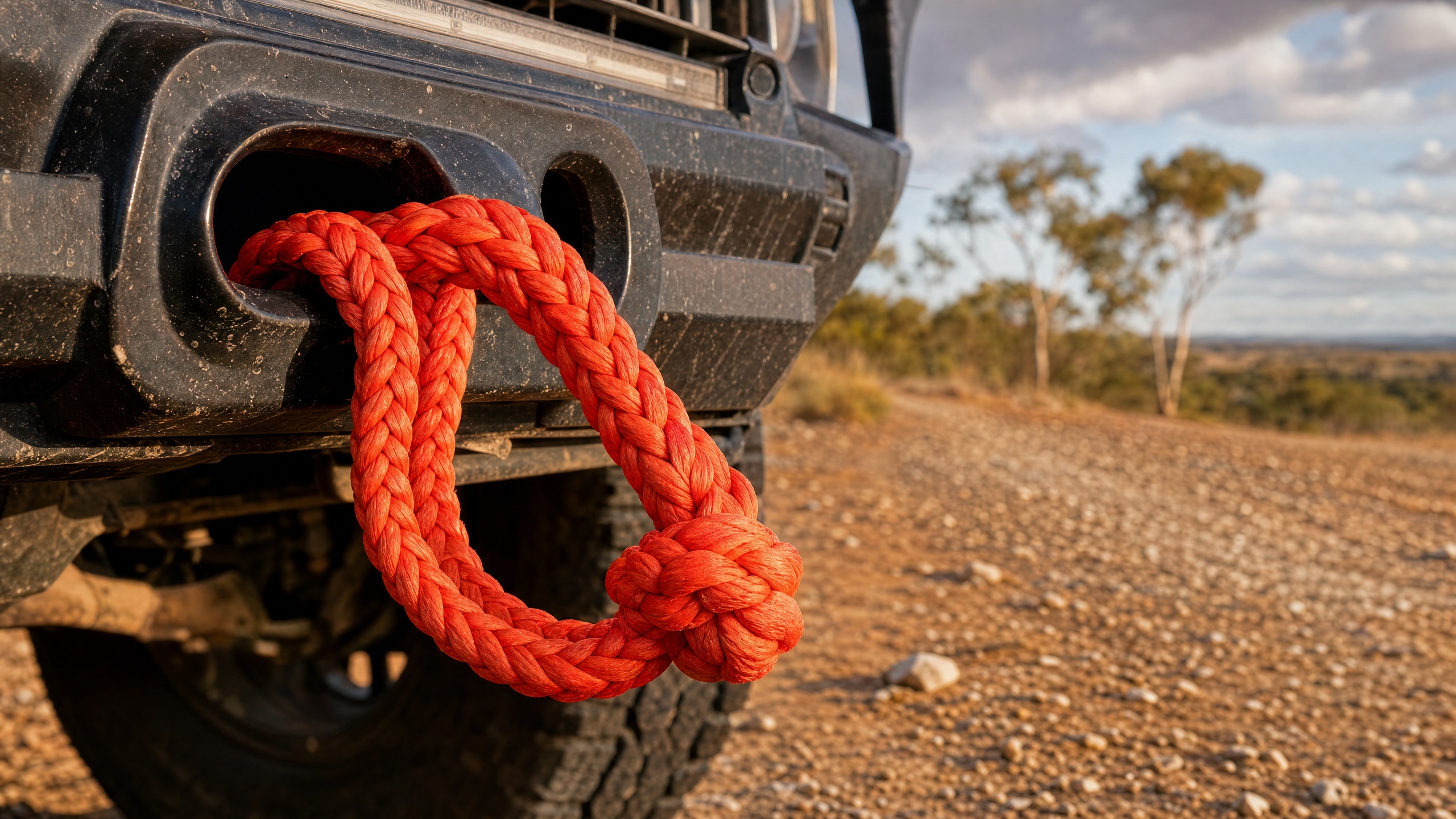
Soft shackles have quietly taken over serious recovery kits, and for good reason. A loop of woven synthetic rope with a stopper-knot closure now does the job a heavy steel bow shackle used to, at a fraction of the weight and with a large margin more safety. The trick is understanding why they work, and the one place steel still earns its keep.
That last point matters, because the internet talks about soft shackles as if they have no downside, and they do. Not every soft shackle is fit for heavy recovery, recovery loads are serious, and synthetic fibre has a genuine weakness the marketing skips over. So this guide stays practical: what actually gives a soft shackle its strength, how to spot a real one from an invented number on a packet, and how to use it without turning a clever bit of kit into a liability.
Quick Picks
- Best overall: a rated soft shackle with an honest breaking strength above your vehicle’s weight.
- Best for abrasion: a soft shackle with a moveable chafe sleeve.
- Best for heavy rigs: a high-rated soft shackle for loaded vehicles and trailers.
- Best value: a multipack so you always have a spare in the kit.
- Best for sharp edges: a rated steel bow shackle for rock and abrasive work.

How to Choose a Soft Shackle
Start with why they took over, because it tells you what to look for. The headline is safety: a steel shackle is a dense lump of metal, so if a recovery line snaps under load that mass becomes a projectile that can kill. A soft shackle stores far less energy and simply drops. Add the weight saving, the immunity to rust, and the way it cinches onto a recovery point without a spanner, and the case writes itself. Here is the myth worth busting, though: a soft shackle is not magic, and it will still fail if you abuse it.
Strength lives in the fibre and the splice. Good shackles use twelve-strand ultra-high-molecular-weight polyethylene, the material sold as Dyneema or Spectra, which is famously stronger than steel by weight, but cheap copies cut corners on both the fibre and the splice. Look for a clearly stated minimum breaking strength several times your vehicle’s loaded weight, published by a brand that gives real figures rather than a vague, oversized number on the packet. Saber, ARB and Bushranger are among the names that state honest ratings.
Then weigh up the practical extras. A moveable chafe sleeve is more important than it looks, because the one thing synthetic rope hates is being sawn over a sharp edge or a rough recovery point, and the sleeve lets you put protection exactly where the shackle contacts metal. Check the stopper knot is large and cleanly formed so it cannot pull through, and that the loop closes without trapping grit. Practise opening and closing it at home before you need it under pressure.
A soft shackle is only ever as strong as what you loop it through, so treat the attachment point as part of the system: use a rated recovery point with a stated capacity, never a tow ball, a factory tie-down tab or the lip of a bash plate. Match its breaking strength to the rest of the kit — a good rule of thumb is a minimum breaking strength at least two to three times the loaded weight of the vehicle — and keep the knot seated and the loop off any sharp edge, which is exactly what a moveable chafe sleeve is for. The real safety advantage over a steel bow shackle is that a soft shackle cannot become a flying missile if something lets go, but it is not immortal: grit, UV and friction heat quietly cook the fibres, so inspect each one for furring, glazing or a stiff glassy feel and retire any that shows it. A ten-dollar loop is never worth a windscreen.
The Shackles
Check today’s prices on Amazon →
Standard Rated Soft Shackle
The one most drivers should buy, and buy a couple of. A standard rated soft shackle in the common size handles the everyday recovery jobs, cinches onto a rated point in seconds, and weighs so little you forget it is in the kit. The whole decision here is the rating: choose one with a published minimum breaking strength comfortably above your loaded vehicle, from a brand that states a real figure. Saber and ARB shackles are the safe reference. Skip anything selling only a big, unexplained number. Check the latest rated soft shackles
Soft Shackle with Chafe Sleeve
The version worth paying a little more for if your recovery points or bar edges are rough. A moveable sleeve slides along the shackle so you can sit the protection right where it rubs on metal or another component, which is the single most effective way to stop a soft shackle wearing through. The sleeve is cheap insurance against the fibre’s one real weakness. Look at soft shackles with a chafe sleeve
Heavy-Duty High-Rated Soft Shackle
For a loaded touring rig, a caravan tug, or anyone who is regularly the vehicle doing the pulling, a thicker, higher-rated shackle gives a bigger safety margin. The larger diameter raises the breaking strength and shrugs off wear better, at a small cost in weight and bulk. Match it to a matching-grade rope and recovery points, because a chain is only as strong as its weakest link and there is no point in an oversized shackle bolted to an underrated point. Bushranger and others rate shackles for exactly this heavier use. Find the right heavy-duty soft shackle
Soft Shackle Multipack
Recoveries rarely need only one connection point, and a shackle that is fuzzed or cut has to be retired on the spot, so a spare is not a luxury. A multipack keeps a fresh shackle in the kit at all times and lets you rig a slightly more complex recovery without borrowing from someone else. Buy a pack from a brand that rates every shackle in it, not a bag of unmarked loops, and store them in the supplied pouch out of the sun. See current soft shackle multipack prices
Rated Steel Bow Shackle
The honest counterpoint, because steel is not obsolete. Where a shackle must be dragged over sharp rock or a hard abrasive edge, synthetic fibre is vulnerable and a hardened steel pin simply survives. A single rated bow shackle in the kit covers that job so you are not sacrificing a soft shackle to abrasion. Keep it for the abrasive work and let the soft shackles handle everything else, and treat its rating with the same respect: buy a stamped, load-rated shackle, not an unmarked hardware-shop lump. Compare rated steel bow shackle prices

Comparison
| Type | Rating to look for | Weight vs steel | Best for |
|---|---|---|---|
| Standard soft shackle | Well above loaded weight | A fraction | Everyday recovery |
| With chafe sleeve | Same, plus protection | A fraction | Rough points, sand, grit |
| Heavy-duty high-rated | Larger margin | Still light | Loaded rigs and tugs |
| Multipack | Every one rated | A fraction | Spares and complex rigs |
| Steel bow shackle | Stamped load rating | Heavy | Sharp rock and abrasion |
Frequently Asked Questions
Are soft shackles as strong as steel?
A quality rated soft shackle matches or exceeds the working load of common steel shackles, provided you buy a genuine rated one and check its stated figure. The risk is not the concept but the cheap, unrated copies with invented numbers. Buy on published breaking strength from a brand that stands behind it.
Why are they safer than steel?
Because in a failed recovery any heavy metal in the line carries huge energy and can fly. A soft shackle stores far less and drops rather than launches, which is why recovery-savvy drivers switched. It is not indestructible, but it removes a lot of unnecessary mass from the system, and that is the whole safety argument.
How do I look after them, and when do I retire one?
Keep them clean, rinse off grit, and inspect for cuts, abrasion and heat glaze before each trip. They wear rather than bend, so retire any that look cut, fused or heavily fuzzed instead of trusting them. Store them out of the sun, because prolonged UV quietly weakens the fibre over time.
Can I use one on a tow ball?
No. Only ever connect a soft shackle to a rated recovery point, never a tow ball, a tie-down eye, or anything not designed for shock loads. The shackle is only as safe as what it is attached to, so an unrated anchor point undoes every bit of the shackle’s own strength.
Which soft shackle brands can I trust?
Stick to established recovery brands that print a rated working load and breaking strain on the shackle itself. Saber Offroad is the benchmark for a sheathed shackle with a proper chafe guard, ARB is the safe mainstream default, and Maxtrax makes a shackle sized to pair with its recovery boards. Bushranger is a solid value option. Whatever the name, buy the rated version for your vehicle weight and retire any shackle once the eye or knot area looks furry, glazed or sun-bleached.
The Bottom Line
A good soft shackle is one of the easiest upgrades to justify: lighter, safer and more versatile than the steel it replaces, for very little money. If you only ever drive sealed roads it is not a priority, so spend on the basics first. If your trips include sand, mud, ruts or remote tracks, choose one with an honest breaking strength well above your vehicle’s weight, a chafe sleeve, and quality fibre, use it only with rated points, and inspect it often. Keep a steel shackle for abrasive work, and the soft one will outlast several sets of straps.
A soft shackle is one link in the recovery chain, so read it alongside our guides to the best kinetic recovery ropes and snatch straps, the best traction boards, and the rated underbody protection and recovery points they all anchor to.