
This page contains affiliate links. Far Cornel may earn a commission if you buy through them, at no extra cost to you.
See the current soft plastic kits on Amazon →
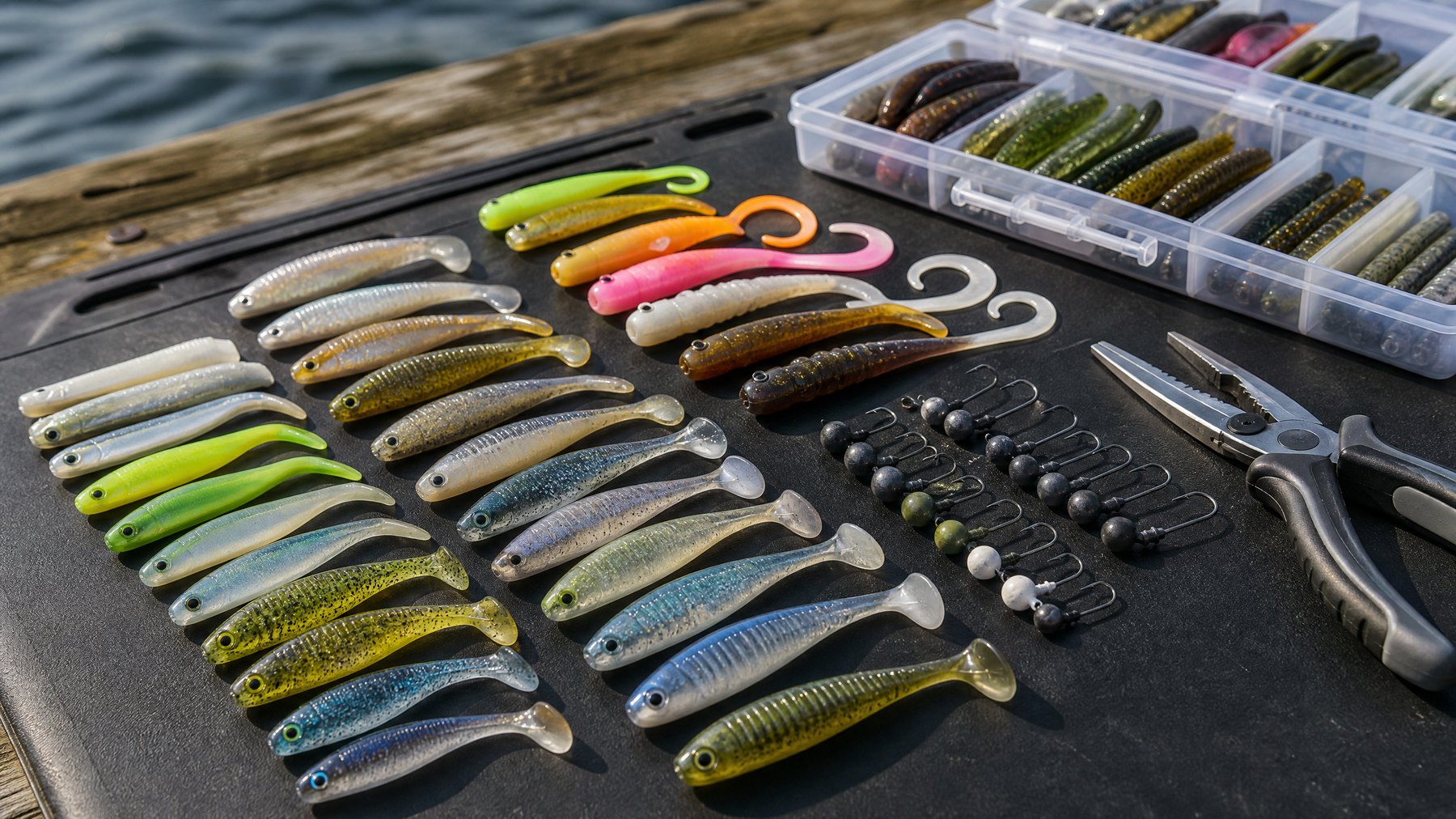
Quick answer: a good starter kit pairs 3–4 inch paddle-tails and curl-tail grubs with a spread of jig heads — enough to catch flathead, bream and whiting from the first session. Add a jerk-shad kit for snapper and trevally, and a creature or prawn kit for fussy bream and bass. Proven brands like Berkley and Samaki help, but the real trick is matching jig-head weight to the depth and rigging the plastic dead straight, not chasing colours.
Walk into any tackle shop and you will be sold colour. Whole racks of it, in shades with names like “motor oil” and “bubblegum” — and it is almost never the reason a fish eats a soft plastic. What actually gets bites is a plastic rigged dead straight, on the lightest jig head that reaches the fish, worked slowly enough to look like something worth eating. Colour is the final five percent, and a kit that is all colour and no jig-head range sets a beginner up to fail.
That is the case for buying a kit instead of a wall of single packets. Picking plastics one bag at a time, then the matching jig heads, then working out which weight suits which tail, is slow and quietly expensive. A well-built kit hands you a working spread of tails, sizes and heads in one tray, so your first sessions go into learning the retrieve rather than second-guessing in the shop. The catch is buying a kit that suits your water — not the one with the biggest number on the front.
Quick Picks
- Best all-round starter: 3–4 inch paddle-tails and curl-tail grubs with matched jig heads.
- Best for finesse: a curl-tail grub kit for fussy bream, whiting and redfin.
- Best for reaction strikes: a jerk-shad kit for snapper, trevally and bigger fish.
- Best for fussy fish: a creature and prawn-imitation kit.
- Best foundation: a matched jig-head assortment to fish the lot properly.

How to Choose a Soft Plastic Lure Kit
Start with the fish, because the target sets the size and style. Flathead in the shallows want paddle-tails and curl-tails in the 3–4 inch range; bream and whiting want smaller grubs and prawn imitations; snapper and trevally want larger jerk shads with a darting action. A kit that suits your water beats a bigger one full of sizes you will never tie on, so read what is actually inside the tray rather than the piece count on the front.
Then check the jig heads, because they are half the kit and where cheap ones cut corners. A brilliant plastic on the wrong head is useless, so the best kits carry a range of weights — from around 1/8 oz for shallow, slow work up to 1/2 oz or more to hold bottom in current — matched to a hook size that suits the plastics. The lightest head that still reaches the fish is almost always the right one: a slow, natural fall is where most of the hits come, because a plastic does its best work sinking on a slack line.
Last, look at how the kit is built to last and to travel. Separate compartments stop a loose hook burying in a soft tail and stop incompatible plastics warping each other, sealed lids stop scented baits leaking their oils over everything, and a mix of natural, bright and dark tones covers changing water clarity without a hundred novelty colours. You want range and organisation, not a headline number.
The Kits to Consider
Compare soft plastic kits on Amazon →
The paddle-tail kit
The paddle-tail catches the most fish for the least skill, which is why it anchors almost every good kit. The flat “boot” tail thumps out a tight swimming action on a straight slow roll, so even a beginner who just winds it back is fishing a lifelike lure. In 3–4 inch it covers flathead, and it scales up for barramundi and mangrove jack. Keep a mix of natural and brighter tones and a few tougher bodies for toothy fish. Berkley builds paddle-tails that keep swimming even at a crawl, which is exactly when a flathead decides to eat. Browse the paddle-tail plastics on offer.
The curl-tail and grub kit
For finesse, nothing beats a curl-tail grub fluttering on the drop. The thin tail quivers with almost no input, which is deadly on bream, whiting and redfin that a fast, aggressive lure would spook, and it shines on a slow lift-and-drop that lets the grub flutter down on a slack line. It is forgiving to fish, cheap to stock in numbers, and the style most likely to rescue a slow day — my pick for the first plastic a beginner should master. Keep small jig heads alongside so you can fish it as light as the water allows. See the curl-tail grub range.
The jerk-shad kit
When you are chasing bigger, more aggressive fish, a jerk shad brings the erratic, darting action that triggers a reaction strike. Worked with sharp rod twitches, it darts and glides like a wounded baitfish, then draws the hit on the pause. It is a less forgiving lure — it rewards rod work over a straight wind — but on snapper, trevally and other predators it out-fishes a steady swimmer. Rig it on a slightly heavier head than you would expect so it darts crisply instead of rolling. Compare the jerk-shad options.
The creature and prawn kit
When fish turn picky and stop chasing, a prawn or creature imitation fished slow and low often turns the session. These stubby, leggy plastics copy the shrimp and crabs that bream, bass and estuary fish grub for on the bottom, and they earn hits when a swimming lure gets ignored — hopped gently along the floor or left to sit dead-still. It is not a fast search lure, but as the change-up when nothing is chasing, it deserves its own compartment. Look over the prawn and creature baits.
The jig-head assortment
Plastics are only half the system, and the jig heads are the half beginners skimp on. A great plastic on the wrong head is useless, so a kit needs a spread of weights — light heads for shallow, slow presentations up to heavier ones that hold bottom in current — matched to a hook size that lets the point sit right and the lure ride straight. Store them in their own compartment, because a loose hook buried in a soft tail is a rig ruined before you cast. Check the current jig-head assortments.
Comparison
| Lure style | Action | Target species | How to work it |
|---|---|---|---|
| Paddle-tail | Tight swimming kick | Flathead, barramundi, mangrove jack | Slow roll or hop and drop |
| Curl-tail grub | Fluttering tail on the drop | Bream, whiting, redfin | Light lift-and-drop |
| Jerk shad | Erratic darting | Snapper, trevally, predators | Sharp twitches, then pause |
| Creature / prawn | Subtle, bottom-grubbing | Bream, bass, estuary fish | Slow hops along the floor |
| Jig-head choice | Sets the depth and the fall | All of the above | Lightest that holds bottom |

Frequently Asked Questions
How do I rig a soft plastic so it swims right?
Lay the jig head alongside the plastic to judge where the hook should exit, push the point into the centre of the nose, thread it down the body, and bring it out on that mark so the plastic sits dead straight. A crooked plastic spins, twists your line and puts fish off — rigging it true is the single most useful thing a beginner can fix.
What jig-head weight do I actually need?
Use the lightest head that still reaches the depth and holds bottom in the current, because a slower, more natural fall draws the most hits — a lot of takes come as the plastic sinks. Carry a range so you can go heavier in wind or deep water and lighter in the shallows. Weight matters far more than the colour of the plastic.
Why do my plastics warp and fuse together?
Different plastic types react. Some ultra-stretchy, hard-wearing plastics do not rot but will warp standard PVC baits stored against them, and scented plastics leak their oils over everything. Keep different materials in separate compartments and store the tray out of direct heat and sunlight.
Do I really need all those colours?
No. A natural tone, a bright one and a dark one cover most water clarities, and presentation decides far more than shade. Buy a kit for its range of tails and jig heads, not its colour count — the 80-piece tray that is mostly novelty colours is worse value than a smaller one with the right heads.
The Bottom Line
A well-chosen kit turns a wall of confusing packets into one ready-to-fish tray. Match the plastics to your target fish, make sure the jig heads suit them, and put your energy into rigging straight and matching the weight to the depth rather than agonising over colour. Keep the materials separated, store it out of the sun, and start with a paddle-tail and a curl-tail grub on light heads — learn those two and the rest of the kit falls into place.
Related guides
More for the plastics angler: our guides to jig heads and soft plastics, the spinning reels you cast them with, and the beginner fishing gear checklist to round out the kit.