
This page contains affiliate links. Far Cornel may earn a commission if you buy through them, at no extra cost to you.
See the top-rated gear on Amazon →
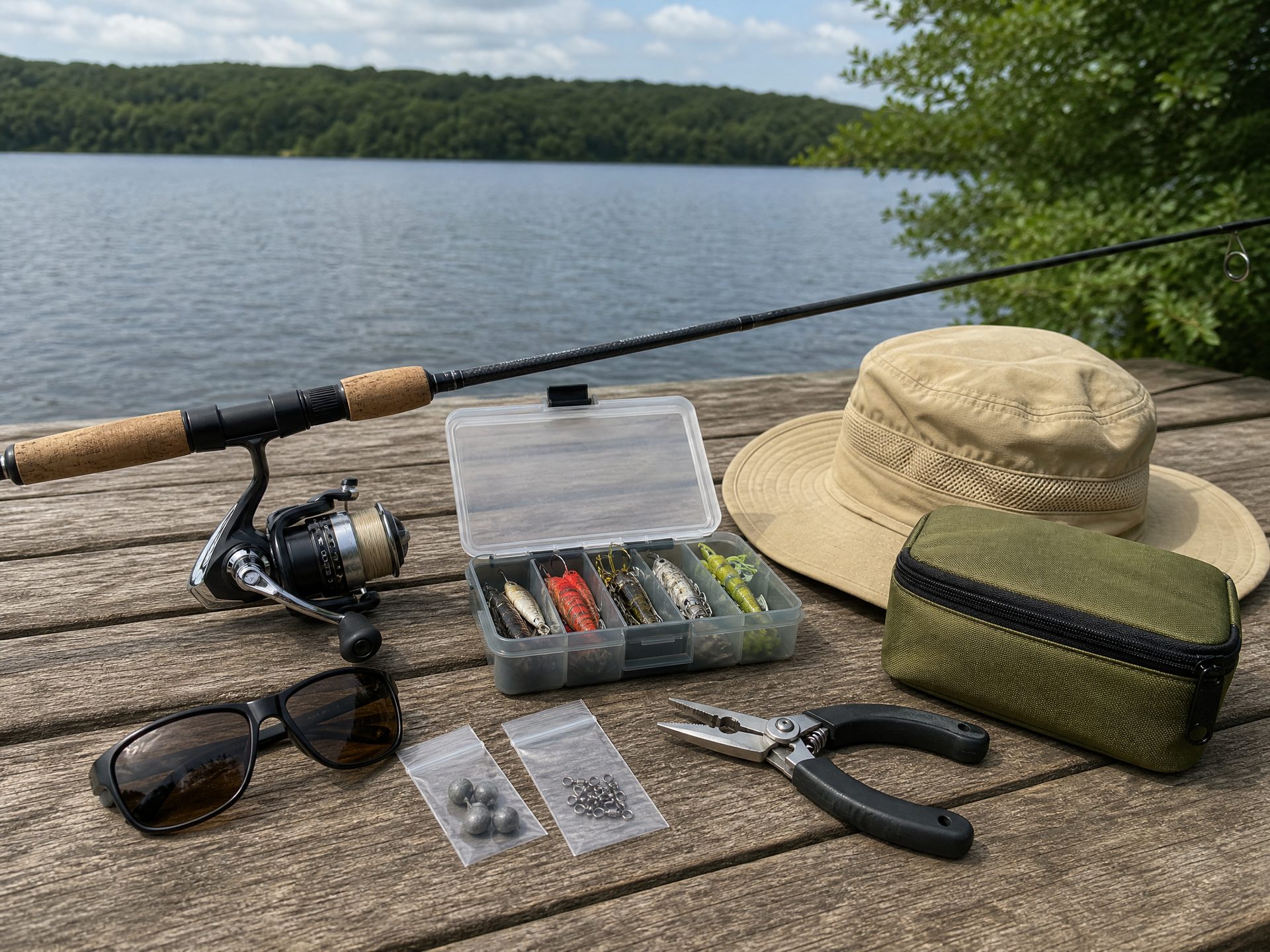
Quick answer: For a first outfit, start with a 6–7 ft light to medium spin rod-and-reel combo — it casts both bait and lures and is the easiest setup to learn on. Add a spool of forgiving monofilament, a small kit of hooks, sinkers and swivels, a compact tackle box, and a pair of long-nose pliers with line cutters. Buy braid, a second rod and a tray of lures later, once you know what you are chasing.
Most people spend their first fishing budget backwards. They buy a fistful of shiny hard-body lures, a reel with a number they read about online, and a rod far heavier than the fish they will actually meet off a jetty or a lake edge. Then the lures sit in the tray, the reel outclasses the rod, and the whole outfit feels like hard work. A first kit should be light, cheap enough that a snapped-off rig does not sting, and simple enough that you actually take it out on a Tuesday evening.
A genuinely capable beginner setup costs less than most people think, and the same five or six items cover bream off a wharf, trout on a lake or a flathead on a soft plastic. Names like Shimano, Daiwa, Penn and Okuma all sell matched combos aimed at first-timers, so you are not gambling on mismatched parts. Get the basics right, learn a couple of knots, and you will out-fish someone with a boot full of gear they have not figured out yet.
Quick Picks
- Best overall: a 6–7 ft light-medium spin rod-and-reel combo from a name like Shimano or Daiwa.
- Best line to learn on: forgiving monofilament in 4–8 lb, before you graduate to braid.
- Best organiser: a compact tackle box with adjustable dividers and a latching lid.
- Best terminal kit: a small pre-sorted pack of hooks, sinkers and swivels.
- Best most-forgotten buy: long-nose pliers and dedicated line cutters.

How to Choose a Beginner Fishing Kit
Two questions settle most of the decision: what will you stand next to, and what swims there? A calm lake edge, a busy wharf, a shallow estuary flat and a beach gutter each ask for slightly different gear, but a light-to-medium spin combo in the 2–4 kg line class handles the overlap better than anything else. Go heavier only when you already know you are chasing something that pulls hard, because an over-gunned rod robs you of the fun of a small fish and the feel of a bite.
Match the reel size to the rod so the outfit balances in your hand — a 2500 or 3000 reel on a 7 ft rod is the classic all-rounder. For line, start with monofilament: it stretches, forgives a clumsy strike, and ties simple knots without a leader. Braid is thinner, casts further and is bite-through-to-your-fingertips sensitive, but it needs a leader and better knots, so save it for your second spool. Stainless or anodised terminal tackle earns its keep near saltwater, and a freshwater rinse afterwards is the difference between gear that lasts and gear that seizes.
Spend a little of the budget on skill, not just kit. One reliable knot — an improved clinch or a uni — and knowing how to set a drag will land more fish than a pricier reel ever will. The gear gets you to the water; technique gets the fish in the net.
The Beginner Fishing Gear
Check today’s prices on Amazon →
The all-round spin rod-and-reel combo
This is the heart of a first kit and the one item worth the most thought. A matched 6–7 ft light-medium spin combo casts bait rigs and lures, breaks down for the boot, and is sold by every brand worth trusting. Shimano’s Sienna and IX, Daiwa’s Crossfire and Sweepfire, Penn’s Pursuit and Okuma’s starter ranges all land in the beginner bracket and come pre-balanced, so the rod and reel suit each other. Pick a 2500–3000 reel size and choose the one that feels alive in the hand, not the one with the biggest number on the box. Compare the light-medium spin combos in this size
A spool of beginner-friendly line
Line does more for your success than almost any other cheap buy, and it is where beginners quietly sabotage themselves with old, brittle spools. Start with fresh monofilament around 4–8 lb from a range like Berkley Trilene or Daiwa — it is stretchy, forgiving and knots easily. Once you are comfortable, a thin braid such as Berkley Fireline or Daiwa J-Braid with a short leader will transform your casting distance and bite detection. Re-spool at least once a season, because sunlight and salt tire line out faster than you would think, and tired line is what loses the fish you will most want to land. Check what a spool of forgiving mono costs
A simple terminal-tackle kit
Most beginners overbuy lures and underbuy the bits that actually catch fish. A small pack of hooks in a few sizes, some ball and bean sinkers, a handful of swivels and a spool of leader will rig you for bait fishing almost anywhere. Trusted hook names like Mustad and Gamakatsu hold their points through a session; cheap bulk hooks bend on the first solid fish and blunt on the first snag. Keep the sizes sensible, too — a hook that matches the bait and the mouth of the fish will out-catch a big one every single time. Browse a starter kit of hooks, sinkers and swivels
A compact tackle box
Loose tackle in a bag is a tangle waiting to happen, and a rusty hook you cannot find is no use at all. A compact box with adjustable dividers keeps hooks, sinkers, swivels, a few lures and your pliers sorted, and a latching lid stops the lot spilling in the boot. Plano and Flambeau make the trays most anglers end up owning, and a single 3600-size box is plenty to start with. Buy one you can open one-handed while you balance on a rock or a wharf rail, because that is where you will actually be using it. Look for a compact tackle box that stays light
Long-nose pliers and line cutters
This is the most-forgotten buy and the one that quietly saves the day. A pair of long-nose fishing pliers unhooks fish, crimps sinkers, opens split rings and handles a hook that has found a finger instead of a fish; dedicated braid scissors or line cutters do the cutting your teeth should not. Corrosion-resistant or coated tools survive saltwater if you rinse them, while bare steel rusts solid over a single weekend. Clip them to the box or a lanyard so you never leave them sitting on the tailgate. See the long-nose pliers with built-in cutters

Comparison
| Item | What it does | Beginner-friendly choice | Easy mistake to avoid |
|---|---|---|---|
| Spin rod-and-reel combo | Casts bait and lures; the core of the kit | 6–7 ft light-medium, 2500–3000 reel | Buying a heavy surf rod you cannot feel a bite through |
| Line | Connects you to the fish; affects casting and feel | Fresh 4–8 lb monofilament to start | Fishing old, sun-perished line |
| Terminal tackle | Hooks, sinkers and swivels that present the bait | Small mixed pack of quality hooks | Cheap hooks that bend and blunt |
| Tackle box | Keeps everything sorted and rust-free | One 3600-size box with dividers | A box too big to carry, or no latch |
| Pliers and cutters | Unhooking, rigging and safe line cutting | Coated long-nose pliers on a lanyard | Leaving them at home or in the car |
Frequently Asked Questions
Do I need a fishing licence to start?
It depends on where you fish. Rules vary by area, so check the local fishing authority before you go — some places require a paid recreational licence you must carry, others do not. It is a two-minute check that saves a fine and tells you the size and bag limits at the same time.
Should my first rod be spin or baitcaster?
Spin, without much doubt. A spinning combo casts light rigs further, tangles far less and is much easier to learn. A baitcaster is a rewarding second outfit once you are hooked and casting heavier lures, but it will only frustrate you as a first rod.
Monofilament or braid for a beginner?
Monofilament to learn on. It stretches, forgives a mistimed strike and needs no leader, so your knots are simpler. Move to braid with a short leader once your knots are reliable and you want the extra casting distance and bite feel it gives.
What is the one thing beginners always forget?
Pliers, line cutters and sun protection. None of them catch a fish, but forgetting them is what turns a promising session into a frustrating one, and a hook you cannot safely cut free is a genuine hazard.
The Bottom Line
A first fishing kit is about getting on the water, not owning the catalogue. A balanced spin combo, fresh monofilament, a tidy box of terminal tackle and a pair of pliers will catch fish in more places than any single specialist outfit. Learn two knots, rinse your gear after saltwater, and add to the kit only once you can name the problem a new item solves — that is how you spend less and catch more.
Once you have the basics sorted, these guides help you build from here: our beginner spinning rod and reel combos, a closer look at how to pick a spinning reel, and a first tray of soft plastic lures to start catching on artificials.