
This page contains affiliate links. Far Cornel may earn a commission if you buy through them, at no extra cost to you.
See the top camp axes and saws on Amazon →
Quick answer: Carry a folding saw and a hatchet together and you cover almost every camp firewood job — the saw bucks branches to length safely, the hatchet splits them, and the pair weighs less than one full-size axe. Reach for a Fiskars X7 hatchet for kindling, a Silky GomBoy or BigBoy for sawing, a Fiskars X11 when you split bigger rounds, and a hand-forged Gransfors Bruks Small Forest Axe as the buy-once heirloom. Skip the big splitting axe unless you work a base-camp woodpile.
Ask ten campers what you need to make firewood and half will say a big axe. Then watch what they actually reach for at the fire ring: nine times out of ten it is a folding saw, because cutting a branch to length is faster, safer and needs almost no skill. The axe question is really three questions — splitting, limbing, and cutting to length — and no single tool wins all three. Match the tool to the job and you carry less while doing more.
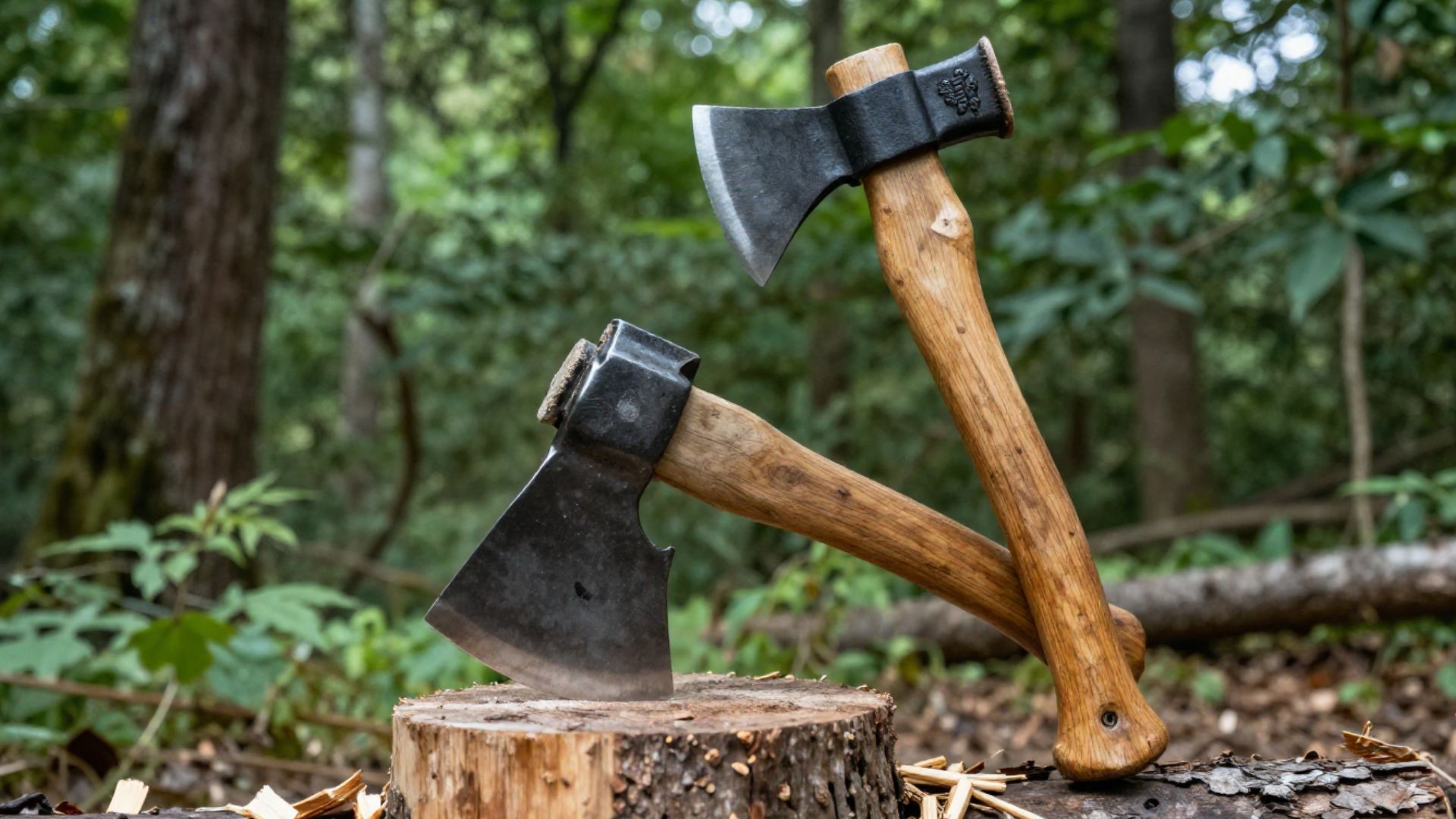
A hatchet splits kindling and small rounds and drives the odd stubborn peg; a larger camp axe adds weight and reach for bigger splitting and limbing; a folding saw chews through branches and logs with a fraction of the effort and risk of chopping. The combination most experienced campers settle on is a saw plus a hatchet, which together weigh less than one big axe and cover nearly everything. Here is how to choose, and the tools worth packing for the woodpile.
Quick Picks
- Best all-round hatchet: Fiskars X7, light and sharp with a near-indestructible handle.
- Best hand-forged axe: Gransfors Bruks Small Forest Axe, an heirloom for limbing and splitting.
- Best folding saw: Silky GomBoy or BigBoy, which cuts logs astonishingly fast for the weight.
- Best two-in-one: Gerber Gator Combo Axe, a hatchet with a saw stored in the handle.
- Best value splitter: Fiskars X11, an efficient splitting head at a friendly price.

How to Choose a Camp Wood Tool
Start with the wood you actually process and how far you carry the tool. Weekend campers burning branch wood and a few rounds rarely need more than a hatchet and a saw; if you split a big base-camp woodpile you will want a proper splitting axe. Be honest here, because a heavy full-size axe that stays in the vehicle helps nobody, while the saw comes out every single night.
Then look at head and handle. Head weight drives splitting power, but a heavier head tires your arm faster; a longer handle adds leverage and swing speed. On materials, composite handles like the Fiskars FiberComp are near-indestructible, weatherproof, and shrug off the learner misstrikes that snap wood, though they cannot be re-handled. Traditional hickory feels superb and absorbs shock, and it can be replaced for life, but it demands care. Premium hand-forged axes such as the Gransfors and Hults Bruk hold an edge for generations at a price, while mass-produced heads from Fiskars and Gerber deliver most of the performance for far less.
Two things trip people up. Geometry is one: a thin felling profile bites deep but jams when you try to split, while a wide splitting wedge pops rounds apart but is hopeless for fine cutting, so buy for your main job. The saw is the other: blade length sets capacity, hardened teeth that cut on the pull stroke (as on a Silky) tear through surprisingly large limbs, and a locking blade is a safety must. And a sharp edge is a safe edge, since a dull one glances and slips, so carry a small file and always store the tool sheathed.
Two things separate a good woodpile from a frustrating one, and neither is printed on the packaging. First, cut the right wood: standing-dead timber and downed limbs held off the ground burn hot and dry, while green, living wood is heavy, sappy and mostly hisses and smokes. Second, split safely. Never swing a blade down at a round balanced on bare ground with your shin in the firing line — stand the round on a solid splitting block, or use the kneeling contact method, bringing the hatchet and the wood down together so a miss buries itself in timber, not your leg. A stable base, a clear swing arc and a sharp edge do more for safety than any single tool.
The Wood Tools
Check today’s prices on Amazon →
Fiskars X7 Hatchet
The default camp hatchet, and hard to beat for the money. At roughly 600 grams with a low-friction blade and a virtually indestructible FiberComp handle, it splits kindling and small rounds, limbs branches, and laughs off the overstrikes that shatter wooden handles. It lives happily in a wet shed and carries a lifetime warranty. You cannot re-handle it if the composite is wrecked, and it runs out of puff on big rounds — if that is your weekend, jump to the X11 — but for one reliable, affordable hatchet it is the obvious pick. See what the Fiskars X7 is selling for right now
Gransfors Bruks Small Forest Axe
The buy-it-once, hand-forged option. On a roughly nineteen-inch hickory handle it weighs about a kilogram all up and excels at limbing, felling small trees and splitting smaller rounds, with an edge that holds beautifully and a handle you can replace for life. It is dearer than a mass-produced head and it rewards a clean swing, so it is not the axe to learn on if you tend to overstrike and chew the haft just below the head. But for a camper who wants one superb traditional axe to hand down, nothing here comes close. Check the going rate on the Gransfors Small Forest Axe
Silky GomBoy / BigBoy Folding Saw
The efficiency champion, and the tool I use most in camp. Silky’s hardened teeth cut on the pull stroke and slice through 6 to 8 inch logs with alarming speed — a whole night’s firewood in around ten minutes is realistic. The blade folds to protect the teeth and locks open for safe cutting, far lighter and safer than an axe for bucking wood to length. Choose the GomBoy for packability or the BigBoy for capacity; either earns its place over a second axe. Compare the Silky GomBoy and BigBoy saws
Gerber Gator Combo Axe
The clever space-saver. This hatchet stores a folding saw inside its handle, so you get both tools in one packable unit: saw the branch to length, then split it with the head. The combined weight beats a full-size axe plus a separate saw, and it is durable and handy. It is a jack-of-all-trades rather than a master of either — the saw shorter than a dedicated Silky, the head lighter than a real splitter — but for one grab-and-go tool that covers both jobs, it is a smart pick. Look over the Gerber Gator combo axe
Fiskars X11 Splitting Axe
The value splitter for bigger rounds. A size up from the X7, its splitting-head geometry and longer handle pop apart rounds that a small hatchet only bounces off, while the FiberComp handle keeps the weight sensible and survives abuse. It is the pick for anyone processing a real woodpile at a base camp who would rather not pay hand-forged money. It is more axe than you need for a single night close to town, but as an affordable splitter it is excellent. See current pricing on the Fiskars X11 splitter
Comparison
| Tool | Type | Best job | Weight | Watch-out |
|---|---|---|---|---|
| Fiskars X7 | Hatchet | Kindling, small rounds | Light | Struggles on big rounds |
| Gransfors Small Forest | Forest axe | Limbing, splitting | Medium | Price, rewards clean swings |
| Silky GomBoy / BigBoy | Folding saw | Cutting to length | Very light | Does not split |
| Gerber Gator Combo | Axe + saw | One-tool versatility | Medium | Master of neither job |
| Fiskars X11 | Splitting axe | Bigger rounds | Medium-heavy | Overkill near town |

Frequently Asked Questions
Do I still need an axe if I carry a folding saw?
For cutting wood to length, the saw wins on speed and safety every time. But it cannot split a round or drive a peg, which is where a hatchet earns its keep. Most campers carry both a saw and a small hatchet and leave the full-size axe at home.
Hickory or a composite handle?
Composite handles are near-indestructible, weatherproof and forgiving of misstrikes, but you cannot re-handle them. Hickory feels better in the hand, absorbs shock, and can be replaced when it breaks, at the cost of a bit more care. For a knockabout camp tool, composite; for a treasured axe you will maintain, hickory.
How do I use an axe or saw safely?
Cut on a stable block, keep your body and legs out of the swing path, and sheath the edge whenever it is not in use. Above all, keep it sharp, because a dull edge glances and slips. Most camp injuries come from a blunt tool or from rushing a tired swing.
Can I always collect firewood and light a fire?
No, and this catches people out. Collecting wood and lighting open fires is restricted or banned in many parks and during fire bans, and the rules change with the season. Always check the current local regulations and any fire restrictions before you head out.
The Bottom Line
Match the tool to the job and the whole task gets easier: a hatchet for kindling and small rounds, a larger axe for bigger splitting and limbing, and a folding saw — the safest and most efficient of the lot — for cutting wood to length. Plenty of campers carry a saw and a hatchet and skip the big axe. Choose composite for toughness or hickory for feel, keep the edge sharp and sheathed, and cut on a stable block away from your body. And because firewood collection and open fires are restricted or banned in many parks and during fire bans, always check your local regulations first.
Pair these with the rest of a good campfire setup: our guides to the best portable camping fire pits, best camp ovens and Dutch ovens, and best camping first aid kits round out the kit.