
This page contains affiliate links. Far Cornel may earn a commission if you buy through them, at no extra cost to you.
See the top-rated gear on Amazon →
Quick answer: for a bad back, buy a high-back chair with genuine lumbar support and a seat at least 45cm off the ground, so it supports the whole spine and lets you stand without folding down low. From there, a firm director’s chair suits meals and easy exits, a zero-gravity recliner takes pressure off the spine for a nap, a multi-recline chair lets you keep changing posture, and a high-seat raised chair suits taller bodies and stiff hips.
The wrong camp chair can undo a good day outdoors. A low, sagging seat drops your hips below your knees and leaves you hauling yourself upright, which is exactly what a sore back does not need. The right chair supports your spine, sits high enough to rise from easily, and holds its shape instead of collapsing into a hammock. This guide sorts through the styles that actually help.
Those three things, back support, a firm seat, and a sensible seat height, matter more than weight or pack size for a bad back, so weigh them first.
Quick picks
- Best overall: a high-back chair with real lumbar support and a firm seat.
- Best for getting up: a director’s chair with rigid armrests and an upright seat.
- Best for pressure relief: a zero-gravity recliner that elevates your legs.
- Best adjustability: a multi-recline chair so you can keep changing posture.
- Best for tall bodies: a high-seat raised chair for stiff hips and knees.

How to choose a chair for a bad back
Start with seat height, because it decides how hard the chair is to get out of. A seat around 45cm or higher keeps your hips level with or above your knees and lets you rise using your legs rather than wrenching your back, which low beach-style chairs make almost impossible. Then look for genuine lumbar support and a back tall enough to hold your whole spine, ideally with a headrest, so you are supported rather than slumped.
Next, judge the seat itself. A firm, well-tensioned seat that holds its shape supports you evenly, while a cheap sling sags into a hammock that rounds your lower back and aches within minutes. Check the weight capacity and frame sturdiness, since a solid frame keeps the support consistent, and accept that the most supportive chairs are heavier and bulkier, which is a fair trade for a back that lets you enjoy the evening.
Finally, build and fit: a chair only stays supportive if the materials hold. Heavy-denier polyester around 600D or a tough ripstop canvas resists stretching better than thin nylon, and a rigid steel or thick aluminium frame keeps the seat from flexing. A higher weight rating, say 150kg or more, usually signals a firmer, better-built chair even if you never near it. Check seat width and folded size against your body and boot before you commit.
The styles that help, and who each suits
Check today’s prices on Amazon →
High-back chair: full spine and neck support
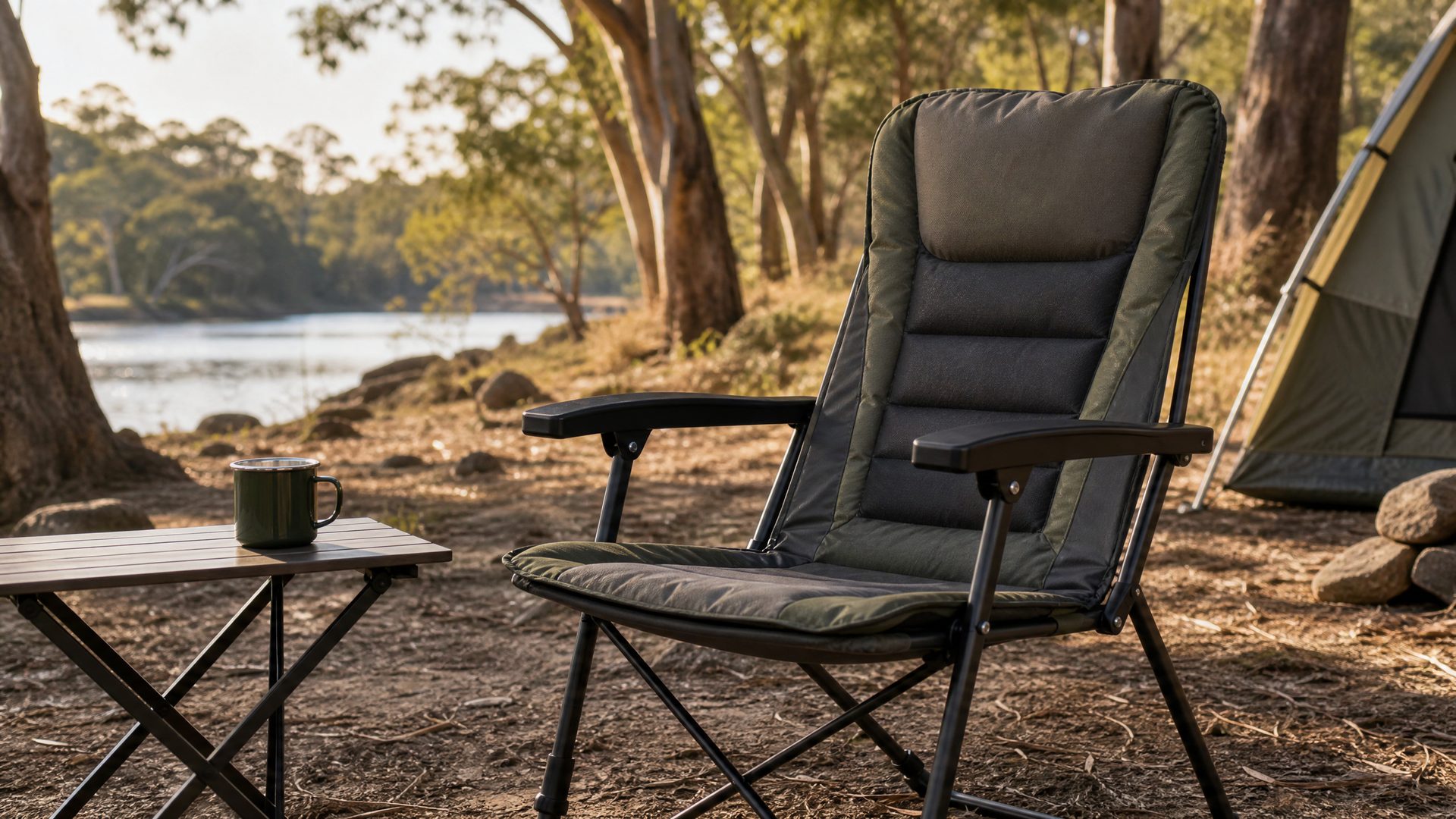
For most sore backs, reach for a high-back chair first. The backrest carries past your shoulders to support the upper back, neck and often the head, letting your spinal muscles switch off instead of holding you up. Pair that with a firm seat and rigid arms and you can sit all evening without stiffening up. The only real cost is packed size, since a tall back folds bigger than a sling. For comfort over pack space, start here. See what the high-back supportive chairs are selling for
Director’s chair: firm, upright, easy to rise from
A director’s chair keeps you upright on a flat, taut seat with solid armrests — the best style for eating at a camp table and getting up without a groan. The level seat stops the bucket effect that rounds your spine, and the height and rigid arms make standing easy. It reclines little to nothing, so it is a working-and-dining chair, not a napping one, and can be bulky folded. Check which director’s chairs are in stock right now
Zero-gravity recliner: takes pressure off the spine
To take the load off entirely, a zero-gravity recliner tilts you into a neutral position with your legs raised roughly to heart height, spreading your weight and easing pressure on the lower spine. It is superb for an afternoon rest or after a long drive. The catches: it is bulky and heavy, and you cannot eat at a table from it. Bring it alongside something upright, not as your only seat. Look over the current zero-gravity recliners
Multi-recline chair: change posture through the day
One of the best things for a bad back is to keep changing position, and a multi-recline chair is built for it. Several locked back angles let you sit upright to eat, ease back to chat, and drop further to rest, so no single posture stiffens you up. Check that the recline mechanism locks solidly, because a vague one that creeps is worse than no recline at all. Compare the multi-recline models and their price spread
High-seat raised chair: easiest in and out
Tall campers and anyone with cranky hips or knees often struggle less with the back than with getting up from a low seat. A high-seat raised chair lifts the seat to around 50cm or more, so you rise as easily as from a kitchen chair, using your legs, not your back. It trades some deep-recliner comfort for that easy in-and-out — a great deal if lowering and rising is what hurts most. Confirm the seat height, as it varies more than you would think. Find a tall, high-seat chair that suits your height
How the styles compare
| Chair style | Seat height | Back support | Best for |
|---|---|---|---|
| High-back chair | Medium to high | Full spine, neck and head | All-round comfort |
| Director’s chair | High | Upright, firm lower back | Dining and easy exits |
| Zero-gravity recliner | Low when reclined | Even, pressure-relieving | Resting and recovery |
| Multi-recline chair | Medium | Adjustable by angle | Changing posture often |
| High-seat raised chair | Highest | Upright, moderate | Stiff hips and knees |
Frequently Asked Questions
What actually makes a camp chair better for a bad back?
Three things above all. A seat high enough to stand from without folding low, which usually means around 45cm or more; genuine lumbar support with a back tall enough to hold your whole spine; and a firm seat that keeps its shape instead of sagging into a hammock. Padding, a headrest, and recline help, but those three fundamentals are what separate a chair that eases a bad back from one that aggravates it.
High-back or low sling?
High-back, almost always. A tall back supports your whole spine and often your neck, keeping you upright and evenly supported, which is exactly what a sore back needs. A low sling chair drops you into a rounded, slumped position with your hips below your knees, then makes you strain to get up. Low slings are lighter and pack smaller, so they suit fit backs and tight loads, but for back trouble the high-back is worth its extra size and weight.
Are the padded ones worth it?
For a bad back, usually yes, but support matters more than softness. Padding adds comfort over long sits and takes the edge off a firm frame, which is welcome. What it cannot do is fix a chair that sags or sits too low, so do not let a thick cushion distract you from seat height, lumbar support, and a seat that holds its shape. Buy the supportive chair first, and treat good padding as a bonus on top.
How do I check a chair will fit me?
Sit in it if you can, and check three measurements against your body. The seat height should let you stand without pushing off your knees, around 45cm or higher for most people; the seat depth should support your thighs without cutting in behind the knees; and the back should reach at least your shoulders. Check the weight capacity too, and if buying unseen, compare those figures to a chair at home you already find easy to get out of.
The bottom line
For a bad back, the chair is not the place to save weight or money. Prioritise a seat you can stand from easily, real lumbar support, and a firm seat that holds its shape, and let comfort features follow. A high-back or zero-gravity chair earns its extra bulk every evening you sit down without dreading getting back up. Match the style to how you use the chair, at meals, relaxing, or napping, and a good one turns sitting around camp from a chore into the best part of the day.
Related guides
Compare your options on Amazon →
