
This page contains affiliate links. Far Cornel may earn a commission if you buy through them, at no extra cost to you.
See the top-rated gear on Amazon →
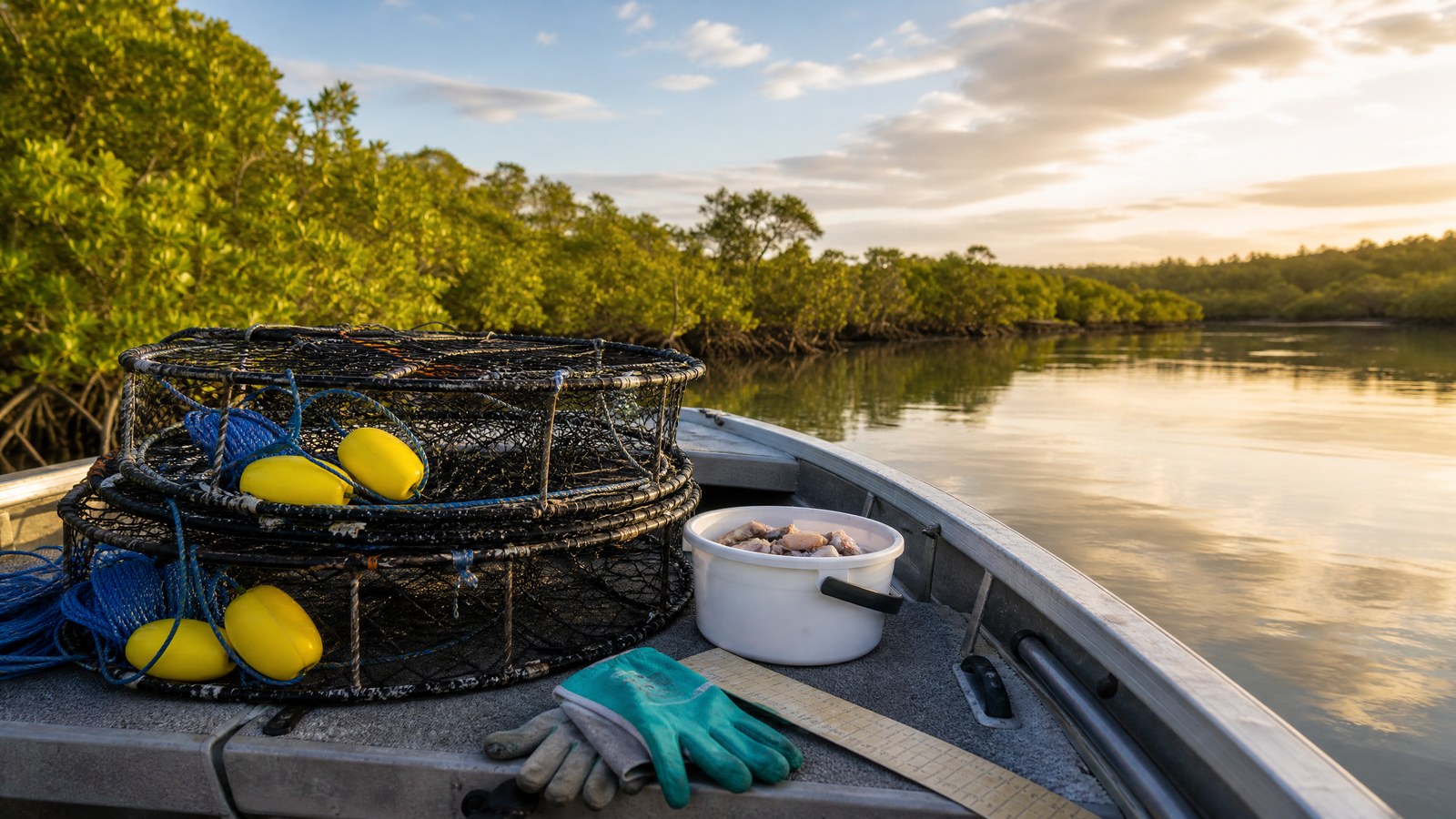
Quick answer: Check the rules where you crab first, then pick a legal round or box pot. For mud crabs go heavier — a Wilson collapsible round or a rigid galvanised box pot; for sand and blue swimmer crabs a lighter round pot or a hoop net does the job. The Surecatch is the value pick, a pop-up pot the space-saver. Tag both the pot and the float, and release undersized crabs.
Few things beat pulling a pot full of mud crab or sand crab — it’s one of the most accessible, rewarding bits of fishing going, and the sweet white meat is worth every minute. The right pot catches crabs and holds them; the wrong one, or an illegal one, loses crabs, wastes bait, or lands you a fine.
Because the rules vary so much depending on where you crab, the single most important step is choosing a legally-compliant pot for your area — the gear is simple, but the regulations around it aren’t. Here’s how to choose a pot that catches and complies, and the traps worth setting once you know what you’re allowed to use.
Quick Picks
- Best overall: Wilson Collapsible Round Crab Pot.
- Best value: Surecatch Crab Pot.
- Best heavy-duty (mud crab): a rigid galvanised box pot.
- Best for storage/transport: a collapsible pop-up pot.
- Best for bait and yabbies: a witches hat or hoop net.

How to Choose a Crab Pot
Check the rules where you crab before anything else — this matters more than the pot itself. Local fisheries rules vary a lot on the type of trap allowed, how many you can set, size and bag limits, and tagging. Notably, some enclosed traps like opera house traps and dillies are banned or restricted in many areas because they drown air-breathing bycatch such as turtles, so round collapsible and box pots are the safe, widely-accepted choice. Always confirm the current rules first.
Then match the pot to your target. Mud crabs are big and powerful, so you want a heavier-gauge pot — a rigid galvanised box or a sturdy round pot with strong mesh — set in tidal creeks and mangrove channels. Blue swimmer and sand crabs are smaller and suit lighter round pots or hoop nets over sand and seagrass. A built-in bait holder in the floor of the pot is a great feature: it stops crabs dragging your bait out through the mesh from outside.
On construction, rigid pots are tough and stack well but take up space, while collapsible pots fold flat for storage and travel. Here’s the trap to avoid: assuming that because a shop sells a trap it’s legal where you crab — it often isn’t. Sort the required extras too: an ID tag with your details on both the pot and the float, a bright float, and rope longer than the water depth so the float sits up without dragging the pot under.
A good pot is only half the job; bait, tide and timing are the other half. Oily fish is the draw — a couple of mullet or fish frames, or chicken necks, pinned into a secured bait clip so crabs cannot drag them out, laying a scent trail they follow upcurrent; bait heavy and re-bait once it washes out. Set on the run-in tide along tidal creeks, drains and mangrove edges where crabs move to feed, weight the pot so the current cannot roll it, and run enough rope for the full tidal range plus a little slack. Then be patient, but not slow: check every hour or two, because crabs raid each other, an octopus will clean out a pot, and a load of dead bycatch is a fined mistake in most places. Pull it up in one smooth lift so nothing scrambles back over the rim.
The Pots and Traps
Check today’s prices on Amazon →
Wilson Collapsible Round Crab Pot
The compliant all-rounder. From a trusted brand whose range is built to meet the rules in most areas, with strong poly mesh, opposing entry funnels and often a built-in bait clip — and it folds flat for storage. Best for crabbers who want a proven, widely-legal pot that catches and, just as importantly, holds what it catches until you get back to it. See what the Wilson round pots cost
Surecatch Crab Pot
The value staple. A popular, affordable round pot stocked just about everywhere, with funnel entries and a fold-flat design that does the job on mud and sand crabs without spending much. Best for first-time crabbers or anyone building up a few pots cheaply to spread across a session and cover more water. Price up the value Surecatch pot
Rigid Box Crab Pot
The mud-crab workhorse. A heavy galvanised-wire rectangular pot that handles the size and crushing power of big mud crabs, stacks neatly on the boat, and stands up to strong tidal current. Best for serious mud crabbers chasing the bigger bucks who want a pot that won’t fold or roll when a big one goes to work on it. Look at the heavy galvanised box pots
Collapsible Pop-Up Pot
The space-saver. A round pot that pops up to fish and folds dead flat for storage and transport, ideal if you’re tight on boot or boat space and want to carry a few. Best for crabbers who travel light or store gear in a small space and don’t want rigid pots swallowing the whole boot on the way there. Check the fold-flat pop-up pots
Witches Hat or Hoop Net
The bait and yabby option. A simple weighted hoop net — the “witches hat” — for catching yabbies, prawns and bait, plus sand crabs in some spots, that drops and lifts quickly from shallow water. Best for collecting live bait and shallow sand crabs, though it needs checking often since it only holds while it’s down. Check local rules, as some net types are restricted. Compare hoop nets and witches hats

Comparison
| Pot or trap | Type | Best target | Best for |
|---|---|---|---|
| Wilson Collapsible Round | Round (poly mesh) | Mud/sand crab | Compliant all-round |
| Surecatch Crab Pot | Round | Mud/sand crab | Value |
| Rigid Box Pot | Box (galvanised) | Mud crab | Heavy-duty |
| Collapsible Pop-Up | Round (folding) | Mud/sand crab | Storage and transport |
| Witches Hat / Hoop Net | Hoop net | Yabbies, bait, sand crab | Bait collection |
Frequently Asked Questions
Are all crab pots legal to use?
No, and it catches people out. Some traps sold in shops, like certain opera house traps and dillies, are banned or restricted in many areas because they drown air-breathing bycatch. Always check your local fisheries rules before you set anything, not just before you buy the pot.
What pot for mud crabs versus sand crabs?
Mud crabs need a heavier round or rigid box pot with strong mesh to handle their size and crushing claws. Blue swimmer and sand crabs are smaller and suit lighter round pots or hoop nets. A built-in bait holder helps keep the bait working on either target.
How much rope and what float do I need?
Use rope comfortably longer than the deepest water and highest tide you’ll set in, so the float sits up rather than being dragged under, and a bright, buoyant float that’s easy to see and tag. Too little rope is the classic way to lose a pot for good.
What size crabs can I keep?
Only legal-size crabs, and you must release undersized ones and egg-bearing females. Size and bag limits vary by area, so carry a measuring gauge and check the current rules. Releasing the breeders and the littlies is what keeps the crabbing good year after year.
The Bottom Line
Start by checking the rules where you crab — pick a legal round or box pot and steer clear of banned traps. For mud crabs, go heavier with a Wilson round or a rigid box pot; for sand crabs, a lighter round pot or a hoop net does the trick. Look for a built-in bait holder and a big access door, tag both the pot and the float with your details, use a bright float and rope longer than the water depth, and always release undersized crabs and egg-bearing females. Do that, and the pots keep filling.
Round out your kit with our guides to the best fishing landing nets, the best tackle boxes and bags, and the best cast nets for bait.