
This page contains affiliate links. Far Cornel may earn a commission if you buy through them, at no extra cost to you.
See the top-rated gear on Amazon →
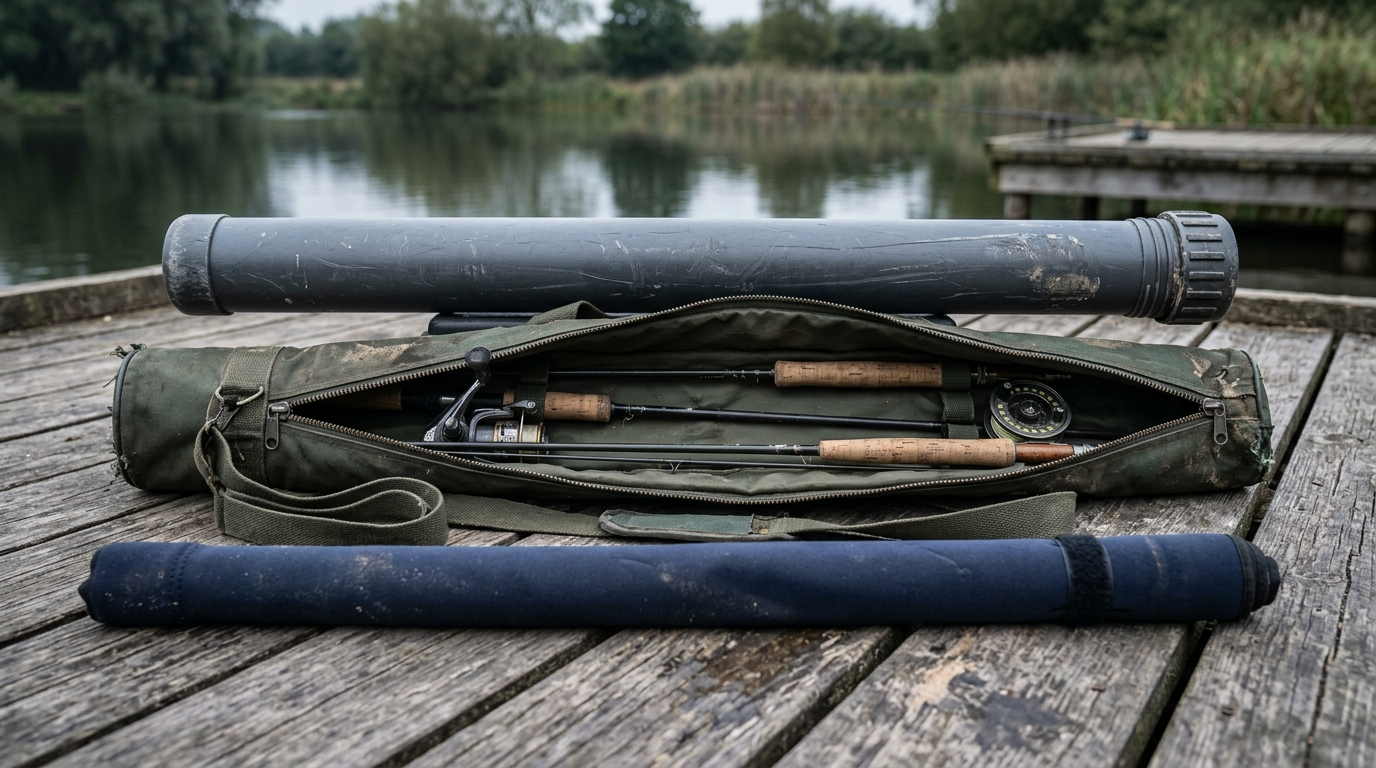
Quick answer: The protection worth buying first is a padded rod holdall — it carries two or three made-up outfits, cushions the knocks of a car boot, and costs a fraction of the rods inside. Add a hard travel tube only if you fly with rods, a few soft sleeves for everyday runs, a combo case if you carry reels attached, and a rack for home.
Rods break far more often in the boot of a car or the back of the garage than they ever do fighting a fish. A closed door, a shifting load or a tangle of tips against the tackle box is all it takes to snap the delicate top of an expensive rod. A bag or case is cheap insurance against exactly that, keeping rods separated, padded and out of harm’s way between sessions. The trick is matching the protection to how far and how roughly your rods travel.
Protection runs from a thin cloth sleeve that just stops scratches up to a rigid tube built to survive baggage handlers, with padded holdalls and combo cases in between. More protection means more bulk and cost, so buy the least you can get away with for your travel. Here is how to judge that, then five options worth comparing.
Quick Picks
- Best overall: a padded rod holdall for two or three outfits.
- Best for flying: a hard rod tube or travel case.
- Best budget: a soft rod sleeve or sock.
- Best for rod and reel: a combo case that stores both together.
- Best for home storage: a rod wrap or rack.

How to Choose a Rod Bag or Case
Start with length and how many rods you carry, because a case has to fit your longest rod. Decide whether you store them made up or broken into sections: a two-piece travel rod needs a far shorter case than a one-piece. Then count how many you move at once. Buying too short is the usual regret, leaving a tip crammed against the end or poking out the top — which, along with car doors, is how most tops actually break, not on a fish.
Match the protection to the journey, and check reel clearance. A soft sleeve keeps rods tidy at home, a padded holdall handles the knocks of car travel, and only a hard tube truly protects rods checked onto a flight. If you carry rods with the reels still attached, make sure the bag has reel pockets or enough width, or the reel fouls the zip and presses on the blank. Do not trust a thin sleeve as impact protection; it is tidy storage, not armour.
Finally, weigh the fabric. A tougher, higher-denier outer shrugs off abrasion and lasts for years, and a water-resistant coating keeps damp off your gear. A hard case only earns its cost if you fly with rods, while a padded holdall covers most trips for far less. Brands like Shimano, Daiwa and Plano span the range from soft sleeves to hard tubes.
It helps to know how rods actually die, because it is almost never the fish. The tip section and the ferrule joints are the weak points, and the classic kills are a slammed boot lid or car door, a rod stood in a corner that slides and cracks, and a tip left poking out of a bag that snags a doorway. A case only helps if it matches that: the delicate tip wants to sit in the middle of the bundle, not at an exposed end, so when you break rods down and bag them, alternate tip-to-butt so every fragile tip is cushioned by a butt section beside it.
Two habits do more than any bag. First, never store or transport a rod under tension or in a hot car — heat plus a bent blank leaves a permanent set, and a made-up outfit rattling loose in a boot is asking for a guide to snap. Second, rinse and dry rods and reels before they go in the bag; salt and damp trapped in padding quietly corrode guides and seize reels far faster than any single knock. Keep a hard tube for checked flights, a padded holdall for the car, and a soft sleeve over the tip of anything you care about.
The Rod Bags and Cases
Check today’s prices on Amazon →
Soft rod sleeve or sock
The simplest, cheapest option: a cloth sleeve slides over a single rod to stop scratches and keep tips from tangling with other gear. It weighs almost nothing and is ideal for organising rods in the garage or the back of a car. What it will not do is absorb impact, so treat it as tidy storage and scratch protection, not real armour. Many anglers run sleeves inside a larger padded bag for the best of both. See what the soft rod sleeves and socks are going for.
Padded rod holdall
A padded holdall is the everyday workhorse for anglers who travel by car. It carries several made-up rods in a semi-rigid, cushioned tube, usually with internal sleeves to keep them apart and a shoulder strap for the walk in. The padding shrugs off the knocks and pressure of a loaded boot, which is where most transit damage happens. It is not crush-proof like a hard tube, but for road trips and general use it hits the sweet spot between protection and convenience. Check pricing on the padded rod holdalls.
Hard rod tube or travel case
When rods have to survive baggage handling or a rough overland trip, a rigid tube is the only thing that will do. A hard shell resists the crushing and impact that no soft bag can, protecting broken-down rods through the worst handling. The trade-offs are weight, bulk and pulling multi-piece rods apart to fit. Do not buy it unless you actually fly with rods or travel genuinely rough. Compare the hard rod travel tubes for flying.
Rod-and-reel combo case
A combo case is shaped to carry rods with the reels still attached, usually in individual padded sleeves, so you grab a set of ready-rigged outfits and go. That saves fiddling with reels at the ramp and suits anglers who fish the same setups often. The trade-off is bulk, since accommodating reels makes the case wider and heavier. Check the length and reel pockets suit your outfits before you buy. Look at the rod-and-reel combo cases.
Rod wrap or storage rack
A rod wrap or rack is about organised storage rather than transport, holding rods safely in the garage, the shed or a boat. Racks keep rods separated and supported so tips are not leaning under load or waiting to be stepped on, and a roll-style wrap secures several rods and their rigs together. Neither offers travel protection, so pair them with a bag for the journey. For keeping a growing collection tidy and undamaged at home, they are worth the small outlay. Weigh up the rod wraps and storage racks.
Comparison
| Type | Protection | Portability | Best for |
|---|---|---|---|
| Soft sleeve or sock | Light | Excellent | Everyday scratch protection |
| Padded holdall | Good | Very good | Carrying several outfits |
| Hard tube or case | Excellent | Fair | Flying and rough transport |
| Combo case | Good | Very good | Rod and reel stored together |
| Wrap or rack | Moderate | Home use | Tidy long-term storage |
Frequently Asked Questions
What is the difference between a sleeve, a soft bag and a hard case?
A sleeve is a thin single-rod cover that stops scratches and tangles but nothing more. A padded soft bag carries several rods and cushions the knocks of car travel. A hard case is a rigid tube that resists crushing and impact, which is what you need for flights or genuinely rough transport. Protection rises with each, and so does bulk.
Do I need a bag that fits rods with the reel attached?
Only if you regularly carry rods rigged and ready, since a reel-friendly bag is wider and heavier. If you break rods down and remove reels between trips, a slimmer sleeve or holdall is lighter and easier to store.
How do I stop my rods breaking in transit?
Keep tips protected and rods from moving. Use a padded bag with internal sleeves so rods cannot knock together, load them so nothing presses on the fragile tips, and never shut a rod in a car door or bury it under heavy gear. For flights, only a hard tube reliably prevents the crushing that snaps blanks.
Does the fabric quality really matter?
Yes. A tougher, higher-denier outer resists the abrasion and snags that wear a cheap bag out in a season, and a water-resistant finish keeps damp off your rods. Better fabric is the difference between a bag that lasts and one that frays at the seams.
The Bottom Line
A padded holdall is the sensible first buy: it protects several outfits, carries easily and costs a fraction of the rods inside. Add a hard tube if you fly with your gear, keep a few soft sleeves for everyday runs, and use a rack at home so nothing takes a set. Remember that rods snap in car doors and crowded boots, not on fish, so the cheapest bag you own still pays for itself the first time it saves a tip.
Good rod storage works hand in hand with the rest of your kit, from your telescopic fishing rods to a set of fishing rod holders and a well-sorted tackle box.
Compare your options on Amazon →
