
This page contains affiliate links. Far Cornel may earn a commission if you buy through them, at no extra cost to you.
See the top-rated gear on Amazon →
Quick answer: For touring, a quality plastic military-pattern can like the Scepter is the smart default: lighter than steel, rust-proof and patchable on the trail. Choose Wavian steel where cans cop knocks and abrasion, RotopaX flat packs for clean rack mounting, the Anvil can to save money, and a lockable holder so nothing shifts on corrugations.
Run dry two hundred kilometres from the nearest pump and the trip stops being an adventure. A loaded 4WD in low range, aired down and grinding through sand, drinks far more than its highway figure, and the gap between working fuel stops on a long remote route often outreaches any tank plus its warning light. An extra twenty or forty litres buys that margin back, and the same cans double for water.
Fuel is heavy, flammable and unforgiving of a sloppy setup. Twenty litres of diesel is close to seventeen kilograms before you add the can, and a weeping spout or a can that shakes loose on corrugations turns a safety upgrade into a hazard. Getting it right is less about the badge than matching material, capacity and mounting to how you travel.
Quick Picks
- Best overall: Wavian steel jerry can — military-spec, leak-proof, near indestructible.
- Best all-rounder: Scepter military fuel container — rust-proof HDPE that patches on the trail.
- Best modular: RotopaX fuel packs — flat, stackable, bolt straight to a rack.
- Best value: Anvil Off-Road steel can — most of the toughness for less money.
- Best mount: a lockable jerry can holder — keeps fuel outside the cabin and stops it moving.

How to Choose Fuel Storage
Two questions settle most of it: what material, and how much. Steel cans like the Wavian and Anvil shrug off knocks and abrasion and last decades, but they are heavy and rust if the coating is breached. Quality plastic cans such as the Scepter and RotopaX weigh about half as much, never rust, and a split can often be patched by the track. Plastic degrades in UV over years and can go brittle in hard frost. Steel suits cans that take a beating; plastic wins where weight and rust are the enemy.
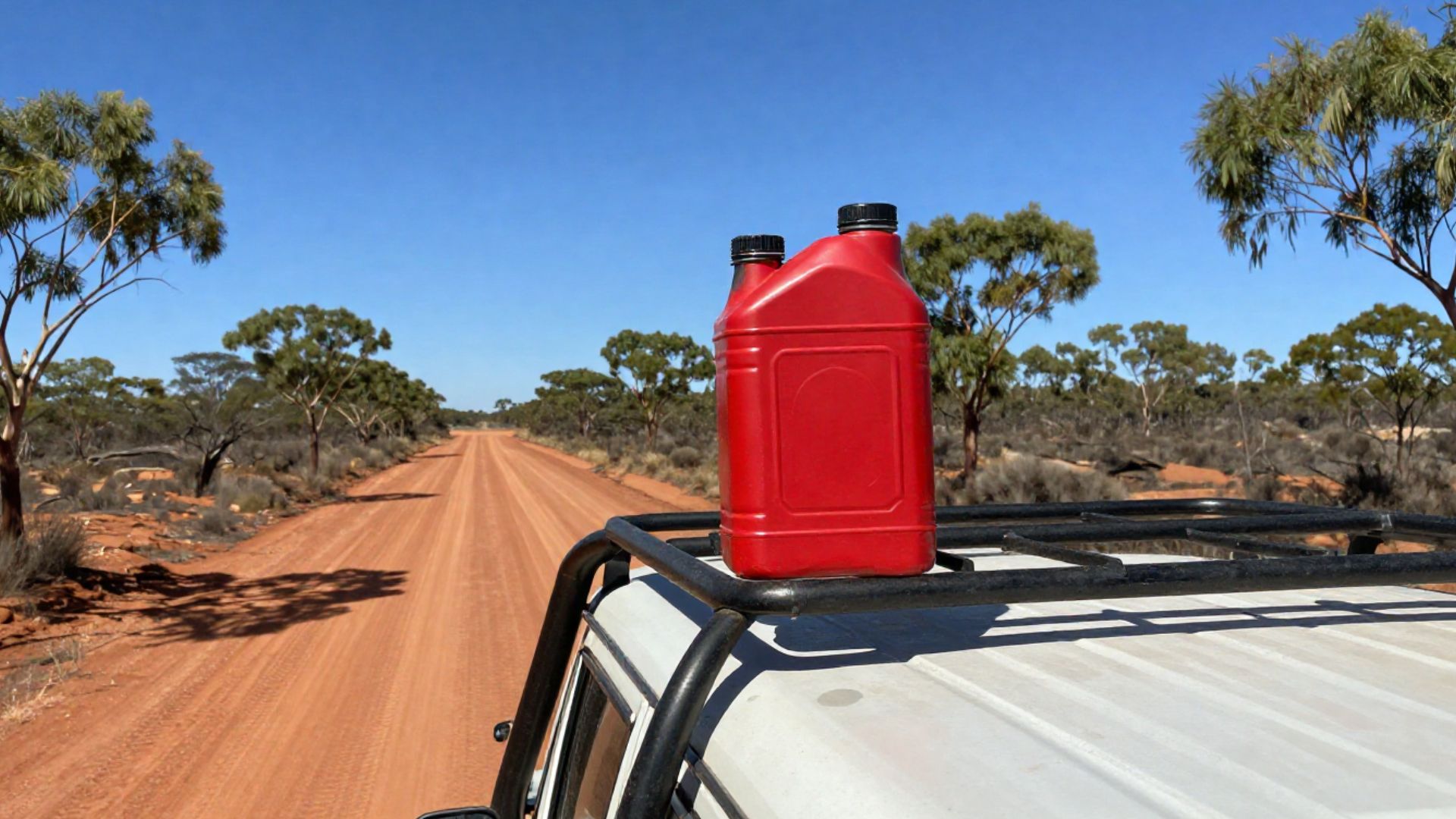
Size capacity to your worst day, not your average. The standard can holds twenty litres; modular packs run smaller, eight to fifteen. Run your longest gap between fuel against your loaded off-road economy, not the highway sticker, and add half again. The mistake almost everyone makes is stacking full cans on the roof: twenty litres is fifteen to seventeen kilograms, and up high it lifts your centre of gravity exactly where you least want it on a side-slope. Carry fuel low and rearward where you can.
Then sweat the details that spill fuel or start fires. A sealing, controllable spout is the difference between a clean pour and petrol down your paintwork, and the flimsy nozzles on cheap cans are the first thing to replace. Cans need burping as heat and altitude change, so never fill to the brim. Mount every can externally and locked down, and once a can has held petrol keep it for fuel for life. Colour-code the fleet: red petrol, yellow diesel, blue water.
Two things matter more than the badge on the can. First, safety: never carry petrol loose inside the cabin — the vapour alone is a fire risk — so mount fuel outside on a rear bar or rack, downwind of where you sit, and remember diesel is far more forgiving than petrol, which flashes off vapour and demands more care. Do not fill to the very top either; fuel expands in heat, so leave an air gap and crack the cap slowly to release pressure before you pour, or a sun-baked can sprays fuel everywhere. Second, fuel goes off: petrol can turn stale and gummy in as little as one to three months as its ethanol draws in water, so rotate your spare fuel through the tank and refill rather than hauling the same can for a year, and add a stabiliser if it is going to sit. A full 20-litre can is close to 18 kg, so mount it low and lock it — fuel walks.
The Fuel Storage
Check today’s prices on Amazon →
Wavian Steel Jerry Can
The one serious tourers keep coming back to. Built to military spec from cold-rolled steel with anti-corrosive coating inside and out, it is leak-proof, near indestructible, and its splash-proof bayonet spout pours fast and clean. It comes in matched fuel and water colours, with a full range of carriers to bolt it down. Don’t buy it if you are weight-conscious and mounting up high, because steel is where the kilograms hide. For puncture-prone, hard-mounted storage, nothing outlasts it. See what a Wavian steel jerry can costs.
Scepter Military Fuel Container
My pick for touring, and the one that busts the steel-is-always-tougher myth. This rugged HDPE can has been trusted by militaries for decades: it will not rust, it takes heat, cold and abuse, and a puncture can be patched where steel would need welding. It seals well and weighs noticeably less than steel. The one gripe is that replacement cap parts can be fiddly to source, so grab a spare seal. For toughness without the weight or rust risk, it is the standout. Look at the Scepter military fuel containers.
RotopaX Fuel Pack
The modular specialist. These flat, roto-moulded packs are built for overlanding, with spill-proof valves and a stacking design that bolts to racks, flat panels or spare tyres, so you add capacity by adding packs. The slim profile stows where a boxy can never would. The trade-offs are honest: more cost per litre and smaller sizes, so they suit tidy mounting and modest range extension rather than big volumes. Don’t buy them if litres-per-dollar is your priority. Compare the RotopaX modular fuel packs.
Anvil Off-Road Jerry Can
The value steel play. A twenty-litre steel can with a safety cap and spout, it gives a big slice of premium-steel toughness for less, and pairs with standard holders. You give up some fit and spout quality, so check the seal the day it arrives. As a no-frills workhorse for extra fuel without flagship prices, it earns its spot. Price up an Anvil Off-Road jerry can.
Lockable Jerry Can Holder
The unglamorous half of the job, and the one people skimp on. A can full of fuel is only as safe as what holds it: a solid, lockable holder bolts to a roof rack, rear bar or tray and clamps the can so it cannot shift on corrugations, while keeping fuel outside the cabin. Look for sturdy build, a lockable strap, and a fit matched to your rack. Skip it and the best can becomes a projectile. Grab a lockable jerry can holder mount.
Comparison
| Product | Material | Capacity | Best for | Watch-out |
|---|---|---|---|---|
| Wavian | Steel | 20 litres | Puncture-prone hard mounts | Heavy |
| Scepter MFC | HDPE plastic | 20 litres | Light, rust-free carry | Cap parts fiddly |
| RotopaX | HDPE plastic | ~8–15 litres | Clean modular mounting | Pricey per litre |
| Anvil Off-Road | Steel | 20 litres | Value steel storage | Check seal and finish |
| Jerry can holder | Steel or alloy | Fits 20 L cans | Securing cans externally | Must match your rack |

Frequently Asked Questions
Steel or plastic jerry can?
Steel is tougher against knocks and abrasion and lasts decades, but it is heavy and rusts if the coating breaks and stays wet. Quality plastic is lighter, rust-proof and patchable, and it is what most tourers are better off with unless the cans take a real hammering.
How many litres should I carry?
Work your longest gap between fuel against your loaded, off-road economy, not the highway figure, then add half again. For a lot of touring an extra twenty to forty litres covers it; true remote crossings can call for far more.
Is it safe to carry fuel on the roof?
You can, but it is rarely smart. Full cans are fifteen to seventeen kilograms each, and up high they lift your centre of gravity right where it hurts handling. Carry fuel low and to the rear where you can, and keep the roof for light gear.
Can I use the same can for fuel and water?
No. Once a can has held petrol or diesel, keep it for fuel only, because residue and fumes make it unsafe for drinking water. Colour-code the fleet so there is never a dangerous mix-up.
The Bottom Line
Extra fuel buys range and a real safety margin far from the nearest pump, but only if you carry it properly. Pick plastic for light, rust-free litres and steel where cans take a hammering, size capacity to your worst-case economy plus a buffer, and mount every can externally on a locked holder, never in the cabin. Fuel-carriage rules differ by place and change over time, so check the current local requirements before you load up.
Pair it with the rest of a long-range touring setup: our guides to the best 4×4 water tanks and storage, best 4×4 roof racks and cargo systems, and best 4×4 recovery kits round out the kit.