
This page contains affiliate links. Far Cornel may earn a commission if you buy through them, at no extra cost to you.
See the top-rated gear on Amazon →
Quick answer: Most kayak anglers need two things: a folding grapnel anchor around 1 to 1.5 kg with rope and a float, and an anchor trolley to position it. Together they let you hold over structure and sit bow- or stern-into the current safely. Add a stake-out pole for the shallows and a drift chute if you like to drift. Skip the heavy anchor — scope and a trolley matter far more than weight.
Anchoring is what lets a kayak angler stop on a patch of fish and actually work it, instead of drifting off the school every couple of minutes. But dropping a weight is only half the job. The trolley that slides the anchor point from bow to stern decides how the kayak sits in wind and current — and on moving water, that is a safety issue, not just a comfort one.
Get the pair right and you hold quietly over structure with the bow into the flow. Get it wrong and you sit side-on, uncomfortable at best and, in any chop or current, capsizing at worst. Here is how to choose an anchor and a trolley that work together, and the gear worth rigging to your yak.
Quick Picks
- Best all-round anchor: a folding grapnel kit around 1 to 1.5 kg with rope and float.
- Best trolley system: Railblaza Anchor Trolley Kit — smooth and expandable.
- Best value trolley: Yak Gear Anchor Trolley Kit — the full function for less.
- Best for the shallows: a stake-out pole for silent holding on the flats.
- Best for drifting: a drift chute or drogue to slow a windy drift.

How to Choose a Kayak Anchor and Trolley
Start with the anchor type for where you paddle. A folding grapnel — around 1 to 1.5 kg for most kayaks — is the all-rounder; its hinged flukes grab sand, weed, mud and rock, and it folds flat to stow. Bump up to 2 kg only for a big loaded yak or strong current. In skinny water a stake-out pole you push into soft mud or sand holds you silently with no rope to tangle, and for drifting a run of bank a drift chute slows and steadies you at a fishable pace.
The piece that makes anchoring actually work is the trolley: a loop of rope on pulleys down one side of the hull, bow to stern, with a ring you clip the anchor line to. It lets you move the attachment point without re-anchoring, so you can swing the kayak to face the wind or current instead of sitting side-on. It is the single best upgrade a kayak angler can make. And here is the myth to drop — a heavier anchor does not hold better. On a kayak, holding comes from scope and set, not sheer weight, and a 1.5 kg grapnel on plenty of rope out-holds a 3 kg lump on a short, steep line.
Match the rope to depth: longer than the deepest water you anchor in, because you want to pay out several times the depth so the anchor lies flat and digs in rather than dragging. A short length of chain helps it set. Add a float so you can drop and retrieve fast, and — most important — rig a quick-release so you can ditch the line if current pins the kayak. Choose corrosion-resistant hardware, and keep a knife within reach as a last resort.
The Anchors and Trolleys
Check today’s prices on Amazon →
Folding Grapnel Anchor Kit
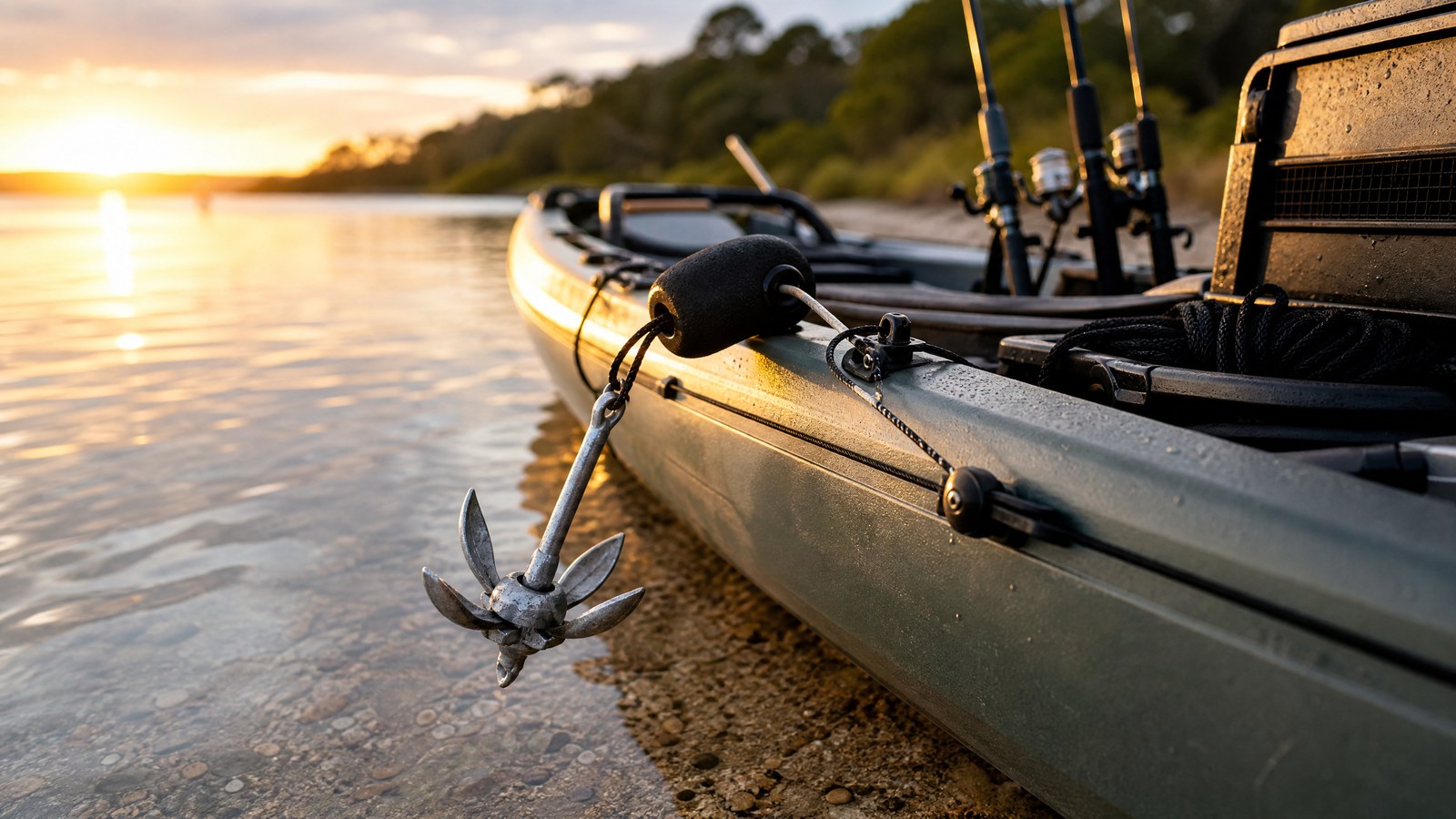
The anchor to own if you buy only one. A hinged four-fluke grapnel bites most bottoms — sand, weed, mud, rock — and folds flat to stow in a hatch, usually sold as a kit with rope, a float and a bag. The 1 to 1.5 kg size is right for most kayaks; only size up for a big loaded yak or strong tide. Don’t rely on it in deep, fast water without enough rope out, because scope is what makes it hold. For general anchoring it is the best value going. Check the latest folding grapnel anchor kit on Amazon
Railblaza Anchor Trolley Kit
The trolley most anglers point newcomers to. Railblaza’s kit brings the pulleys, cleat and ring you need, and it clips into their track-and-base system if you already run their rod holders and mounts. The action is smooth and it expands as you add gear. It costs more than a bare-bones kit, but the integration and finish are worth it if you are building a rig you will keep. Best for anyone who wants a tidy, quality trolley that grows with the setup. Browse Railblaza anchor trolley kit on Amazon
Yak Gear Anchor Trolley Kit
The value way into a proper trolley. This kit supplies the pulleys, ring, cleat and hardware to add a full anchor trolley to almost any kayak, at a price that undercuts the premium options. It is not as slick to integrate with a mounting system, but the job it does — sliding the anchor point bow to stern — is identical. Best for the angler who wants the function without the spend, or a first trolley to learn on. Shop Yak Gear anchor trolley kit on Amazon
Stake-Out Pole
The quiet tool for the shallows. Push it through a scupper or over the side into soft mud or sand and it pins you in place with no rope, no splash and no spooked fish — ideal for flats and skinny water. Don’t buy it as your only anchor, though: it works only in a couple of metres of soft bottom, so it is a companion to a grapnel, not a replacement. For stealthy shallow fishing it is hard to beat. See kayak stake-out pole options on Amazon
Drift Chute / Drogue
The drift controller. This underwater parachute deploys off the bow or stern to slow your drift in wind and current, keeping you over the strike zone longer and at a pace you can fish. It will not stop you dead like an anchor, and that is the point — it turns an uncontrolled blow-through into a slow, fishable drift along a bank or flat. Best for anglers who cover ground rather than sit still. Find the right kayak drift chute or drogue on Amazon

Comparison
| Item | Role | Best water | Note |
|---|---|---|---|
| Folding grapnel | Anchor (1–1.5 kg) | Sand, weed, rock | Needs good scope to hold |
| Railblaza trolley | Positioning system | Any (any depth) | Integrates with mounts |
| Yak Gear trolley | Positioning system | Any (any depth) | Same job, lower cost |
| Stake-out pole | Push-pole hold | Shallow mud/sand | Silent; shallow only |
| Drift chute | Drift brake | Wind and current | Slows, does not stop |
Frequently Asked Questions
What size anchor does a fishing kayak need?
A folding grapnel around 1 to 1.5 kg suits most kayaks, stepping up to about 2 kg only for a big loaded yak or strong current. Resist the urge to go heavier for its own sake, because holding on a kayak comes from scope and a clean set, not sheer weight. A modest anchor on enough rope holds better than a heavy one on a short line.
Do I really need an anchor trolley?
If you anchor in any current, yes. The trolley lets you move the anchor point to the bow or stern so the kayak faces into the flow and rides safely. Anchoring straight off the side in moving water is the classic way kayakers get pulled over and tipped in, so treat the trolley as safety gear rather than a nice-to-have.
How much rope should I let out?
Pay out several times the water depth, since a long, low angle lets the anchor dig in while a short, steep line just drags it. Carry rope comfortably longer than the deepest water you fish, add a short length of chain to help it set, and clip on a float so you can drop and collect the line quickly.
How do I anchor safely when the tide is running?
Anchor from an end using the trolley, never from the side, and rig a quick-release — usually a float clipped to the line — so you can ditch the whole rig and paddle clear if it pins you. Keep a sharp knife within reach as a last resort. These are basic safety on any kayak that anchors in current.
The Bottom Line
The answer is a folding grapnel around 1 to 1.5 kg plus an anchor trolley to place it — together they hold you over structure with the bow into the flow. Add a stake-out pole for the shallows and a drift chute if you like to drift a bank. Use plenty of rope, rig a quick-release for current, and choose corrosion-resistant hardware so the salt does not seize it by next season.
Round out your kayak setup with our guides to the best fishing kayaks, the best kayak fishing paddles, and the best kayak fish finders.