
This page contains affiliate links. Far Cornel may earn a commission if you buy through them, at no extra cost to you.
See the top-rated gear on Amazon →
Quick answer: There’s no single best line. Run monofilament for value, topwater and while you’re learning; run braid as a mainline for sensitivity, distance and capacity; and use fluorocarbon as a leader, or as a mainline for clear-water finesse. The setup most anglers land on is braid mainline plus a fluorocarbon leader — feel and distance from the braid, a near-invisible end from the fluoro.
Your line is the only thing connecting you to the fish, yet it’s the bit most anglers think about last. Pick the wrong one and you’ll lose feel, spook fish, or snap off at the worst moment. There are three main types — monofilament, fluorocarbon and braid — and each is brilliant at some jobs and hopeless at others.
The good news is you don’t have to memorise a chemistry lesson to choose well. Almost everything each line does flows from a single property, stretch, and once you understand that, matching a line to your fishing gets simple. Below are the five line choices worth spooling up, and exactly when each one earns its place.
Quick Picks
- Best all-round mainline: braid with a fluorocarbon leader.
- Best for beginners and topwater: monofilament.
- Best leader: fluorocarbon.
- Best for sensitivity and distance: braid.
- Best for clear-water finesse: fluorocarbon mainline.

How to Choose Your Line
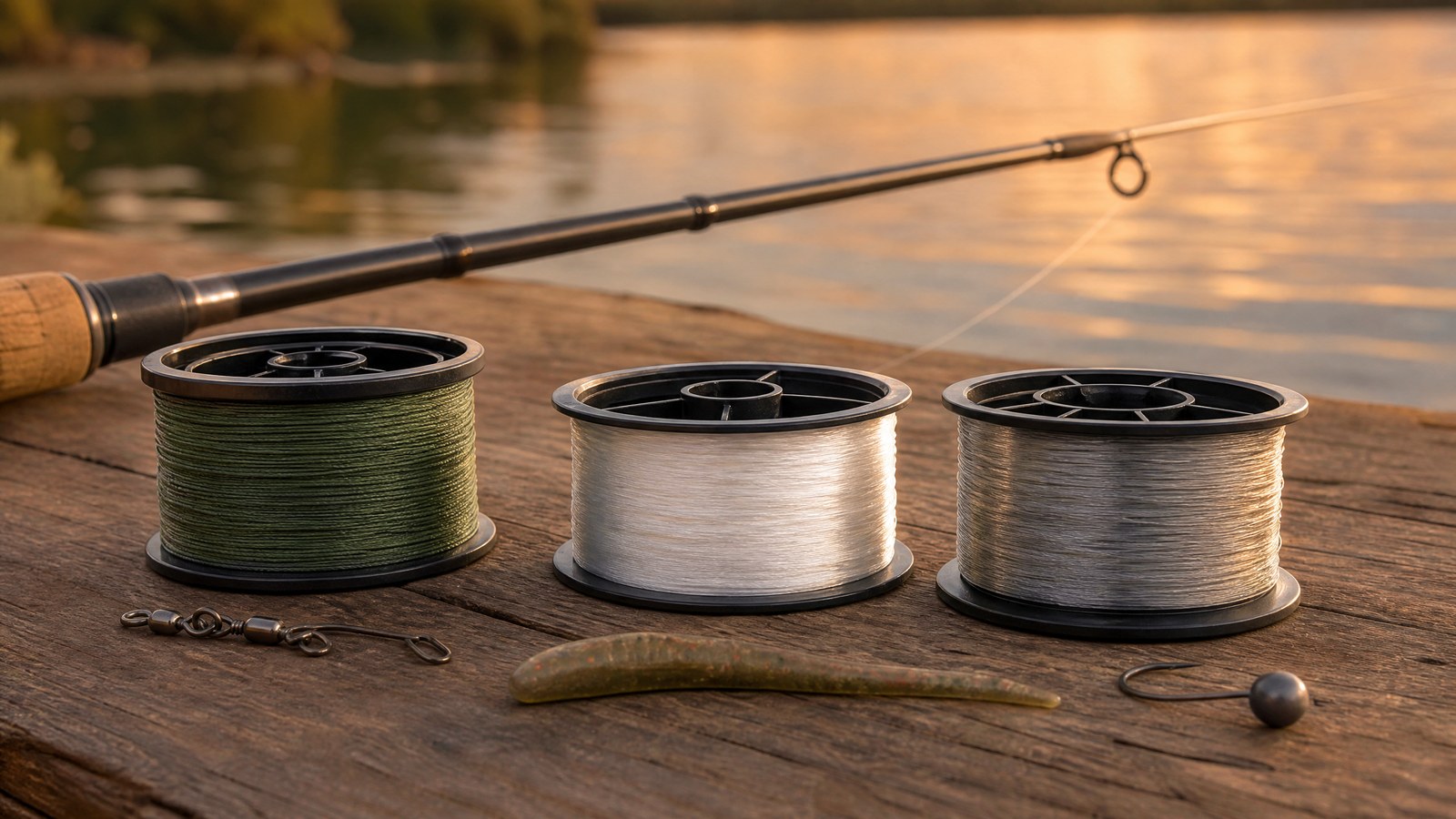
Almost every difference flows from one thing: stretch. Monofilament, a single nylon strand, stretches a lot, which forgives mistakes, softens a hard strike and keeps trebles pinned — but that stretch costs sensitivity, and it’s the cheapest line by far. Braid, woven from fine fibres, has almost no stretch, so it telegraphs every tap to your hand and drives hooks home even at long range, and it’s astonishingly thin for its strength.
Fluorocarbon sits in between: denser than water so it sinks, tougher against abrasion, and nearly invisible underwater because it bends light much like water does. The myth worth busting: braid isn’t automatically the best line. Tied straight to a lure in clear water it spooks wary fish, and its zero stretch can tear hooks free on a violent strike — which is exactly why most anglers finish braid with a leader instead of running it bare.
So pick by the job. Mono for value, topwater and learning; braid as a mainline for sensitivity, distance and capacity; fluorocarbon as a leader, and as a mainline only for clear-water finesse. Save on mono and replace it each season, spend on a good braid that lasts years, and keep one spool of decent fluoro for leaders. Get those roles right and you’ll feel more bites and lose fewer fish.
The Lines Worth Spooling
Check today’s prices on Amazon →
Monofilament mainline
The forgiving all-rounder. Monofilament stretches, floats and knots easily, which makes it the friendliest line to learn on and the best choice for topwater and treble-hooked hardbodies, where a little give keeps hooks pinned through head-shakes. Berkley Trilene and Stren are the familiar names. It’s cheap enough to respool every season — which you should, because sunlight quietly weakens it — and it doubles as grippy backing under braid. Compare mono across the breaking strains you use most
Braided mainline
The sensitive workhorse. Braid’s near-zero stretch sends every tick straight to your hand and sets hooks at long range, and it’s so thin for its strength that you fit more line on the spool and cast further. PowerPro and Sufix 832 are proven picks that hold their round profile. It lasts years without sun damage. The catch is visibility, so in clear water tie on a leader rather than fishing it straight to the lure. Check what the braid mainlines are running
Fluorocarbon leader
The near-invisible business end. A short fluorocarbon leader is where most anglers actually use fluoro, and for good reason — it’s hard for fish to see and it resists rubbing on rock and timber far better than braid. Seaguar and Berkley Vanish are go-to names. Tie a rod-length or two to your braid whenever fish are line-shy or you’re fishing around abrasive structure, and always wet the knot before you pull it tight. Browse fluorocarbon in leader-spool sizes
Fluorocarbon mainline
The finesse specialist. As a full mainline, fluorocarbon suits clear water and finicky fish — it sinks, so it pulls a lure down, and its low stretch and invisibility help on subtle soft-plastic and bottom presentations. It costs more and holds a stiff memory, so it rarely earns a full spool unless you fish finesse almost every trip. For most anglers a fluoro leader does the same job for far less outlay. Price up a full fluorocarbon mainline for finesse
Braid mainline with a fluorocarbon leader
The setup most anglers land on. Run braid as your mainline and join a fluorocarbon leader to the end, and you get the best of both — the braid’s sensitivity, distance and capacity with the fluoro’s near-invisible, abrasion-tough business end. A firm Palomar or uni knot to the lure and a solid leader knot joining the two, and it covers a huge range of clear-water lure fishing. See braid-and-leader pairings in one place

Comparison
| Property | Monofilament | Fluorocarbon | Braid |
|---|---|---|---|
| Stretch | High (forgiving) | Low | Almost none |
| Visibility | Medium | Lowest | Highest |
| Diameter for strength | Thick | Thick | Thinnest |
| Sink or float | Floats | Sinks | Floats |
| Abrasion resistance | Medium | High | Lower (cuts) |
| Best used as | Mainline/backing | Leader | Mainline |
Frequently Asked Questions
What’s the real difference between the three?
Braid is thin, strong and has almost no stretch, so it excels at sensitivity and casting distance. Mono is cheap, stretchy and floats, which makes it forgiving. Fluorocarbon is nearly invisible underwater and sinks, which suits leaders and finesse. Each earns its place on a different job.
Which line should a beginner use?
Monofilament. It’s inexpensive, easy to tie, and forgiving of clumsy drag settings and rushed hooksets. Once you’re comfortable, add a braid outfit with a fluorocarbon leader for the situations where mono starts to fall short.
When should I use a fluorocarbon leader?
Tie one to braid whenever fish are line-shy or you’re fishing around abrasive rock and timber. It’s far less visible and stands up to rubbing better than braid, which makes it a reliable link between a braided mainline and your lure.
Can I just run braid for everything?
You can, but in clear water it spooks wary fish and its zero stretch can pull hooks on a hard strike. Adding a leader fixes both. For topwater and treble baits, plenty of anglers still prefer mono’s stretch to keep the hooks pinned.
The Bottom Line
There’s no single best line, only the right line for the job. Run mono for value, topwater and while you’re learning; run fluorocarbon as your leader, and as a mainline when invisibility and abrasion really matter; run braid as a mainline for sensitivity, distance and capacity, with a fluoro leader in clear water. Get those three roles sorted and you’ll feel more bites, lose fewer fish, and spook far less — which is the whole point of thinking about line at all.
Related guides: best spinning reels | best baitcaster combos | beginner fishing gear checklist