
This page contains affiliate links. Far Cornel may earn a commission if you buy through them, at no extra cost to you.
Browse current camping tents on Amazon →
Quick answer: Buy the tent that matches how you camp, not the biggest number on the box. A large cabin or tunnel tent is the best all-round family buy — standing headroom and a proper vestibule. Choose a geodesic dome if you camp where it blows, an instant tent for the fastest pitch, a budget dome for occasional fair-weather trips, and a lightweight crossover if you split time between the car and a walk-in site.
The number on the box — “sleeps 6” — is the biggest fib in camping. That rating assumes six adults lying shoulder to shoulder like tinned fish, with nowhere for boots, bags or a stray elbow. The rule that has never let me down: size up by at least one, usually two. A group of four wants a six-person tent; a couple who like room to move want a four. Ignore it and you’ll spend the whole trip climbing over your own gear.
After capacity, three things decide whether a tent earns its price: how it takes wind, how fast it goes up, and how it breathes. Pole geometry does most of the work — more crossing poles mean a stronger tent, which is why a low geodesic dome shrugs off a gust that would fold a tall cabin tent. Season rating tells you the rest: a three-season tent suits the vast majority of camping, while a four-season buys snow-loading strength you probably don’t need and charges for it in weight and stuffiness. The five shapes below cover every honest way to camp.
Quick Picks
- Best all-round / family — large cabin or tunnel tent: standing headroom, room to spread out, and a big vestibule for wet boots.
- Best for wind and weather — geodesic dome: multiple crossing poles and a low profile that holds firm when it blows.
- Best for fast setup — instant or pop-up tent: pitched in a minute, ideal for one-nighters and quick getaways.
- Best budget — simple dome tent: cheap and light enough, fine for fair weather and occasional use.
- Best crossover — lightweight camping tent: bridges car camping and carrying it to a walk-in site.

How to Choose a Camping Tent
Start with real capacity, not the headline number. Find the floor dimensions in centimetres and picture your sleeping mats laid out side by side — allow roughly a metre of width per adult, then add space for packs, a dog or a restless kid. Peak height matters just as much: a tent you can stand up in to dress is a different holiday from one you crawl around in. If the floor plan looks tight on paper, it will feel tighter at 11pm in the rain.
Then look at the poles, because they decide how the tent behaves when the weather turns. A geodesic crosses several poles over the canopy for strength; a tunnel relies on hoops and good guying; a cabin trades wind resistance for vertical walls and space. The pole material matters more than buyers expect — aluminium bends under load and springs back, while cheap fibreglass shatters and is miserable to fix in the field. If you camp anywhere exposed, pay up for aluminium.
The thing most buyers skip is the rainfly and the floor. A full-coverage fly that reaches near the ground keeps rain off the walls far better than a skimpy cap that leaves the mesh exposed. On the floor, the waterproof rating counts for more than it does up top, because you kneel and sit on it — look for a bathtub floor that curves up the sides. And most tents that seem to “leak” are actually sweating: condensation from blocked vents, not water getting in. Ventilation is a feature, not an afterthought.
The Camping Tents
Check today’s prices on Amazon →
The large cabin or tunnel tent — best all-round and family
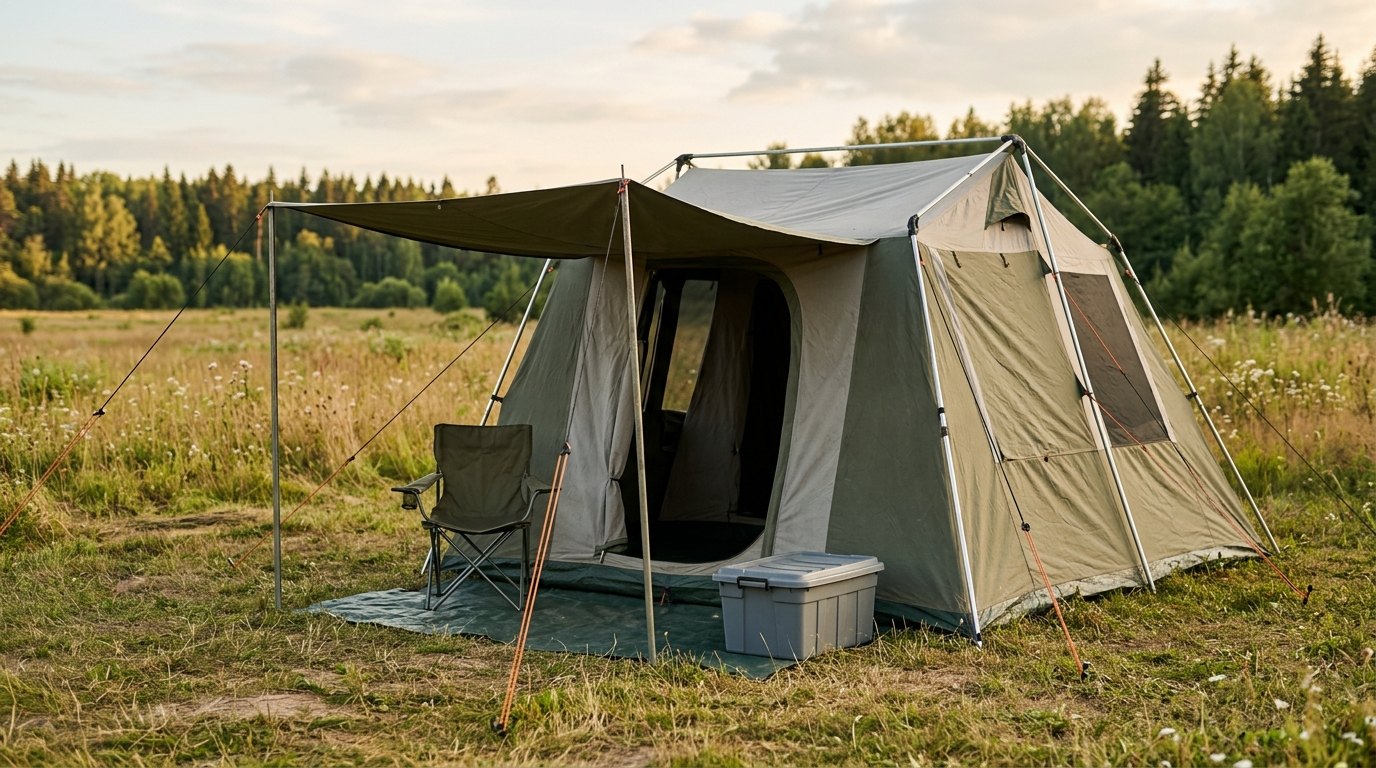
This is the shape that turns a campsite into somewhere you actually want to spend a wet afternoon. Near-vertical walls give real standing room, a big vestibule or awning swallows boots and camp chairs, and many split into rooms so parents and kids aren’t sharing one space. For car-based family camping, nothing else is as liveable.
The trade-off is wind and bulk: those tall walls catch a gale, and the packed tent is heavy and awkward, so this is a drive-to-site tent, not one you carry. Guy it out properly and it’s superb; skimp on the pegs and a cabin tent will let you know. See what today’s cabin and tunnel tents are going for.
The geodesic dome tent — best for wind and weather
When the forecast looks mean, this is the tent to have. Several poles cross over the canopy so the load spreads instead of concentrating, and the low, rounded profile gives the wind little to grab. It stands up on its own, pitches on almost any ground, and stays put when lesser tents are flapping themselves to pieces.
You pay for that strength in two ways: geodesics cost more, and you get less floor space per dollar than a plain dome or tunnel. If your camping is mostly fair-weather, it’s more tent than you need — but for exposed, unpredictable trips it’s the honest choice. Compare current geodesic dome tents on Amazon.
The instant or pop-up tent — best for fast setup
The appeal is simple: the poles are pre-attached, so the tent unfolds and locks out in about a minute with no threading and no swearing. For a single night, a quick weekend, or anyone who values getting camp up before dark, an instant tent removes the one job people dread.
Speed costs you elsewhere. Folded, these tents are bulky discs that fight you going back in the bag, they rarely pitch as taut as a poled tent in wind, and the mechanisms wear out faster. Buy one as a convenience tent, not the tent you’ll still own in ten years. Look up the latest instant and pop-up tents.
The simple dome tent — best budget
Two poles crossed over a square floor: the dome is the default cheap tent for a reason. It’s light enough to carry a short way, quick to learn, and perfectly good for warm nights and settled weather. As a first tent or a spare for visitors, it does the job without denting the wallet.
The savings show up in fibreglass poles and thinner fabric, which is fine until real wind or a long downpour arrives. Keep a budget dome for gentle conditions and don’t ask it to be a storm shelter. Check prices on entry-level dome tents.
The lightweight crossover tent — best for mixed use
This is the tent for people whose camping doesn’t fit one box — mostly car-based, but occasionally carried to a walk-in site or packed for a bike trip. A crossover keeps enough room for two and their gear while shedding the weight and pack size of a full family tent, usually with aluminium poles and lighter fabric.
It won’t swallow a family, and a dedicated backpacking tent will still be lighter for serious hiking. But if you want one tent that stretches across how you actually camp, this is the sensible middle. Browse lightweight crossover tents on Amazon.
Comparison
| Tent type | Wind handling | Setup speed | Living space | Best for |
|---|---|---|---|---|
| Cabin / tunnel | Fair (guy well) | Slow | Excellent | Family car camping |
| Geodesic dome | Excellent | Moderate | Good | Wind & weather |
| Instant / pop-up | Modest | Fastest | Moderate | Quick trips |
| Budget dome | Modest | Fast | Moderate | Fair-weather / first tent |
| Lightweight crossover | Good | Moderate | Snug for two | Mixed car & walk-in |

Frequently Asked Questions
What size tent do I actually need?
Size up by one or two from the person rating. Check the floor dimensions in centimetres rather than trusting “sleeps 4,” and allow about a metre of width per adult plus room for gear. A couple is comfortable in a three or four-person tent; a family of four wants a six.
Are pop-up tents any good?
For speed and occasional fair-weather use, yes. They go up in a minute and suit festivals and one-nighters. They struggle in real wind, are awkward to fold back down, and wear out sooner than a poled tent — so they’re a convenience buy, not a tent for regular campers.
How waterproof does a tent need to be?
The floor matters most, because you sit and kneel on it — look for a bathtub floor around 2000mm or higher. A fly around 1500mm sheds rain well. Bear in mind that most “leaks” are condensation from poor airflow, so ventilation matters as much as the waterproof numbers.
Aluminium or fibreglass poles?
Aluminium, if you can. It bends under load and springs back, and a bent section can often be splinted in the field. Fibreglass is cheaper but shatters when it fails and sends splinters through the sleeve. For anything but gentle weather, aluminium poles are worth the extra.
Can one tent do both family camping and hiking?
A crossover gets close, but not all the way. A true family cabin tent is far too heavy to carry, and a backpacking tent is too cramped for a family. Pick the tent for the trip you take most often, and borrow or hire for the rare exception.
The Bottom Line
Match the shape to how you camp and the rest falls into place. A large cabin or tunnel tent is the most liveable choice for family trips you drive to; a geodesic dome is the one to trust when the weather turns; an instant tent wins on speed, a budget dome on price, and a lightweight crossover if your camping refuses to sit still. Whatever you choose, size up on capacity and guy it out properly — those two habits fix more bad nights than any brand ever will.
Working out the rest of your setup? See our guide to the roomier best family camping tents, weigh up going off the ground with the best rooftop tents, and pair your tent with one of the best sleeping bags for camping.