
This page contains affiliate links. Far Cornel may earn a commission if you buy through them, at no extra cost to you.
See the current rooftop tents on Amazon →
Quick answer: For the most sleeping space per dollar, a softshell fold-out is the roof top tent most people should buy. If you break camp most days, a hardshell wedge sets up in seconds; a clamshell adds sit-up headroom; a softshell with an annex gives families a room underneath; and a low-profile lightweight tent suits a modest roof rating. Skip a rooftop tent altogether if you camp in one spot for a week.
The first time you pop a rooftop tent open in under two minutes and climb onto a proper mattress while everyone else is still fighting pegs in the wet, you are sold for life. The second time you have to fold the whole thing down just to drive to the shop for milk, you understand the catch. A rooftop tent is one of the best upgrades a touring setup can have — for the right kind of camper, on the right vehicle.
The decision is not really which brand. It is whether your roof can carry the thing, how often you move camp, and how much space you want for the weight and drag you will haul around the rest of the year. Get those three answers straight and the right style almost picks itself. Get them wrong and you have a heavy, expensive tent your car cannot legally carry.
Quick picks
- Best overall: a softshell fold-out — the most sleeping space per dollar, with the option of an annex later.
- Best fast setup: a hardshell wedge that pops up in seconds and sits low and sleek for the drive.
- Best headroom: a hardshell clamshell that lifts at both ends so you can sit up properly.
- Best for families: a softshell with an annex that turns the space underneath into a change room or a kids’ bunk.
- Best for small vehicles: a low-profile lightweight tent that respects a modest roof rating.

How to choose a rooftop tent
Start with the number nobody prints on the tent: your vehicle’s dynamic roof load rating. That is what the roof can legally carry while you are driving, and it is far lower than the static rating that applies once you are parked and asleep up there. Plenty of wagons sit around 60 to 100 kg dynamic. A hardshell tent can eat most of that on its own before you have added the rack, the bedding, or a second person on the ladder. Check the dynamic figure, add the tent and rack weight, and stay under it — this is the step that keeps a dream build from becoming an illegal, unsafe load.
Weight up high does more than nudge a number over the limit. Sixty-odd kilos on the roof raises the vehicle’s centre of gravity, so it leans more in corners, feels tippy on off-camber tracks, and gets shoved around by crosswinds and passing trucks. It is manageable if you respect it — ease off the pace and leave more room — but it is the reason a lighter tent often beats a bigger one on a tall or narrow vehicle.
After the roof, the real fork is softshell versus hardshell. Hardshell wedges pop up in about a minute, sit low and slippery for less fuel drag, and shrug off weather — but they usually sleep fewer and cost more. Softshell fold-outs take longer to open and pack and stand taller folded, yet give you roughly double the bed for the money and the option of an annex room below. Match that trade to how often you move: if the tent lives on the roof all year, a hardshell’s sleek closed profile quietly pays you back at the fuel bowser.
Two honest warnings. If you camp in one spot for days at a time, think hard before going rooftop at all: a ground tent lets you leave camp standing and drive off, while a rooftop tent has to be packed down every time the car moves. And whatever you buy, plan for the ladder and the damp — a lifted vehicle makes every 2 am climb higher, and a sealed tent full of sleeping bodies breeds condensation unless you crack the vents.
The main styles, and who each suits
Compare hardshell and softshell tents on Amazon →
Softshell fold-out: the space-and-value pick
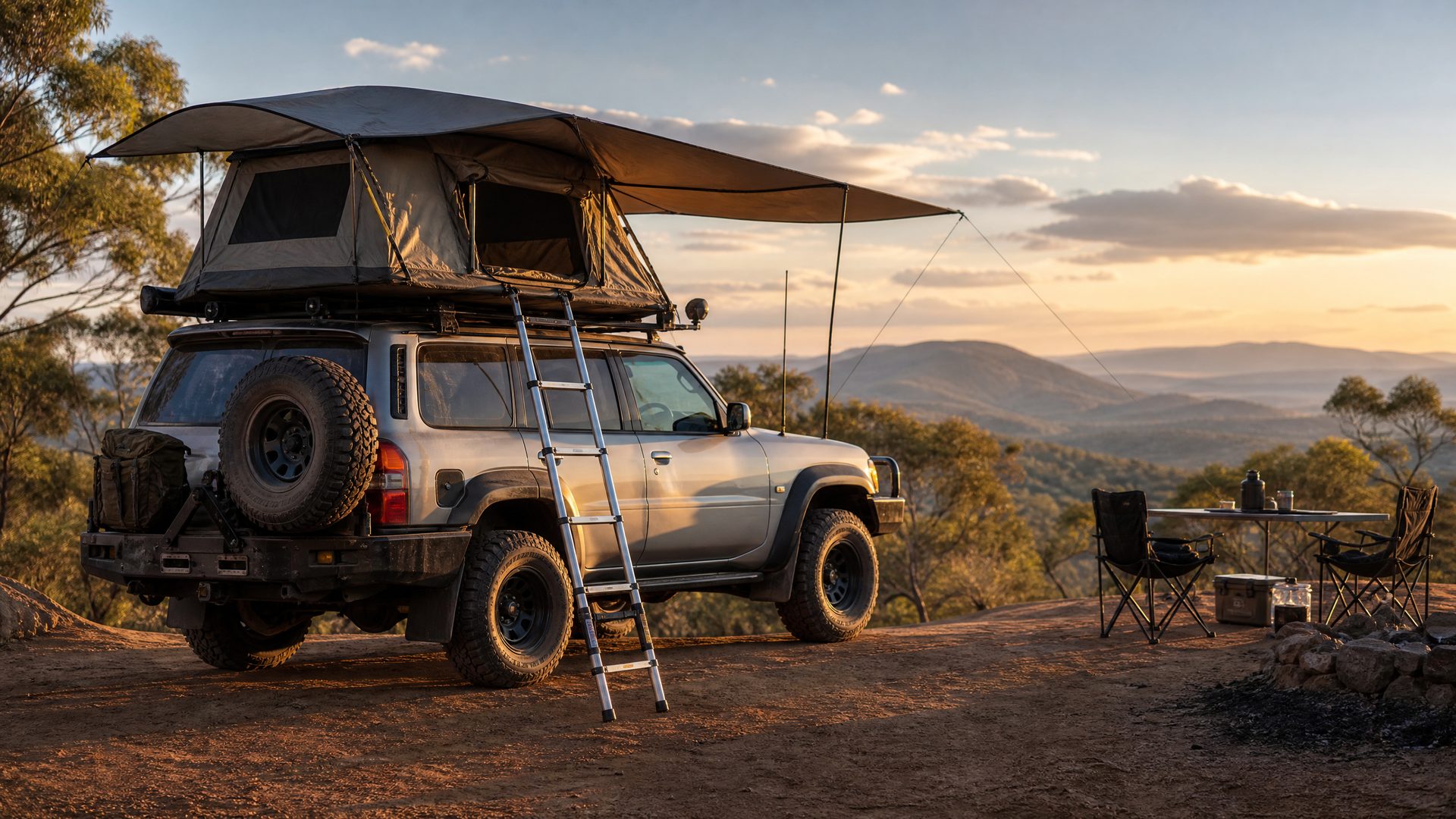
This is the rooftop tent most people should start with. It folds out over the side of the vehicle, so the floor is roughly double the closed footprint — the most bed you can buy for the money, and comfortably enough for two adults and a small child. You pay for that space in setup time (a few minutes at each end), a taller folded profile that drags more on the highway, and a cover you have to wrangle in the wind. If you value a big, comfortable bed over a lightning-fast pack-up, none of that is a deal-breaker. See what the current softshell fold-outs are going for.
Hardshell wedge: fastest up, sleekest down
Lift two clips and a gas-strut wedge pops up on its own in well under a minute; drop it and the low, hard lid shrugs off rain and cuts fuel-sapping drag. The trade is space — a wedge is tallest at the head and low at the foot, so it sleeps two adults snugly rather than roomily, and it costs more per sleeping spot than a softshell. If you move camp most days and want the tent to vanish into a slim profile for the drive, the wedge earns its price. Check the hardshell wedges currently listed.
Hardshell clamshell: sit-up-straight headroom
A clamshell hinges up at both ends instead of wedging, so the roof stays high across the whole tent and you can actually sit up to dress or wait out a wet afternoon. You keep the hardshell’s quick setup and weatherproof lid, but the taller closed box drags a little more than a wedge and the extra height adds weight up top. It is the pick for taller campers, or anyone who has spent one too many mornings hunched inside a wedge. Browse the clamshell options and their fold heights.
Softshell with an annex: a room downstairs
Add an annex to a fold-out softshell and the space under the tent becomes an enclosed downstairs room — somewhere to change, stow gear out of the weather, or give kids a ground-level bunk. For a family running a single basecamp, that extra room changes how the whole camp works. The cost is more canvas to pitch and stow and a slower setup, so it suits groups who stay put rather than tourers chasing a new site every night. Look over the softshell-with-annex setups on offer.
Low-profile lightweight: kindest to payload and fuel
If your vehicle has a modest roof rating, or you simply do not want a heavy load up high, a trimmed-down lightweight tent is the sensible answer. Compact softshells and slim hardshells keep the weight down so you stay under a tighter dynamic limit and preserve handling, and they cost you less fuel all year. You give up some interior room and mattress luxury, but you gain a setup your car can carry without complaint — the right call for smaller wagons, light SUVs, and anyone watching payload. Compare the lightweight, low-profile tents here.
How the styles compare
| Style | Setup | Sleeps | On-road profile | Best for |
|---|---|---|---|---|
| Softshell fold-out | A few minutes | Two adults + child | Tall, more drag | Space and value |
| Hardshell wedge | Under a minute | Two, snug | Low and sleek | Fast, frequent moves |
| Hardshell clamshell | About a minute | Two, more headroom | Taller box | Sitting-up comfort |
| Softshell + annex | Longest | Largest, plus a room below | Tall, draggy | Family basecamps |
| Low-profile lightweight | Varies | Compact | Lowest, lightest | Small vehicles, payload |

Frequently asked questions
Are rooftop tents worth it over a good ground tent?
Often, if you move around a lot. A rooftop tent sets up in minutes, puts you on a real mattress off wet, hard, or uneven ground, and keeps you clear of insects — which suits tourers who camp somewhere new most nights. A good ground tent is far cheaper, does not load your roof or cost you fuel, and lets you leave camp standing while you drive off. Choose rooftop for fast, comfortable, mobile camping; keep the ground tent for value and staying put.
Softshell or hardshell?
It is the core decision. Softshell fold-outs give the most sleeping space for the money and can take an annex, but they are slower to pack and taller folded. Hardshells set up in seconds and sit low and weatherproof for less fuel drag, but sleep fewer and cost more. If you value bed size and versatility, go softshell; if you value speed and a slim on-road profile, go hardshell.
Can my vehicle actually carry one?
Check the dynamic roof load rating, not the static one. The dynamic rating is what your roof can carry while driving, and it is much lower than the static figure that applies while you are parked and asleep in the tent. Add the tent’s weight to the rack’s and make sure the total sits within both the vehicle’s dynamic limit and the rack’s rating. If it does not, a lighter, low-profile tent is the fix rather than pushing the numbers.
Do they get cold or damp inside?
They can, like any tent, if airflow is poor. Bodies breathe out a lot of moisture overnight, so condensation forms when a tent is sealed tight — crack the vents and windows to let it escape, even in the cold. An insulating mattress topper or an anti-condensation mat under the mattress helps, and airing the tent before you pack it stops damp building up. Manage the ventilation and a rooftop tent stays comfortable across a wide range of conditions.
The bottom line
Buy the style that matches how you camp, not the one that looks toughest in the car park. That usually means a softshell fold-out: the biggest bed for the money, with an annex on tap when the family grows. If you break camp most mornings, pay for a hardshell wedge and enjoy the ninety-second setup and the slim, fuel-friendly profile. Reach for a clamshell if you want headroom, an annex if you want a proper family room, and a low-profile lightweight if your roof rating is tight. Confirm the dynamic load figure first, then pick the tent — do it in that order and you will love the thing for years.
More camping guides: read our companion on how to choose a rooftop tent for the setup detail, weigh a rooftop setup against a good ground tent, or size up sleeping room with our family camping tents guide.