
This page contains affiliate links. Far Cornel may earn a commission if you buy through them, at no extra cost to you.
See the top-rated gear on Amazon →
Quick answer: The safe, affordable default for three-season camping is a synthetic bag with a comfort rating near 0°C — warm enough for a cold snap, easy to wash, and forgiving when it gets damp. Choose down if you carry the bag any distance and want it to pack small, a doublewide if you sleep two, and a sub-zero mummy bag for genuinely cold trips. Whatever you pick, pair it with an insulated mat or you will still be cold.
The coldest night I have spent in a tent was not the sleeping bag’s fault. It was a thin foam mat letting the ground drink the heat out of my back while a perfectly good bag kept my top half toasty. That is the thing nobody tells you at the checkout: a sleeping bag is only half of a warm night, and the temperature number on the tag is more of a hopeful suggestion than a promise.
Manufacturers quote two ratings — a comfort rating and a lower limit — and the limit is closer to “you will survive but not sleep” than “you will be cosy”. Buy to the comfort figure, give yourself a few degrees of margin, and decide honestly between down and synthetic based on where you camp rather than what looks impressive. Get those two calls right and the rest is detail. Here are the five that cover almost everyone.
Quick Picks
- Best all-round: a synthetic bag with a comfort rating near 0°C.
- Best for packing light: a down bag with a high fill power.
- Best for couples: a doublewide two-person bag.
- Best for cold trips: a tapered sub-zero mummy bag.
- Best cheap upgrade: a liner to add warmth and keep the bag clean.

How to Choose a Sleeping Bag
Start with the coldest night you realistically expect, then buy a bag whose comfort rating sits a few degrees below it — ratings are optimistic, and cold sleepers should add more margin. A comfort rating near 0°C handles most three-season nights; drop to -5°C or colder for frost, and 5 to 10°C suits warm-month camping. It is far easier to vent a bag that is slightly too warm than to conjure heat out of one that is too cold.
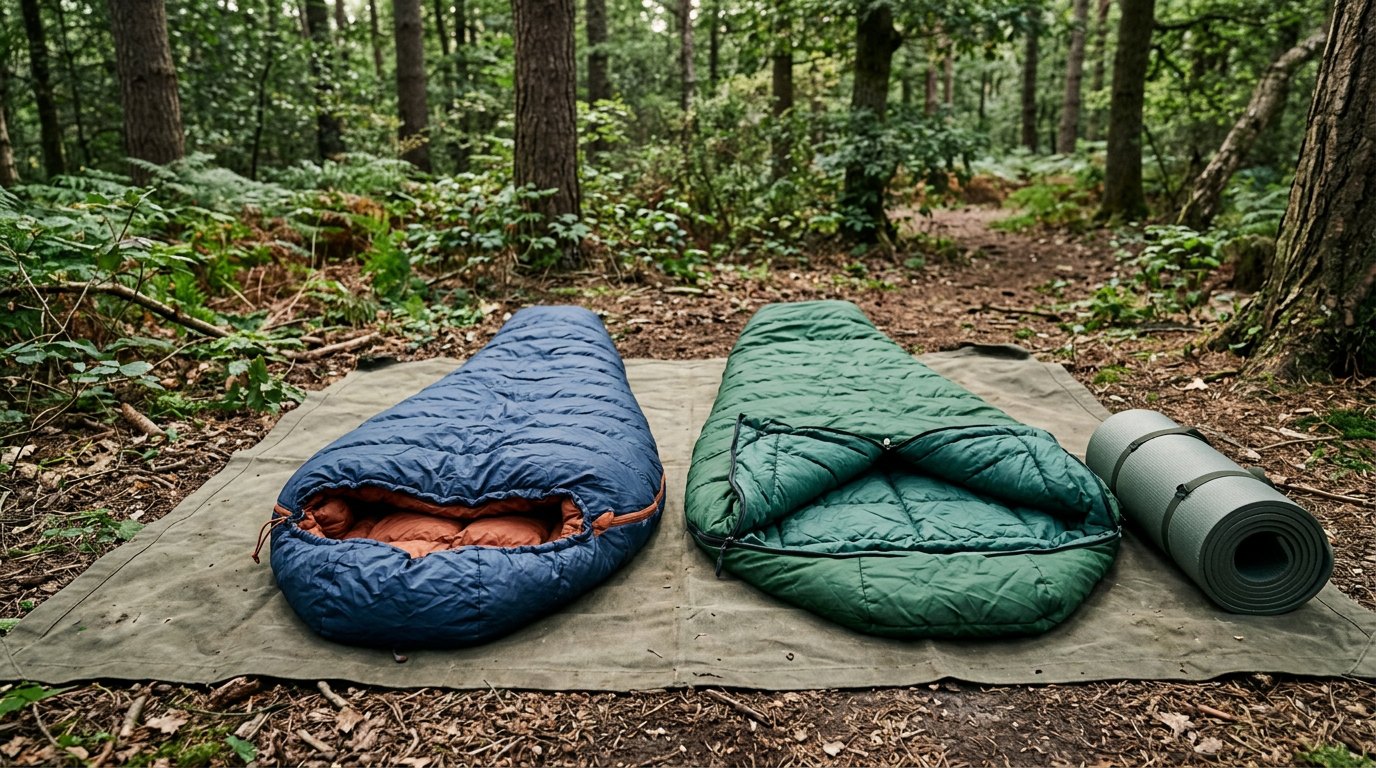
Then choose the fill. Down gives the most warmth for its weight, packs tiny and lasts years if kept dry, but it collapses when wet and costs more; its quality is graded by fill power, usually 650 to 900-plus. Synthetic is bulkier for the same warmth yet keeps insulating when damp, dries fast and costs less — the sensible default for car camping. A tapered mummy also traps far more heat than a boxy rectangular bag. Whatever you pick, budget for an insulated mat in the same breath, because its R-value does as much for a cold night as the bag itself.
Two things the tag never explains. Fill power is the loft of down, not the weight of it – 800-fill traps more warm air per gram than 550-fill, so a dearer high-fill bag is often both warmer and lighter than a cheap one packed with more low-grade down. And storage matters more than most buyers realise: never keep a bag crushed in its stuff sack between trips. Compression is what flattens the loft for good, in down and synthetic alike. Hang it, or leave it in the big cotton sack it came with, and it will outlast three bags that lived jammed in the bottom of a cupboard.
The Sleeping Bags
Check today’s prices on Amazon →
The three-season synthetic
This is the bag I hand a first-time camper without a second thought. A synthetic three-season bag with a comfort rating around 0°C keeps insulating even after a damp night of condensation, dries quickly on the vehicle at lunchtime, and survives being stuffed into its sack in a hurry. Brands like Coleman and Darche do dependable, roomy versions, and Sea to Summit make a more refined one if you want less bulk. It is heavier and packs larger than down, but for car camping where boot space is not precious, that trade is worth making. see what a decent synthetic bag runs to right now
The down bag
If you ever carry the bag on your back, down is the upgrade you feel. A good down bag with 650 to 900 fill power packs to the size of a loaf, weighs a fraction of the synthetic equivalent, and lofts up warm for years if stored loose and dry. Sea to Summit and Exped make lovely ones. The catch is real: get untreated down properly wet and it clumps into cold ropes until it dries, which is slow. Choose down for dry, cold conditions and packability, and consider treated down if damp is likely. check the going rate on a high-fill-power down bag
The doublewide for two
Sleeping as a couple, a doublewide beats two singles zipped together nine times out of ten. The best versions, like the Kelty two-person bags, give each person their own blanket layer so one restless sleeper cannot strip the covers off the other at 2am. You share body heat, get room to move, and it rolls into one carry sack. It is the heaviest option here and strictly for driving to camp, but for comfort side by side it is hard to beat. look at what the two-person doublewides cost
The cold-weather mummy
When the forecast dips below freezing, a tapered mummy earns its keep. The close cut, the cinch-down hood and the insulated draft collar stop warm air escaping in a way a boxy rectangular bag never manages. Therm-a-Rest and Sea to Summit both make serious sub-zero bags in down and synthetic. Do not make it your only bag if most trips are warm — a deep winter bag is stifling on a mild night, and you end up sleeping on top of it. price up a sub-zero mummy for the cold trips
The liner that does two jobs
A liner is the cheapest upgrade in this whole guide and the one people overlook. A thermal or silk liner adds a few degrees of warmth on a cold night, and just as usefully it takes all the skin oil and grime that would otherwise soak into your fill, so the bag stays fresh and lasts longer. Sea to Summit make the ones I keep coming back to. Slide it in for winter, use it alone as a sheet in the heat, and pull the bag out on top only when you need it. see how little a good liner actually costs

Comparison
| Type | Fill | Comfort range | Packs small? | Best for |
|---|---|---|---|---|
| Three-season synthetic | Synthetic | Around 0°C | No, bulky | Most car campers |
| Down bag | Down 650–900 | 0°C and below | Yes, very | Carrying it any distance |
| Doublewide | Synthetic or down | Around 0–5°C | No, large | Couples |
| Cold-weather mummy | Down or synthetic | -5°C and colder | Down yes | Frosty trips |
| Liner | Silk or thermal | Adds a few degrees | Tiny | Warmth and hygiene |
Frequently Asked Questions
What temperature rating should I actually buy?
Read the comfort rating, not the lower limit, and pick one a few degrees below the coldest night you expect. The limit figure assumes you are curled up and just about coping; the comfort figure is where you actually sleep. Cold sleepers should add extra margin.
Down or synthetic for camping?
Synthetic is the safer, cheaper choice for car camping because it keeps you warm when damp and washes easily. Down wins if you carry the bag, camp in dry cold, and want it to pack small. If wet is likely but you love down, treated down is the middle path.
Why am I still cold in a good bag?
Almost always the ground, not the bag. Cold seeps up from below and crushes the insulation you are lying on, so a bag with a poor mat under it will always feel colder than its rating. Add an insulated mat with a decent R-value before you buy a warmer bag.
Can I zip two bags together?
Sometimes. You need one bag with a left-hand zip and one with a right-hand zip, usually from the same brand and size, and even then the join can be draughty. For regular two-up camping a purpose-built doublewide is warmer and far less fiddly.
The Bottom Line
One synthetic bag with a comfort rating near 0°C covers almost everyone: the smart, affordable buy — warm enough for a surprise cold night and unbothered by damp. Step up to down when packability matters, choose a doublewide for two, and keep a sub-zero mummy for genuinely cold trips. Then do the thing that matters most: put a properly insulated mat underneath it, add a liner for a few extra degrees, and you will sleep warm on trips where everyone else is complaining about the cold.
To finish the sleep system, read our take on down versus synthetic insulation, then sort the rest of camp with the best camping tents and the best camping stoves.