
This page contains affiliate links. Far Cornel may earn a commission if you buy through them, at no extra cost to you.
See the top-rated gear on Amazon →
Quick answer: For most overlanders a hardshell wedge rooftop tent is the best buy — up on gas struts in about a minute, aerodynamic, and weatherproof. Choose a fold-out softshell for more sleeping space and better value, a budget softshell to try rooftop camping cheaply, a low-profile hardshell if you drive a lot between trips, and a premium insulated tent for serious, all-conditions touring. Check your roof load rating first.
Before anything else, a rooftop tent conversation has to start with a number most buyers never look up: your vehicle’s dynamic roof load rating. That is what the roof can safely carry while you are moving, and your tent, rack and everything on it has to stay under it. Rooftop tents are heavy — commonly 45 to 70kg before anyone climbs in — so this is a genuine safety limit, not fine print. I have seen people fall in love with a tent, mount it, and only then discover their roof was never rated to carry it down a corrugated track.
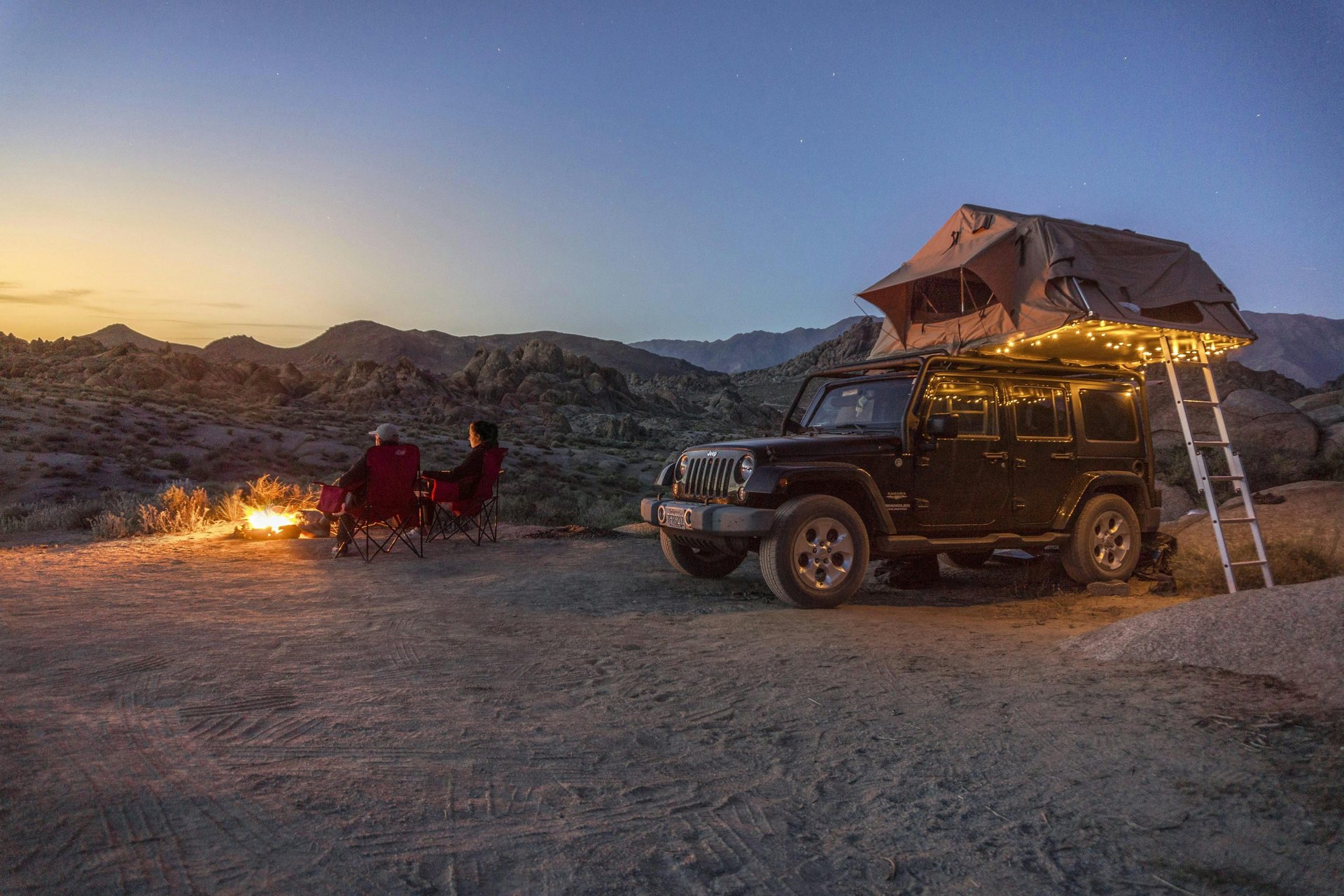
Get that right and a rooftop tent is one of the best upgrades touring has to offer. Instead of hunting for a flat, dry, rock-free patch of ground, you pop a tent open on the roof, climb the ladder, and sleep on a proper foam mattress off the dirt — set up and packed away in minutes. The main fork in the road is hardshell versus softshell, and the honest answer of which to buy depends entirely on how you camp.
Quick Picks
- Best overall: a hardshell wedge tent that lifts on gas struts in about a minute.
- Best for space: a fold-out softshell that doubles its footprint over the vehicle.
- Best budget: an entry-level softshell to try rooftop camping.
- Best low-profile: a slim aerodynamic hardshell for frequent driving.
- Best premium: an insulated hardshell in poly-cotton for all-conditions touring.

How to Choose a Rooftop Tent
Start with that load rating, then decide hardshell or softshell, because everything else follows from it. A hardshell has a rigid lid that lifts on gas struts: setup is genuinely about a minute, it is more aerodynamic so you lose less fuel economy and hear less wind noise, and it sheds weather well — but it costs more and usually sleeps two adults at most. A softshell folds open like a clamshell, often doubling its footprint out over the vehicle, which gives more sleeping space for the money and frequently an awning, at the cost of a five-to-ten-minute setup and covers that wear faster.
The rule of thumb is about how you travel. If you move camp most days and want to minimise faff, a hardshell saves real friction every morning. If you base-camp for several nights or need to sleep three or four, a softshell wins on space and value. Neither is “better” — they are built for different trips, and buying the wrong one for your style is the most common regret.
Then the comfort details. A thick foam mattress is half the reason to buy a rooftop tent, so check the thickness. Two people breathing overnight in an enclosed space makes condensation, so look for good cross-ventilation with multiple windows and doors. Remember a closed hardshell adds roughly 15 to 25cm on top of your rack, which is worth measuring against a garage or carport, and expect a small fuel-economy hit that is larger on tall softshells. The day-one upgrade is an anti-condensation mat under the mattress and a quality travel cover. Have a quick look at the current and most recent options on Amazon for the rooftop tents.
The Rooftop Tents
Check today’s prices on Amazon →
The hardshell wedge tent
For most overlanders this is the one to buy. A wedge hardshell lifts on gas struts in about a minute, packs away just as fast, and its rigid low-profile shell is aerodynamic and weatherproof. Roofnest and ARB build well-sorted versions with quality mattresses and tough shells. The trade-offs are an honest two: it costs more than a softshell, and it usually sleeps two adults rather than a family. If you move camp often and value a fast, fuss-free setup every morning, the convenience is hard to give up once you have lived with it. Have a quick look at the current and most recent options on Amazon for the hardshell rooftop tent.
The fold-out softshell tent
If you want maximum sleeping space for your money, a fold-out softshell delivers. It opens like a clamshell over the side of the vehicle, roughly doubling its floor area, so it comfortably sleeps two to three and often includes an awning and a roomy annexe option. Thule and Darche make durable, well-featured ones. The costs are a longer setup of several minutes, more exposure to wind, and covers and zips that wear faster than a hardshell’s lid. For base-camp trips where you settle in for a few nights, the extra room is worth the extra effort. Have a quick look at the current and most recent options on Amazon for the softshell rooftop tent.
The budget softshell tent
Rooftop camping does not have to be a huge outlay to start. An entry-level softshell from a value brand like Smittybilt gets you a comfortable mattress, a telescoping ladder and a windowed rainfly for far less than a premium tent. Setup and mounting take a bit more effort and the materials are not as refined, but you get a remarkable amount of tent for the spend. It is the sensible way to find out whether rooftop camping suits you before committing to a top-tier hardshell. Have a quick look at the current and most recent options on Amazon for the budget rooftop tent.
The low-profile aerodynamic hardshell
If you cover a lot of highway between trips, a slim low-profile hardshell is the clever pick. A moulded, shallow shell sits low on the rack to cut wind drag, which means less noise, a smaller fuel-economy penalty and a better chance of clearing a garage door. It is light for its type and opens fast on struts, while still offering more room inside than the shallowest wedge designs. It sleeps two rather than a crowd, so it suits couples and solo tourers who prioritise how the vehicle drives day to day. Have a quick look at the current and most recent options on Amazon for the low-profile rooftop tent.
The premium insulated hardshell
At the top end, an insulated hardshell is the all-conditions benchmark. Premium poly-cotton canvas, an insulated and genuinely comfortable mattress, and world-class build quality let it handle high-speed travel and rough weather without complaint. iKamper and Rhino-Rack sit in this bracket, with larger versions that sleep a small family. It commands a premium price and adds weight, so it is aimed at dedicated tourers rather than occasional campers — but for people who live out of their vehicle for weeks, the refinement and durability justify it. Have a quick look at the current and most recent options on Amazon for the insulated rooftop tent.
Comparison
| Tent | Type | Setup | Best for |
|---|---|---|---|
| Hardshell wedge | Hardshell | About a minute | Moving camp often |
| Fold-out softshell | Softshell | Several minutes | Space and value |
| Budget softshell | Softshell | Several minutes | Trying rooftop camping |
| Low-profile hardshell | Hardshell | About a minute | Frequent driving |
| Insulated hardshell | Hardshell | About a minute | All-conditions touring |
Frequently Asked Questions
Are rooftop tents worth it?
They set up and pack away fast and keep you off wet, uneven, rocky ground, which is why tourers love them. The costs are real too: they are pricey, add significant roof weight, dent fuel economy, and mean climbing a ladder at night. If you move camp often and value the speed, they are well worth it.
Hardshell or softshell?
Hardshells open in about a minute, drive sleeker and shed weather well, but cost more and usually sleep two. Softshells are roomier and better value and can sleep three or four, but take several minutes to pitch and catch more wind. Choose for setup speed versus sleeping space and how you travel.
Can my vehicle carry one?
Check your vehicle’s dynamic roof load rating and your rack’s rating before you buy, because a rooftop tent plus occupants is heavy and the roof has a real moving-weight limit. This is a safety issue, not a formality — confirm the numbers first and factor in higher fuel use.
How do I deal with condensation?
Two people breathing overnight in a closed tent creates moisture, so open the windows and vents even when it is cool, and add an anti-condensation mat under the mattress to let air move beneath you. Airing the tent out before you pack it keeps the canvas and mattress dry and lasting longer.
The Bottom Line
For most overlanders a hardshell wedge is the smartest buy — a minute-long setup, sleek driving and solid weather protection. Want more room for less? A fold-out softshell delivers space and value; a budget softshell is the low-risk way to try rooftop camping; a low-profile hardshell saves fuel and noise if you drive a lot; and an insulated premium tent is worth it for serious touring. Check your roof load rating first, match hardshell or softshell to how you camp, and you add one of the best comfort upgrades touring has.
Complete your overlanding setup:– Weighing it up? →Rooftop Tent vs Ground Tent (internal link)– Prefer a ground tent? →Best Camping Tents– Power off-grid →Best Portable Power Stations (internal link)