
This page contains affiliate links. Far Cornel may earn a commission if you buy through them, at no extra cost to you.
See the top-rated gear on Amazon →
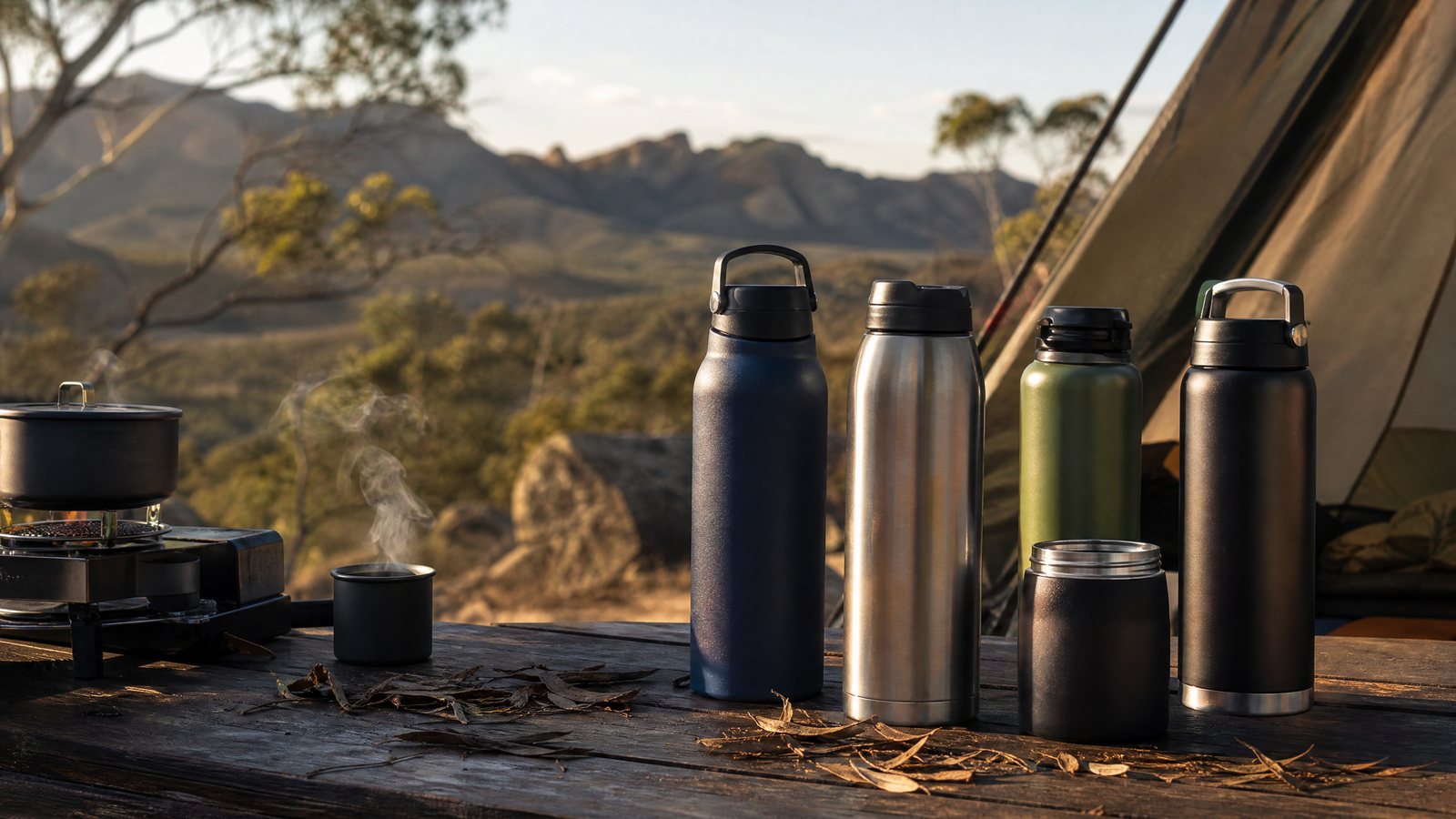
Quick answer: Nearly every vacuum bottle keeps drinks cold about 24 hours and hot about 12, so the winner comes down to steel, lid and size rather than the badge. A wide-mouth bottle with a swappable lid system suits most people; choose a thick-walled one if you drop things, a heritage flask with a cup lid as a campfire thermos, and always use a screw or chug lid for anything hot.
Cold water at the end of a hot walk, or a coffee still hot two hours after you poured it, is one of those small luxuries that earns its place on every trip. A good vacuum-insulated steel bottle holds drinks cold for around a day and hot for around half of one, survives being dropped on rock, and doubles as a thermos for the car.
What trips people up is assuming the dearest badge keeps things coldest. It does not. The big names sit within a whisker of each other on temperature, and the real differences are the grade of steel, the lid you choose, and the size you carry. This guide sorts them into five types so you can match a bottle to how you actually drink.
Quick Picks
- Best overall: a wide-mouth bottle with a swappable cap, straw and chug lid system.
- Best for abuse: a thick-walled bottle that shrugs off drops and dents.
- Best thermos: a heritage flask with a built-in cup lid for the campfire.
- Best taste-neutral: a ceramic-lined bottle that never turns coffee metallic.
- Best leakproof everyday: a bottle with a sealed magnetic or straw lid.

How to Choose an Insulated Bottle
They all work the same way, with a near-vacuum between two steel walls stopping heat moving in or out, so roughly 24 hours cold and 12 hours hot is the baseline rather than the thing that separates them. Spend more and you are not buying colder water; you are buying better steel, a better lid, or a nicer finish. Keep that in mind and the choice gets a lot simpler.
Steel grade matters more than most buyers realise. Most bottles use 304, also marked 18/8, food-grade stainless, which is perfectly safe but can pick up a faint metallic edge with coffee or acidic drinks over time. A few premium bottles use 316 steel, which resists that better, and a ceramic-lined bottle sidesteps the issue entirely. For plain water, any of them is fine.
The lid decides how you will really use the bottle. A screw or loop cap seals best and is the only safe choice for hot drinks; a straw lid is brilliant for one-handed sips in the car but usually is not rated for hot liquid; and a wide chug cap pours fast and takes ice cubes. Some ranges let you swap lids on one bottle, which is the most flexible setup. Size it to the job, roughly 500ml for kids and light carry, 600ml for everyday and cup-holders, and a litre for hiking, then hand-wash the lid to keep the seal alive. Have a quick look at the current and most recent options on Amazon for the insulated flask.
The Bottles
Check today’s prices on Amazon →
Wide-mouth bottle with a lid system
The balanced all-rounder. A bottle like the Hydro Flask Wide Mouth pairs strong double-wall insulation with a mouth wide enough to drop ice in, and the best lid ecosystem going, where the cap, straw and chug lids all fit the same body. That means one bottle adapts to a hike, the car and the desk simply by changing the top. It comes in a huge size range. For the camper who wants one bottle that does everything, this is it. Have a quick look at the current and most recent options on Amazon for the wide-mouth insulated bottle.
Thick-walled tough bottle
The one that survives you. A bottle like the Yeti Rambler is built from heavy 18/8 steel that brushes off the drops and dings that dent lighter bottles, with strong insulation and a choice of compatible lids. It is heavier and dearer, and it is close to indestructible, which is exactly the point. This is the bottle for anyone hard on their gear who wants something that lives in the back of the vehicle and the bottom of the pack without complaint. Have a quick look at the current and most recent options on Amazon for the tough insulated bottle.
Heritage thermos with a cup lid
The campfire classic. The traditional Stanley Classic flask, and not the trendy tumbler that is a leakier, different thing, has kept working people in hot drinks for over a century, with a built-in cup lid, around a full day hot or cold, and toughness that borders on stubborn. It is the flask to pour a round of tea from beside the fire. For proven, no-nonsense value it is hard to argue with. Have a quick look at the current and most recent options on Amazon for the heritage thermos flask.
Ceramic-lined taste-neutral bottle
The one for fussy palates. A ceramic-lined bottle such as the Frank Green range uses a smooth ceramic inner that never lends a metallic taste to coffee or juice, paired with a leakproof push-button lid and a big spread of colours. It is a premium price for what is really a polished everyday carry, but if you have ever noticed your steel bottle tainting your coffee, the ceramic liner is the fix. Have a quick look at the current and most recent options on Amazon for the ceramic-lined bottle.
Leakproof everyday bottle
The reliable daily driver. A bottle like the CamelBak Chute Mag seals tight and tucks its magnetic cap out of the way while you drink, so it does not clout you on the nose, and it holds cold and hot well in a cup-holder-friendly shape. The sealed lid is the selling point: this is the bottle you throw in a bag next to a laptop without a second thought. It punches above its price and rarely lets you down. Have a quick look at the current and most recent options on Amazon for the leakproof everyday bottle.
Comparison
| Bottle type | Steel / liner | Cold / hot | Best lid job | Watch-out |
|---|---|---|---|---|
| Wide-mouth lid system | 304 steel | ~24h / ~12h | Swaps for any use | Nothing major |
| Thick-walled tough | 304 steel, thick | ~24h / ~12h | Durability | Heavier, dearer |
| Heritage thermos | 304 steel | ~24h either way | Pour-and-share | Bulky, one size feel |
| Ceramic-lined | Ceramic inner | Strong | Taste-neutral | Premium price |
| Leakproof everyday | 304 steel | Strong | Sealed in a bag | Straw not for hot |
Frequently Asked Questions
How long does it really keep drinks cold or hot?
A good vacuum bottle holds roughly 24 hours cold and 12 hours hot, though that assumes you keep the lid shut. Opening it often, or filling it only halfway, shortens both a lot. Pre-chilling the bottle with a splash of cold water, or warming it before a hot drink, buys you noticeably more time.
Which lid should I use for hot coffee?
A screw or loop cap, every time. Straw lids are made for cold drinks and often are not rated for hot liquid, and a hot straw can spurt when the bottle warms in the sun. A chug or wide cap is fine for warm drinks, but the sealed screw lid is the one that will not scald you.
Why does my bottle taste metallic?
Standard 304 steel can pick up a faint taste from coffee or acidic drinks left in it over time. Rinsing promptly after use fixes most of it. If it still bothers you, step up to a 316-steel or a ceramic-lined bottle, both of which resist that taste far better than plain 304.
What size should I buy?
Around 500ml suits kids and a light day out, 600ml is the everyday sweet spot and fits most cup-holders, and a litre carries a proper day of hiking or a group’s hot drinks. A bigger bottle holds temperature longer when full but is heavier, so match it to the trip.
The Bottom Line
For most campers a wide-mouth bottle with a swappable lid system is the safe pick, because it adapts to any use and travels light. Choose a thick-walled bottle if you are hard on gear, a heritage flask for a proper campfire thermos, a ceramic-lined bottle if steel taints your coffee, and a sealed everyday bottle for a leakproof daily driver. Pick the size for the trip, use a screw or chug lid for anything hot, and hand-wash the lid to keep the seal going for years.
Keep your drinks and food sorted with our guides to the best camping coffee makers, the best camping coolers, and the camp kitchen setup guide.