
This page contains affiliate links. Far Cornel may earn a commission if you buy through them, at no extra cost to you.
See the top camp coffee makers on Amazon →
Quick answer: An immersion brewer like the AeroPress is the do-everything pick — fast, forgiving, near-unbreakable and rinsed clean in seconds. Chase real espresso with a hand-pumped Wacaco, brew for a group with a camp press pot, go lightest with a stainless pour-over cone, or sit a moka pot on the flame for a dark, punchy cup. Skip a dedicated brewer only if you honestly do not care past instant.
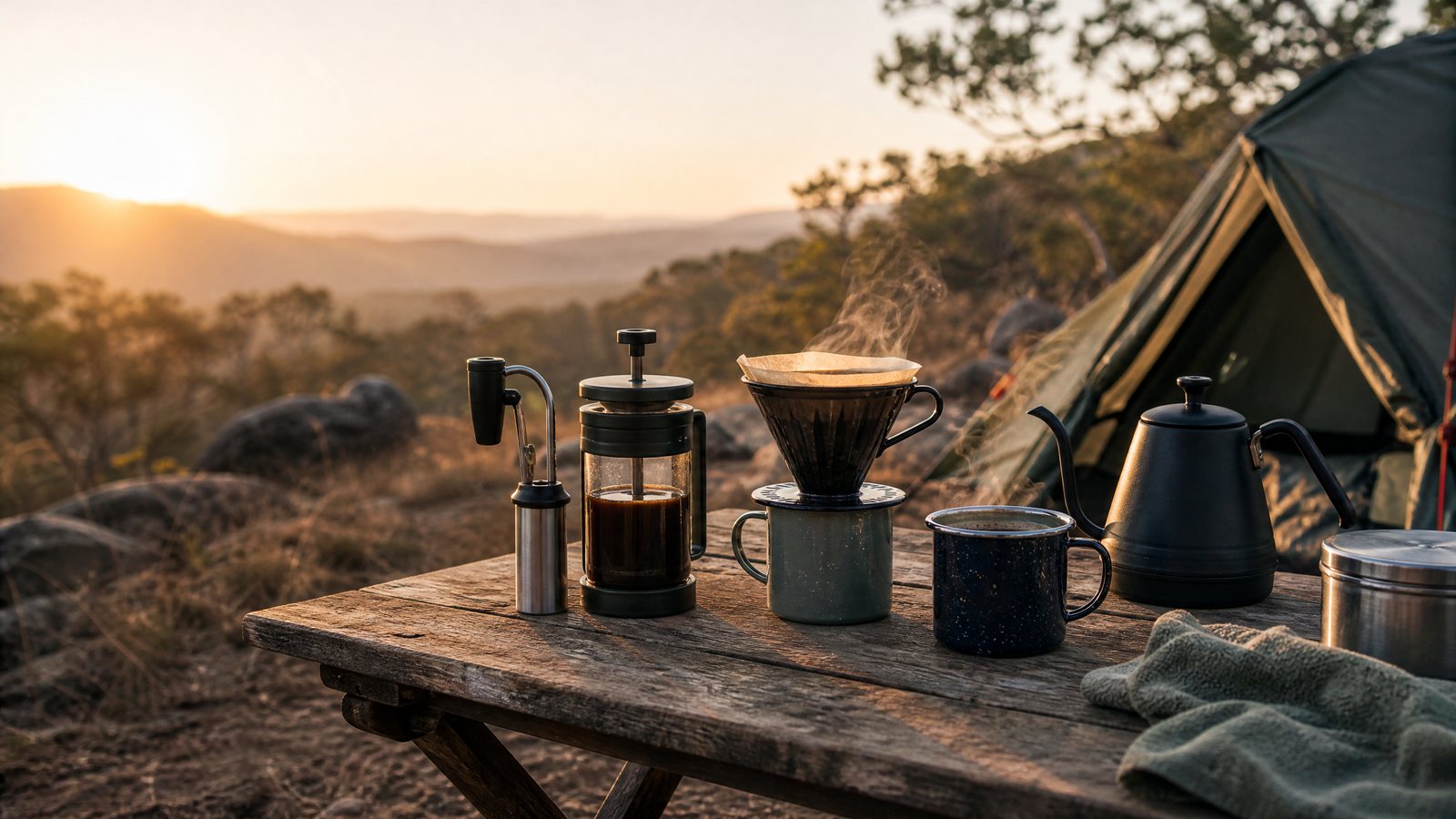
The first morning of a trip tells you everything. You crawl out at dawn and either there is a cup of something dark and genuinely good in your hands within five minutes, or there is a sad brown swirl of instant going cold in a tin mug while everyone pretends it is fine. The gap between those two mornings is smaller than most people think — and it is almost never about spending more on gear.
Here is the part nobody selling you a shiny brewer leads with: at camp, the machine matters less than the grind, the water and the ratio. A cheap pour-over cone fed a fresh, even grind will beat a clever gadget fed stale, dusty pre-ground every time. So this guide sorts the real methods by how you actually camp — solo and fast, espresso-obsessed, brewing for a hungry group, or counting every gram — and says plainly where each one shines and where it will let you down.
Quick Picks
- Best all-rounder: an immersion brewer like the AeroPress — clean, strong, near-unbreakable.
- Best espresso: a hand-pumped pocket maker such as the Wacaco Nanopresso.
- Best for groups: a camp-proof press pot that brews several cups at once.
- Best minimalist: a stainless pour-over cone with a reusable mesh filter.
- Best stovetop brew: an aluminium moka pot like the Bialetti Moka Express.

How to Choose a Camping Coffee Maker
Start with the three things that actually decide whether the cup is good, because they are free. Grind: match it to the method — coarse for a press pot, medium for pour-over and immersion, fine for espresso and moka. Supermarket pre-ground is cut for a drip machine and goes flat fast, so a small hand grinder is the single best upgrade most camp kits can make. Water: take it off the boil. Coffee brews best a touch under boiling, so after the kettle screams, count to thirty before you pour — fully boiling water scorches the grounds and drags out the bitterness. Ratio: roughly one part coffee to fifteen or sixteen parts water, near enough to two heaped tablespoons a mug. Nail those and cheap gear tastes great; ignore them and no brewer will save you.
Then pick the method for your crew and your patience. Immersion brewers and pour-overs are the low-drama options; espresso makers reward a bit of fuss; a press pot or a larger moka pot keeps a busy camp moving because they brew several cups in one go. Check what each one demands — nearly everything here needs hot water, and the moka pot needs an actual flame to sit on — and plan a stove or kettle into your kit. One hard rule: choose metal or tough plastic over glass. A glass press that survives your kitchen will not survive a corrugated track, and a shattered brewer three days from a shop is a miserable way to learn the lesson.
Last, think about the after. The brewer you will actually reach for every morning is the one that rinses clean in seconds and packs down small. A reusable mesh filter or a press with a removable screen beats fiddly paper you have to carry in and out, and a brewer that nests inside its own mug is one less loose thing rattling round the tub. Few parts, quick to clean — that is what keeps good coffee a habit instead of a chore.
The Coffee Makers
Compare brew kits and prices on Amazon →
The immersion brewer
An immersion brewer steeps the grounds in hot water, then pushes the coffee through a fine filter with gentle pressure — the most forgiving way to make a strong, clean cup at camp. The AeroPress is the benchmark: it brews in under a minute, the spent puck pops straight into the bin, and the travel version packs the whole kit inside its own cup. The tough plastic laughs off the drive where glass would not. One tip worth knowing — the standard paper discs make a crisp, bright cup, but a reusable metal filter lets more body and oils through and means nothing to run out of. It is the pick for almost anyone who wants great coffee fast without babying their gear. See what current AeroPress kits are going for.
The hand-pump espresso maker
For the camper who flatly refuses to leave espresso at home, a hand-pumped pocket maker like the Wacaco Nanopresso pulls a genuine, crema-topped shot with nothing but your arm and hot water — no power, no pods. It packs down tiny and feels faintly ridiculous in the best way. The catch: it wants a properly fine, even grind (this is where the hand grinder earns its keep), a bit of pumping effort, and it makes one shot at a time, so it suits solo espresso drinkers rather than a crowd. Feed it good grounds and it is the real thing, anywhere you can boil a cup of water. Compare the current pocket espresso makers.
The camp press pot
A press pot — a French press built for the outdoors — is the easiest way to brew several cups at once, which is why it wins at a family camp or a group trip. Coarse grounds steep in hot water for around four minutes, then you press the plunger down slowly and pour. Look for an insulated stainless body rather than glass: it keeps the pot hot for second cups and survives being knocked off a table. GSI make a sturdy camp benchmark. The trade-off is a little grit at the bottom of the cup and a slightly bulkier pack, but for handing a crew a hot brew with almost no fuss, nothing else is this simple. Look over the camp-ready press pots on offer.
The pour-over cone
The simplest brewer of all is a stainless pour-over cone with a permanent mesh filter that sits straight on your mug or flask. No paper to pack, nothing to shatter, and clean-up is a tip-and-rinse. Stanley and GSI both make rugged ones that fold or nest flat. It makes a clean, bright single cup and weighs almost nothing, so it is the hiker and the minimalist pick — the price is that it rewards a slow, steady pour and a medium grind, and it only brews one mug at a time. Pour in slow circles, let it bloom for thirty seconds first, and it punches well above its size and weight. Find a reusable pour-over cone that suits your mug.
The stovetop moka pot
For a dark, espresso-style brew with a bit of ritual, the aluminium moka pot is the classic, and the Bialetti Moka Express is the icon — a metal build that lasts for years with no fragile parts to baby. Here is the technique most people miss: start it with hot water in the base, not cold, and keep the flame low, so the coffee does not stew on the heat while the base slowly warms. The moment it starts to gurgle and splutter, pull it off and cool the base (a splash of water on the bottom does it) or the last of the extraction turns bitter. You need a flame to stand it on and a little practice, but for a proper stovetop cup with real character, nothing else comes close. See the moka pots and sizes available now.
Comparison
| Method | Cups per brew | Needs a flame? | Grind | Best for |
|---|---|---|---|---|
| Immersion (AeroPress) | 1–2 | No, just hot water | Medium | Fast, clean, all-round |
| Hand-pump espresso | 1 shot | No, just hot water | Fine | Solo espresso drinkers |
| Camp press pot | 3–8 | No, just hot water | Coarse | Groups and family camps |
| Pour-over cone | 1 | No, just hot water | Medium | Hikers and minimalists |
| Moka pot | 2–6 | Yes, a stove or trivet | Fine–medium | Dark, punchy stovetop coffee |

Frequently Asked Questions
What is the easiest way to make genuinely good coffee at camp?
An immersion brewer like the AeroPress or a simple pour-over cone. Both are hard to get wrong, need only hot water, and clean up in seconds. Add a medium grind and water taken just off the boil and you will beat most takeaway coffee with gear that fits inside a mug.
What works best for a group?
A camp press pot or a larger moka pot, because they brew several cups in one go rather than one at a time. For a full camp, brew in batches and pour into an insulated flask so nobody is left standing around waiting on the kettle.
Do I need a stove, or just hot water?
For almost everything here, just hot water — so a kettle or stove to boil it. The one exception is the moka pot, which has to sit on an actual flame while it works. Boil a bit more than you think you need so second cups come quick.
Why does my camp coffee taste bitter or weak?
Nine times out of ten it is grind, water temperature or ratio, not the brewer. Bitter usually means water that was fully boiling or grounds left on the heat too long; weak and sour usually means too coarse a grind or too little coffee. Grind to suit the method, pour just off the boil, and use around two heaped tablespoons a mug.
The Bottom Line
Buy for the morning you actually want. If you just want a strong, reliable cup with zero drama, an immersion brewer like the AeroPress is the one to beat — fast, tough and nearly foolproof. Espresso diehards should pack a hand-pump maker, groups are best served by a press pot, gram-counters by a pour-over cone, and anyone chasing a dark stovetop brew by a moka pot. Whichever you choose, spend the few dollars on a hand grinder and take the water off the boil — that, far more than the brewer, is what turns camp coffee from a chore into the best five minutes of the day.
Sort the rest of your camp kitchen while you are at it: pair your brewer with one of the best camping stoves to boil water fast, round out the cook kit with our guide to the best camping cookware sets, and give it all a steady base with the right camp kitchen table.