
This page contains affiliate links. Far Cornel may earn a commission if you buy through them, at no extra cost to you.
See the top-rated gear on Amazon →
Quick answer: Start with Gamakatsu Octopus hooks in three or four sizes — the sharpest all-rounder for bream, snapper and flathead. Add Mustad for cheap everyday variety, Owner or VMC circle hooks when you plan to release, a spread of ball, bean and star sinkers to reach the bottom, and a couple of quality swivels to kill line twist. Simple, sharp and matched to the fish beats a giant bargain kit.
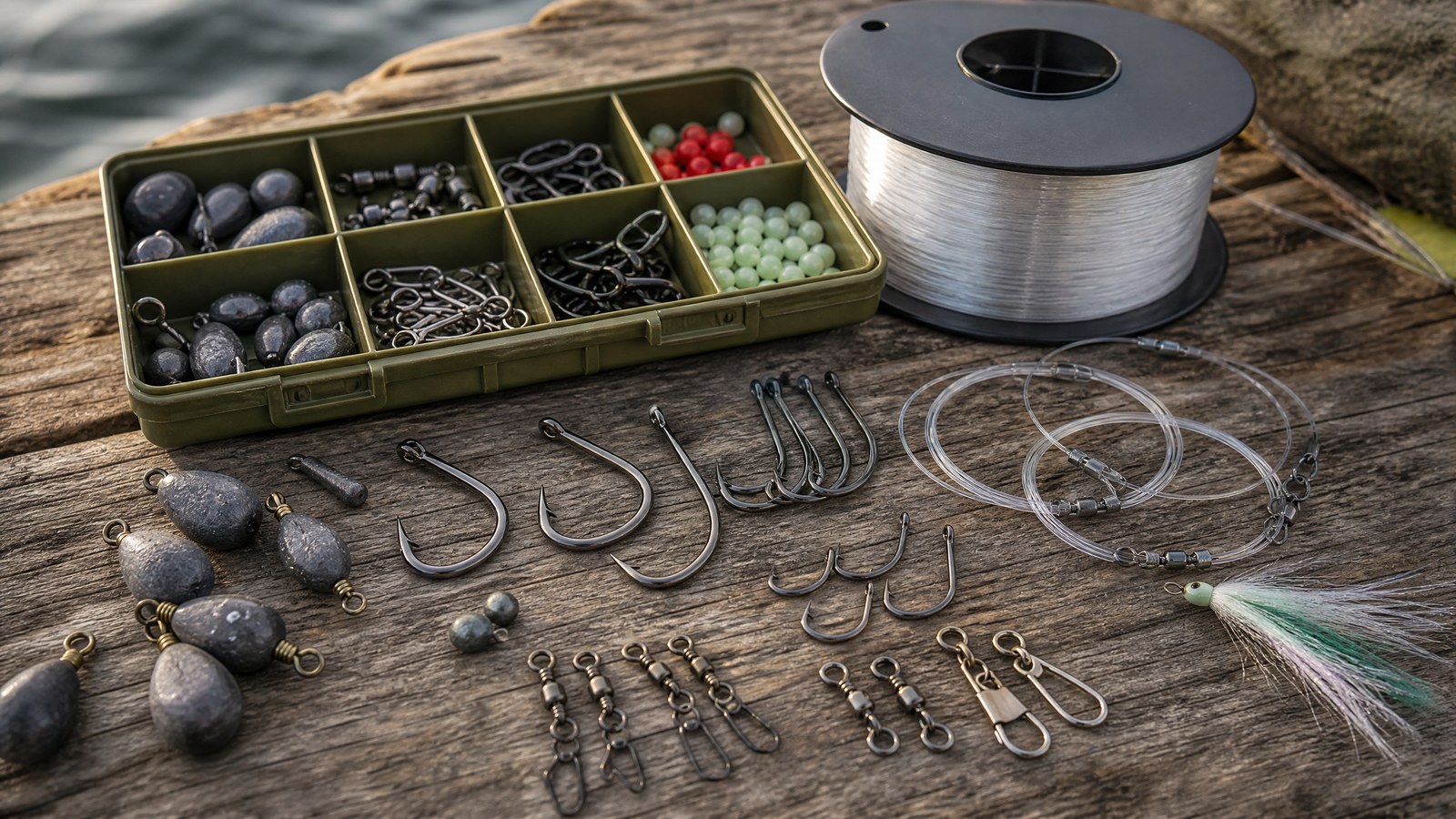
Everything between your main line and the fish counts as terminal tackle: the hook, the sinker, the swivel, the snap and the leader. It is the cheapest gear in the box and the part that actually decides whether a bite turns into a landed fish. A blunt or badly sized hook loses fish that the rod and reel did all the work to bring in, and a sinker that is too light never reaches the feeding zone in the first place.
The confusing bit is choice. Hooks come in dozens of patterns and a two-way size scale, sinkers in half a dozen shapes, and a wall of swivels and snaps that all look the same. Get four things right — pattern, size, point quality and weight — and the rest sorts itself out. Here is how I work through it, and the tackle that earns a permanent spot in my box.
Quick Picks
- Best all-round bait hook: Gamakatsu Octopus — needle-sharp and strong in every useful size.
- Best value for stocking the box: Mustad — a pattern for everything, priced to buy deep.
- Best for release and big fish: Owner or VMC circle hooks — they set themselves in the jaw hinge.
- Best for reaching the strike zone: a spread of ball, bean and star sinkers.
- Best line-twist cure: a few quality swivels and a couple of snaps.

How to Choose Hooks and Terminal Tackle
Start with the hook pattern, because the shape decides the job. An octopus or suicide hook has a short shank and a beaked point, and it is the default bait hook for bream, snapper, flathead and nearly everything else. A circle hook is bent so it slides to the corner of the mouth and sets itself as the fish moves off, the honest choice for release and big baits — provided you resist the urge to strike. Baitholder hooks have barbs on the shank to stop soft baits sliding down; long-shanks suit whiting and toothy fish and make unhooking quick. For lures, wide-gap worm hooks hold soft plastics and jig heads add the weight.
Sizing catches everyone out, because the scale runs two ways. In the plain range a bigger number means a smaller hook, so a 12 is tiny; then it flips at 1/0 and climbs, so a 6/0 is a serious hook. Match the hook to the bait and the fish’s mouth — a whiting wants a small long-shank, a solid snapper a 4/0 to 6/0. And bin this myth: a 300-piece bargain assortment is not 300 useful hooks. It is mostly tiny split shot and one or two of each hook you would actually tie on. Spend that money on quality hooks in the three sizes you fish and you will out-fish the mega-kit.
For the rest of the rig, make every piece earn its place. A running ball or bean sinker lets a fish move off without feeling lead; a star or snapper lead holds in current; split shot fine-tunes a float. Carry just enough weight to reach or hold the bottom, because a wary fish feels every gram. Swivels stop a spinning bait twisting your line into coils, and a ball-bearing one earns its keep for hard-spinning lures. Save on bulk sinkers and beads, spend on sharp hooks and a couple of decent swivels, and keep wire leader for genuinely toothy fish, since it is stiff, visible and costs you bites when it is not needed.
The one habit that lands more fish than any upgrade costs nothing: check the point. Drag it across a thumbnail — a sharp hook catches and bites in, a blunt one skates straight across. Chemically sharpened hooks come out of the packet deadly, but the tip dulls fast on sand, rock and teeth, so touch it up with a small file or, on a cheap hook, tie on a fresh one. A blunt hook is the single most common reason a good bite never comes up, and it undoes everything the rod, reel and bait did to earn it.
The Hooks and Terminal Tackle
Check today’s prices on Amazon →
Gamakatsu Octopus
If I could keep one bait hook it would be this. The Octopus pairs a short shank with a beaked point on chemically sharpened high-carbon wire, so it slides in under almost no pressure and holds. It covers bream, snapper, flathead, trevally and more, and the strong wire straightens far less often than cheap hooks under a hard drag. Don’t buy it if you only chase whiting on tiny baits — a fine long-shank suits that better. Otherwise grab three or four sizes and stop thinking about hooks. see what a pack of Octopus hooks runs to across the sizes
Mustad
The workhorse brand for stocking a box without going broke. Mustad makes a hook for every job — baitholders, long-shanks, the Demon circle range, suicides and more — at prices that let you buy in bulk and not wince when you leave a rig on the reef. Straight out of the packet the points are not quite as fine as the premium brands, so run a hook file over them once and they fish beautifully. Best for the angler who wants dependable, everyday hooks across every pattern and size without paying top dollar. price up a bulk box of everyday hooks for bait
Owner and VMC Circle Hooks
When the plan is catch and release, or you are soaking a big bait for mulloway or snapper, a quality circle hook is the tool. Owner and VMC grind some of the sharpest, and the shape does the work: let the fish load the rod and the hook slides to the jaw corner and pins itself, which means clean hook-ups and far less gut-hooking. The rule people break is striking hard — do that and you pull it straight out. Wind steadily instead and it rarely lets go. look at the circle hooks for catch and release
Ball, Bean and Star Sinkers
The bit that gets your bait down where the fish are. A few ball and bean sinkers to run on the line, a couple of star or snapper leads to hold in current, and a tub of split shot for fine adjustment covers almost every rig. Match the weight to the depth and flow and go as light as you can get away with, because a fish that feels a heavy sinker drops the bait. Don’t overspend — plain lead does the job, and you will donate plenty to snags anyway. grab a spread of ball, bean and star sinkers
Swivels and Snaps
Small, cheap, and the cure for the most maddening problem in bait and lure fishing: line twist. A barrel or rolling swivel above the leader stops a spinning bait coiling your main line, and a ball-bearing one is worth the extra for anything that spins hard. Add a few snaps to swap lures without re-tying, but keep them off heavy gear where the weaker link can cost you a big fish. Buy quality even though they are cheap — a swivel that opens up takes the whole rig, and the fish, with it. add a couple of quality swivels to kill line twist

Comparison
| Item | What it is | Where it shines | Watch-out |
|---|---|---|---|
| Gamakatsu Octopus | Premium bait hook | General bait, sharpest point | Overkill on tiny whiting baits |
| Mustad | Every-pattern value range | Stocking the box cheaply | Touch up the point first |
| Owner / VMC circle | Self-setting circle hook | Release and big baits | Never strike, just wind |
| Ball / bean / star sinkers | Weight range | Reaching and holding bottom | Too heavy spooks wary fish |
| Swivels and snaps | Connectors | Beating line twist | Snaps weaken heavy rigs |
Frequently Asked Questions
What hook size do I actually need?
Match it to the bait and the fish’s mouth, not to the size of fish you are hoping for. As a rough guide, a small long-shank around size 6 to 4 suits whiting, a 1 to 2/0 octopus covers bream and flathead, and a 4/0 to 6/0 handles a decent snapper on bigger baits. Carry a small spread of sizes and change to suit the day rather than forcing one hook to do everything.
Why won’t my circle hooks hook up?
Almost always because you are striking. A circle hook is designed to slide to the corner of the jaw and set itself as the fish swims off, so a hard strike pulls it clean out before it can grab. Leave the rod in the holder or wind down slowly and let the fish load it up. Do that and circle hooks hook and hold better than most anglers expect.
Are expensive hooks worth it over cheap ones?
For the point, yes. A chemically sharpened point slides in with the light pressure a fish gives you in that split second, and that is the single biggest factor in hook-ups. You do not need premium hooks for everything, though — a cheaper hook touched up with a small file fishes almost as well, so keep a file in the kit and you get the best of both.
Do I need swivels, or can I tie straight through?
For a still bait sitting on the bottom you can happily tie straight through and save the knot. The moment you spin a bladed lure, troll, or fish a bait that rotates in current, a swivel saves you from line twist that ruins a spool. Use a plain barrel swivel for bait and a ball-bearing one for anything that spins hard.
The Bottom Line
Build the terminal end around sharp, strong hooks in the sizes you actually fish: Gamakatsu Octopus for general bait work, a circle hook when releasing or chasing something big, and Mustad for cheap variety. Add just enough sinker to hold bottom, a couple of good swivels to beat twist, and keep the rig as simple as the day allows. Do that and the cheapest gear in the box stops being the reason you lose fish.
Related Far Cornel guides: best fishing pliers and tool kits, best fishing landing nets, plus how to choose your leader line.