
This page contains affiliate links. Far Cornel may earn a commission if you buy through them, at no extra cost to you.
See the top-rated gear on Amazon →
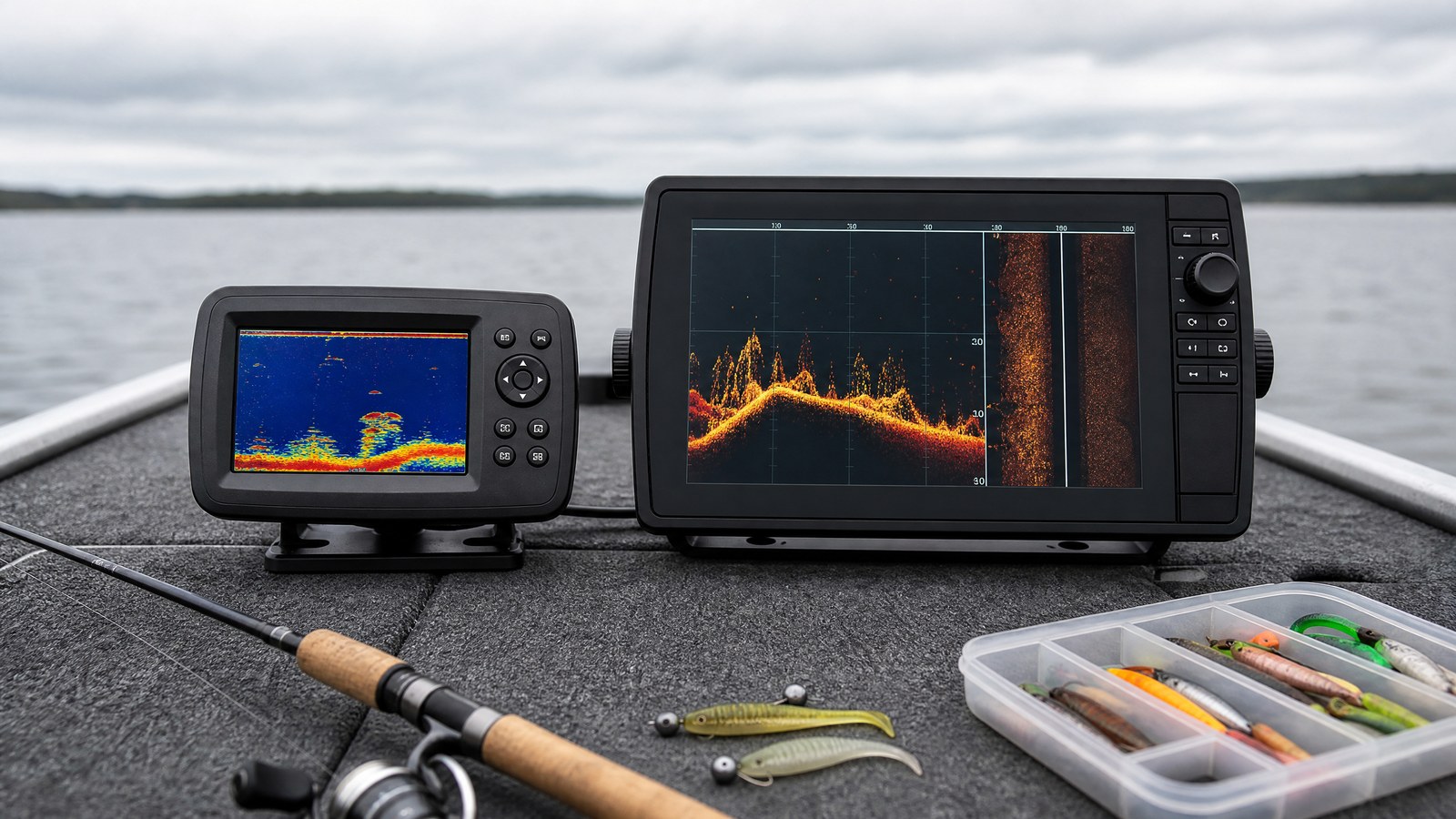
Quick answer: A budget CHIRP-and-GPS sounder under $300 already shows you depth, structure and fish, and for a kayak or small boat that is often all you need. Premium money buys bigger screens, side and live imaging, detailed mapping and sharper target separation, which earn their keep on larger boats and bigger water. Most anglers land happily in the mid-range. Buy for your boat and your fishing, not for imaging you’ll never switch on.
Fish finders run from under a hundred dollars to well past two thousand, and it is not obvious what the extra money actually buys. Does a budget unit mark fish as well as a premium one? Often yes — and sometimes the gap is enormous. The trick is knowing which features change your fishing and which just look good on the shop shelf, so you neither overspend on capability you’ll never use nor underspend and wish you hadn’t.
The honest truth is that the single biggest factor is not the unit at all — it is learning to read the screen. A cheap sounder in skilled hands out-fishes a flagship that its owner never bothered to understand. That said, the hardware does start to matter as you fish bigger, deeper or more complex water. Here is what separates the tiers, and five picks that map to how and where you actually fish.
Quick Picks
- Best entry unit: a compact CHIRP-and-GPS sounder under $300.
- Best all-rounder: a mid-range combo with down-imaging and mapping.
- Best for structure: a side-imaging unit for bigger water.
- Best premium: live or forward-facing sonar for real-time fish.
- Best without a boat: a castable finder you read on your phone.

How to Choose a Fish Finder
A good budget unit — a compact CHIRP sounder with GPS — covers the fundamentals: depth, bottom hardness, structure, bait schools and the arches where fish are holding, plus basic waypoints to mark a spot. That is genuinely most of what inshore, kayak and small-boat anglers need. What you give up is screen size and resolution, side-imaging, live sonar, detailed mapping and the sharpest target separation. None of that stops you catching fish.
Step up to premium and you pay for capability, not just a nicer screen: bigger high-resolution displays you can split into views, side-imaging to see structure out to the sides, live or forward-facing sonar that shows fish reacting to your lure in real time, high-detail mapping you can record as you go, and better transducers that tell two close fish apart. Here is the myth to bin: a pricier finder does not find more fish by itself. It gives you more information, but only if you can read it, and skill with the screen beats the price tag every time.
So match the unit to the platform and the fishing, not the badge. Go budget if you fish from a kayak or small boat, you’re learning, or you mainly want depth, structure and fish marks. Go premium if you run a larger boat, fish deep or offshore, or lean on side-imaging, live sonar and detailed maps. And don’t overlook the mid-range, where a decent-sized screen with CHIRP, down-imaging and GPS mapping covers the vast majority of fishing without premium money.
The Fish Finders
Check today’s prices on Amazon →
Budget CHIRP and GPS Sounder
The entry tier, and plenty of finder for a lot of anglers. A compact unit built around CHIRP sonar and simple GPS — the kind that anchors the sub-$300 ranges from Garmin and Lowrance — shows you depth, structure, bait and fish, and lets you drop a waypoint on a good spot. The screen is small and there is no imaging, but it nails the core job. Best for kayak, small-boat and first-time sounder buyers who want to learn without spending big. Price up a budget fish finder on Amazon
Mid-Range Combo with Down-Imaging and Mapping
The sweet spot for the average boat. A mid-size combo — a Garmin ECHOMAP or a Lowrance Elite-class unit — pairs CHIRP with down-imaging and proper GPS mapping on a screen big enough to read at a glance. You get most of the useful capability without paying flagship money, which is why plenty of anglers who think they want premium are better served here. Best for trailer-boat anglers who want one do-most-things unit. See current mid-range fish finder combo prices on Amazon
Side-Imaging Unit
The structure-hunter’s tool. Side-imaging — a Humminbird Helix strength, matched by Lowrance and Garmin — throws a photo-like view out to each side of the boat, so you cover ground and spot fish-holding structure you would otherwise motor straight past. It shines on bigger water and around timber and reef, and is largely wasted in a couple of metres of open sand. Best for anglers working structure on larger systems. Compare side-imaging fish finder on Amazon
Live or Forward-Facing Sonar
The premium showpiece — Garmin LiveScope, Lowrance ActiveTarget, Humminbird MEGA Live — that shows fish moving and reacting to your lure in real time. On its day it genuinely changes how you fish, letting you cast at individual fish and watch them respond. It is expensive, power-hungry and needs setting up properly. Don’t buy it for a small kayak in shallow water — you’ll never use half of it. Best for keen and tournament anglers on capable boats. Check the latest live sonar fish finder on Amazon
Castable Portable Finder
The no-boat answer. A castable sonar — Deeper’s Chirp+ range, or Garmin’s Striker Cast — is a ball you tie on, cast out and read on your phone, mapping depth and marking fish from the shore, a jetty or a kayak with nothing to mount. Resolution and range trail a fixed unit and it leans on your phone battery, but for portability and price nothing else comes close. Best for shore anglers and anyone without a permanent sounder. Browse castable fish finder on Amazon
Comparison
| Tier | Screen | Sonar | Mapping | Best for |
|---|---|---|---|---|
| Budget sounder | ~3.5–5 in | CHIRP 2D | Basic GPS | Kayak / small boat / learning |
| Mid-range combo | ~5–7 in | CHIRP + down-imaging | Detailed maps | Most trailer boats |
| Side-imaging | 7–9 in | Adds side-imaging | Detailed + contour | Structure on big water |
| Live sonar | 9–12 in+ | Forward-facing | Record your own | Serious / tournament |
| Castable | Your phone | Castable CHIRP | App mapping | Shore and no-boat |
Frequently Asked Questions
Is a budget fish finder good enough?
For depth, structure and marking fish in most water, yes — an affordable CHIRP-and-GPS unit does the job well and is a great place to start. You mainly pay more for a bigger, sharper screen, for imaging and for detailed mapping. If you fish a kayak or small boat inshore, a well-set-up budget unit will show you plenty.
What does premium actually add?
Sharper, bigger screens, side and down imaging, live sonar, better mapping and networking, and cleaner target separation. Those features help most in bigger, deeper or more complex water where covering ground and picking fish off structure pays. Casual and inshore anglers often do not need the whole list, which is why the mid-range suits so many people.
Do I really need side-imaging or live sonar?
Only if you fish the water that rewards it. Side-imaging earns its keep working structure on larger systems, and live sonar suits anglers casting at fish they can watch. Plenty of inshore and kayak anglers never switch either on, so learn to read CHIRP first and add imaging later if your fishing grows into it.
What should a beginner buy?
Start with a clear, well-reviewed budget or mid-range unit, learn to read the screen, and upgrade only if you genuinely outgrow it. Skill at interpreting sonar catches far more fish than an expensive display does, so put your first effort into understanding depth, structure and arches rather than into chasing features.
The Bottom Line
A budget fish finder isn’t a toy — it shows you depth, structure and fish, and teaches you to read sonar, which is what actually catches fish. Premium money buys bigger screens, side and live imaging, detailed mapping and sharper separation, which earn their keep on larger boats and bigger water. If you’re unsure, the mid-range hits the sweet spot. Buy for your boat and your fishing, and don’t pay for imaging you’ll never switch on.
Related guides:best kayak fish finders|best fishing kayaks|beginner fishing gear checklist
Compare your options on Amazon →
