
This page contains affiliate links. Far Cornel may earn a commission if you buy through them, at no extra cost to you.
See the top-rated gear on Amazon →
Quick answer: For most extended off-grid trips a 65 to 75-litre dual-zone fridge-freezer with a variable-speed compressor is the sweet spot: days of food while sipping power. Solo travellers can drop to 35 to 45 litres, families suit a 95-litre-plus, a single-compressor unit saves money if you accept one thermostat, and a rugged brand-name build earns its keep if you are hard on gear.
Running a fridge and freezer at once, for days, with no powered site in sight, is a different job to keeping drinks cold for a weekend. The compressor cycles around the clock, the freezer works hardest in the heat, and every watt-hour comes from a battery you refill with sun or alternator. Match fridge, battery and solar and you forget it is there; get it wrong and you are eating warm food by day three.
The catch is that “dual-zone” covers everything from a single-compressor box with a divider to a twin-compressor unit that freezes bait solid while chilling salad alongside. This guide sorts them by how you travel — days between resupply, room in the vehicle, how rough you are on gear — so you buy the fridge that fits the trip, not the biggest number on the lid.
Quick Picks
- Best overall: a 65 to 75-litre dual-zone with a variable-speed compressor.
- Best compact: a 35 to 45-litre dual-zone for solo and couple trips.
- Best for families: a 95-litre-plus dual-zone with a deep freezer.
- Best value: a single-compressor dual-zone that splits one circuit two ways.
- Best for hard use: a rugged brand-name unit built to take a beating.

How to Choose a Dual-Zone Camping Fridge
Start with power: on a long trip the fridge is only as good as the battery behind it. A well-insulated 75-litre dual-zone averages around 1 to 3 amps an hour once pulled down, near 30 to 60 amp-hours over a hot day with both zones running. Size battery and solar for the worst day. A 100Ah-plus lithium setup with 150 to 200 watts of solar keeps both zones honest without babysitting the voltage.
Then look hard at the compressor and insulation, because those decide reliability and draw. A variable-speed compressor — the kind better brands such as Engel, Dometic and Bushman use — winds down at temperature instead of hammering on and off, so it runs quieter and gentler on the battery. Thick walls and a lid seal that bites matter just as much; a cheap box with thin foam out-draws a dearer one in the sun whatever compressor hides inside. Check the split, too: some give a big fridge and token freezer, others near fifty-fifty.
Finally, sort the unglamorous details that bite on the track: solid tie-down points or a slide, handles that clear your knuckles, a drain plug you can reach without unpacking, and a low-voltage cutoff so the fridge protects your cranking battery instead of flattening it overnight. Have a quick look at the current and most recent options on Amazon for the dual-zone camping fridges.
The Dual-Zone Fridges
Check today’s prices on Amazon →
The 65 to 75-litre all-rounder
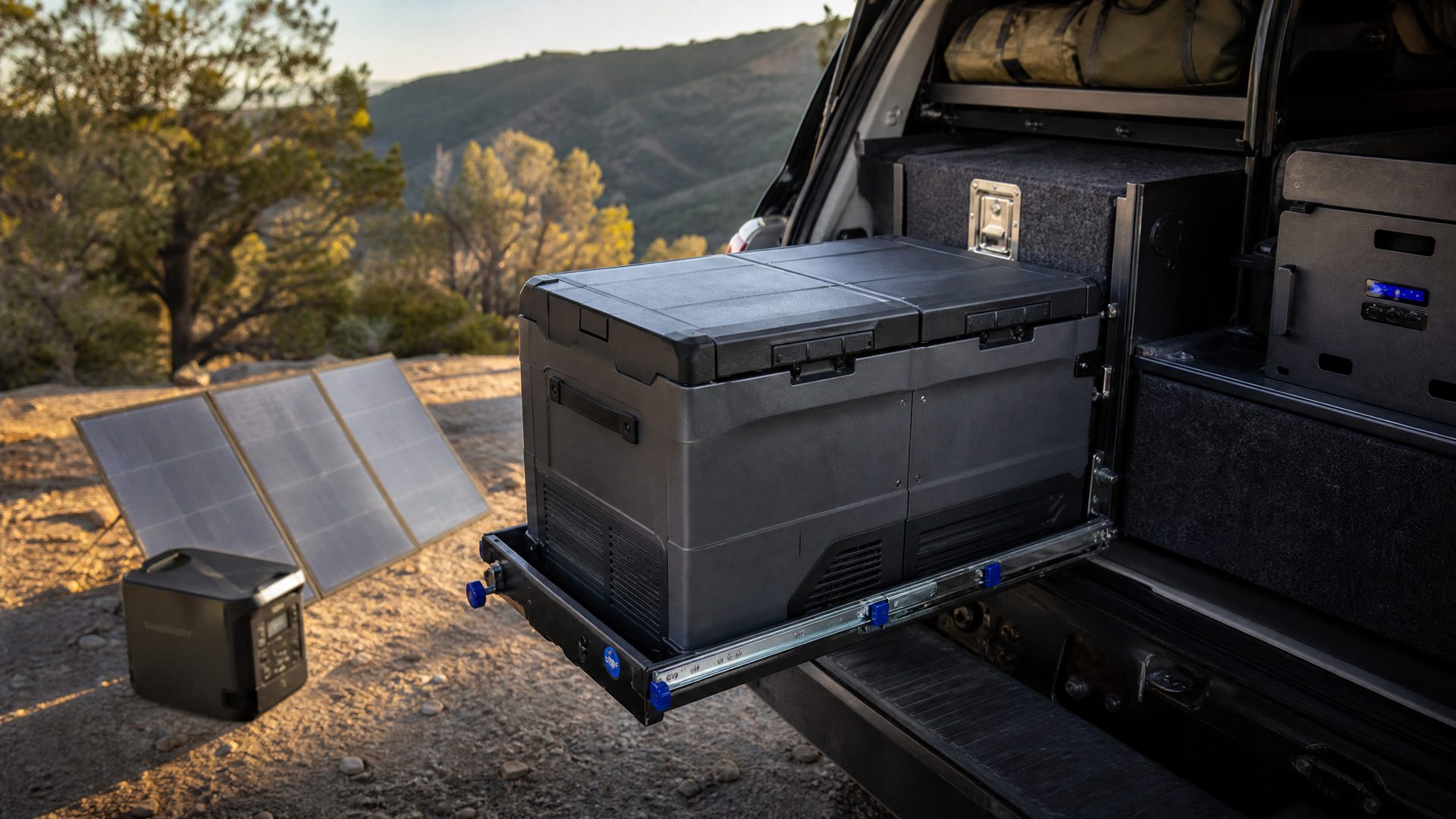
This is the size I would point most people to for a week or more. A 65 to 75-litre dual-zone holds enough fresh food for two to four people with a real freezer for meat, yet still fits a cargo drawer or a single slide. Run the larger zone as the fridge, keep the freezer modest, and the daily draw stays manageable. Buying one fridge to do everything? Buy this one. Have a quick look at the current and most recent options on Amazon for the 75-litre dual-zone fridge.
The compact 35 to 45-litre dual-zone
For solo travellers, couples, and anyone tight on space, a 35 to 45-litre dual-zone tucks behind the seats and barely touches the battery. The trade-off is obvious: the freezer shrinks to a few days of frozen portions, so you shop more often. In return you get a fridge you can lift when full and run off a modest battery and one solar blanket. It is the smart pick if your trips are short or the vehicle is full. Have a quick look at the current and most recent options on Amazon for the compact dual-zone fridge.
The 95-litre-plus family fridge-freezer
Feeding a family or crossing long gaps between shops, a 95-litre-plus unit stops the daily game of fridge Tetris. You get a deep freezer holding a week of meat and a fridge big enough that nothing gets crushed. The downsides are weight and draw: full, it is a two-person lift needing a bigger battery and solar. Worth it if you truly run out of room in a 75, overkill if you are talking yourself into it. Have a quick look at the current and most recent options on Amazon for the large dual-zone fridge freezer.
The single-compressor dual-zone
A single-compressor dual-zone runs two zones off one circuit through a shared duct, dropping the price noticeably. The catch is linked temperatures: push the freezer colder and the fridge follows, so you get less independent control than a twin-compressor unit. For campers who mostly want a big fridge with a small permanently-frozen corner, that is a fair deal — just know you are trading flexibility for dollars. Have a quick look at the current and most recent options on Amazon for the single-compressor dual-zone fridge.
The rugged brand-name unit
If you travel rough tracks and expect your gear to cop dust, vibration and the odd knock, a proven brand like Engel or Dometic is where the extra money works. You pay for a stronger case, a better-sealed lid, a compressor with a real service network, and resale that holds up. It will not chill colder than a good mid-range box, but it is far likelier to still run in ten years. Buy it if downtime far from a shop is not an option. Have a quick look at the current and most recent options on Amazon for the heavy-duty camping fridge freezer.
Comparison
| Fridge type | Rough capacity | Typical draw, hot day | Best suited to |
|---|---|---|---|
| 65 to 75L all-rounder | 65–75 litres | Moderate | One fridge to do everything |
| Compact dual-zone | 35–45 litres | Low | Solo, couples, tight vehicles |
| Family fridge-freezer | 95 litres and up | High | Groups and long resupply gaps |
| Single-compressor | Varies | Low to moderate | Value, linked temperatures acceptable |
| Rugged brand-name | Any | Moderate | Rough tracks, long service life |
Frequently Asked Questions
How much battery do I really need to run one for three days off-grid?
Plan on covering 40 to 60 amp-hours a day in warm weather, so a 100Ah-plus lithium battery topped up by 150 to 200 watts of solar keeps a mid-size dual-zone running with headroom for a cloudy afternoon. The power system, not the fridge, fails first on long trips, so size it generously.
Is a second compressor actually worth the extra money?
Only if you need true freezing on one side while holding the other at fridge temperature. If you mostly want a big fridge with a small frozen section, a single-compressor unit does the job for less. Pay for twin compressors when you carry lots of frozen food and want each zone set independently.
Can I run it off the vehicle’s main battery?
For a few hours while driving, yes, especially with a low-voltage cutoff on. Overnight is asking for a flat start. For anything beyond a day trip, run an auxiliary battery so the fridge can draw down without touching the one that starts the engine.
Why does the freezer side frost up, and does it matter?
Frost is humidity that sneaks in every time you open the lid, then freezes to the cold plate. A light coating is normal, but a thick build-up insulates the plate and makes the compressor work harder. Keep the lid closed, wipe condensation off cold items before they go in, and defrost once it gets chunky.
The Bottom Line
The dual-zone fridge that survives a long trip is matched to its power system and packed so air moves around it. For most people that means a 65 to 75-litre unit, a 100Ah-plus battery and a couple of solar panels. Go compact if you travel light, size up if you truly run out of room, and spend extra on a rugged build for rough tracks. Match the power to the fridge and it disappears into the trip; skimp and it becomes the thing you nurse all week.
Related: portable fridge vs cooler and portable power stations.