
This page contains affiliate links. Far Cornel may earn a commission if you buy through them, at no extra cost to you.
See the top-rated gear on Amazon →
Quick answer: For weekend camping, a mid-size 500–800Wh unit is the sweet spot — silent, safe to run inside a tent, and enough to charge devices, run lights and nurse a small fridge overnight. Drop to a roughly 300Wh compact for just phones and a camera, step up to 1,000Wh or more to keep a 12V fridge cold all weekend, and add a fold-out solar panel once you go past two nights off-grid.
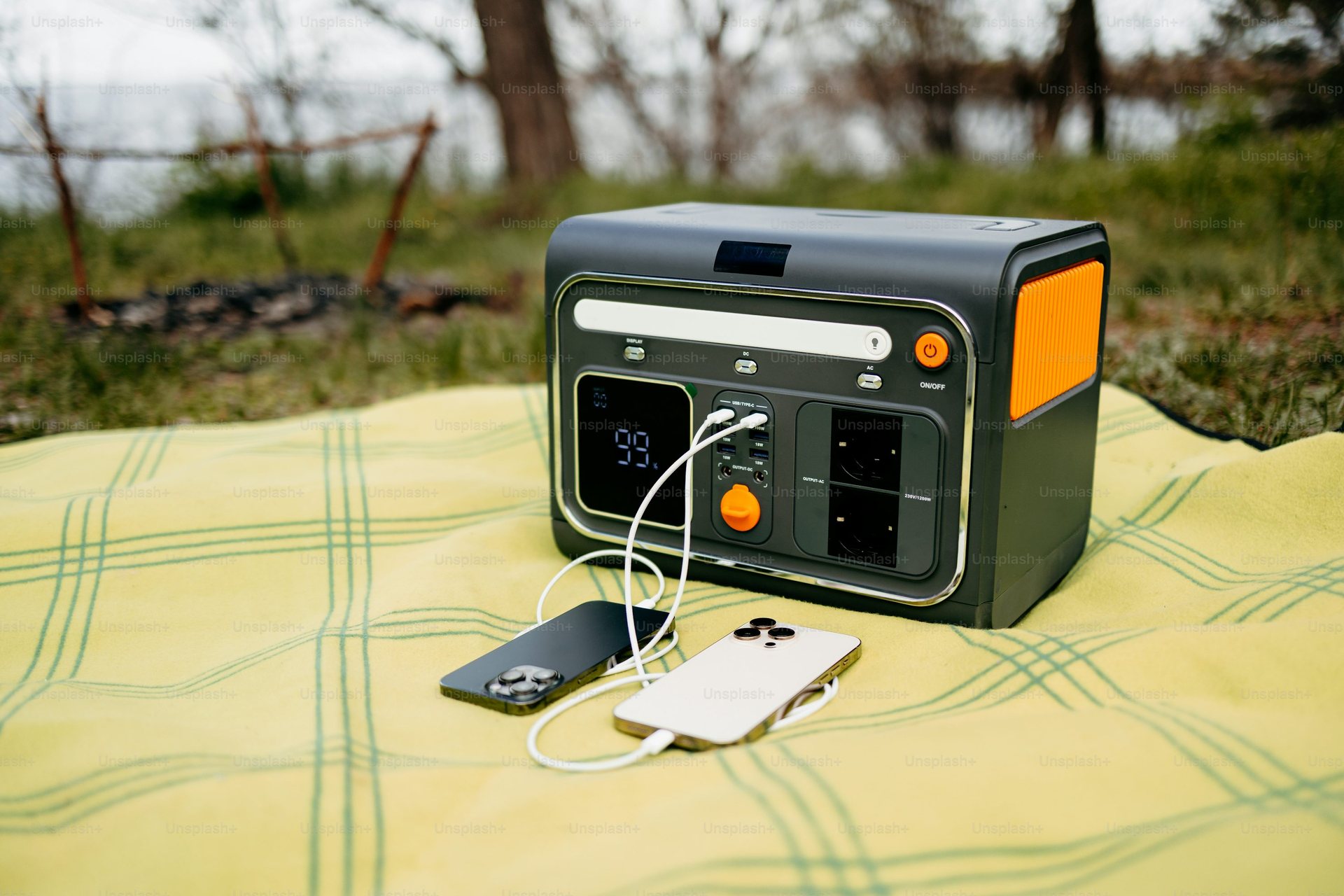
A power station earns its keep the first morning you wake to a cold drink and a full phone battery, having never once listened to a generator drone through the night. It is really just a large lithium battery with an inverter and a handful of sockets, and for the way most people camp it has quietly retired the little petrol generator. The catch is that the number everyone quotes — watt-hours — only tells you half the story.
The half that trips people up is continuous output: a 1,000Wh battery sounds enormous until an 1,800W kettle trips it straight off on overload. Match both numbers to what you actually run, insist on a lithium iron phosphate (LiFePO4) cell so it lasts years rather than seasons, and you get quiet power that makes an off-grid weekend feel like home. These are the five tiers worth knowing.
Quick Picks
- Best all-rounder: a mid-size 500–800Wh unit with a true pure sine inverter.
- Best lightweight weekender: a roughly 300Wh compact for phones, cameras and lights.
- Best for a camp fridge: a 1,000Wh-plus LiFePO4 unit with a dedicated 12V socket.
- Best for long stays: a 2,000Wh-plus unit you can bolt extra batteries onto.
- Best first upgrade: a 100–200W fold-out solar panel to recharge by day.

How to Choose a Portable Power Station
Two numbers decide almost everything. Watt-hours (Wh) are the size of the fuel tank; watts (W) are the size of the fuel line, or how much the inverter can push at once. A big tank with a thin line will charge a phone for a week, then shut off the instant you ask it to boil water — the most common regret by far. Add up the running watts of your thirstiest device, then buy a unit whose continuous rating clears it with room to spare.
Be fussy about the battery. LiFePO4 cells shrug off 3,000-plus charge cycles where older lithium tires after about 500, so treat LiFePO4 as a deal-breaker, and check it takes solar — a station paired with a panel can stay out indefinitely. You want proper mains outlets, high-wattage USB-C and a real 12V socket, since running a fridge straight off DC skips the inverter and saves real energy overnight. One warning: lithium loses a good slice of capacity near freezing, so insulate it on frosty trips.
The Power Stations
Check today’s prices on Amazon →
The compact weekender (around 300Wh)
If your power needs stop at phones, a camera, a head torch and maybe a small fan, a compact unit around 300Wh is all you need to carry. A Jackery Explorer 300 or a small EcoFlow unit weighs about as much as a full drink bottle and slips into a daypack. Be clear-eyed about the ceiling: this class will not start a kettle or an induction hob, and it will not carry a fridge through a warm night. As a device-charging hub it is brilliant; asked to do more, it disappoints. Price up a compact power station on Amazon
The mid-size all-rounder (500–800Wh)
This is the tier most campers should buy and the one I reach for first. A 500 to 800Wh unit with a genuine pure sine inverter runs lights, charges a laptop and camera batteries, drives a CPAP machine overnight and will nurse an efficient 12V fridge through a mild night. A compact, fast-charging EcoFlow is the standout here, refilling from mains alarmingly fast, so a quick top-up keeps you moving. Portable enough to shift with one hand, capable enough to matter. See current 500Wh power station prices on Amazon
The fridge-runner (around 1,000Wh, LiFePO4)
The moment a fridge becomes the point of the trip, step up to 1,000Wh or more and make sure it is LiFePO4. A unit in this class — a Bluetti in the AC180 mould, a Jackery 1000, a similar EcoFlow — holds a well-packed fridge cold for a full weekend with plenty left for the phones. Run the fridge off the 12V socket rather than a mains adaptor and you claw back energy every hour. This is the size that turns “we might get two nights” into “we are fine until we pack up”. Compare 1000Wh power station on Amazon
The high-capacity hub (2,000Wh and up)
For long stays, big groups or gear that pulls hard, a 2,000Wh-plus unit gives you headroom and the option to clip on extra battery modules later. The EcoFlow Delta 2 and larger Bluetti units live here; they run a fridge for days, cope with modest mains appliances and double as home backup when a storm takes the grid down. Do not buy this for the odd overnighter — it is heavy, dear, and most of that capacity will sit unused. Buy it when the trip or the load genuinely calls for it. Check the latest 2000Wh power station on Amazon
The fold-out solar panel (100–200W)
Whatever station you choose, the upgrade that changes how you camp is a fold-out solar panel. A 100 to 200W panel — a Jackery SolarSaga, an EcoFlow or a similar folding blanket — laid out in decent sun claws a real chunk back into the battery while you are off doing something else, which is the difference between rationing power and forgetting about it. Nudge it toward the sun a couple of times across the day and a mid-size station becomes effectively bottomless on a bright weekend. It is the first thing I would add, not the last. Browse portable solar panel on Amazon

Comparison
| Type | Rough capacity | Runs a 12V fridge? | Solar-friendly | Best for |
|---|---|---|---|---|
| Compact weekender | ~300Wh | No, not overnight | Small panel | Phones, lights, camera |
| Mid-size all-rounder | 500–800Wh | A mild night | Yes | Most campers |
| Fridge-runner | ~1,000Wh | A full weekend | Yes | Fridge-based trips |
| High-capacity hub | 2,000Wh+ | Days at a time | Yes, multiple panels | Long stays, heavy loads |
| Fold-out solar panel | 100–200W in | Extends any unit | It is the panel | Staying out longer |
Frequently Asked Questions
Will a power station really run a camp fridge overnight?
A well-packed, efficient 12V fridge draws surprisingly little, so a 500Wh unit usually sees it through a mild night and a 1,000Wh unit through a hot one. Run the fridge off the 12V socket rather than a mains plug, keep it shaded, and do not open it more than you must.
Watt-hours or watts — which number should I read first?
Watts first. Watt-hours tell you how long it lasts, but the continuous watt rating decides whether it can start your appliance at all. A huge battery is useless if its inverter trips the moment a kettle switches on, so size the output to your thirstiest device before you worry about capacity.
Can I recharge it while I drive?
Yes. Most take a 12V car lead or a DC-to-DC charger that tops the battery up on the drive between sites — slower than mains or strong sun, but you rarely arrive empty.
Is it safe to charge and use inside a tent?
That is the whole advantage over a generator: no fuel and no exhaust, so it is safe to run and recharge inside a tent or vehicle. Just keep it dry and give it air when it is working hard.
The Bottom Line
The honest answer is a mid-size 500 to 800Wh unit with a pure sine inverter and a LiFePO4 battery — enough to run the camp without the weight or cost of a big hub. Size up to 1,000Wh the moment a fridge is involved, go past that only when trips get long or loads get heavy, and add a fold-out panel before you add more battery. Get the two numbers right — watts to start it, watt-hours to sustain it — and you have silent power that just disappears into the background of the trip.
For more on running your camp off-grid, see our guide comparing a power station versus a generator, plus our picks of the best camping tents and the best rooftop tents.