
This page contains affiliate links. Far Cornel may earn a commission if you buy through them, at no extra cost to you.
See the top-rated gear on Amazon →
Quick answer: A hybrid inflatable-foam pillow, like a Sea to Summit Aeros Premium or a Nemo Fillo, is the all-round sweet spot: it packs small yet feels plush. Counting grams, a bare inflatable is lightest; chasing comfort, a compressible foam pillow such as a Therm-a-Rest Compressible feels closest to home. A self-inflating pillow sets itself up, and a stuff-sack pillow you fill with a jacket is the cheap backup. Match it to how you sleep and your pack space.
A pillow is the small piece of gear that quietly decides how you feel in the morning. Bunch up a jacket or go without and you wake with a cricked neck and a short fuse; pack the right one and you sleep almost as well as you do at home. It is easily the cheapest upgrade to a night outdoors, and the one people leave until last.
The trick is matching the pillow to how you actually sleep and to the room you have to spare. Modern camping pillows fall into a few clear groups: featherlight inflatables that pack to a fist, plush compressible pillows that feel close to the real thing, and hybrids that chase both. Here are the five types worth knowing, and how to pick the one that suits your sleep style and your pack.
Quick Picks
- Best overall: a hybrid inflatable-foam pillow that balances comfort and pack size.
- Best ultralight: a simple inflatable pillow for counting every gram.
- Best for comfort: a compressible foam pillow that feels like home.
- Best value: a stuff-sack pillow you fill with spare clothes.
- Best for convenience: a self-inflating pillow that sets itself up.

How to Choose a Camping Pillow
Start with the type, because it sets everything else. Inflatables are the lightest and smallest, but the firm, slightly bouncy surface is not for everyone. Compressible foam pillows, like the Therm-a-Rest Compressible, are the most forgiving and comfortable, yet they eat far more room in a pack. Hybrids such as the Sea to Summit Aeros Premium or the Exped range put a thin layer of foam or fleece over an air bladder to soften the feel while keeping the weight down, which is why they suit the most campers.
Then weigh packed size and weight against comfort, and look at loft. Anyone carrying gear on their back leans toward inflatables and hybrids, while campers travelling by vehicle can happily bring a bulkier foam pillow. Loft matters more than people expect: side sleepers need more height to keep the neck aligned, while back and stomach sleepers do better with a low profile, and an adjustable inflatable lets you dial this in with a few breaths. Get the height wrong and no amount of padding will save your neck.
Finally, think about the surface and upkeep, because this is where cheap pillows annoy you nightly. A brushed or knitted cover feels warmer and grips better than bare TPU, which matters when a slick pillow slides off the mat all night. A removable, washable cover is worth having, since a pillow soaks up sunscreen, sweat and campfire smoke over a season. These small details decide whether you actually keep using it.
The Camping Pillows
Check today’s prices on Amazon →
Inflatable camping pillow
The lightest and most packable option, an inflatable such as a Sea to Summit Aeros Ultralight blows up in a few breaths and deflates to a bundle the size of a fist, often well under 100 grams. It is the natural pick when weight and space are tight. The trade-off is a firmer, more air-mattress feel that some sleepers never warm to, so look for a contoured shape and a brushed cover to take the edge off, and do not over-inflate it, since a rock-hard pillow is the usual complaint. Compare today’s inflatable camping pillows prices on Amazon.
Compressible foam pillow
Stuffed with shredded foam and wrapped in soft fabric, a compressible pillow like the Therm-a-Rest Compressible feels the most like your bed at home. It squashes into a stuff sack for transport and springs back to full loft at camp, and it stays warm against your head where a bare air pillow can feel cool. It is bulkier and heavier than an inflatable, which makes it ideal for car-based trips where comfort beats pack size. If you sleep poorly on air, this is the type to buy. See the newest compressible foam pillows listings on Amazon.
Hybrid inflatable-foam pillow
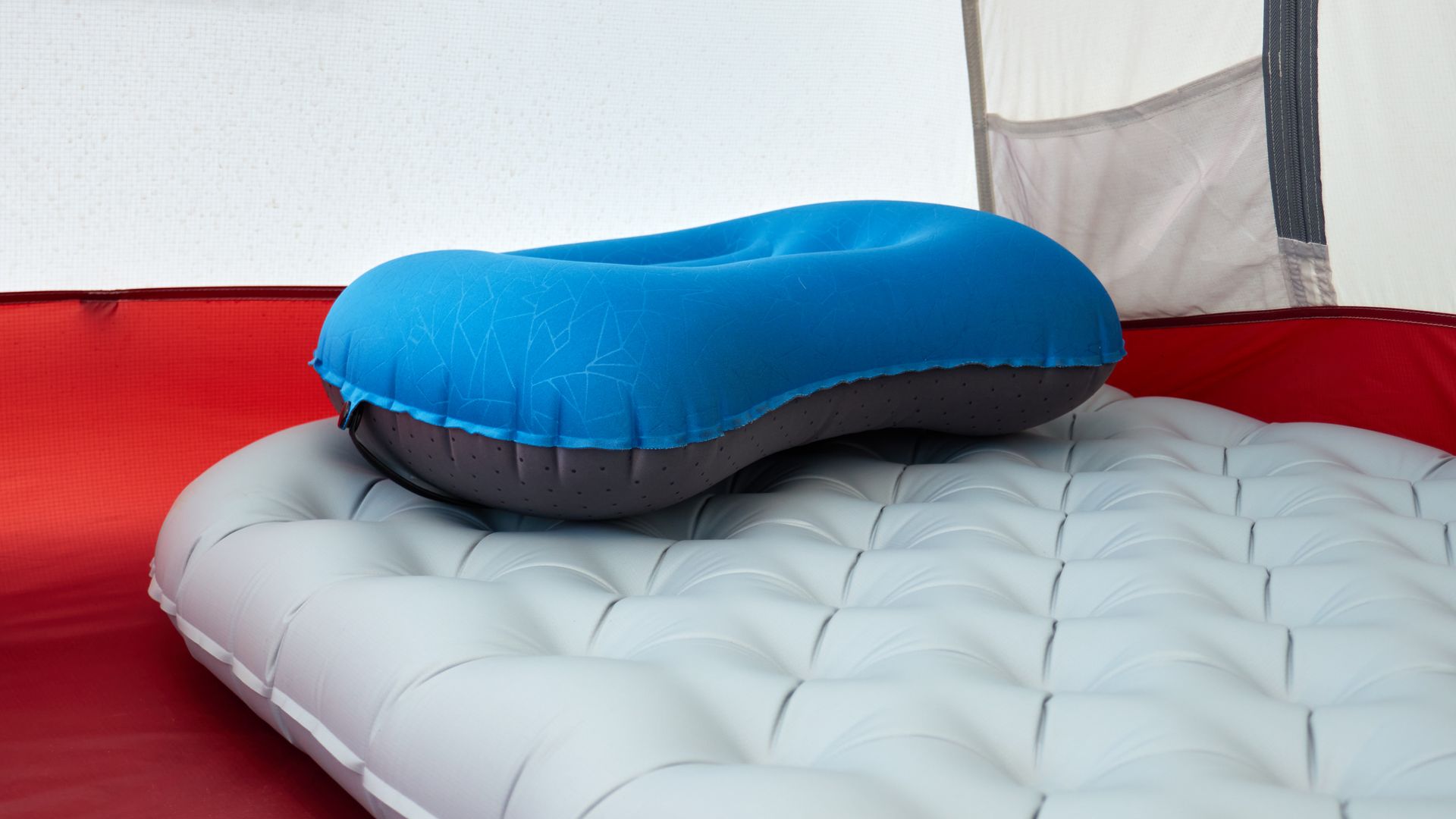
A hybrid layers a thin foam or fleece top over an inflatable core, aiming to combine soft comfort with a small packed size. For many campers this is the sweet spot: noticeably plusher than a bare air pillow, like a Nemo Fillo or a Sea to Summit Aeros Premium, yet still light enough to carry into a pitch. Adjust the air to fine-tune the height to your sleeping position, and you get most of the comfort of foam at a fraction of the bulk. It is the one I recommend first to anyone unsure. Run your eye over the hybrid camping pillows range on Amazon.
Self-inflating pillow
Open the valve and a self-inflating pillow draws in air on its own, firming up with a top-up breath or two. It removes the head-rush of hard blowing and packs reasonably small, and the foam core gives a more cushioned feel and a stable base than a plain air pillow. It adds a little weight over a bare inflatable, which is the price of the convenience. For campers who want a fuss-free setup without going all the way to bulky foam, it is a tidy middle path. See current self-inflating pillows prices on Amazon.
Stuff-sack pillow
The budget favourite is a fabric stuff sack with a soft panel that you fill with a spare jacket or clothing. It weighs almost nothing, doubles as gear storage, and costs very little, so it is a smart backup for any kit. Comfort depends entirely on what you stuff it with, and it tends to go flat and shift through the night, so a fleece-lined version helps. It will not beat a dedicated pillow, but as a low-cost fallback or a second pillow it earns its tiny space. Look over the current stuff sack pillows options on Amazon.
Comparison
| Type | Packed size | Comfort | Weight | Best for |
|---|---|---|---|---|
| Inflatable | Very small | Firm | Very light | Backpacking, tight space |
| Compressible foam | Large | Excellent | Heavier | Vehicle camping comfort |
| Hybrid | Small | Very good | Light | All-round use |
| Self-inflating | Small to medium | Good | Medium | Fuss-free setup |
| Stuff-sack | Tiny (empty) | Variable | Almost none | Budget and backup |

Frequently Asked Questions
Inflatable, foam or hybrid — which type should I pick?
Inflatables pack down smallest and let you set the exact height, though some sleepers find them bouncy. Foam feels closest to a pillow at home and stays warmer against your head, but it is bulkier to carry. Hybrids split the difference and suit most people. Tight on space, go inflatable; comfort first, go foam.
How do I stop it sliding off my mat at night?
A slippery pillow that keeps ending up in the dirt is the single most common complaint, so look for a brushed or grippy underside, or tuck it inside your sleeping bag hood. Some mats and bags have a pillow pocket or lock loops. That grip matters more in daily use than any figure on the box.
How small should a good one pack down?
A quality inflatable packs to roughly the size of your fist and weighs very little, while compressible foam is bulkier but still squashes into a corner of your pack. Carrying everything on your back, prioritise packed size; travelling by vehicle, do not overthink it and buy for comfort instead.
Can I just stuff a dry bag with clothes instead?
You can, and it is a fine backup, but it tends to go flat and shift through the night, and a bare stuff sack is slippery. A dedicated pillow is cheap and makes a genuine difference to sleep quality if you camp more than once or twice a year, so it is worth the small outlay.
The Bottom Line
The best camping pillow is the one that matches your sleep style and your pack. If you carry your gear, an inflatable or hybrid keeps weight and bulk down; if you travel by vehicle, a compressible foam pillow rewards you with a near-home night. Side sleepers should chase loft, everyone should want a grippy, washable cover, and nobody should settle for a bunched-up jacket. Whatever you choose, a proper pillow is one of the cheapest upgrades to how well you rest outdoors.
For a complete sleep setup, pair your pillow with the right base and bag: see our guides to self-inflating sleeping mats, sleeping bag liners, and our full camping sleep system guide.