
This page contains affiliate links. Far Cornel may earn a commission if you buy through them, at no extra cost to you.
See the top-rated gear on Amazon →
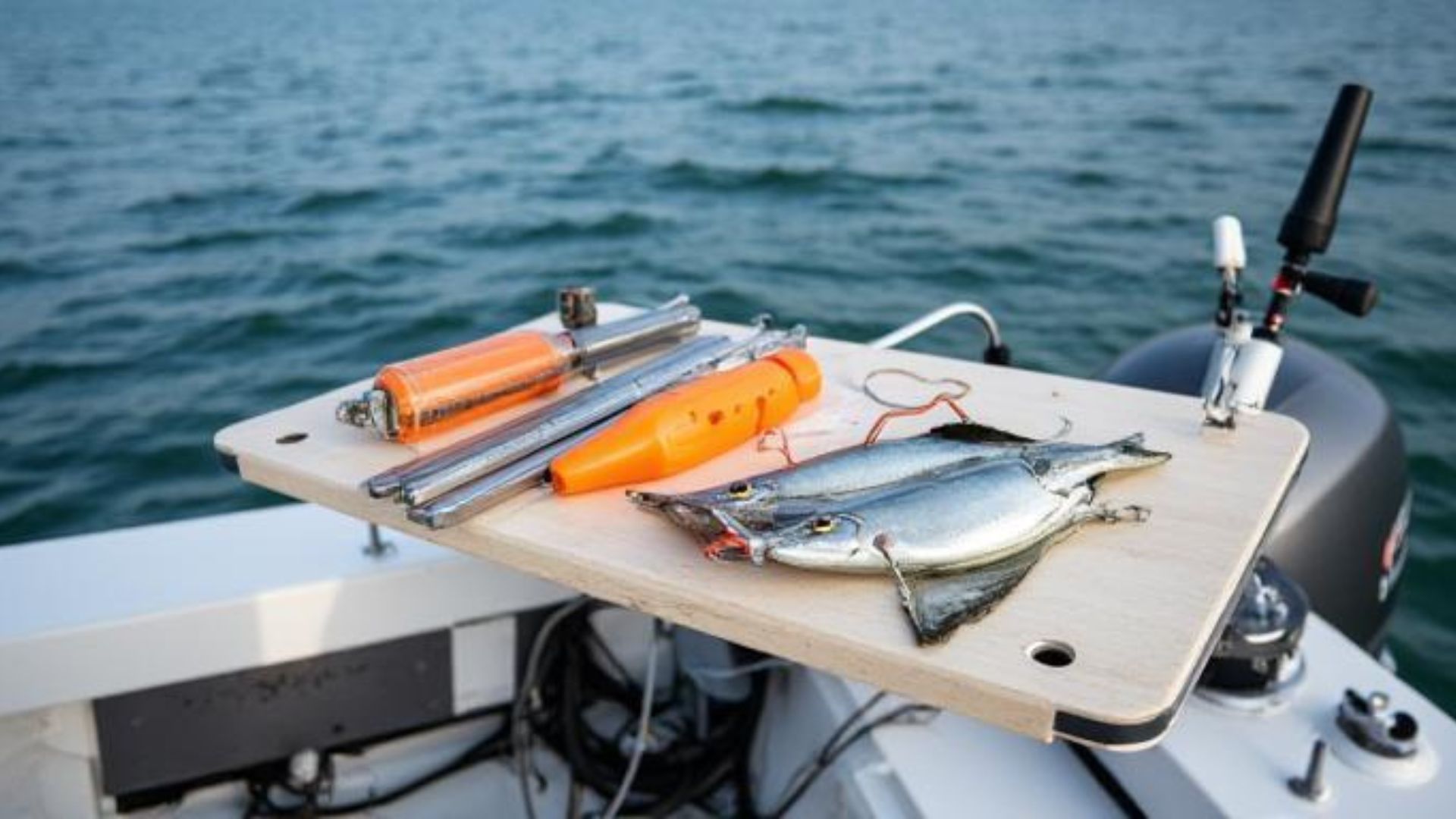
Quick answer: The best bait board is a clamp-on or freestanding HDPE board with a built-in ruler — it mounts on a boat or a bank, cuts clean and hoses off. Go for a Railblaza StarPort transom board if your boat runs those fittings, a compact board for the kayak or the rocks, a storage board when you rig a lot, and a plain budget board as a backup.
The board is the one bit of kit that turns the messiest job on the water into a quick, clean one. Without it you are cutting slippery baits on a wet gunwale, watching knives slide toward the edge, and spreading bait juice across every surface in the boat. A proper board gives you a stable, non-slip surface, somewhere to clip a knife and pliers, and a ruler so you check legal size in the same motion you cut.
The trap is thinking any flat bit of plastic will do. The right board mounts in seconds, stays put in chop, and rinses clean at the ramp. These five cover the main setups, from a compact bank board to a full transom station, so there is a match for how and where you fish.
Quick Picks
- Best overall: a clamp-on or freestanding HDPE board with a ruler.
- Best for a boat: a Railblaza StarPort transom board that folds flat.
- Best for bank and kayak: a light, compact board you carry in a bag.
- Best for busy rigging: a board with an integrated tackle tray.
- Best budget backup: a simple, solid board that just hoses clean.

How to Choose a Bait Board
A bait board is not just a chopping board with ambitions. A kitchen board or the bare gunwale soaks up bait juice, slides around in chop and gives you nowhere to clip a knife, so blades and hooks end up over the side. A proper board mounts solidly, drains, and puts a ruler and tool slots where you need them. Start by deciding boat or bank, because that drives the size and the mount.
Surface material matters more than the feature list: hard polyethylene (HDPE) and marine-grade aluminium both rinse clean and do not hold odour, while timber rots and soft plastic scars and traps bacteria. For size, a 40 to 60 cm top suits most boat work, and a small dinghy or kayak wants something you can stow, so measure the space first. Match the mount to that spot — a StarPort or rail mount for a fixed boat position, a clamp for gunwales, legs for a level bank — and favour a slight tilt or drainage groove so juice runs off instead of pooling.
The Bait Boards
Check today’s prices on Amazon →
Clamp-on or freestanding board
The sensible default is a board that works on the boat and the bank without fuss. Fold-out legs give a freestanding surface, and a clamp grips gunwales, rails and tables, so one board covers most situations. Look for an HDPE top that cuts cleanly and rinses fast, and a ruler running its length so you check size as you work. A Plano-style portable fillet table is the one I would hand a first boat owner. Look over the current portable bait board options on Amazon.
Transom StarPort board
If your boat already runs Railblaza StarPort fittings, a transom board that clips into them is the cleanest setup going. It locks in and out in seconds and folds flat against the transom when you are done, so it never clutters the deck. The surface is big enough for real work, filleting a flathead or rigging gangs, and it stays put in chop. The catch is you need the base fittings first, so check the boat before you buy. Check the latest transom bait board range on Amazon.
Compact bank and kayak board
Land-based and kayak anglers need the opposite of a big station: something light you carry in a bag and clip to a rail or set on a flat surface in seconds. A compact board keeps a decent cutting area without getting in the way, and many add a few slots for hooks and sinkers. It will not replace a full boat setup, but for a session on the rocks or a seat-mounted kayak job it does exactly what is needed. Browse the current kayak bait board listings on Amazon.
Board with integrated storage
If you rig a lot of different presentations, a board with a tackle tray around it keeps hooks, sinkers, swivels and scissors within reach instead of buried in a box you open with bait-covered hands. The best, like a Berkley bait station, ring the work surface with small compartments so everything is one grab away. The trade-off is bulk, so match it to a boat with the room. For busy bait sessions it genuinely speeds you up. Compare bait board with storage options on Amazon.
Budget backup board
When you just want a solid surface without paying for features you will never use, a plain board does the job: clean top, easy mount, quick rinse. It is the smart backup to leave on the kayak or lend to a mate, and a fair starting point if you have never fished with a dedicated board. Quality varies at the bottom end, so do not buy a soft plastic top that scars and traps smell, and you will get years out of it. See current budget bait board prices on Amazon.
Comparison
| Board | Mount | Surface | Best for |
|---|---|---|---|
| Clamp or freestanding | Clamp / legs | HDPE | All-round boat and bank |
| Transom StarPort | StarPort base | HDPE / alloy | A permanent boat station |
| Compact board | Rail clip / surface | HDPE | Bank and kayak |
| Storage board | Gunwale clamp | HDPE | Busy rigging sessions |
| Budget board | Clamp | HDPE | A cheap backup |

Frequently Asked Questions
Is a bait board just a cutting board?
No. It mounts to a boat, kayak or rail so it stays put, drains bait juice off the surface, and usually adds a ruler and tool slots. A loose kitchen board slides in chop and gives you nowhere to secure a knife, which is how gear ends up over the side.
HDPE or aluminium?
Both are good; it comes down to feel. Hard polyethylene is quiet under a knife, easy on your edge and cheap to replace, while marine-grade aluminium is tougher and cooler to the touch. Avoid timber and soft plastic tops, which soak up smell and scar over a season.
What size suits a small boat or kayak?
Smaller than you think. A 40 to 60 cm board is the sweet spot for a boat, but on a kayak or small dinghy a big board just gets underfoot. Pick something you can mount clear of your feet and stow when it is not in use.
How do I stop it stinking?
Choose a non-porous surface, rinse it hard after every trip, and look for a drainage groove so juice does not pool in the corners. Bait residue is what smells and draws flies, so a board you can hose clean in seconds stays fresh far longer than a textured one.
The Bottom Line
A bait board is a small buy that cleans up the messiest part of the day: it holds a stable surface, keeps knives and pliers to hand, and stops bait juice going through the boat. Match it to how you fish — a StarPort mount for a boat, a clamp or legs for mixed use, something compact for the bank — and pick an HDPE or aluminium top that hoses clean. Size and mount matter far more than the number of gadgets bolted on.
Pair it with the rest of a solid fishing setup: our guides to the fillet knives and boards, tackle boxes, and best fishing rod holders cover the rest of what you need within arm’s reach on the water.