
This page contains affiliate links. Far Cornel may earn a commission if you buy through them, at no extra cost to you.
See the top-rated gear on Amazon →
Quick answer: A good flexible manual knife like the Rapala Fish ‘n Fillet or a Victory covers the cleaning table. If you regularly bring home a feed, an electric knife saves real time — the Bubba Lithium-Ion for portable power, the Rapala R12 HD for outright grunt. Add a clamp fillet board so the fish can’t slide, and keep whatever you buy razor sharp.
Cleaning the catch is the least glamorous part of fishing, and the right fillet knife is what turns it from a frustrating, wasteful mess into a quick, clean job. A sharp, flexible blade glides along the backbone and peels skin off in one pass; a blunt or wrong-shaped one tears flesh, wastes fillets and slips dangerously.
Add a good fillet board to hold the fish steady and a two-minute chore stops being a chore at all. The choices come down to manual or electric, the blade length and flex, the steel, and the board underneath it all. Here’s how to match them to the fish you usually clean, and the gear worth having at the table.
Quick Picks
- Best electric (portable): Bubba Lithium-Ion Cordless.
- Best electric (power): Rapala R12 HD.
- Best manual classic: Rapala Fish ‘n Fillet.
- Best manual workhorse: Victory Fillet Knife.
- Best fillet board: a clamp fillet board or table.

How to Choose a Fillet Knife
First, manual or electric. A manual knife gives the most control and precision, needs no charging, and travels anywhere — perfect for cleaning a handful of fish. An electric knife is about throughput: if you regularly bring home a feed of bream, whiting or flathead, it cleans and skins them in a fraction of the time. Electric comes corded (constant power, needs a socket or inverter) or cordless lithium (go-anywhere, usually with a spare battery so one’s always charged).
Match the blade to your fish. Around 15 cm suits panfish, bream and small fish; 18 to 23 cm handles general work; and a longer blade sweeps through a big saltwater fish in one stroke. Flex is the other half — a flexible blade hugs the fish’s frame for a clean fillet and neat skinning, while a stiffer blade gives more control through thick flesh and past tougher bones. Clean a range of sizes, and a medium, moderately flexible blade is the sensible one-knife answer.
For fishing, corrosion resistance is key, so look for stainless or coated high-carbon steel and rinse and dry the knife after every use. And here’s the myth to kill: a sharp knife isn’t the dangerous one — a blunt one is. A dull blade skips off the fish and cuts unpredictably toward your hand, so keep a sharpener close. Finish the setup with a fillet board or table that clamps the fish’s head or tail so it can’t slide while you cut.
Two things separate a knife that fillets cleanly from one that mangles the fish and scares you. First, the blade: you want flex and the right length — a 6-inch flexible blade follows the ribs of bream and whiting, a 7 to 9-inch suits bigger fish, and a stiff or stubby blade just fights the shape of the fish. Second, sharpness is a safety feature, not a luxury: a blunt fillet knife tears the flesh and, worse, skids off the skin toward your hand, so touch it up on a steel before every session and keep the handle grippy because everything on a cleaning table is wet and slimy. If you process a real feed, a clamp board that grips the fish by the tail is what makes fast one-handed filleting safe rather than a finger-count exercise.
The Knives and Boards
Check today’s prices on Amazon →
Bubba Lithium-Ion Cordless
The go-anywhere electric. A quiet, clean-cutting cordless knife with the famous non-slip grip, a trigger guard and safety lock, multiple blade lengths (flexible and stiff), corrosion-resistant coated blades, and two lithium batteries in a hard case. Best for anglers who regularly clean a feed and want portable power that doesn’t tie them to a socket at the cleaning table. See what a Bubba cordless runs to
Rapala R12 HD
The power option. Rapala’s heavy-duty lithium knife is one of the most powerful and ergonomic electrics going, with fast blade speed, instant trigger response, a small work light, two batteries and a case. Best for anglers cleaning big numbers or larger fish who want maximum cutting grunt and don’t want the motor bogging down halfway through a bucket of panfish. Check the price on the Rapala R12 HD
Rapala Fish ‘n Fillet
The classic. Quite possibly the best-selling fillet knife ever made — a comfortable grooved birch handle, a flexible ground stainless blade, a leather sheath and a sharpener, all at a very friendly price. Best as a do-everything manual knife to keep in the kit or take travelling, and a genuinely nice thing to use once you’ve put a proper edge on it. Look at the classic Rapala Fish ‘n Fillet blades
Victory Fillet Knife
The workhorse. A trusted brand whose fillet and bait knives are a fixture on cleaning tables, with sharp, flexible blades and tough, grippy handles built for hard saltwater use. Best for anglers who want a proven, no-nonsense manual knife that shrugs off salt and keeps taking a keen edge season after season. Compare the Victory fillet knives
Clamp Fillet Board or Table
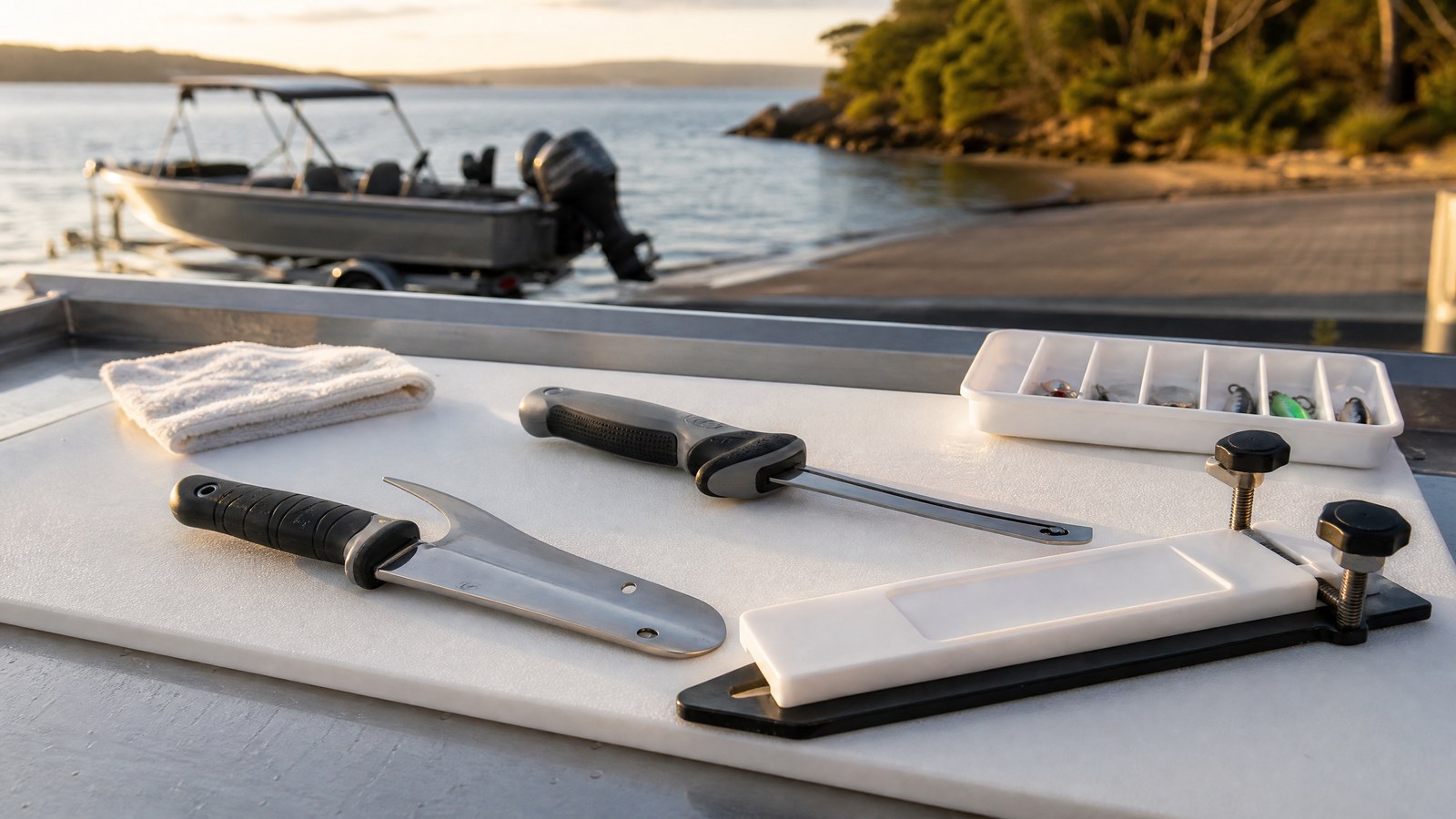
The steady base. A board or folding table with a spring clamp to grip the fish, a non-slip surface and often a measure scale, giving you a stable, safe platform to fillet on. Best for anyone who cleans fish at home or the ramp and wants the fish held firmly — because half of filleting cleanly is simply the fish not sliding around under the blade. Price up a clamp board that holds the fish by the tail

Comparison
| Item | Type | Blade or feature | Best for |
|---|---|---|---|
| Bubba Lithium-Ion | Electric cordless | Multi-blade, coated, trigger guard | Portable power |
| Rapala R12 HD | Electric cordless | High power, work light, 2 batteries | Volume and big fish |
| Rapala Fish ‘n Fillet | Manual | Flexible blade, sheath, sharpener | Travel and value |
| Victory Fillet Knife | Manual | Sharp flexible blade | Salt-tough workhorse |
| Clamp fillet board | Board/table | Clamp, non-slip, measure | Holding the fish |
Frequently Asked Questions
Electric or manual fillet knife?
Manual for control, travel and the odd clean; electric for volume. If you regularly bring home a feed, an electric knife cleans and skins in a fraction of the time, while a manual blade gives finer control on smaller or delicate fish and never needs charging.
What blade length and flex do I need?
Around 15 cm for small fish, 18 to 23 cm for general work, and longer for big species. Choose a flexible blade for clean filleting and skinning, a stiffer one for thick flesh and tougher bones. A medium, moderately flexible blade is the best single choice.
What steel is best for saltwater?
Stainless or coated high-carbon steel resists the rust that ruins knives near salt. Stainless is the easy default and quick to touch up; high-carbon takes a keener edge but needs drying and a wipe of oil. Rinse and dry either one after every trip.
How do I keep it sharp, and does it matter?
It matters a lot — a dull knife tears the flesh, wastes meat and slips dangerously. Keep a sharpener in the kit and use it often, running the edge at a shallow angle. A sharp knife is faster, cleaner and, counter-intuitively, safer to use.
The Bottom Line
If you regularly clean a feed, an electric knife like the Bubba for portability or the Rapala R12 HD for power saves real time. For control, travel or the occasional clean, a manual knife like the classic Rapala Fish ‘n Fillet or a Victory is all you need. Match the blade length to your fish, choose flex for filleting and stiffness for big species, prioritise corrosion-resistant steel for salt, and pair it with a clamp board so the fish stays put. Above all, keep it sharp — it’s faster and safer.
Round out your kit with our guides to the best fishing pliers and multi-tools, the best fishing landing nets, and the best fish grips, and the best tackle boxes and bags.