
This page contains affiliate links. Far Cornel may earn a commission if you buy through them, at no extra cost to you.
See the top-rated gear on Amazon →
Quick answer: For a touring rig, a compact 2 kW unit, run properly rather than idled low, is the smart default: clean, quiet heat that is kind to a small battery. A budget all-in-one kit is the cheapest way in, a split-system install is the tidiest for permanent van builds, and it is worth paying up for Webasto, Eberspacher or Autoterm when you rely on it all winter.
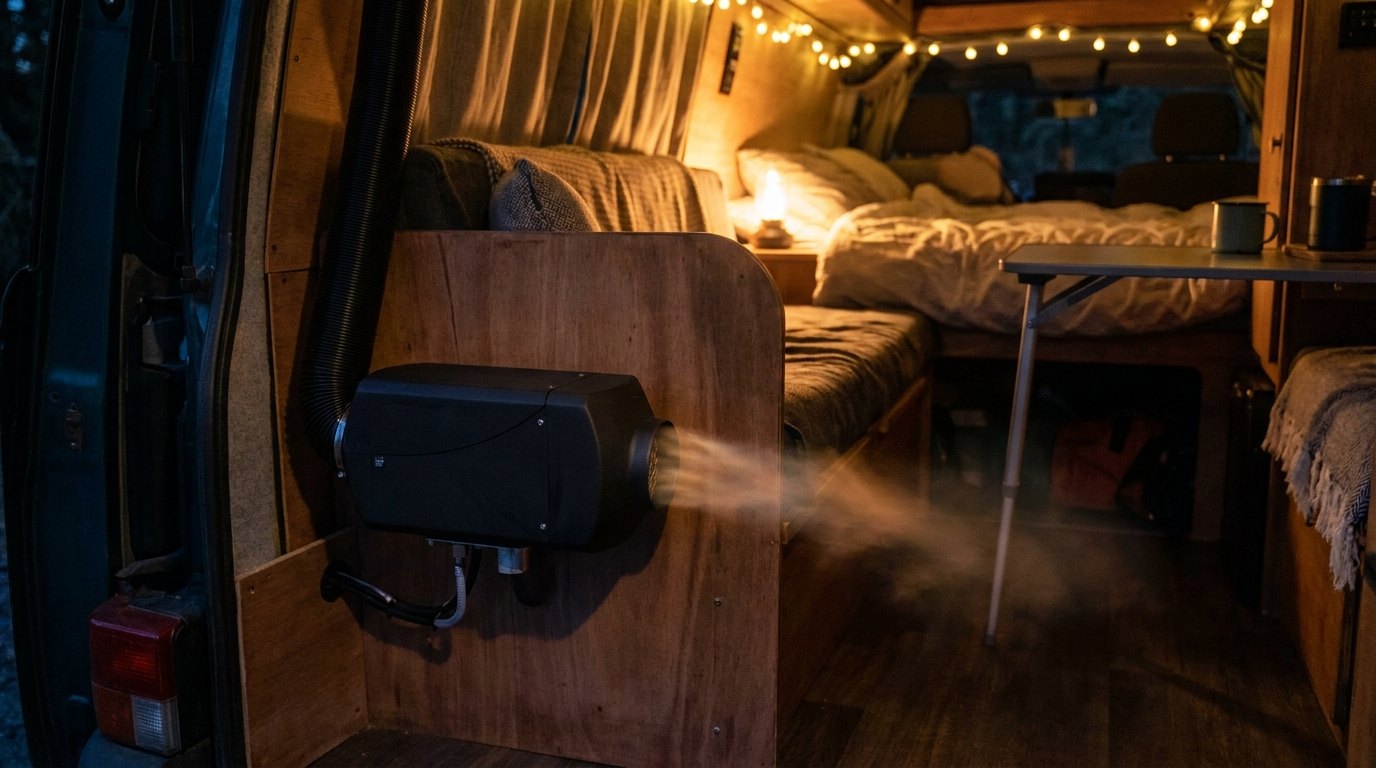
The difference between loving and loathing a cold-weather trip often comes down to one thing: whether you can warm the space you sleep in without idling the engine or filling it with condensation. A diesel heater does exactly that, sipping fuel to push a steady stream of dry, warm air into a van, camper or tent. It runs on the fuel already in your tank, and it heats without the damp that a gas burner or your own breath leaves on cold windows.
It is also one of the bigger upgrades you can fit, and the one where people most often buy wrong. The temptation is to chase the highest kilowatt figure on the box; the right move is to match the unit to your space and your power setup. Get that right and a freezing cabin becomes a warm, dry base you actually want to climb back into.
Quick Picks
- Best overall: a compact 2 kW unit — enough heat for a small rig, kind to the battery.
- Best value: a budget all-in-one kit — self-contained warmth for the least money.
- Best for permanent builds: a split-system install — quiet, tidy, out of the way.
- Best for big or draughty vans: a 5 kW unit — fast heat that holds in the cold.
- Best buy-once: a premium branded unit — Webasto, Eberspacher or Autoterm.

How to Choose a Diesel Heater
Size it to your space, and resist going big. Output is quoted in kilowatts: around 2 kW warms a small van or a rooftop tent, while 5 kW only makes sense for a large or poorly insulated build. Oversizing is the most common regret, because the heater reaches temperature fast, then idles low and cokes up its combustion chamber and glow plug. A smaller unit run harder stays cleaner and lasts longer.
Plan power and mounting before you order. A diesel heater draws a big gulp of current on startup while the glow plug fires, often eight to ten amps for a few minutes, before settling to around an amp running. That spike is what flattens a small battery, so size your electrics for it. Fuel use is modest, roughly a tenth to a half a litre an hour. Route the exhaust and combustion intake so fumes vent well clear of windows, vents and where you sleep.
Then decide where to spend and where to save. Budget clone units heat a space just as well as the big names, so the heat itself is not where the money goes. Spend instead on a quiet, well-mounted fuel pump and a proper thermostat, and if you can a premium unit from Webasto, Eberspacher or Autoterm, which run quieter, last longer and behave better at altitude. The one corner never worth cutting is a carbon-monoxide alarm.
Two things matter more than the price, and one of them is safety. Size first: bigger is not better — a 5 kW heater in a small camper short-cycles, sooties up and roasts you out, while a 2 kW unit run steady is cleaner, quieter and sips less fuel, so match the output to the space and resist over-buying. Then the part no marketing photo shows: a diesel heater burns fuel and must vent its exhaust outside the sleeping space. A cracked exhaust, a blocked outlet or a unit run in a sealed cabin is a carbon-monoxide risk, so route the exhaust well clear of where you sleep and fit a CO alarm in any space with a heater running — a cheap part that does the one job nothing else can. On power, the glow plug pulls a short current spike on start-up, then settles to about an amp running, so it is easy on a dual battery once it is lit.
The Diesel Heaters
Check today’s prices on Amazon →
Budget All-in-One Kit
The cheap way in, and better than its reputation. A self-contained kit puts the burner, fan, controller and a small tank in one case, so there is nothing to plumb and you can lift it in and out. The budget clone versions heat a small space perfectly well. What you trade is refinement: a louder pump, a basic controller and patchier support if something fails. Fit a carbon-monoxide alarm and route the exhaust carefully, and it is a lot of warmth for the money. Don’t buy it if you want silent, install-and-forget reliability. See what an all-in-one kit costs.
Split-System Install
The tidy, permanent answer. Here the burner and fan mount out of the way, often under the floor in a sealed box, drawing from a larger remote tank. That keeps noise and any fuel smell outside the living space and frees up cabin room, which is why it suits builds you sleep in for weeks at a stretch. It asks for more work and a little plumbing, but the payoff is quieter, cleaner heat. Don’t buy it if you want something portable to move between vehicles. Compare the split-system installs.
Compact 2 kW Unit
The right size for a small rig, and the one people wrongly skip for something bigger. A 2 kW-class heater warms a small van or rooftop tent quickly, draws less startup current and sips fuel, so it is easy on a modest battery and solar setup. Run it in a genuinely large or draughty space on a bitter night and it will labour and still fall short. But for the spaces most tourers actually heat, it is the sweet spot, and it stays clean because it works rather than idles. Look at the compact 2 kW units.
Higher-Output 5 kW Unit
For big vans, caravans and draughty builds that shed heat fast, a 5 kW-class unit brings a cold space up to temperature quickly and holds it in poor conditions. The catch is the flip side of the oversize trap: drop one into a small, well-sealed rig and it short-cycles and soots up unless you keep it working hard. Only step up in output if your space genuinely needs it. Price up a higher-output 5 kW unit for a big space.
Premium Branded Unit
The buy-once option. Names like Webasto, Eberspacher and Autoterm cost more than a clone, and what you pay for is not extra heat but longevity: quieter fuel pumps, better-made glow plugs and controllers, proper support, and cleaner running at altitude where cheap units soot and drop out. For a permanent install you lean on winter after winter, the premium tax is easy to justify. Don’t buy one if this is an occasional-use heater and the budget is tight. Check the premium branded units.

Comparison
| Type | Output | Install effort | Noise | Best for |
|---|---|---|---|---|
| Budget all-in-one | 2–5 kW | Low | Louder pump | Value, portable warmth |
| Split-system | 2–8 kW | Higher | Quietest inside | Permanent installs |
| Compact 2 kW | ~2 kW | Low to medium | Low | Small vans, rooftop tents |
| Higher-output 5 kW | 5 kW and up | Medium | Moderate | Large or draughty builds |
| Premium branded | Any | As base type | Quiet pump | Buy-once reliability |
Frequently Asked Questions
Are diesel heaters safe to use while sleeping?
Yes, when installed correctly. A diesel heater burns in a sealed chamber and vents its exhaust outside, keeping combustion gases out of the cabin, so the air it blows in stays clean. Fit a carbon-monoxide alarm anyway and keep the exhaust outlet clear.
How much fuel and power do they use?
Very little fuel, roughly a tenth to a half a litre an hour. Power draw is high for the first few minutes on startup while the glow plug fires, then drops to about an amp once the unit is running.
Are the cheap budget heaters any good?
For pure heat, yes. A budget clone warms a space much like a premium unit does. The differences show up over time in pump noise, controller quality, support and high-altitude running. Buy budget to get started, and buy premium for a permanent install you rely on.
Do they work at altitude?
They work, but thinner air makes combustion run rich, so many units need a high-altitude setting or kit above roughly 1,500 metres to avoid sooting and dropouts. Premium units generally handle the change better.
The Bottom Line
The best diesel heater is the one sized to your space and your battery, not the one with the biggest number on the box. On a touring rig, a compact unit, run properly rather than idled low, delivers clean, quiet heat for years, and a budget clone will do it cheaply if you accept a louder pump. Spend up on Webasto, Eberspacher or Autoterm when it is a permanent install you lean on all winter. Match output to the build, route the exhaust safely, and never skip a carbon-monoxide alarm.
Power and airflow matter too: see our guides to DC-DC chargers and dual battery systems, dual battery monitors, and inverters for vehicles.