
This page contains affiliate links. Far Cornel may earn a commission if you buy through them, at no extra cost to you.
See current polarised fishing sunglasses on Amazon →
Quick answer: Choose the lens tint first, not the darkness. Copper or amber lenses lift contrast for sight-fishing shallow, variable water; grey or blue-mirror lenses give true colour and knock down glare on bright open water; yellow suits dawn, dusk and overcast. Get a wraparound frame that blocks side light, and a floating strap so one slip doesn’t cost you the glasses. Cheap “polarised” lenses with the film off-axis are the ones to avoid.
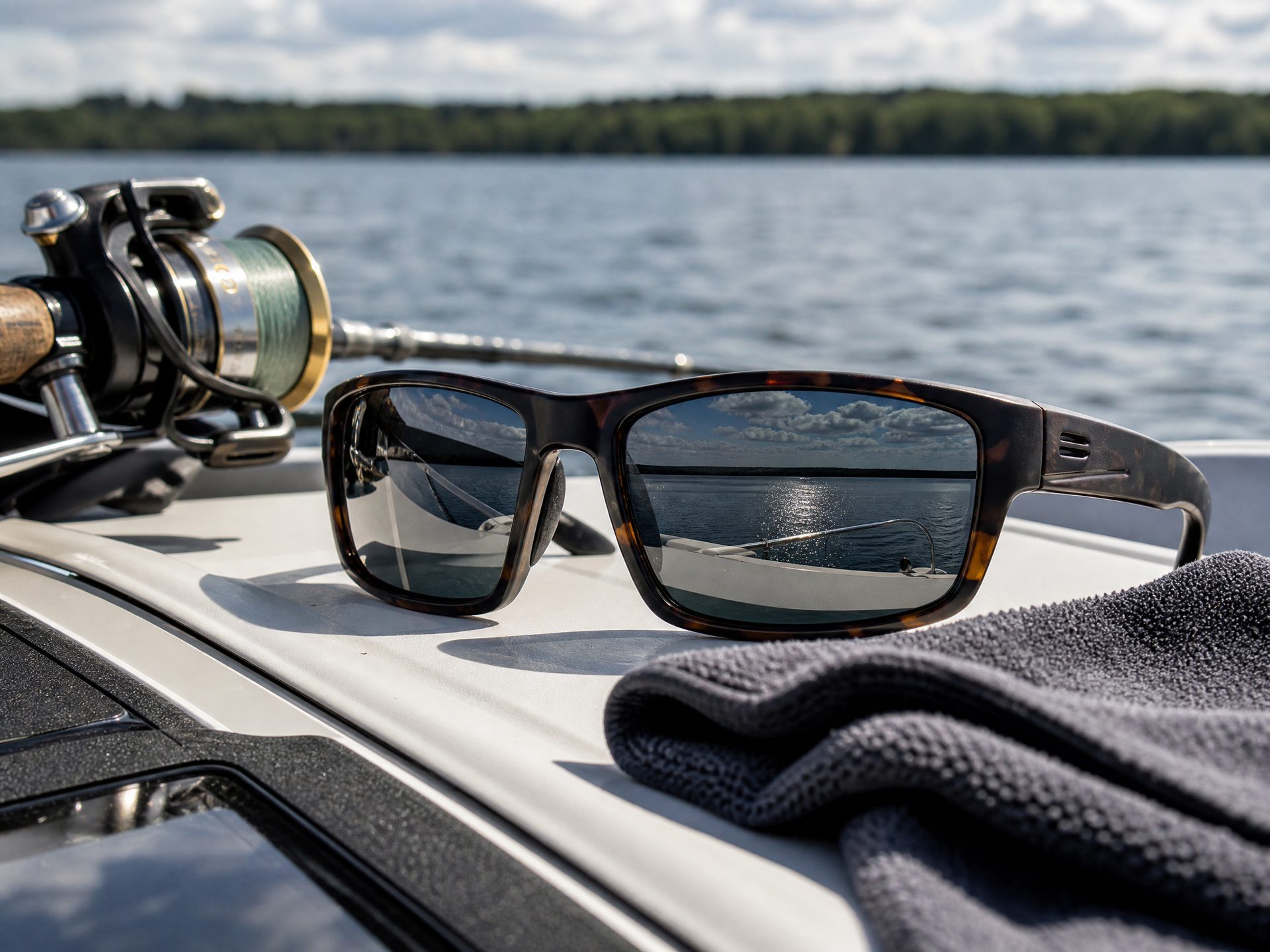
Slip on a genuinely good polarised pair over moving water and the surface stops being a silver mirror and turns into a window. The drop-off, the weed edge, the dark shape easing along the gravel — all of it appears, because the lens has stripped out the horizontal glare bouncing off the water. That single trick is why a serious angler treats sunglasses as fishing gear, not fashion: they let you read water and see fish you would otherwise cast straight past.
The catch is that the word “polarised” on a sticker tells you almost nothing about quality. A ten-dollar servo pair and a proper fishing lens can both claim it, and only one will actually cut glare, survive a season, and protect your eyes. What separates them is the lens tint, the optical quality, the frame fit and the coatings — so that is what this guide sorts out, tint by tint.
Quick Picks
- Best all-round tint: a copper or amber lens — high contrast for sight-fishing and forgiving across changing light.
- Best for bright open water: a grey or blue-mirror lens for true colour and maximum glare knockdown.
- Best for low light: a yellow or light-amber lens for dawn, dusk and overcast days.
- Best optics: a glass-lensed wraparound if you want the sharpest, most scratch-resistant view.
- Best insurance: a floating strap and a hard case — the cheapest gear that saves the most expensive.

How to Choose Polarised Fishing Sunglasses
Tint beats darkness. The most common mistake is buying the darkest lens on the rack, assuming dark equals better. It doesn’t. Lens colour is what changes how you see fish. Copper and amber tints boost contrast and make structure pop in shallow or tea-stained water; neutral grey shows colours truthfully and is easiest on the eyes under harsh open-water glare; yellow and rose brighten a flat, overcast morning. The number behind this is visible light transmission (VLT): lower for blazing midday, higher for dawn and dusk.
Check that the polarising is actually good. Polarised only works if the film’s axis is aligned to cut horizontal glare, and cheap lenses are often off. A quick shop test: hold the pair against another known-good polarised lens and rotate ninety degrees — overlapped, they should go nearly black. If they don’t, the polarisation is weak. Two more things buyers miss: polarised is not the same as UV protection, so confirm UV400 separately; and a polarised screen or phone can look strange or rainbow-streaked through good lenses, which is normal, not a fault.
Frame fit and lens material finish the job. Light leaking in around a flat, fashion-style frame reintroduces the glare you paid to remove, so a wraparound that hugs the face and blocks side light matters as much as the lens. For material, glass gives the sharpest optics and shrugs off scratches but is heavier and can shatter; polycarbonate is lighter and far more impact-resistant, which suits wading, kayaks and anyone hard on gear. Mirror coatings add glare-cutting punch on bright water but do nothing in low light and mark easily — match the coating to where you actually fish.
The Lenses and Frames
Compare current lens tints and prices on Amazon →
Copper and amber sight-fishing lenses
If you buy one tint, buy this one. Copper and amber cut glare while lifting contrast, which makes edges, weed lines and fish shapes jump out of shallow, coloured or variable water. They flatter changing light too, so you are not swapping glasses every time a cloud rolls over. For inshore flats, rivers and estuaries, this is the tint most anglers reach for first. See what copper and amber fishing lenses are selling for
Grey and blue-mirror offshore lenses
Out on bright, open water, grey is the calm, true-colour choice: it dims everything evenly without shifting hues, which reduces eye fatigue over a long day in the sun. Add a blue or silver mirror coating and you knock down even more surface glare on the harshest days. The trade-off is that grey gives less contrast than copper in murky shallows, so think of this as the bright-water and bluewater specialist. Check grey and mirrored lenses for bright water
Yellow and low-light lenses
Dawn, dusk and heavy overcast are when a dark lens works against you. A yellow, rose or light-amber tint brightens a flat scene and sharpens contrast in weak light, buying you clearer vision at exactly the low-light windows when fish often feed hardest. They are a second pair rather than an only pair — too light for midday — but they earn their keep at the edges of the day. Look at low-light and yellow-tint options
Wraparound frames: glass or polycarbonate
The frame decides how much stray light reaches your eyes, and a wraparound that seals the sides preserves the polarised benefit a flat frame throws away. Choose glass lenses for the crispest optics and best scratch resistance if you are gentle with your kit; choose polycarbonate if you wade, paddle or routinely drop things, because it is lighter and takes an impact without shattering. Rubber nose and temple grips keep the frame put when you sweat or lean over the gunwale. Compare wraparound frames in glass and poly
Floating straps and hard cases
The most expensive sunglasses are the ones you watch sink. A floating strap keeps a slipped pair at the surface long enough to grab, and a hard case stops the lenses getting chewed up in a tackle bag between trips. Spend a few dollars here and a good pair lasts years instead of one unlucky lean over the side. It is the least glamorous purchase on this page and the one that saves you the most. See floating straps and protective cases
Comparison
| Lens / feature | Best conditions | Strength | Watch-out |
|---|---|---|---|
| Copper / amber | Shallow, variable, tea-stained | Contrast, versatility | Slight colour shift |
| Grey / blue-mirror | Bright, open, offshore | True colour, glare knockdown | Less contrast in murk |
| Yellow / rose | Dawn, dusk, overcast | Low-light clarity | Too light for midday |
| Glass lens | Boat, careful use | Sharpest, scratch-proof | Heavier, can shatter |
| Polycarbonate | Wading, kayak, rough use | Light, impact-proof | Scratches easier |

Frequently Asked Questions
Do polarised lenses really help you see fish?
Yes — by cutting the horizontal glare bouncing off the surface, they let you see into the water instead of at it. You will pick up drop-offs, weed edges, structure and cruising fish that are invisible to the naked eye, which is why sight-fishers treat them as essential rather than optional.
What lens colour is best for fishing?
Copper or amber is the best all-rounder because it adds contrast and copes with changing light. Grey is better for bright, open water where you want true colour and less eye strain, and yellow or rose is better for dawn, dusk and overcast. Many keen anglers own two tints and swap by conditions.
Are glass or polycarbonate lenses better?
Glass wins on optical sharpness and scratch resistance but is heavier and can shatter; polycarbonate is lighter and far more impact-resistant. If you fish from a boat and look after your gear, glass is lovely. If you wade, paddle or drop things, polycarbonate is the sensible call.
Is polarised the same as UV protection?
No. Polarisation cuts glare; UV protection shields your eyes from ultraviolet damage. They are separate specs, so check the lenses are rated UV400 as well as polarised — a cheap pair can be one without the other.
The Bottom Line
Pick the tint for the water you actually fish before you worry about anything else: copper or amber if you sight-fish shallow and variable water, grey or blue-mirror for bright open water, yellow for the low-light edges of the day. Make sure the frame wraps enough to block side glare, confirm the lenses are UV400 as well as polarised, and match glass or polycarbonate to how rough you are on gear. Then spend the last few dollars on a floating strap — it is the difference between a pair that lasts years and one that lasts until the first unlucky lean over the side.
Sorting the rest of your kit? Start with our beginner fishing gear checklist, keep fishing after dark with the best fishing headlamps, and keep your phone and glasses dry in one of the best waterproof dry bags.