
This page contains affiliate links. Far Cornel may earn a commission if you buy through them, at no extra cost to you.
See the top-rated gear on Amazon →
Quick answer: For cold, dry nights the best pick is a mummy down bag with treated (hydrophobic) fill and a rating a step below your expected low. Chase the deepest cold with an expedition bag and high fill power; save weight with a down quilt; choose a rectangular down bag for roomier comfort. If you camp somewhere persistently wet and cannot keep down dry, that is the one case to look hard at synthetic instead.
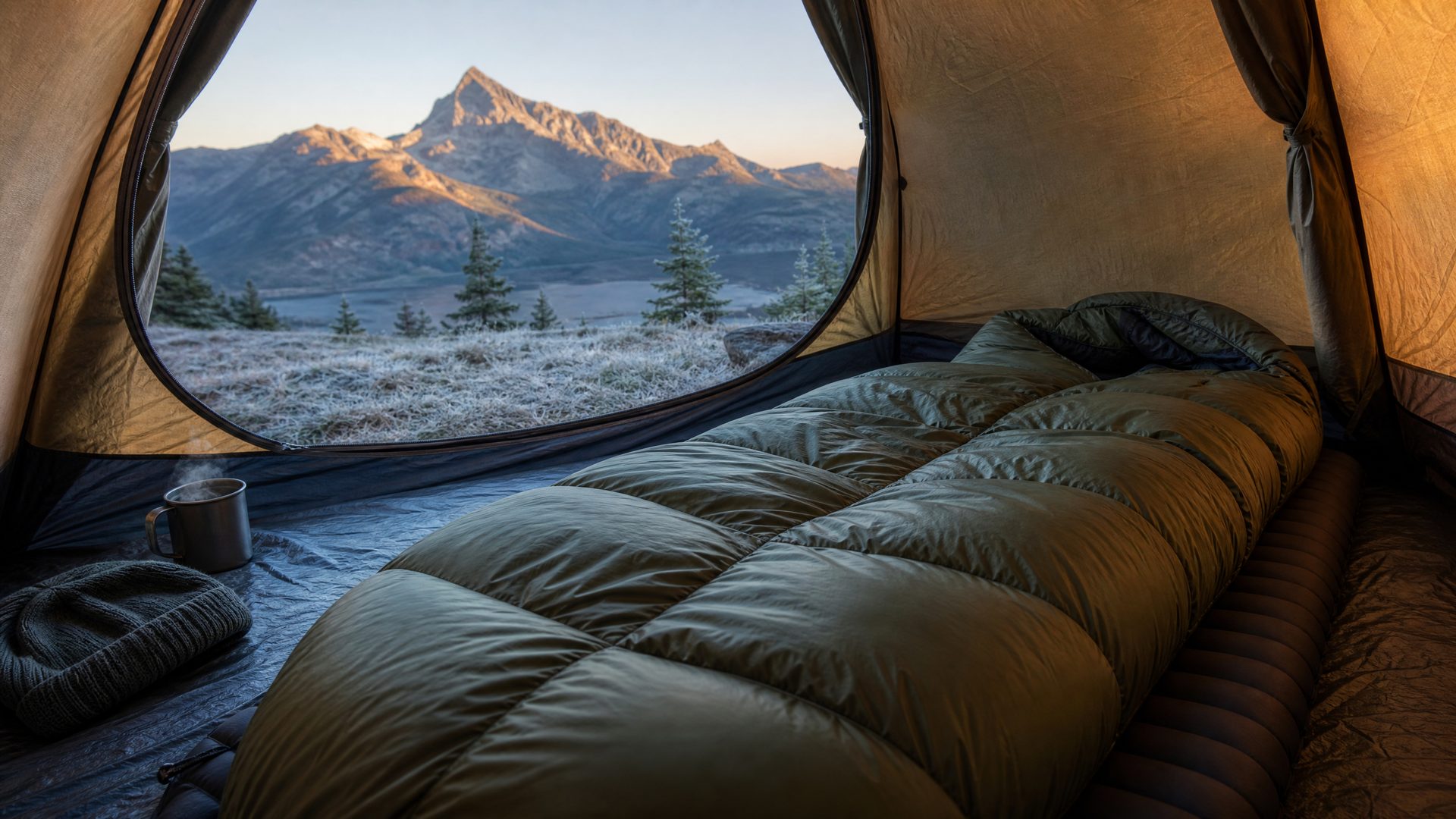
Down is the warmest insulation you can carry for its weight, which is exactly why it rules cold-weather bags: it lofts into a thick layer of trapped air, then crushes down to almost nothing in your pack. It has one real weakness, and it is worth stating plainly. Wet down clumps and stops insulating, so the whole game with a down bag is keeping it dry and reading the temperature rating honestly.
Get those two things right and a good down bag will outlast and outperform almost anything else on a cold night. This guide covers fill power, what the ratings really mean, and the five types of down bag worth knowing before you spend.
Quick Picks
- Best overall for cold weather: a mummy down bag with treated fill.
- Best for deep cold: an expedition bag with high fill power.
- Best for saving weight: a down quilt.
- Best for roomy comfort: a rectangular down bag.
- Best for damp conditions: a hydrophobic-treated down bag.

How to Choose a Down Sleeping Bag
Start with fill power, the number that describes down quality. It measures how much an ounce of down lofts, so higher fill power traps more warmth for less weight: 550 to 650 is solid mid-range, 800 to 900 is premium territory that packs tiny and costs more. A high-fill bag and a low-fill bag can share the same temperature rating, but the high-fill one will be lighter and far more compressible.
Then read the temperature rating properly, because this is where people get caught. Independent ratings usually quote a comfort figure, a lower limit and an extreme survival number, and only the comfort figure is a realistic night’s sleep. Buy for the comfort rating, not the limit, and drop a step colder if you sleep cold or the air is damp. The extreme number is for staying alive, not resting.
Two things decide whether a cold-weather bag actually keeps you warm, and neither is the number on the marketing photo. The first is the mat under you. You lose more heat to the cold ground than to the air, so a deep-winter down bag on a thin summer mat still sleeps cold; pair it with an insulated mat that has a genuine cold-weather R-value and you finally get the warmth you paid for. The second is how you read the rating. Bags tested to the EN/ISO standard quote three numbers — comfort, limit and extreme — and the headline figure is usually the limit. Buy on the comfort rating if you sleep cold, and treat the extreme number as a warning label: it is a survival figure, the point at which you shiver through the night, not one at which you sleep.
Finally, weigh down against its one rival. Down wins on warmth-to-weight and packed size and lasts for years if cared for; synthetic keeps some warmth when wet and costs less, which is the case for persistently damp trips. Treated hydrophobic down splits the difference and resists moisture longer, and a dry bag plus airing the bag each morning keeps any down lofting well.
The Down Sleeping Bags
Check today’s prices on Amazon →
Mummy down bag
The default for cold-weather camping. A mummy cut hugs the body and tapers to the feet, so there is less dead air to heat and less bag to carry, which is why it warms up fastest and packs smallest. Sea to Summit and Exped both make excellent mummy bags across a range of ratings. Pick one rated a step below your expected low and with treated fill, and it will handle the coldest nights most campers ever meet. See what a treated-fill mummy bag is selling for
Expedition down bag
For genuinely severe cold, an expedition bag steps up the fill and the baffling. High fill power, a draft collar, a hood that cinches down and boxed baffles that stop the down shifting all combine to hold heat when the temperature drops hard. These bags are an investment and overkill for mild trips, but when the nights are bitter they are the difference between sleeping and shivering. Match the comfort rating to the coldest night you realistically expect. Price up an expedition bag in the fill power you need
Down quilt
The weight-saver’s choice. A quilt ditches the crushed underside and the full zip, since the insulation beneath you does little anyway, and straps to your mat instead. That saves real weight and bulk, which walkers and bikepackers value, and it vents easily on milder nights. It suits warmer-sleeping people and anyone who feels trapped in a mummy, though it leans even harder than a bag on a well-insulated mat underneath. Weigh up a down quilt for a lighter kit
Rectangular down bag
For campers who want down’s warmth without the cocoon. A rectangular down bag gives you room to roll, bend a knee and sleep on your side, which many people simply cannot do in a tight mummy. It carries more weight and more cold space to heat, so it suits car camping over backpacking, and some models zip together into a double. If comfort matters more than grams, this is the down bag to choose. Look at the roomier rectangular cuts
Hydrophobic down bag
The answer to down’s weak spot. A hydrophobic bag uses down treated with a water-repellent finish, so it resists damp, lofts longer in humid air and dries faster after a soaking. It is not waterproof, and you still store it in a dry bag, but for trips where condensation and moisture are likely it buys a real margin over untreated down. If you love down but worry about the wet, this is the version to buy. Check the current treated hydrophobic-down bags
Comparison
| Type | Fill power guide | Best temp use | Watch-out |
|---|---|---|---|
| Mummy | 650–800 | Cold, dry nights | Snug for some sleepers |
| Expedition | 800–900 | Severe cold | Costly and heavy |
| Down quilt | 650–850 | Mild to cool, low weight | Needs a warm mat |
| Rectangular | 550–700 | Cool car camping | More cold air to heat |
| Hydrophobic | 650–800 | Damp, humid trips | Still not waterproof |
Frequently Asked Questions
Down or synthetic for cold camping?
Down wins for warmth-to-weight, packed size and longevity, which makes it the better cold-weather choice when you can keep it dry. Synthetic holds some warmth when wet and costs less, so it earns its place on persistently damp trips or for people who cannot be careful with moisture. Treated hydrophobic down is a strong middle ground.
What fill power do I need?
For cold-weather camping, 650 to 800 fill power is the sweet spot: warm, reasonably light and not eye-watering in price. Go to 800 to 900 only if you count every gram or face severe cold, where the weight and pack-size savings justify the cost. Below 550, the bag gets heavy and bulky for the warmth it gives.
What temperature rating should I buy?
Buy for the comfort rating, not the lower limit, and drop a step colder than your expected low if you sleep cold or camp somewhere damp. It is easy to vent a bag that is too warm and impossible to add warmth you did not bring, so a small margin is cheap insurance against a miserable night.
How do I keep a down bag dry and clean?
Store it in a dry bag on the trip, air it each morning to shed overnight moisture, and use a liner so you wash it far less often. When it does need washing, use a down-specific product, rinse it thoroughly, and tumble-dry on low with a couple of dryer balls to break up the clumps. Store it loose, never crushed.
The Bottom Line
The best down bag for cold weather is a mummy with treated fill, rated a step below your expected low: warm, light and packable, and forgiving of a damp morning. Step up to an expedition bag only for genuinely severe cold, save weight with a quilt if you sleep warm, and pick a rectangular bag if room matters more than grams. Whatever you buy, read the comfort rating rather than the survival number, keep the down dry, and pair the bag with a well-insulated mat so the cold ground cannot undo all that warmth.
For the rest of your sleep setup, see our guides to camping sleep systems, down versus synthetic bags and self-inflating sleeping mats.
Compare your options on Amazon →
