
This page contains affiliate links. Far Cornel may earn a commission if you buy through them, at no extra cost to you.
See the top-rated gear on Amazon →
Quick answer: A tackle backpack that swallows standard 3600 or 3700 trays is the best all-rounder for walking anglers. Go for a sling pack if you wade and want quick front access, a welded dry-bag pack for kayak work, a chest pack for minimalist lure sessions, and a rod-carrying trekking pack when the walk in is long. Match the harness and fabric to how far you actually carry it.
Fishing has become a walking sport. Anglers rock-hop headlands, hike into back lakes, and paddle to water a car cannot reach, and a hand-carried tackle box fights you every step of the way. A backpack puts the whole kit on your back and leaves both hands free for the rod, the net, and keeping your balance on wet rock. It is the difference between arriving at the good water fresh and arriving with a dead arm.
The trick is that a fishing pack is judged on different things than a hiking one. Tray storage, a harness that carries weight comfortably, tough water-resistant fabric and somewhere to stow rods all matter more than litres alone. Get that mix right and the pack disappears on your back; get it wrong and it gathers dust in the shed. This guide breaks the field into the styles worth owning.
Quick Picks
- Best overall: a tackle backpack sized for 3600 and 3700 trays.
- Best for wading: a sling pack you can swing to the front.
- Best for kayaks: a welded waterproof dry-bag backpack.
- Best for travelling light: a compact chest pack.
- Best for long walk-ins: a trekking pack with rod holders.

How to Choose a Fishing Backpack
Start with the trays, because that is what separates a fishing pack from a schoolbag. Check the main compartment takes the standard utility trays you already own, usually the 3600 and 3700 sizes, and how many. A front-loading design that lets you reach a tray without unpacking the whole bag saves real frustration on the water, and dedicated pockets keep leaders, tools and small bits from becoming one tangled heap in the bottom.
Here is the myth worth busting: a hiking daypack is not the same thing cheaper. It has no tray fit, so tackle rattles loose; its soft base soaks up water and rusts your hooks the moment you set it on wet sand; and it has nowhere to carry a rod. A purpose-built pack answers all three with a moulded water-resistant base, tray-shaped compartments and rod holders. Look for high-denier ripstop fabric and oversized corrosion-resistant zips, because on salt water cheap metal zips seize within a season.
Finally, weigh the harness against how far you walk. For a short stroll from the car, almost anything carries fine; for a few kilometres over rough ground, a padded ventilated back panel, genuinely adjustable straps and a hip belt that shifts the load onto your hips are what stop the pack wrecking your shoulders. A pack that carries well empty is easy to build; one that still carries well fully loaded is the one you actually want.
The Backpacks
Check today’s prices on Amazon →
Tackle backpack with tray storage
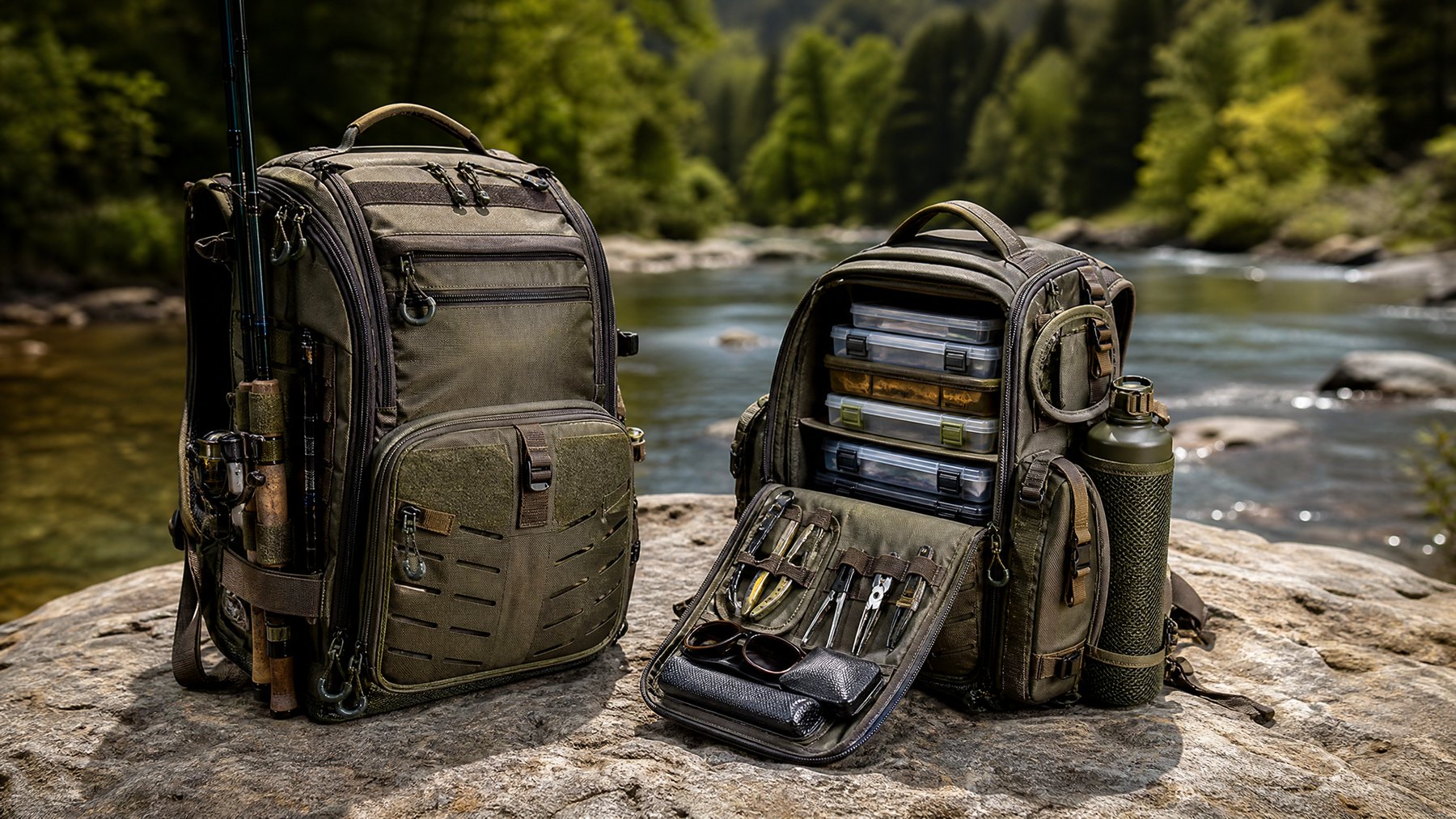
The all-rounder, and the right first pack for anyone building a kit. A structured lower section holds three to five utility trays, a roomier top section takes layers, lunch and a drink, and external lash points carry pliers, a net and a spare rod. It is the pack for the angler who wants everything on their back for a session of rock-hopping or beach walking, and it keeps tackle organised so you spend less time untangling trebles and more time casting. Check the tray fit and the base before anything else. Look over the current tackle backpacks options on Amazon.
Sling pack
For wading and light lure work, a sling pack is the quick-draw option. Worn over one shoulder, it swings around to your chest in a second so you can reach a lure or a tool without taking the bag off or setting it in the water. It carries one or two small trays rather than a full load, which is the point: it keeps you mobile and unencumbered when you are moving constantly and casting all day. Choose one with a stable single strap that does not slip mid-cast. Check current fishing sling packs stock on Amazon.
Waterproof dry-bag backpack
For kayak fishing and any trip where a soaking is likely, a welded dry-bag backpack keeps everything bone dry even if it takes a dunk. Built from waterproof fabric with roll-top or welded closures, it trades internal tray dividers for guaranteed dryness, so it suits spare clothes, electronics and safety gear more than finely sorted tackle. Pack the small stuff in pouches inside it to stay organised, and clip it into the boat so it cannot float off if you come out. It doubles as your camping dry bag off the water. Compare waterproof fishing backpacks options on Amazon.
Compact chest pack
When you want the bare minimum on you, a chest pack carries a single tray of lures, a spool of leader and a couple of tools right where you can see them. It is the favourite of lure and fly anglers who move light and fast and hate anything swinging off their back. It will not hold a day’s gear or a jacket, so it is a specialist rig for short, mobile sessions rather than a do-everything bag. Pair it with a dry bag for the extras you leave on the bank. Check the latest fishing chest packs range on Amazon.
Trekking pack with rod holders
For a long walk in to reach quiet water, comfort beats capacity, and a trekking-style pack with proper rod-carry straps is the one that gets you there fresh. A supportive harness and hip belt carry the load over distance, while side straps or tubes hold a spare rod and a net so your hands stay free for scrambling down a bank. Leave room for water, a headlamp and a small first aid kit, and use pouches to keep trays and leaders sorted. Run your eye over the hiking fishing backpacks range on Amazon.

Comparison
| Style | Tray capacity | Mobility | Best for |
|---|---|---|---|
| Tackle backpack | 3 to 5 trays | Moderate when loaded | Rock-hopping and beach walking |
| Sling pack | 1 to 2 small trays | Excellent | Wading and light lures |
| Dry-bag backpack | Few dividers | Good | Kayaks and wet trips |
| Chest pack | 1 tray | Excellent | Minimalist lure sessions |
| Trekking pack | Pouch-based | Good over distance | Long walk-ins |
Frequently Asked Questions
What makes a good fishing backpack?
Tackle-tray storage that fits the trays you use, tough water-resistant fabric and corrosion-resistant zips, a comfortable padded harness, and somewhere to carry rods hands-free. Beyond that it comes down to matching the capacity and features to how far you walk and how much gear you actually carry.
Backpack or a hard tackle box?
A backpack keeps your hands free for walking, rock-hopping and paddling, and carries weight far more comfortably over distance. A hard box holds more and protects better from one fixed spot. If you move around to fish, the backpack wins; if you sit still by the car or on a boat, the box is fine.
Is a fishing backpack waterproof?
Most are water-resistant against spray and light rain, not submersible, unless it is a welded dry-bag design. Treat the rating as splash protection, keep a phone and anything that must stay dry in a sealed pouch, and use the rain cover if one is included. A pack left in a downpour will let water in eventually.
What size should I get?
Size it to the trays and the day, not to the biggest number on the shelf. A pack that holds three or four trays plus a jacket and lunch suits most sessions, and a smaller sling or chest pack suits mobile lure fishing. Buying too big just tempts you to overpack and strain your back.
The Bottom Line
A purpose-built pack is an upgrade you feel the first time you reach a spot with your hands free. Spend on the harness and the fabric, match the storage to the trays you own, and be honest about how far you carry it. A tackle backpack suits most; rinse the zips after salt and it lasts for years.
Related: fishing gear checklist and fishing pliers and tool kits, and waterproof dry bags.