
This page contains affiliate links. Far Cornel may earn a commission if you buy through them, at no extra cost to you.
See the current fishing waders on Amazon →
Quick answer: Breathable stockingfoot chest waders paired with separate wading boots are the best all-round choice — comfortable, versatile, and easy to layer for warmth. Pick bootfoot chest waders for cold, muddy, quick-on-and-off days, neoprene for genuinely cold water, and waist or hip waders for shallow edges. Buy the fit and the boot traction first, because a leak-free wader that fits well beats a feature-packed one that does not.
The wader most people regret buying is the warmest one. Neoprene feels like the safe pick on the shop floor — thick, cosy, built for cold — but it is warm precisely because it does not breathe. Walk any distance to the water or fish a mild day in it and you cook, you sweat, and that sweat chills you the moment you stand still. Breathable waders you can layer under are far more versatile across every season bar the genuinely cold, which is why anglers who own both reach for breathable nine trips out of ten.
Waders are a comfort and safety item as much as a fishing one: warm, dry legs keep you fishing longer and standing steadier on slick ground. The field splits by cut (chest, waist or hip), by construction (breathable fabric, neoprene or rubber), and by whether the boot is built in or separate. Names like Simms, Redington, Orvis and Patagonia set the standard for breathable waders and boots, and the right pick comes down to where you wade and how far you walk to get there.
Quick Picks
- Best overall: breathable stockingfoot chest waders with separate boots.
- Best for cold water: neoprene chest waders.
- Best quick-on and muddy: bootfoot chest waders.
- Best for shallow work: waist or hip waders.
- Best upgrade: quality wading boots with the right sole.

How to Choose Fishing Waders
First decide how deep you wade and how far you walk. Chest waders cover the most water and double as wind protection; waist and hip waders are lighter and cooler for shallow edges and small creeks. Then choose bootfoot or stockingfoot: bootfoot has the boot built in, so it is quick to pull on and warmer in mud, while stockingfoot uses a snug neoprene sock with separate wading boots that fit better, walk better, and support your ankles over rough ground.
Material sets the comfort range. Breathable multi-layer fabric lets sweat escape and lets you dial in warmth with layers underneath, which makes it the most versatile choice across the seasons. Neoprene, usually 3–5 mm, is warm but does not breathe, so it suits genuinely cold water and little else. Rubber waders are cheap and tough but hot and heavy. Denier ratings and reinforced knees and seat tell you where a wader will resist wear, which is worth checking if you kneel on gravel or push through timber.
Two things the spec sheets bury. First, the wading belt is not optional — cinch it snug at the waist so that if you step into a hole over your depth, the legs cannot fill and drag you under; it is the single most important safety habit in waders, and most come with a belt people never tighten. Second, waders almost always leak at the seams and the crotch long before the fabric ever wets through, so favour taped, welded seams over plain stitching, and when a leak does start, a dab of the right seam sealant usually fixes it — you rarely need a whole new pair.
Fit and traction are what most anglers get wrong. Waders should give you room to squat and step up without pulling tight across the shoulders, with a little length so the crotch sits comfortably when you lift a leg. For soles, felt grips slick rock superbly but can carry pest organisms between waterways and is restricted in some areas; rubber and studded rubber travel cleaner and grip well, so many anglers now choose them. A wading belt is not optional — it slows water filling the legs if you go in.
The Fishing Waders
Compare wader styles and prices on Amazon →
Breathable stockingfoot chest waders
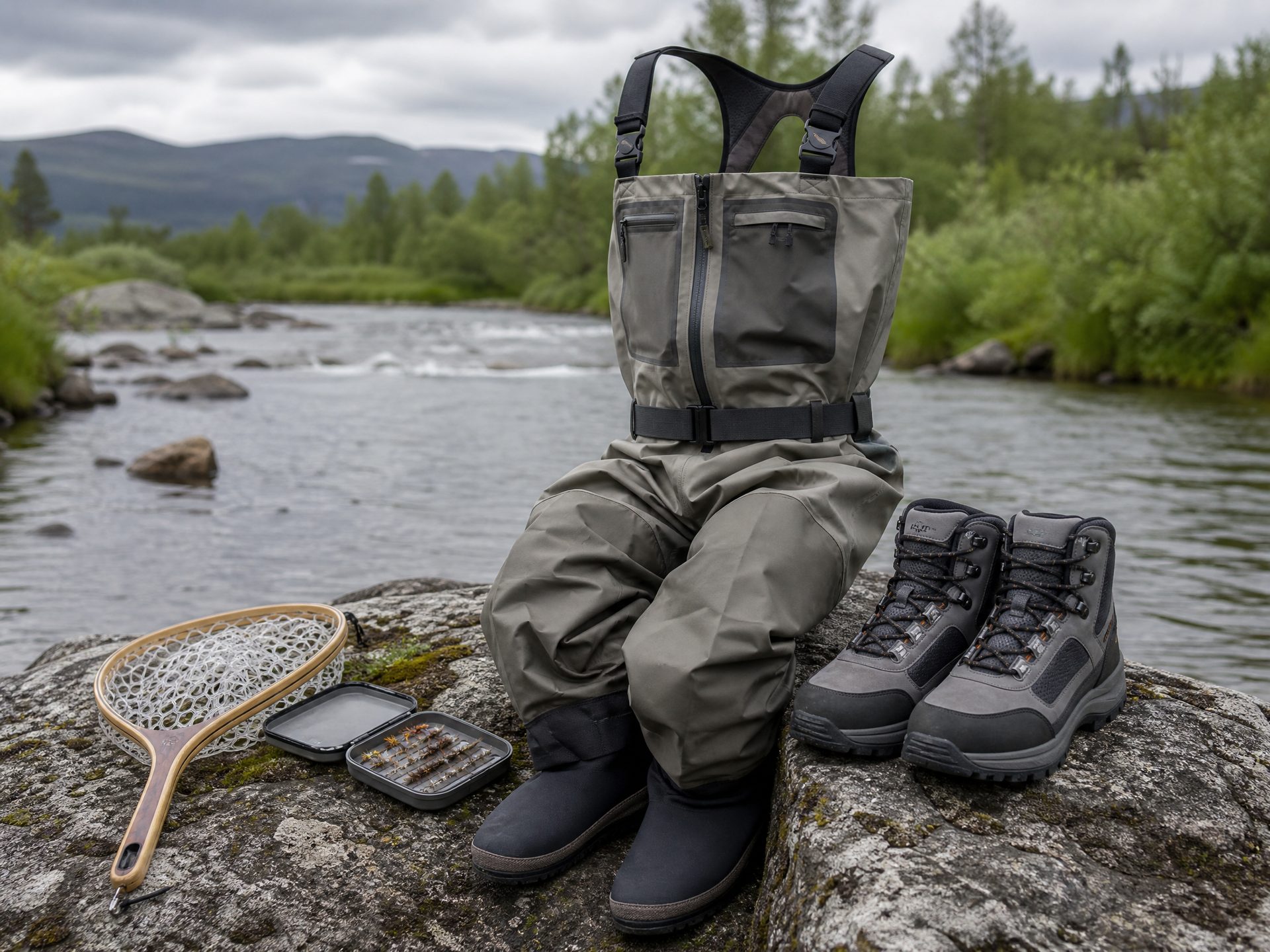
This is the wader most anglers should own. A breathable stockingfoot chest wader from Simms, Redington, Orvis or Patagonia lets sweat out, takes layers underneath for cold days, and pairs with wading boots that actually fit your feet. Because the neoprene sock sits inside a proper boot, you get real ankle support and grip on rough ground, and you can replace boots and wader independently as they wear. It costs more up front than a one-piece bootfoot, but its versatility across the year is why it stays the default recommendation. See what the current breathable chest waders are going for
Bootfoot chest waders
When speed and warmth beat a perfect fit, bootfoot chest waders make sense. The boot is built straight onto the wader, so there is nothing to lace, and there are no gravel-trapping seams around the ankle — you step in and go. In cold mud the integrated boot stays warmer than a stockingfoot-and-boot combination, which suits still, cold mornings. The trade-offs are honest: the boot size is fixed, they walk less comfortably over distance, and they pack bulkier. Buy them for cold, muddy, get-in-get-out fishing close to the car. Compare the bootfoot chest waders on offer
Neoprene waders
For genuinely cold water there is still nothing warmer than neoprene. A 3–5 mm neoprene wader traps heat like a wetsuit, keeping you comfortable when breathable fabric and layers would not be enough. The catch is that it does not breathe at all, so any walking or mild weather turns it into a sauna, and the sweat you build up chills you when you stop. Treat neoprene as a specialist cold-water tool rather than an all-rounder, and you will be glad of it on the days it is right and leave it home the rest of the time. Check the neoprene options if you fish genuinely cold water
Waist and hip waders
Not every session needs chest-deep coverage. Waist waders and hip waders are lighter, cooler and quicker to move in, which makes them ideal for shallow edges, small creeks and warm-weather wading where you rarely go past the knee or thigh. You lose the deep-water reach and the wind protection of a chest wader, and they offer less if you slip into a hole, so they are a fair-weather, shallow-water choice. For anglers who wade skinny water in the warmer months, they are far more comfortable than sweating inside full chest waders. Look over the waist and hip waders for shallow days
Wading boots
Stockingfoot waders are only as good as the boots on the end of them, so this is where the second half of the budget should go. Quality wading boots from Simms, Korkers or Redington give you the ankle support, drainage and traction that keep you upright on slick rock and shifting gravel. Korkers offer swappable soles so you can run rubber, studded or felt to suit the water and the local rules. Rubber and studded rubber grip well and travel cleanly between waterways; felt grips best on slime but is restricted in some areas. Size them over your wader sock, not your bare foot. Browse wading boots and match the sole to your riverbed

Comparison
| Wader type | Warmth | Breathability | Best for | Watch-out |
|---|---|---|---|---|
| Breathable stockingfoot | Layer to suit | High | All-round, most seasons | Needs separate boots |
| Bootfoot chest | Warm in mud | Low to moderate | Cold, muddy, quick trips | Fixed boot, walks poorly |
| Neoprene | Warmest | None | Genuinely cold water | Overheats when walking |
| Waist and hip | Cool | High | Shallow, warm-weather work | No deep wading |
| Wading boots | — | — | Traction and support | Check sole rules |
Frequently Asked Questions
Neoprene or breathable waders?
Breathable for versatility across the seasons, because you layer under them and they let sweat escape. Choose neoprene only when the water is genuinely cold, since it is very warm but does not breathe at all and will overheat you on the walk in and any time the weather is mild.
Bootfoot or stockingfoot?
Stockingfoot with separate wading boots for the best fit, ankle support and walking comfort over distance. Bootfoot is quicker to pull on and warmer in cold mud, but the boot size is fixed and it walks less well on rough ground, so it suits short trips close to the car.
Felt soles or rubber?
Rubber or studded rubber is the sensible default now: it grips well on most riverbeds, wears hard, and is legal everywhere. Felt bites a little better on slick rock but is banned in some waters because it can carry pests and spores between rivers, so check the local rules before you rely on it.
How should waders fit?
With room to crouch and step up without pulling tight across the shoulders, and enough length that the crotch sits comfortably when you raise a leg. Always wear a wading belt, because it slows water filling the legs if you take a tumble and keeps the waders far safer.
The Bottom Line
The wader worth buying is the one that matches your water, not the warmest one in the shop. That means breathable stockingfoot chest waders with well-chosen boots for the widest range of days — comfortable, layerable and dry across most of the year. Save neoprene for genuinely cold water, drop to waist or hip waders for shallow warm-weather sessions, and spend on the boots and the sole as hard as the wader itself. Fit it properly, cinch the wading belt, and stand on honest traction: do that and you will fish longer, warmer and a good deal safer.
More fishing guides: line up the right lenses with our polarised fishing sunglasses guide for reading the water, tick off the essentials in our beginner fishing gear checklist, and spool up with the right braided fishing line.