
This page contains affiliate links. Far Cornel may earn a commission if you buy through them, at no extra cost to you.
See the top-rated gear on Amazon →
Quick answer: For a modern synthetic-rope winch, a recovery ring paired with a soft shackle is the smart default: lighter, cheaper and safer than a steel pulley, with nothing to seize. Factor 55 and Saber Offroad make trusted ones. Run a rated steel snatch block if you use steel cable, a twin-sheave block only for the deepest bogs, and always rate the pulley well above your winch.
A winch is only half a recovery system. The moment the anchor is off to one side, or the vehicle is buried deep enough that a straight pull will not shift it, you need a way to redirect the line or multiply its power. That is the job of a snatch block or a recovery ring, and it is what turns a winch from a straight-line tool into a genuinely versatile one. These are simple bits of kit that do two clever things.
Run the winch line through one and back and you double the pulling power at the cost of speed, which is what frees a truly stuck vehicle. Anchor one off to the side and you change the direction of pull, so you are not forced to winch dead straight. The choice mostly comes down to whether you run steel cable or synthetic rope, how heavy your vehicle is, and how much you value light weight and safety.
Quick Picks
- Best all-round: a rated steel snatch block that suits cable or rope.
- Best lightweight: a recovery ring for synthetic winch rope.
- Best for heavy pulls: a twin-sheave double-line block.
- Best value starter: a recovery ring and soft-shackle kit.
- Best for heavier rigs: a high-rated heavy-duty snatch block.

How to Choose
Start with the rating, and buy well above your winch. This is the mistake that hurts people: a block or ring rated merely equal to your winch is under-rated, because a double-line rig can load it to nearly twice the winch’s line pull, and a directional pull adds more again. So the working load limit of your pulley should sit comfortably above your winch capacity, never level with it. It is the most heavily loaded single part of the system, so over-rate it on purpose.
Then match the type to your winch line. A steel snatch block with a grooved sheave suits steel cable, which would chew up a soft alloy recovery ring. A recovery ring is made for synthetic rope, which slides through its smooth groove, and it is far lighter and safer because there is less mass to fly if something lets go. A ring and soft shackle covers most synthetic setups for less money and weight, while steel-cable users should invest in a properly rated steel block, and everyone should drape a dampener over the rigging.
The Snatch Blocks and Pulleys
Check today’s prices on Amazon →
Rated Steel Snatch Block
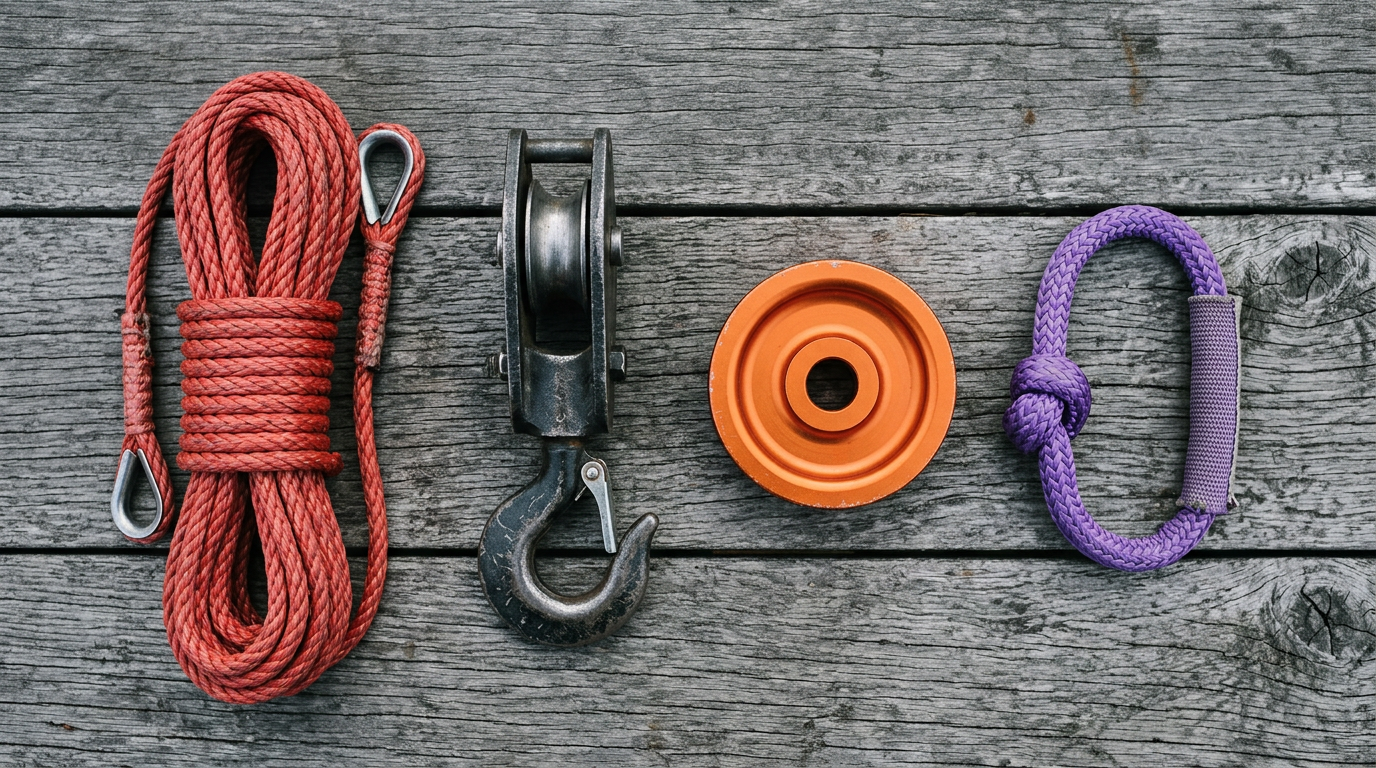
The traditional workhorse. A steel snatch block has a side plate that swings open so you can lay the winch cable into the sheave without threading the end through, then rolls the line around a bearing to redirect or double it. It works with both steel cable and synthetic rope and shrugs off hard use, and ARB and Warn make proven ones. The trade-offs are weight, moving parts that need occasional care, and more mass in the danger zone, but for steel-cable winches it is still the reliable choice. Check the latest steel snatch blocks range on Amazon.
Lightweight Recovery Ring
The modern favourite for synthetic-rope setups, and the one I reach for first. It is a solid alloy ring with no moving parts: you loop a soft shackle and your winch rope through it to redirect or double the pull. Because it is light with nothing to seize or shatter, it is easier to handle and safer, since less mass means less energy if something fails, and Factor 55 and Saber Offroad set the standard. The catch is that it only suits synthetic rope, and it adds a touch of friction over a bearing pulley. Shop recovery rings choices on Amazon.
Twin-Sheave Double-Line Block
A twin-sheave block carries two pulleys side by side, letting you build a compound purchase for serious mechanical advantage when a single or simple double line is not enough. For the deepest, heaviest bogs it multiplies your winch’s power dramatically, at the cost of more rope, more rigging time and a slower pull. Don’t buy it as your first pulley: it is a specialist most people rarely need, but when a recovery is truly stuck, little else does the job as safely. Run your eye over the twin-sheave snatch blocks range on Amazon.
Recovery Ring and Soft-Shackle Kit
Buying a recovery ring with a matched soft shackle is the tidy way to a complete, ready-to-rig kit. The soft shackle is a synthetic loop that replaces a heavy steel bow shackle: light and immensely strong, it floats and cannot become a steel projectile if something fails. Sold as a package, the two are rated to work together, which takes the guesswork out of matching components. For anyone running synthetic rope, this pairing is the simplest safe way into pulley recoveries. Browse the current recovery ring kits listings on Amazon.
Heavy-Duty High-Rated Snatch Block
For heavy vehicles, loaded tourers and anyone recovering big rigs, a high-rated block gives the extra margin those loads demand, staying comfortably within its limits even under a doubled line on a heavy pull. It is heavier and pricier than a standard block, and overkill for a light vehicle. But if you regularly move serious weight, that extra rating is exactly the safety margin you want in the most loaded part of the system. See current heavy-duty snatch blocks prices on Amazon.

Comparison
| Type | Winch line | Weight | Moving parts | Best for |
|---|---|---|---|---|
| Steel snatch block | Cable or rope | Heavy | Bearing or bushing | Proven all-round use |
| Recovery ring | Synthetic only | Very light | None | Lightweight modern kits |
| Twin-sheave block | Cable or rope | Heavy | Two sheaves | Very heavy pulls |
| Ring and shackle kit | Synthetic only | Light | None | Best-value starter |
| Heavy-duty block | Cable or rope | Heaviest | Bearing | Big winches and rigs |
Frequently Asked Questions
What does a snatch block actually do?
A snatch block or recovery ring is a pulley for your winch line. Rig it and pass the line back to your vehicle and you double the pulling power while halving the speed, or anchor it to the side and it redirects the pull so you can winch around an angle rather than only straight ahead.
What rating do I need?
Choose a working load limit comfortably above your winch’s rated pull, not equal to it, because a double-line rig can load the block to nearly twice the winch’s line pull. When in doubt, size up, since this is the most loaded part of the system.
Snatch block or recovery ring, which is better?
For synthetic rope, a recovery ring is usually the better pick: lighter, cheaper, safer and with nothing to seize. A steel snatch block is the choice if you run steel cable, since a ring is made for synthetic line only. Match the tool to your winch line first.
Can I use a pulley with a synthetic winch rope?
Yes. Recovery rings are made specifically for synthetic winch rope, and steel snatch blocks handle it too. Just never run steel cable through a soft alloy recovery ring, because the cable will chew it up.
The Bottom Line
The best pulley follows your winch line and your vehicle’s weight. Synthetic-rope users are well served by a light, safe recovery ring and a matched soft shackle; steel-cable winches call for a properly rated steel snatch block. Whichever you pick, rate it well above your winch, add a twin-sheave only if you tackle extreme bogs, and always drape a dampener over the rigging. Get the rating and the line match right, and pulley recoveries become routine.
For the rest of your recovery setup, see our guides to the best snatch strap recovery kits, the best soft shackles, and how to choose a 4×4 winch.