
This page contains affiliate links. Far Cornel may earn a commission if you buy through them, at no extra cost to you.
See the top-rated gear on Amazon →
Quick answer: You are building a small set, not buying one jig. A size 2.5 to 3.0 egi covers most squid and depths, so start there. Add a natural, translucent pattern for clear water and bright sun, a bold orange or pink for stained water and low light, and a glow finish for dawn and dark. Carry one slow sink and one faster, keep the spikes sharp, and let the water pick the jig.
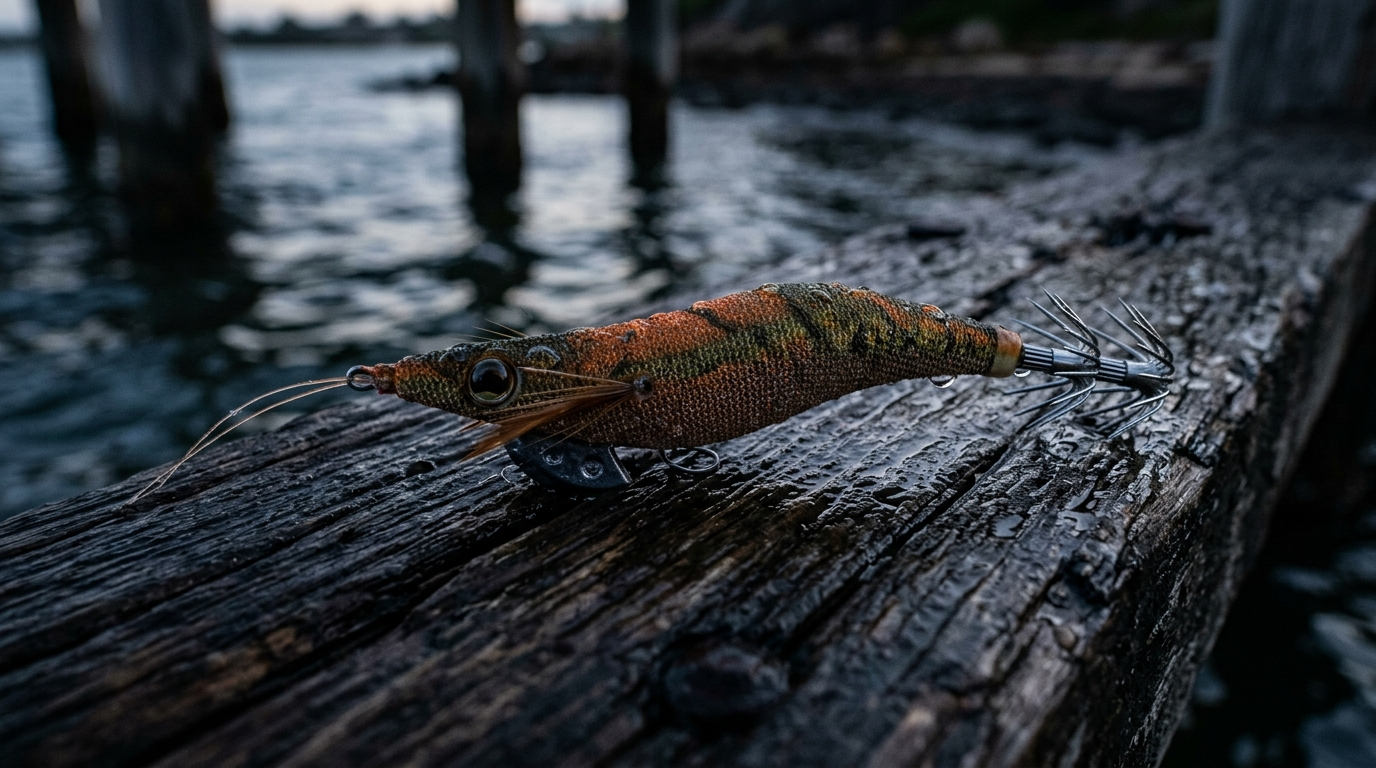
Squid are one of the best things you can lift out of salt water, superb on a plate and unbeatable as fresh bait, and a jig is how you target them on purpose instead of by accident. The jig, an egi, imitates a small prawn or baitfish. You cast it, let it sink, then work it in sharp lift-and-drop hops so it darts up and flutters back down like something wounded. Squid are visual, deliberate hunters, which is why the right jig behaving correctly matters far more than how hard you snap the rod.
The catch is that no single jig covers every session. Sizes run from a dainty 1.5 up to a chunky 4.0, sink rates from a lazy hover to a fast plummet, and colours from barely-there natural to fluorescent. The good news is you do not need dozens. A handful chosen to cover the variables squid actually notice will out-fish a box crammed with one lucky colour. Here is how the types differ and how to build a small spread that handles most days.
Quick Picks
- Best all-round: a size 2.5 to 3.0 egi with natural cloth in a proven colour.
- Best value premium: a bright prism-finish jig for flash in stained water.
- Best for clear water: a finesse egi in translucent, natural tones.
- Best for deep or searching: a heavier, faster-sinking jig.
- Best budget insurance: a few cheap cloth jigs for snaggy ground.

What Actually Makes a Squid Jig Catch
Four things decide a jig: size, sink rate, colour, and whether it sits level. Size comes first. Egi are graded from about 1.5 to 4.0, and the number tracks weight and casting distance, so a 2.5 is roughly 10 grams and a 3.5 closer to 20. A 2.5 to 3.0 is the everyday workhorse for average squid and depths. Drop to a 1.8 or 2.0 for shallow, calm, spooky water, and step up to a 3.5 to punch out a long cast or cut down through current. If you only carry two, make them a 2.5 and a 3.0.
Sink rate is the detail most people ignore, and it decides whether the jig ever fishes properly. It is quoted in seconds per metre: a slow jig at around 5 to 6 seconds per metre hangs over shallow weed where squid sit, while a fast one at 3 seconds or less gets down in deep water or run before the tide sweeps it away. Match it to your depth. Too slow and you never reach them; too fast and you drag bottom and foul the spikes. Here is the myth worth killing: colour is not the master key. Anglers swap colour ten times before they fix a sink rate that was wrong all along.
Colour still earns its keep as light and clarity shift. Natural, translucent bodies suit clear water and sun; bold orange and pink cut through stain and low light; glow and ultraviolet finishes come alive at dawn, dusk and after dark. Just as important, a good jig hangs horizontal on the pause, because a nose-down or tail-heavy egi looks wrong and squid refuse it, and the crown of fine spikes must be genuinely sharp so it holds without a barb and releases cleanly. Spend on a few quality jigs that swim level, and save by keeping a couple of cheap cloth jigs for jig-eating ground. A field tip: a dab of superglue along the belly seam stops the cloth peeling, which is where cheap jigs fail first.
The one thing the product photos never show is the leader, and in clear water it makes or breaks a session. Squid inspect a jig before they commit, so run a length of fluorocarbon leader — it is far less visible underwater than braid and all but disappears against a translucent body — but keep it light enough that the jig still darts and flutters freely, because too heavy a leader kills the action and shows up like a rope. Fish braid as your mainline down to that fluoro leader: braid has almost no stretch, so it telegraphs the soft weight-on-the-drop take that is the whole game, and you feel the squid load up rather than waiting to see your line twitch.
The Squid Jigs
Check today’s prices on Amazon →
The all-round premium egi
The jig I would build a set around, and the one serious squidders keep tying on. A Yamashita EGI-OH Live carries their Warm Jacket cloth, a thermal outer that holds warmth a touch longer than plain cloth, and squid read that faint warmth the way they read real prey, which shows on tough days. Add a proven darting action and a colour range that covers every water, and it simply catches. It costs more than most, but as the anchor of a small kit it earns it. See what the Yamashita EGI-OH Live is going for.
The value-premium flash jig
When the water carries some colour, flash sells the jig, and a Yo-Zuri Aurie-Q leans into it with a bright prism finish that throws light with every hop. The body is well balanced, casts a long way and works cleanly, and it comes across the useful size range. It gives up a little of the subtlety of the top-shelf egi, but it fills a wallet with proven, fish-catching colours without top-dollar prices on every one. A smart way to build depth in your box. Look up the Yo-Zuri Aurie-Q.
The clear-water finesse jig
Gin-clear water and pressured squid punish anything gaudy, and this is where a subtle jig like a Shimano Sephia earns its place, with a tight, refined action and natural, translucent finishes a wary squid will follow and eat. It shines in bright sun over sand and light weed, exactly where a bold colour gets refused. Do not reach for it in stained water or low light, where it disappears. If your squid see a lot of jigs and the water runs clear, a finesse egi like this turns follows into hook-ups. Check the Shimano Sephia range.
The deep or searching egi
For deeper water, running tide, or when you want to search the column, a heavier, faster-sinking jig like a Daiwa Emeraldas gets down and stays in touch. The extra weight buys casting distance and a quicker drop to the strike zone, and the build holds a stable, level fall so the jig still looks right on the pause. It is not the jig for skinny shallow flats, but over depth and current it puts your egi where the squid actually are. A reliable second size to sit beside your all-rounder. Weigh up the Daiwa Emeraldas.
The budget prospecting jig
Every squid wallet wants a few cheap cloth jigs, the ones anglers only half-jokingly call suicide jigs, for scoping snaggy new ground where losing one to reef or weed costs almost nothing. They will not last like the premium egi, since the cloth peels in time, but a handful lets you fish fearlessly where a top-shelf jig would make you wince on every cast. Glue the belly seam and they last longer. Keep three or four purely as insurance. Price up a few budget cloth jigs.
Comparison
| Jig | Size range | Sink rate | Best light / water | Standout |
|---|---|---|---|---|
| Yamashita EGI-OH Live | 2.5–3.5 | Medium | All water, all-round | Warm Jacket cloth |
| Yo-Zuri Aurie-Q | 2.5–3.5 | Medium | Stained water, low light | Bright prism flash |
| Shimano Sephia | 1.8–3.0 | Slow–medium | Clear water, bright sun | Natural finesse |
| Daiwa Emeraldas | 3.0–3.5 | Fast | Deep water, run | Long cast, quick drop |
| Budget cloth egi | 2.5–3.0 | Varies | Snaggy prospecting | Cheap to lose |

Frequently Asked Questions
What size squid jig should I start with?
A 2.5 to 3.0 is the best first jig, because it casts and sinks well across the depths most people fish. Add a 3.5 for deeper water, current or longer casts, and a 1.8 to 2.0 for shallow, calm conditions or wary squid. Two well-chosen sizes cover far more situations than a drawer full of one.
Does jig colour really matter, or is it just marketing?
It matters, but less than most anglers think, and always behind sink rate. Natural, translucent colours work in clear water and sun; bright orange and pink shine in stained water or low light; glow and ultraviolet suit dawn, dusk and dark. Carry a light option and a dark one, and change colour before you change spots.
Why do squid keep following the jig but not grab it?
Usually the jig is fishing wrong, not the wrong colour. Slow the sink so it hangs in front of them, make sure it sits horizontal on the pause rather than nose-down, and try a smaller, more natural jig. A long, dead pause after the hop often turns a hovering follower into a committed grab.
How do I stop the cloth peeling off my jigs?
Run a thin bead of superglue along the belly and nose seams when the jig is new, which is where the cloth lifts first. Rinse jigs in fresh water after a session, let them dry fully before they go back in the wallet, and keep the sharp crowns from crushing each other in storage.
The Bottom Line
Squid jigs reward a bit of thought more than a big spend. Rather than one lucky jig, carry a small set that covers the variables: a couple of sizes, a slow and a faster sink, and a light and a dark colour. Match size and sink to the depth and current, switch colour with the light and clarity, and keep the spikes sharp. Do that and a slow start often turns into a bag of squid once you find the combination they want.
Pair it with the rest of a light squidding setup: our guides to the best spinning reels, the right fishing leader line, and the beginner fishing gear checklist help you build the rest of the rig.
Compare your options on Amazon →
