
This page contains affiliate links. Far Cornel may earn a commission if you buy through them, at no extra cost to you.
See the top-rated gear on Amazon →
Quick answer: For the finest detection the Delkim Txi-D v2 is the benchmark, but most anglers are better served by the Rippton BiteKeeper — a rechargeable, waterproof multi-rod set with a receiver for sensible money. The Fox Mini Micron X is a reliable everyday alarm, the Nash Siren R4 loads on night features, and a set of clip-on bells covers a short daytime sit for almost nothing. Match the alarm to your session, and set the sensitivity to conditions, not to maximum.
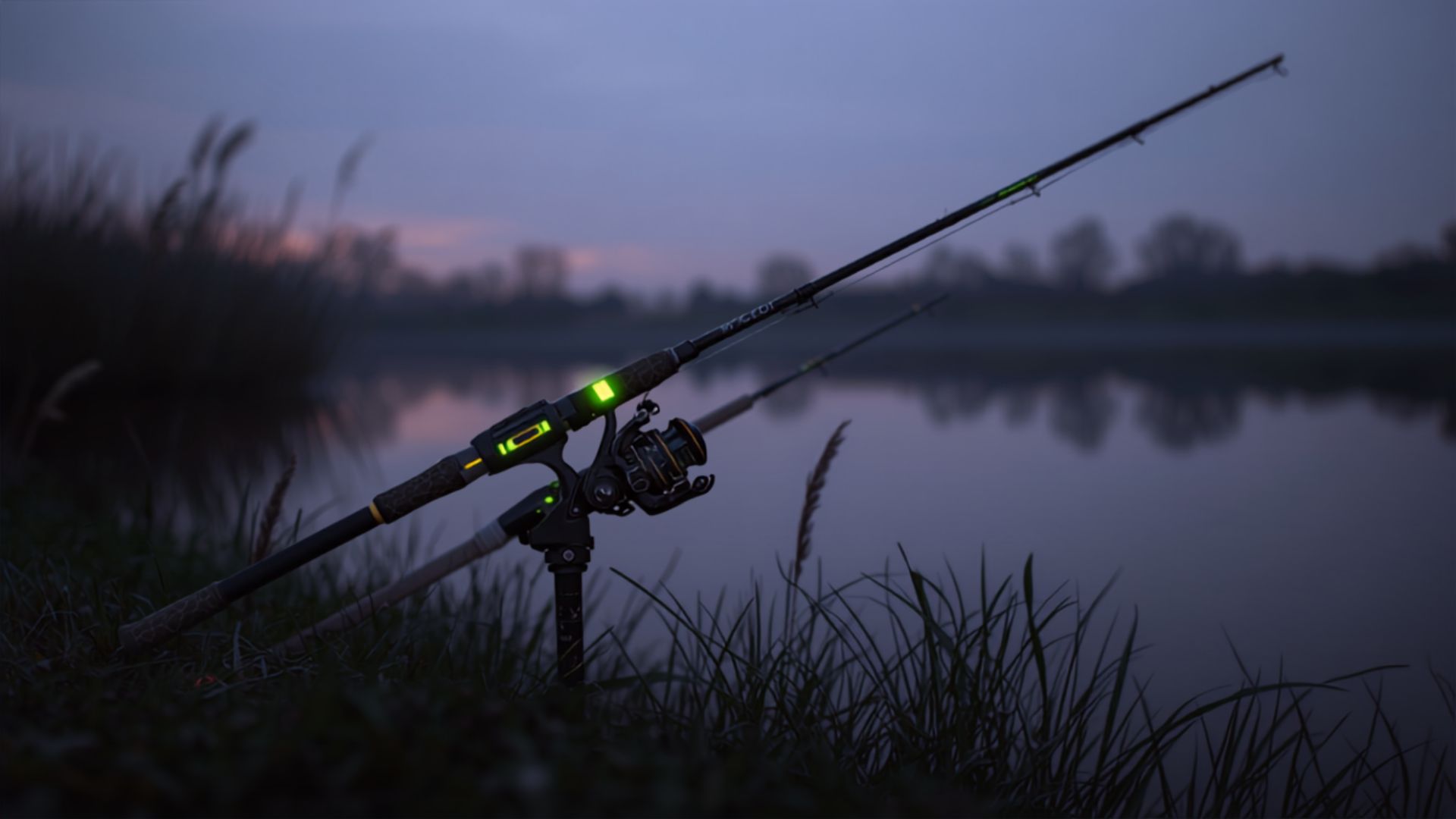
Bait fishing is a waiting game, and the wait can run right through the night. A bite alarm lets you stop staring at a motionless rod tip and still catch the take the instant it happens. Line moves through or over a sensor, the unit calls it with a tone and a flash of light, and a run at three in the morning wakes you instead of dragging a rod off the rest and into the water.
The good ones read the softest movement without crying wolf; the poor ones either miss quiet takes or scream at every gust and ripple. The five below run from a simple clip-on bell to a full wireless set with a receiver. Here is how they differ and how to match one to the way you actually fish.
Quick Picks
- Best overall: Delkim Txi-D v2 — unrivalled piezo vibration detection.
- Best value set: Rippton BiteKeeper — rechargeable, waterproof, with a receiver.
- Best compact: Fox Mini Micron X — small, reliable and proven.
- Best feature set: Nash Siren R4 — homecoming LEDs and false-bleep rejection.
- Best budget: clip-on twin bell indicators — cheap bells with glow lights.

How to Choose a Bite Alarm
The right alarm depends far more on how you fish than on any spec sheet. Fish one rod in daylight within arm’s reach and a basic audible alarm or even a set of bells is plenty. Fish several rods overnight, or sit back in a shelter away from the rests, and a set with a wireless receiver and reliable drop-back detection earns its keep. The most important control is sensitivity, because conditions change through a session: keen enough to register a shy take, yet dialled back so wind, tide and drifting weed don’t set it off. Separate tone and volume let you tell one rod from another by ear.
Not every take pulls line away from you. Fish often lift a bait and swim toward the rod, letting the line fall slack, and a basic alarm sits silent through it — so a unit that signals these drop-back bites, with a different tone or a falling light, catches runs you would otherwise never see. An alarm also lives outdoors in dew and spray, so a properly sealed, waterproof housing matters more than a splash-proof claim. And here is the classic mistake — running the sensitivity flat out. A night of false alarms from wind and weed soon teaches you that a slightly calmer setting catches more real fish and costs you far less sleep.
A wireless receiver repeats each alarm to a handset on your belt, which is the difference between dozing easy and lying awake listening for a beep. Quoted range is measured in open air, so expect less through bushes and banks, and weigh it more heavily if you like to roam between spots. Spend your money on sensitivity control, drop-back detection and genuine weatherproofing, plus stainless snag ears that stop a hard take pulling the rod clean out of the rest. Save on badge appeal and modes you’ll never touch, and look for a low-battery warning so you don’t arrive to a dead alarm.
The Bite Alarms
Check today’s prices on Amazon →
Delkim Txi-D v2
The benchmark serious bait anglers measure others against. Delkim have spent decades refining their piezo vibration sensing, and it shows — indication is almost unrivalled in sensitivity, catching the faintest movement. Volume, tone and sensitivity all adjust, the LEDs offer brightness control and a stealth mode, and battery life is long with low-battery and auto-power-down warnings. It is expensive, and overkill for a casual angler, but for the finest detection available nothing else quite matches it. See current Delkim Txi-D v2 prices on Amazon
Rippton BiteKeeper
The standout value pick for a modern set. It comes as a multi-rod set with a receiver, all rechargeable from a single USB and toppable from a power bank while you fish. The sealed, waterproof construction removes the battery-door weak point, the receiver reaches a good distance with vibration alerts, and the compact form suits mobile anglers. Detection is more than enough for most bait fishing, with no running costs. A lot of modern alarm for sensible money. Compare Rippton BiteKeeper on Amazon
Fox Mini Micron X
A compact, dependable alarm that nails the basics. It is small and light, packs the essential adjustments for tone, volume and sensitivity, and pairs to a receiver, all in a trusted package from a brand with a long track record. It doesn’t carry the premium price or the finest indication of the top vibration alarms, but for reliable, no-drama bite detection at a fair price it is a smart choice. A great everyday alarm for most anglers. Check the latest Fox Mini Micron X on Amazon
Nash Siren R4
The feature-rich option for the tech-minded angler. Beyond solid detection it adds a homecoming function — an LED the receiver can light to guide you back to your rods in the dark without shining a torch on the water and spooking fish — plus smart processing to cut false bleeps. For anglers who fish hard, overnight, or from a boat and want every modern convenience, the R4 is loaded. Skip it if you only fish the odd daytime session and never need the extras. Browse Nash Siren R4 on Amazon
Clip-on Twin Bell Indicators
The budget answer that still catches fish. These simple bells clip onto the rod tip and ring when a fish pulls line, often with a glow stick or LED so you can spot the rod in the dark. There is no receiver, no sensitivity dial and no electronics to fail, just a cheap, reliable audible alert. For the angler fishing one or two rods close by, or anyone starting out who doesn’t want to spend on electronics, a set of bells does the core job for very little. Shop clip-on bite alarm bells on Amazon
Comparison
| Alarm | Detection | Receiver | Best for |
|---|---|---|---|
| Delkim Txi-D v2 | Piezo vibration | Optional | Finest indication |
| Rippton BiteKeeper | Roller | Included | Value multi-rod set |
| Fox Mini Micron X | Roller | Pairs to one | Reliable everyday |
| Nash Siren R4 | Roller + smart tech | Included | Features and night use |
| Clip-on twin bells | Mechanical bell | None | Budget, close range |
Frequently Asked Questions
Are bite alarms worth it for casual fishing?
For a short session with one rod in front of you, an alarm is a convenience rather than a necessity, and a set of bells or a scrap of foil on the line does much the same job for far less. They come into their own the moment you fish more than one rod, fish into darkness, or want to sit back from the rests, when hearing a take you cannot see is the entire point.
What is drop-back detection and do I need it?
Drop-back is when a fish takes the bait and swims toward you, letting the line fall slack instead of pulling it tight. A basic alarm only reacts to line moving away, so it can miss these takes completely. If your target tends to move off gently, an alarm that flags drop-back with its own tone or light will show you runs you would otherwise sleep straight through.
How do I stop false alarms?
Most false alarms come from too much sensitivity combined with wind, flow or weed tugging at the line. Turn the sensitivity down until only real movement triggers it, keep the line angle sensible so surface chop isn’t pulling at it, and run a slacker setup in strong tow. A little tuning at the start of a session saves a whole night of phantom beeps.
Do I need a wireless receiver?
Only if you fish away from your rods — overnight, from a shelter, or across several rods spread along the bank. Within arm’s reach in daylight, a plain audible alarm or a set of bells is enough. Remember that quoted range is measured in open air, so expect noticeably less through bushes, banks and buildings, and weigh range more heavily if you like to roam.
The Bottom Line
A bite alarm turns a long, cold wait into fishing you can actually trust, freeing you to rest, brew up or watch the water while the gear keeps watch on the line. Match it to your sessions: a simple audible alarm or a set of bells for a short daytime sit, and a wireless set with drop-back detection for long or overnight fishing across several rods. Set the sensitivity to your conditions rather than to maximum, and you’ll land more of the takes that matter.
Pair it with the rest of a relaxed bait-fishing setup: our guides to the best fishing rod holders, best fishing hooks and terminal tackle, and the beginner fishing gear checklist round out the kit.
Compare your options on Amazon →
